sinowa@sinowa.cn
+0086 151 0610 6366
PU Sandwich Panel Production Line With Rock Wool-PU Composite Core

PU Sandwich Panel Production Line With Rock Wool-PU Composite Core

Jul 6, 2026

The continuous advancement of modern building insulation and structural material manufacturing has driven the iterative upgrading of sandwich panel production equipment, among which the production line designed for fabricating sandwich panels with rock wool-PU composite core stands out for its unique composite structural advantages and integrated production technology. This specialized production system abandons the single-core structure of traditional sandwich panels and combines the high fire resistance of rock wool with the excellent thermal insulation and sealing performance of polyurethane foam, realizing the complementary advantages of two core materials through streamlined automated production processes. As a core manufacturing equipment for high-performance building enclosure materials, it has been widely applied in the production of industrial building wall and roof panels, clean room enclosure structures, and energy-saving insulation components for special industrial facilities, effectively solving the performance defects of conventional single-material core panels such as poor edge sealing, easy moisture absorption, and unbalanced thermal and fire resistance.

Home > Sandwich Panel Machines > PU Sandwich Panel Production Line With Rock Wool-PU Composite Core

PU Sandwich Panel Production Line With Rock Wool-PU Composite Coresandwich panel line

Different from ordinary single rock wool or pure PU sandwich panel production line, this composite core production line adopts a fully integrated continuous operation mode, covering the whole process from metal surface material pretreatment, core material layout, adhesive bonding, PU edge sealing, integral pressing and curing to final cutting and finished product sorting. The entire production process is tightly linked without redundant manual intervention, ensuring the consistency and stability of panel structure and performance in mass production. The core design concept of the sandwich panel production line is to integrate the rigid fireproof skeleton formed by rock wool aggregate with the flexible closed-cell insulation layer formed by polyurethane foaming, so that the finished panels can maintain outstanding fire resistance and mechanical strength while achieving ultra-low thermal conductivity, breaking through the performance bottleneck of traditional composite panels that can only focus on a single functional attribute.

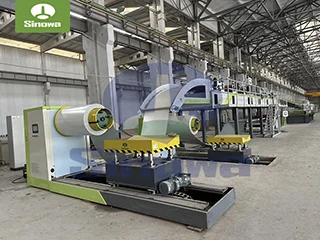
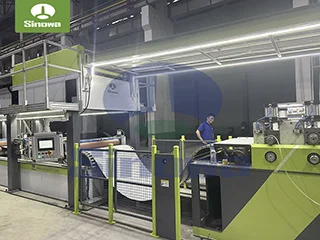
The initial stage of the production workflow focuses on the precise pretreatment of metal surface materials, which is the foundation for ensuring the flatness and bonding quality of finished panels. Coiled metal raw materials are stably unwound through an automatic tension-adjusting unwinding device, which eliminates material wrinkling, stretching and deformation caused by uneven feeding speed in traditional unwinding processes. After unwinding, the metal sheets pass through a multi-stage leveling unit with high-precision roller groups, which corrects tiny surface irregularities and residual stress generated during coil rolling, ensuring the overall flatness of the surface panels. Subsequently, the surface cleaning and preheating process is carried out sequentially. The professional cleaning system removes surface dust, oil stains and oxide layers that may affect bonding strength, while the constant-temperature preheating unit heats the metal sheets to a stable temperature range, which effectively activates the surface activity of the metal materials, enhances the adhesion between the metal surface layer and the adhesive, and avoids degumming and layer separation of panels in long-term service.

After the pretreatment of the metal surface materials is completed, the production process enters the core composite molding stage, which is the most critical link determining the comprehensive performance of the rock wool-PU composite core sandwich panels. The upper and lower metal panels are respectively sent to the precise molding station through a synchronous conveying system, where continuous hot-melt adhesive spraying is carried out on the inner surfaces of the panels. The automatic adhesive spraying system can form a uniform and dense adhesive film on the metal surface through quantitative and fixed-point spraying, avoiding the problems of local glue shortage or excessive glue accumulation in manual or semi-automatic gluing processes. The selected hot-melt adhesive materials have excellent weather resistance and bonding toughness, which can maintain stable bonding performance in high and low temperature alternating environments and ensure the long-term structural integrity of composite panels.

Following the adhesive spraying operation, the rock wool core material is automatically paved and positioned by a special core material feeding system. The rock wool aggregate with uniform density is arranged in an orderly and tight manner through mechanical arrangement, eliminating hollow gaps and loose accumulation inside the core layer. The automated paving equipment can adjust the paving density and thickness of rock wool according to different production requirements, realizing flexible production of panels with different thermal insulation and fire resistance grades. After the rock wool core layer is accurately laid between the upper and lower metal panels, the PU sandwich panel line starts the core process of PU edge sealing and local composite foaming. Different from the simple edge wrapping process of traditional rock wool panels, this production line adopts high-pressure two-component PU foaming injection technology, which quantitatively injects fully mixed polyurethane raw materials into the edge gaps of the rock wool core layer.

The polyurethane foaming system consists of an independent sealed raw material storage unit and a high-precision metering and conveying device. The two components of polyurethane raw materials are stored in separate sealed tanks to avoid premature chemical reaction and material failure caused by mixed storage. The intelligent metering system accurately controls the proportion and injection volume of the two raw materials according to the panel thickness and edge size, ensuring that the PU foam generated by full chemical reaction has uniform density and stable cellular structure. After injection, the polyurethane material rapidly foams and cures at a set temperature, forming a continuous and dense closed-cell sealing layer on the edges of the rock wool core layer. This edge sealing structure completely wraps the exposed rock wool fibers, fundamentally solving the inherent problems of traditional rock wool panels such as easy moisture absorption of edge fibers, poor air tightness, and easy aging and peeling of the edge structure, and greatly improving the weather resistance and service life of the panels.

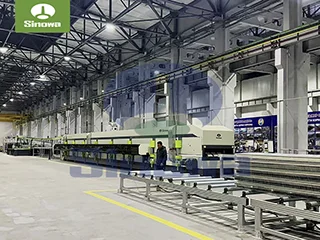
While completing PU edge sealing, the polyurethane sandwich panel production line realizes the integrated composite molding of the rock wool core layer and PU foam structure through a synchronous pressing and curing system. The double-belt continuous pressing device is the key equipment for panel integral molding, which can apply uniform and stable static pressure to the composite semi-finished products in the continuous conveying state. The multi-group pressure regulating units adaptively adjust the pressing force according to the thickness specifications of different panels, so that the metal surface layer, adhesive film, rock wool core layer and PU sealing layer are closely fitted without gaps or relative displacement. At the same time, the constant-temperature heating and curing module matched with the pressing device provides a stable thermal environment for the curing of adhesive and PU foaming reaction, shortening the molding cycle while ensuring the full reaction and solidification of composite materials.

The collaborative operation of pressing and curing processes enables the rock wool-PU composite core to form an integrated rigid structure. The rock wool core layer undertakes the main fireproof and sound insulation functions, with its fibrous porous structure effectively blocking heat transfer and sound wave propagation, and resisting high-temperature combustion and flame spread. The PU foam edge sealing and local filling structure make up for the structural defects of rock wool materials such as poor air tightness and low thermal insulation efficiency. The closed-cell structure of cured polyurethane foam has extremely low thermal conductivity, which effectively reduces the heat conduction gap at the panel edges and improves the overall thermal insulation performance of the sandwich panel. In addition, the integrated composite structure formed by the two materials significantly enhances the overall mechanical stability of the panel, improving the bending resistance, compression resistance and structural toughness of the finished product compared with traditional single-core panels.

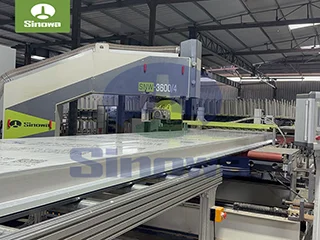
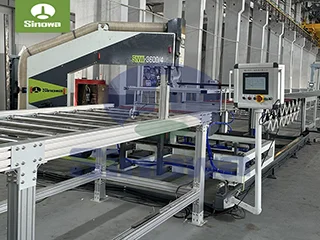
After the completion of pressing and curing molding, the semi-finished panels enter the precise cutting and finishing stage. The intelligent tracking and cutting system automatically identifies the length specification of the panels and performs fixed-length cutting with high precision. The cutting equipment adopts a stable mechanical cutting structure to ensure flat and smooth panel end faces without burrs, cracks or core material shedding, maintaining the integrity of the composite core structure. After cutting, the edge finishing and surface cleaning process is carried out to remove residual adhesive and foam scraps on the panel surface and edges, further optimizing the appearance quality and assembly accuracy of the finished panels. The entire cutting and finishing process is completed automatically without manual trimming, ensuring the uniformity of panel size and appearance in batch production.

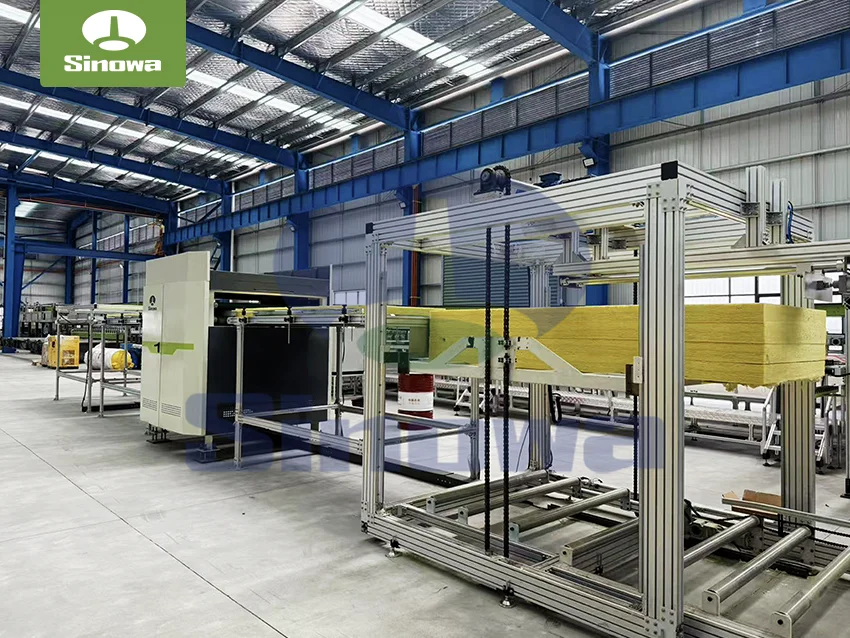
The final stage of the polyurethane sandwich panel line is finished product conveying, sorting and stacking. The qualified finished panels are stably conveyed to the stacking station through the synchronous conveying platform, and the automatic stacking device neatly arranges the panels according to fixed specifications, avoiding surface scratches and structural damage caused by manual handling. The whole production process from raw material input to finished product output realizes continuous automated operation, with all process parameters dynamically monitored and adjusted by the intelligent control system. The system can automatically optimize feeding speed, adhesive spraying volume, foaming proportion, pressing pressure and curing temperature according to different production specifications, ensuring that each batch of panels maintains consistent performance and quality.

The structural design of the PU sandwich panel machine fully considers the stability and durability of long-term industrial operation. All mechanical components in contact with materials adopt wear-resistant and anti-corrosion structural designs, which can adapt to continuous operation in industrial production environments with dust and slight temperature and humidity changes. The modular equipment layout makes the production line compact in structure and convenient for daily maintenance and parameter debugging. Each functional unit is independently controlled and coordinated with each other, which not only ensures the continuity of continuous production, but also facilitates the independent adjustment and maintenance of a single process unit, reducing equipment downtime and maintenance costs.

The panels produced by this rock wool-PU composite core sandwich panel production machine have comprehensive and balanced performance advantages, making them suitable for diverse high-standard application scenarios. In industrial factory buildings and logistics warehouse buildings, the panels meet the strict fire protection and thermal insulation requirements of building enclosure structures, effectively reducing building energy consumption while ensuring building fire safety. In clean manufacturing workshops, pharmaceutical production spaces and sterile laboratory environments, the dense PU edge sealing structure ensures the air tightness and dust-proof performance of the enclosure panels, avoiding air convection and dust penetration caused by loose panel edges, and maintaining the stable indoor clean environment. In addition, the panels also show excellent adaptability in special environments such as low-temperature cold storage and high-temperature industrial workshops, realizing efficient thermal insulation and structural stability in extreme temperature environments.

Compared with traditional single-process sandwich panel production equipment, this composite core production line realizes the organic integration of fireproof core material and thermal insulation sealing material in one continuous production process, avoiding the secondary processing and manual modification required by traditional composite panel production. The integrated production mode not only greatly improves production efficiency and reduces manual operation errors, but also ensures the overall structural integrity of the composite core, avoiding the performance attenuation caused by secondary bonding and assembly. The complementary performance of rock wool and PU materials makes up for the respective shortcomings of single-material panels, realizing the organic unity of fire resistance, thermal insulation, air tightness, mechanical strength and weather resistance of the finished panels.

With the continuous improvement of building energy-saving standards and industrial building performance requirements, high-performance composite core sandwich panels have gradually become the mainstream choice in the field of building enclosure materials. The rock wool-PU composite core sandwich panel manufacturing line, as a special equipment for efficient and standardized production of such high-performance materials, has important practical value for promoting the upgrading of the building material manufacturing industry. Its automated, integrated and intelligent production mode not only improves the industrialization level of sandwich panel production, but also provides stable and high-quality material support for the construction of high-standard energy-saving and fireproof buildings. In the future, with the continuous optimization of composite material formulas and production process technology, this type of composite core production line will further expand its application scope and promote the continuous progress of green energy-saving building material manufacturing technology.

https://www.cnsinowa.com/sandwich-panel-machines/pu-sandwich-panel-production-line-with-rock-wool-pu-composite-core.html

Main Products

Any Questins About Continuous Sandwich Panel Production Lines or Other Products

Email us with inquiries or use our contact infomations

Get In Touch