sandwich panel line
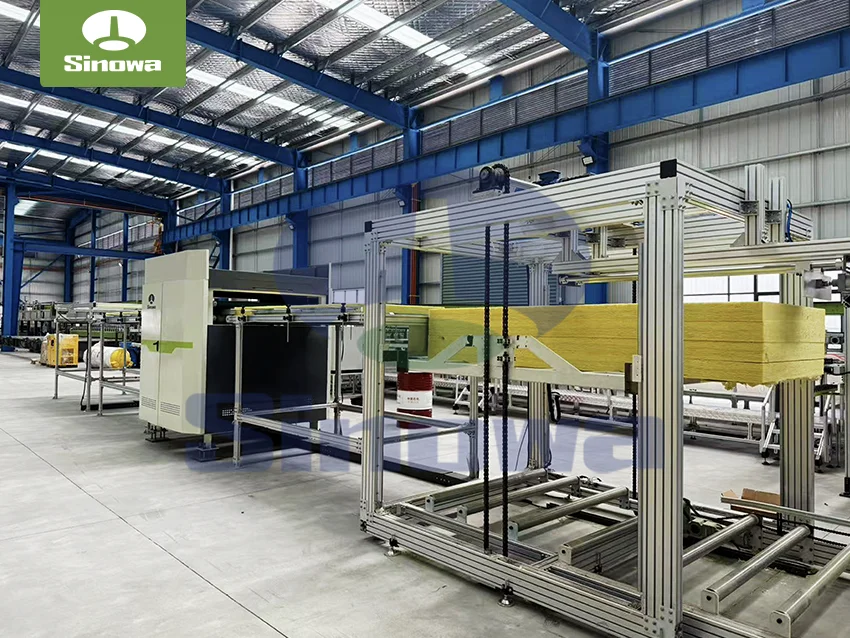
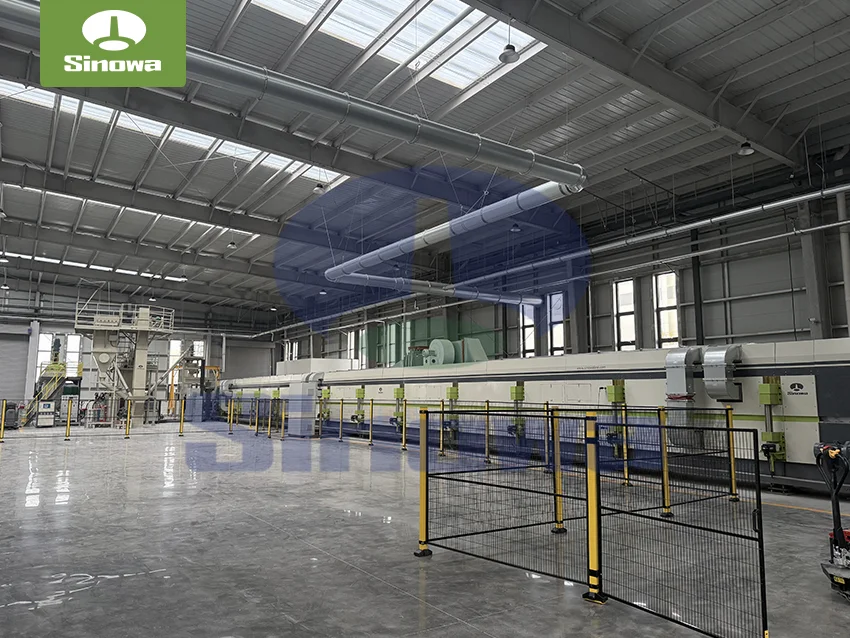
The overall structural design of the polyurethane edge banding sandwich panel production line follows the logic of continuous assembly line operation, and each functional unit is arranged in a sequential connection mode to ensure the smooth flow of raw materials and semi-finished products in the production process. The whole production system can be divided into raw material conveying unit, surface pretreatment unit, polyurethane foaming and mixing unit, continuous compounding and molding unit, edge banding trimming unit, curing shaping unit and finished product cutting and conveying unit. All units are connected by intelligent transmission structures, which can realize uninterrupted feeding, processing and discharging without frequent manual intervention. In terms of mechanical configuration, the production line adopts integrated frame structure with high-strength metal materials, which can maintain stable operating state under long-term continuous working conditions and reduce mechanical vibration and structural deformation caused by long-time operation. The internal transmission system adopts servo drive components to realize precise adjustment of conveying speed, ensuring that the processing rhythm of each station is matched with each other and avoiding product quality defects caused by inconsistent production beats.
Raw material preparation and surface pretreatment constitute the initial stage of the entire production process, which lays a solid foundation for the subsequent bonding and foaming molding of sandwich panels. The main raw materials required for production include metal surface plates, polyurethane composite raw materials and core insulation materials. Before formal processing, the surface plates need to go through multiple pretreatment procedures. The automatic feeding device sequentially sends coiled metal plates into the pretreatment area, where the surface cleaning mechanism removes dust, oil stains and oxide layers attached to the plate surface through physical friction and air dedusting methods. This cleaning process can effectively improve the surface roughness of the plates and enhance the bonding tightness between the plates and polyurethane materials. After cleaning, the plates will be sent to the leveling and embossing mechanism. The precision leveling rollers eliminate the tiny bending and deformation of the plates generated during coiling and storage, while the embossing equipment can form regular texture structures on the plate surface according to production requirements, which not only improves the surface decoration effect of the finished panels but also increases the contact friction between the plates and foam materials to prevent internal delamination. In addition, the drying and constant temperature adjustment device in the pretreatment area keeps the plate surface in a dry and constant temperature state, eliminating the adverse effects of moisture and temperature difference on the subsequent foaming reaction.
The polyurethane foaming and mixing unit is the core functional part of the entire production line, which determines the foaming density, thermal insulation performance and bonding stability of the sandwich panel core. This unit is mainly composed of raw material storage tanks, metering transmission pumps and high-speed mixing components. Two independent sealed storage tanks are used to store polyurethane resin materials and curing agents respectively, and the internal constant temperature system maintains the raw materials within a stable temperature range to prevent chemical property changes caused by temperature fluctuation. The metering pumps driven by variable frequency motors can accurately control the output flow of different raw materials, realizing precise proportioning of resin and curing agent according to the physical performance requirements of the panels. After proportional transmission, the raw materials are sent to the high-speed mixing head for instantaneous stirring and blending. The internal spiral mixing structure of the mixing head can make the multi-component raw materials fully fused in a short time to form homogeneous mixed slurry without local uneven mixing or material precipitation. The well-mixed polyurethane slurry is evenly sprayed on the surface of the lower metal plate through the reciprocating distributing mechanism. The reciprocating movement of the distributing head ensures that the slurry covers the plate surface uniformly without blank areas or material accumulation, which provides a uniform raw material basis for the subsequent integral foaming of the core layer.
Continuous compounding and thermal foaming molding is the key process to realize the composite forming of sandwich panels. After the polyurethane slurry is laid on the lower surface plate, the core insulation material is automatically laid at the designated position by the mechanical laying device, and then the upper metal plate is accurately covered through the flipping and pressing mechanism to form a preliminary composite plate structure. The semi-finished composite plates are continuously sent to the double-belt molding machine, which is equipped with closed heating and constant temperature chambers. The internal circulating heating system maintains a stable reaction temperature inside the chamber to activate the chemical foaming reaction of polyurethane materials. During the foaming process, the polyurethane slurry expands steadily and fills the gaps between the upper and lower plates and the core material, forming a dense and uniform foam structure. At the same time, the hydraulic pressure system of the double-belt machine applies continuous and stable vertical pressure to the composite plates. The pressure value can be adjusted according to the thickness and hardness requirements of different panels, which effectively eliminates internal bubbles and gaps and ensures the compactness of the composite structure. The integrated design of heating and pressing realizes synchronous completion of foaming, bonding and preliminary curing, greatly shortening the molding cycle of single panel and improving the continuity of production.
Edge banding and trimming treatment is a distinctive processing link of this production line, which is also an important measure to optimize the edge performance of sandwich panels. Different from traditional manual edge sealing or simple mechanical cutting processes, this production line adopts integrated polyurethane edge banding technology. After the primary molding of composite plates, the edge banding feeding mechanism automatically transports polyurethane edge banding strips to both sides of the plates. The edge bonding equipment coats the contact surface between the edge banding strips and the plate edges with high-viscosity polyurethane adhesive, and completes rapid pressing and bonding through the side pressure roller group. In order to ensure the flatness and consistency of plate edges, the intelligent trimming device installed on both sides of the production line carries out precise cutting on the edge banding parts. The high-speed cutting blades remove redundant edge banding materials and irregular burrs, making the plate edges smooth and neat with uniform overall width. The edge banding structure formed by this process can completely wrap the cutting section of the sandwich panel, effectively isolating external moisture, air and corrosive substances, and avoiding the problems of core material dampness, mildew and edge corrosion that often occur in ordinary sandwich panels after long-term use.
The curing and shaping unit undertakes the task of stabilizing the internal structure and physical properties of semi-finished panels. After foaming compounding and edge banding trimming, the panels still have incomplete curing of internal chemical materials and unstable structural stress. The constant temperature curing channel is equipped with multi-stage temperature control areas, which carry out gradual heating and heat preservation treatment on the panels. The low-temperature pre-curing area accelerates the secondary reaction of residual polyurethane raw materials to eliminate unreacted components inside the foam layer; the medium-temperature shaping area stabilizes the internal molecular structure of the foam and enhances the bonding strength between layers; the natural cooling area slowly reduces the panel temperature to room temperature to avoid structural cracks caused by rapid temperature change. During the curing process, the horizontal limiting mechanism on both sides of the curing channel fixes the moving track of the panels to prevent lateral displacement and deformation. The whole curing process does not need manual turning, and the automatic transmission speed is matched with the curing time to ensure that each panel obtains sufficient shaping time and achieves consistent structural stability.
The final stage of the production process includes fixed-length cutting, surface inspection and finished product conveying. The continuous long plates after curing are sent to the precision cutting mechanism, and the numerical control system sets the cutting length according to the usage requirements of the finished products. The high-speed cutting equipment adopts flat cutting technology to ensure that the cutting section is flat and without warping, and no debris residue is generated on the plate surface. After cutting, the automatic detection system conducts preliminary quality inspection on the finished panels. The sensing components detect the surface flatness, edge banding tightness and overall thickness uniformity of the panels, and automatically screen out individual defective products with surface scratches, edge degumming and uneven thickness. Qualified finished products are transported to the stacking area through the roller conveying device, and the mechanical stacking equipment neatly arranges the panels to facilitate subsequent packaging, transportation and storage. The whole finishing process realizes automatic integration of cutting, detection and stacking, reducing manual handling links and avoiding secondary damage to panels caused by human contact.
Compared with ordinary sandwich panel production lines, the polyurethane edge banding sandwich panel production line has obvious technical advantages in production performance and product quality. In terms of production efficiency, the continuous assembly line structure realizes uninterrupted feeding and processing, and the linkage operation of multiple stations greatly shortens the production cycle of a single panel. The intelligent control system can adjust production parameters in real time according to raw material characteristics and product specifications, realizing flexible switching of different types of panels without complicated equipment debugging steps. In terms of product performance optimization, the built-in polyurethane edge banding structure improves the overall sealing performance of the panels. The closed edge structure can effectively block the penetration of water vapor and dust, and reduce the heat conduction efficiency at the plate edges, avoiding the heat loss phenomenon caused by the thermal bridge effect of traditional sandwich panels. In addition, the integrated foaming and edge banding process enhances the overall structural toughness of the panels. The edge parts are not easy to crack and fall off during handling, installation and long-term use, which extends the service life of the finished products.
In terms of daily operation and maintenance, this production line adopts humanized structural design to reduce the difficulty of equipment management. The intelligent monitoring system collects the operating data of each component in real time, including transmission speed, heating temperature, raw material flow and operating pressure, and feeds back the data to the centralized control terminal. The staff can view the operating status of the entire production line through the terminal interface and find abnormal parameter changes in time. The key moving parts of the equipment are equipped with sealed lubrication structures to reduce mechanical wear during high-frequency operation, and the detachable shell design facilitates daily cleaning and component replacement. The production line is also equipped with safety protection devices such as emergency stop switches and anti-collision sensors. When foreign matter enters the processing area or mechanical failure occurs, the equipment can automatically stop running to ensure the safety of operators and production equipment. Regular maintenance of the equipment includes raw material pipeline cleaning, metering component calibration and transmission chain inspection, which can effectively maintain the long-term stable operating state of the production line and reduce the failure rate in the production process.
In the application market, the panels produced by this production line have wide adaptability and can meet the usage needs of multiple industrial scenarios. In the field of prefabricated buildings, such panels are used for the enclosure structures of temporary buildings, factory workshops and purification workshops, relying on their light weight, easy installation and good thermal insulation performance to shorten the construction cycle. In the cold chain storage industry, the dense polyurethane foam core and fully sealed edge banding structure can maintain a stable low-temperature internal environment, reduce energy consumption caused by heat exchange, and are suitable for the construction of constant temperature warehouses and refrigerated storage spaces. In addition, the panels also have good sound insulation, fire resistance and corrosion resistance, and can adapt to harsh usage environments such as high humidity and strong corrosion, which makes them widely used in agricultural breeding buildings and chemical industry isolation workshops.
Looking at the future development trend of the industry, the polyurethane edge banding sandwich panel production line will continue to evolve towards higher automation, energy saving and environmental protection, and intelligent precision production. With the continuous improvement of industrial manufacturing standards, the production line will further optimize the raw material utilization rate, reduce the waste of foaming materials and metal plates in the production process, and realize low-consumption and high-efficiency production. The upgrading of intelligent control technology will make the parameter adjustment of the production line more accurate, and realize automatic identification and adaptive processing of different raw materials. In terms of environmental protection optimization, the production line will be equipped with more perfect waste gas collection and purification structures to reduce the emission of harmful gases generated during the foaming reaction. As the market demand for high-performance composite panels continues to expand, this type of production line will become an important processing equipment in the composite material manufacturing industry, continuously providing high-quality polyurethane edge banding sandwich panels for various downstream industries, and promoting the standardized and high-quality development of the entire prefabricated building material industry.
https://www.cnsinowa.com/sandwich-panel-machines/polyurethane-edge-banding-sandwich-panel-production-line.html