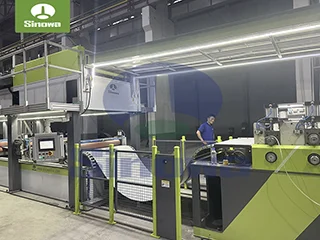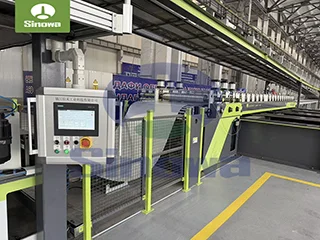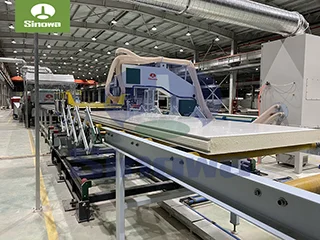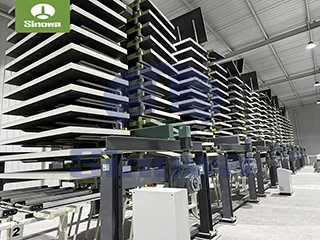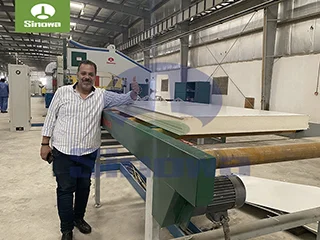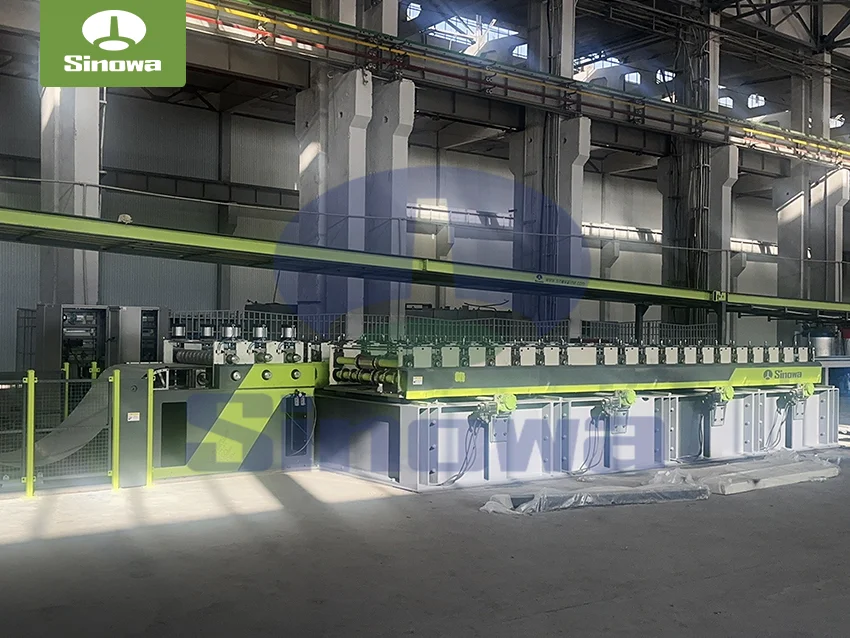
Essentially, the roof PU sandwich panel machine is a modular integrated automated production system that completes the full-process manufacturing of roof-specific composite panels through the synchronous coordination of multiple functional units. Different from ordinary single-function processing equipment, this production line integrates material pretreatment, profile forming, precise foaming, composite lamination, constant-temperature curing, fixed-length cutting, and finished product sorting into a unified operating system. Its core working logic is to compound rigid PU foam core materials with metal or inorganic facing materials stably and evenly, forming a three-layer composite structure with high bonding strength, uniform thickness, and excellent overall performance. The entire production process realizes automated continuous operation, effectively avoiding quality fluctuations caused by manual intervention and greatly improving the consistency and reliability of finished roof panels.
The production operation of the roof PU sandwich panel making machine follows a scientific and rigorous process sequence, with each functional module closely linked and mutually coordinated to ensure the continuity and standardization of production. The whole process starts with the feeding and pretreatment of surface materials. Common facing materials for roof panels include galvanized steel sheets, galvalume sheets, and aluminum sheets, all of which have excellent corrosion resistance, tensile strength, and weather resistance to adapt to long-term outdoor service environments. The coiled raw materials are stably released by the automatic uncoiling device of the equipment, and then enter the precision pretreatment module. This link can effectively remove surface dust, oil stains, and tiny oxide layers on the sheet materials, optimizing the surface flatness and roughness of the materials. Adequate pretreatment is a key prerequisite for improving the bonding tightness between the surface material and the PU foam core layer, which can significantly enhance the overall structural stability and service life of the finished panels.
After completing pretreatment and leveling, the flat sheet materials are transported to the roll forming module, which is the core unit for shaping the appearance of roof panels. Different from wall sandwich panels, roof panels require special corrugated or profiled structures to enhance drainage performance, wind resistance, and structural bearing capacity. The roll forming system of the equipment is composed of multiple groups of precision-machined forming rollers, which gradually bend and shape the flat sheet materials through multi-stage rolling. This gradual forming process avoids structural damage and internal stress concentration of the materials, ensuring that the formed roof profiles have smooth surfaces, accurate dimensional accuracy, and uniform radian. The modular design of the forming rollers also enables the equipment to adapt to multiple conventional roof panel profile specifications, realizing flexible switching of production styles and meeting the personalized profile requirements of different building projects.
Subsequently, the profiled sheet materials enter the PU foaming and injection stage, which determines the thermal insulation performance and core quality of the finished roof panels. The sandwich panel equipment is equipped with a high-precision PU foaming system, including independent chemical storage units, automatic proportioning devices, and uniform injection nozzles. The system can accurately mix polyurethane raw materials, catalysts, and environmentally friendly foaming agents according to set parameters, realizing automatic quantitative injection and uniform distribution of foam materials on the surface of the lower sheet. The advanced injection technology ensures that the PU foam can fully fill the composite gap, form a dense and uniform microporous structure after foaming, and avoid hollowing, uneven thickness, and local density differences in the core layer. The environmentally friendly foaming process adopted by modern equipment also complies with global green production standards, reducing harmful substance emissions while ensuring the thermal insulation and flame-retardant properties of the foam core layer.
The lamination and constant-temperature curing process is a crucial link to realize the composite molding of roof sandwich panels. After the PU foam injection is completed, the upper and lower profiled sheets and the intermediate foam core layer enter the high-precision lamination unit together. The equipment adopts a flexible rubber belt lamination structure, which can provide uniform and stable pressure on the entire surface of the composite plate. This balanced pressure control ensures that the bonding interface between the foam core and the surface material is completely fitted without gaps, and effectively prevents plate deformation, warping, and uneven surface flatness caused by uneven pressure. Meanwhile, the constant-temperature curing system maintains a stable operating temperature in the curing area, providing a good reaction environment for the foaming and curing of polyurethane materials. Sufficient constant-temperature curing enables the PU foam to complete molecular cross-linking and shaping, forming a high-strength integrated composite structure, which greatly improves the overall bonding strength, compressive resistance, and structural stability of the roof panels.
After curing and shaping, the continuous long-size composite plates are transported to the fixed-length cutting module for precision cutting. The equipment is equipped with an automatic numerical control cutting system, which can freely set the cutting length according to actual project needs and realize high-precision fixed-length cutting. The cutting tool adopts high-hardness wear-resistant materials, which can complete smooth and burr-free cutting of composite plates, ensuring neat and flat plate sections without damaging the surface coating and internal foam structure. The automated cutting system has high dimensional accuracy control capability, which can effectively avoid size errors of finished products and ensure the interchangeability and assembly accuracy of roof panels during on-site installation. After cutting, the finished panels enter the cooling and shaping conveying unit, which further stabilizes the internal structure of the plates through natural cooling, eliminates residual internal stress generated in the production process, and ensures that the finished panels will not deform or crack during subsequent transportation, storage, and use.
The final stage of production is automatic sorting and stacking. The sandwich panel production equipment is equipped with an intelligent stacking device, which can automatically absorb, transfer, and stack the qualified finished roof panels according to the set rhythm. The automated stacking operation replaces traditional manual handling, which not only greatly improves production efficiency and reduces labor intensity and human resource costs, but also effectively avoids panel scratches, collisions, and damage caused by manual operation. The neatly stacked finished panels are convenient for subsequent packaging, transportation, and storage, realizing a fully automated closed-loop production process from raw material feeding to finished product output.
The outstanding performance advantages of the roof PU sandwich panel production machine are fully reflected in production efficiency, product quality stability, energy-saving and environmental protection effects, and flexible production capacity. In terms of production efficiency, the continuous automated production mode realizes uninterrupted operation of the entire line, with a far higher hourly output than traditional intermittent production equipment, which can fully meet the large-scale material supply needs of large construction projects. The highly integrated structural design reduces intermediate manual links, shortens the production cycle of single-panel products, and significantly improves the overall production efficiency of the production line.
In terms of product quality control, the equipment adopts a full-process parameterized intelligent control system. All key links such as material proportioning, foaming pressure, lamination pressure, curing temperature, and running speed are precisely controlled by the central control system, realizing standardized and unified production parameters. This intelligent control mode completely avoids quality differences caused by manual operation experience errors, ensuring that each batch of finished roof panels has consistent thickness, density, bonding strength, and thermal insulation performance. The finished panels produced by this equipment have excellent overall performance, including ultra-low thermal conductivity, good thermal insulation and heat preservation effect, excellent waterproof and windproof performance, and strong structural compression resistance, which can adapt to complex outdoor working environments and long-term weathering tests.
In terms of energy saving and environmental protection, modern roof PU sandwich panel manufacturing machine adopts optimized energy-saving design and green production processes. The high-efficiency foaming system reduces the waste of polyurethane raw materials through precise proportioning and quantitative injection, improving the utilization rate of raw materials. The constant-temperature curing system adopts intelligent temperature regulation technology, which can automatically adjust energy consumption according to production load, effectively reducing invalid energy consumption in the production process. At the same time, the equipment uses environmentally friendly foaming agents and low-pollution production processes, which do not produce harmful exhaust gas and waste residue during operation, meeting the green production requirements of the modern building materials industry and conforming to the global low-carbon and environmentally friendly development trend.
In terms of production flexibility, the modular functional design enables the equipment to have strong product adaptability. By adjusting the operating parameters of the system and replacing matching forming accessories, the sandwich panel production line can produce roof panels of different thicknesses, widths, and profile styles, covering the material needs of most industrial and civil building roof projects. Whether it is large-span industrial plant roofs, light steel structure building roofs, or energy-saving and heat-insulating roofs of public buildings, the equipment can complete targeted production and manufacturing, with strong market adaptability and flexible production capacity.
With the continuous development of the construction industry towards energy conservation, greening, and industrialization, the market demand for high-performance roof insulation panels is constantly upgrading, which also puts forward higher technical requirements for roof PU sandwich panel line. The future development trend of such equipment is mainly reflected in intelligent upgrading, high-efficiency energy-saving optimization, and multi-functional integration. On the basis of traditional automated production, the new generation of equipment will be equipped with more intelligent monitoring and fault diagnosis systems, which can realize real-time monitoring of production data, automatic early warning of equipment faults, and remote parameter adjustment, further improving the intelligent level of production and reducing equipment failure rates and maintenance costs.
In addition, with the continuous improvement of building energy-saving standards and environmental protection policies, the sandwich panel production machinery will further optimize the foaming process and structural design, develop more low-carbon and high-strength production technologies, and improve the flame retardancy, weather resistance, and service life of finished roof panels. At the same time, the multi-functional integrated design will become more prominent. The equipment will realize the integrated production of multi-type building insulation panels on a single production line, further enrich product categories and improve the comprehensive utilization rate and economic benefits of the equipment.
In conclusion, the roof PU sandwich panel machinery as the core intelligent equipment for manufacturing high-performance building roof insulation materials, has important application value and market significance in the modern construction industry. Its automated continuous production mode, precise quality control capability, flexible product adaptation performance, and green and energy-saving production characteristics provide strong technical support for the standardized production and popularization and application of PU roof sandwich panels. With the continuous progress of building industrialization and low-carbon construction technology, this type of equipment will continue to iterate and upgrade, adapt to the changing market demand and industry standards, and play a more important role in promoting the high-quality development of the global construction and building materials industry.
https://www.cnsinowa.com/sandwich-panel-machines/roof-pu-sandwich-panel-machine.html



Any Questins About Continuous Sandwich Panel Production Lines or Other Products
Email us with inquiries or use our contact infomations