sandwich panel line
The PIR sandwich panel manufacturing line is a complex integration of multiple mechanical systems, control technologies, and material processing processes, designed to achieve continuous, automated, and high-precision production from raw material input to finished product output. Each link in the production line is closely connected, and the coordination and stability of each system directly affect the overall production efficiency and product quality. Unlike traditional manual or semi-automatic production methods, the modern PIR sandwich panel manufacturing line adopts advanced automation technologies, reducing human intervention, minimizing operational errors, and ensuring that each panel meets uniform quality standards. The core advantage of such a production line lies in its ability to balance high production efficiency with consistent product performance, while also adapting to the customization needs of different panel specifications, such as varying thicknesses, widths, and surface textures.
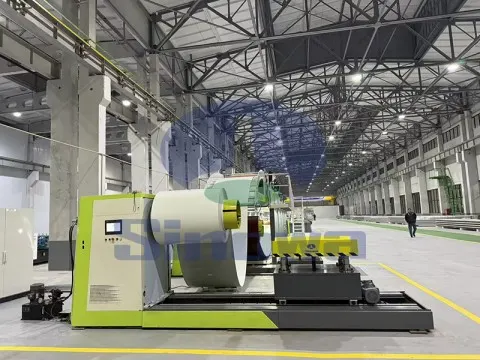
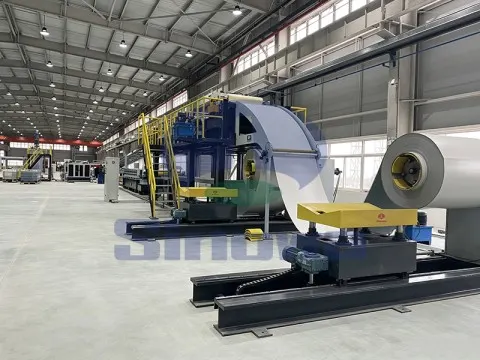
The operation of the PIR sandwich panel manufacturing line starts with the preparation and pretreatment of raw materials, which is the foundation for ensuring the quality of the final products. The main raw materials include the outer facing materials and the PIR foam core materials. The outer facing materials are usually metal sheets with excellent mechanical properties and corrosion resistance, which need to go through a series of pretreatment processes before entering the composite stage. First, the metal coils are uncoiled by a professional uncoiling device, which ensures stable and uniform feeding without causing deformation or damage to the metal sheets. After uncoiling, the metal sheets are sent to a leveling machine to eliminate internal stress generated during the rolling and storage process, ensuring the flatness of the sheets. This step is crucial because any unevenness of the outer facing materials will affect the bonding effect with the PIR core and the overall structural stability of the sandwich panel. Subsequently, the metal sheets undergo a surface cleaning process to remove oil, dust, and other impurities, which can significantly improve the adhesion between the metal surface and the adhesive, preventing delamination between the facing and the core during long-term use. Some advanced production lines also add a surface activation treatment to further enhance the bonding performance, ensuring that the composite structure remains intact even under harsh environmental conditions.
While the outer facing materials are being pretreated, the preparation of the PIR foam core is carried out simultaneously. PIR foam is a thermosetting material with a cross-linked structure, formed by the reaction of isocyanate, polyol, catalysts, and other additives in a specific ratio. The preparation process of the PIR foam core requires strict control of various parameters, as any deviation will affect the thermal insulation performance, fire resistance, and mechanical strength of the foam. The raw materials for the PIR foam are stored in dedicated storage tanks, which are equipped with temperature control systems to maintain the raw materials at a stable temperature, ensuring the consistency of the reaction process. The raw materials are then transported to a high-precision mixing device through dedicated pipelines, where they are fully mixed in a specific ratio. The mixing process must be fast and uniform to ensure that all components react completely. After mixing, the mixture is sent to a foaming device, where it undergoes a foaming reaction under controlled temperature and pressure conditions. The foaming process is a key link in the production of the PIR core, as it determines the density, pore structure, and thermal conductivity of the foam. The production line is equipped with real-time monitoring systems to track the foaming process, adjusting parameters such as temperature, pressure, and mixing ratio in real time to ensure that the PIR foam core meets the required standards. The PIR foam core has significant advantages over other insulation materials, including low thermal conductivity, high fire resistance, non-hygroscopicity, and no deformation in low-temperature environments, making it an ideal core material for high-performance sandwich panels.
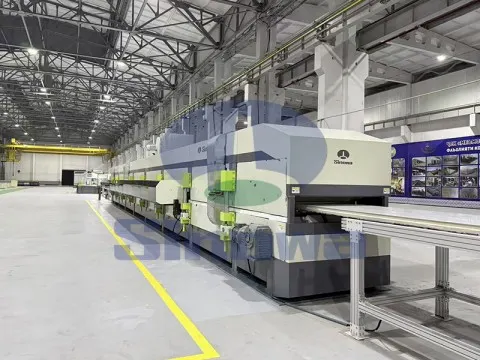
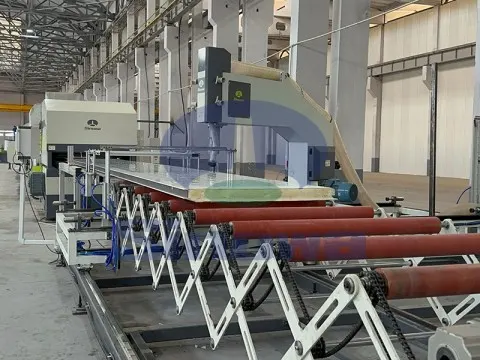
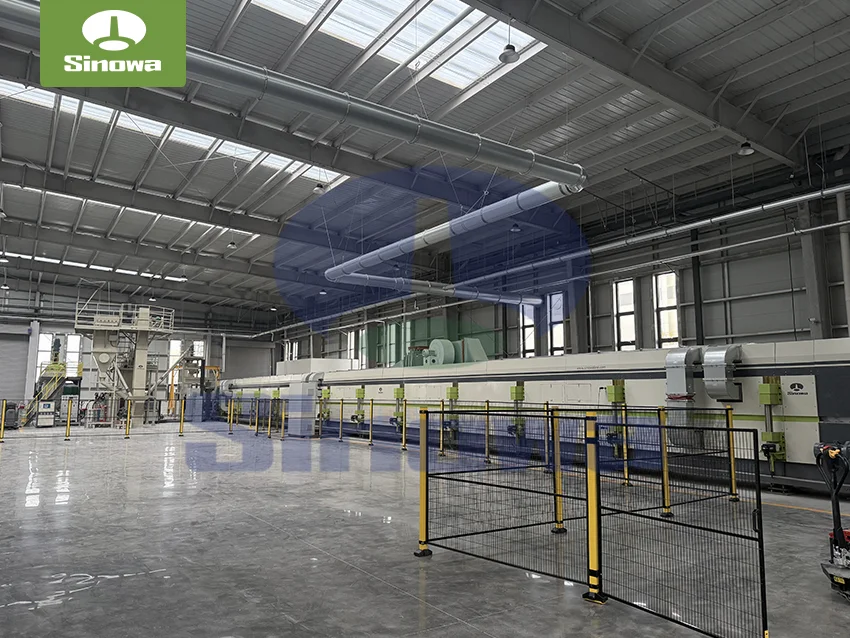
The composite stage is the core link of the PIR sandwich panel manufacturing line, where the pretreated outer facing materials and the prepared PIR foam core are combined to form the final sandwich panel structure. The pretreated upper and lower metal sheets are conveyed to the composite zone at a uniform speed through a synchronous conveying system, ensuring that the two sheets are aligned accurately. Meanwhile, the foaming PIR mixture is evenly sprayed between the two metal sheets through a high-pressure spraying device. The spraying process requires precise control of the spraying amount and uniformity to ensure that the PIR foam core fills the entire space between the two facing materials without gaps or uneven thickness. After spraying, the composite structure enters a double-belt pressing machine, which applies uniform pressure to the upper and lower surfaces of the composite panel. The double-belt pressing machine is equipped with a temperature control system to maintain a stable curing temperature, promoting the full curing of the PIR foam. The curing process is crucial for the formation of the cross-linked structure of the PIR foam, which directly affects the mechanical strength and thermal insulation performance of the sandwich panel. During the curing process, the PIR foam expands and adheres closely to the metal facing materials, forming a strong composite structure. The length of the curing zone is designed according to the curing speed of the PIR foam, ensuring that the foam is fully cured before entering the next process. Some advanced production lines also adopt a continuous foaming and composite process, which can complete the batching, mixing, foaming, and composite processes in one continuous operation, greatly improving production efficiency and reducing material waste.
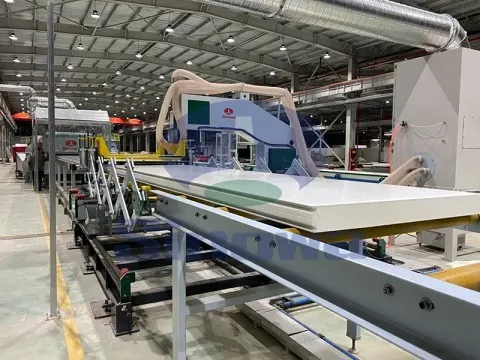
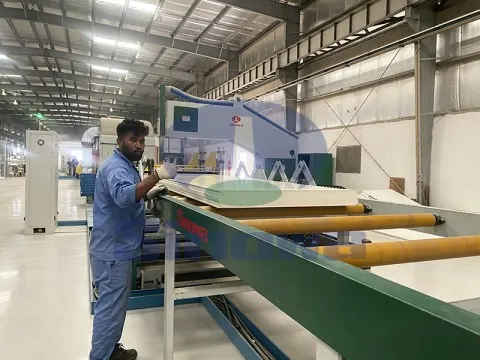
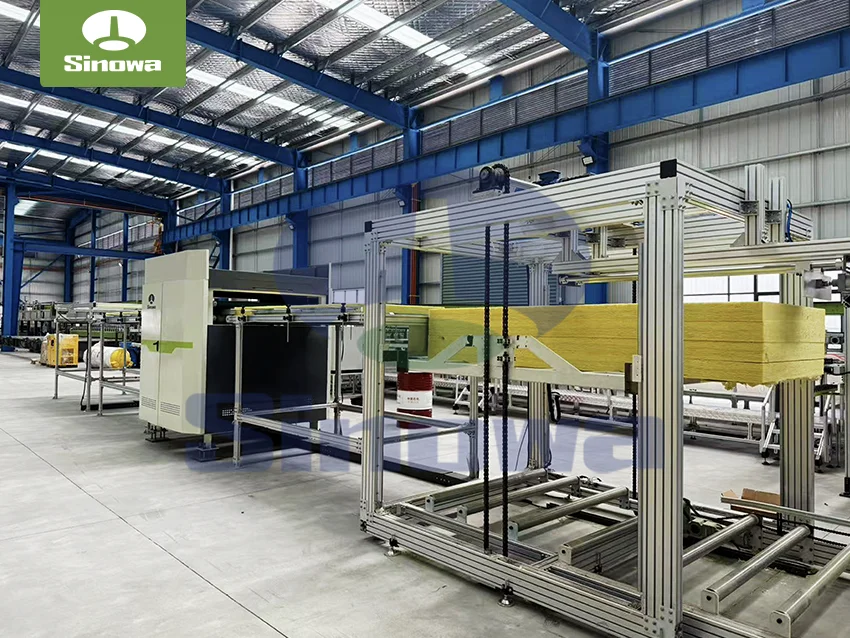
After the composite and curing process, the continuous sandwich panel is sent to the cutting section for precise cutting. The cutting section is equipped with a high-precision flying saw cutting device, which can cut the continuous panel into specific lengths according to customer requirements. The flying saw cutting device operates synchronously with the conveying system, ensuring that the cutting process does not affect the conveying speed of the panel and that the cut is flat and smooth, without damaging the PIR core or the metal facing materials. The cutting parameters, such as cutting speed and length, can be adjusted through the control system, making the production line adaptable to different customization needs. After cutting, the finished panels are sent to a cooling and shaping zone to cool down to room temperature, ensuring that the dimensions of the panels remain stable and preventing deformation during storage and transportation. The cooling and shaping zone is equipped with a forced cooling system, which can speed up the cooling process, improving production efficiency. Subsequently, the finished panels undergo a surface inspection process to check for surface defects, such as scratches, dents, or delamination. Any unqualified products are sorted out and processed accordingly, ensuring that only high-quality panels leave the production line. Finally, the qualified panels are stacked neatly by an automatic stacking device, which is convenient for storage and transportation. The stacking device is equipped with a protective mechanism to prevent damage to the panels during stacking, ensuring that the appearance and performance of the panels are not affected.
The entire PIR sandwich panel manufacturing line is controlled by an advanced automatic control system, which integrates PLC, touch screen, and other control technologies to achieve centralized control and real-time monitoring of the entire production process. The control system can set and adjust various production parameters, such as conveying speed, mixing ratio, foaming temperature, and cutting length, according to production needs. The real-time monitoring system can track the operation status of each equipment in the production line, displaying parameters such as temperature, pressure, and speed in real time. If any abnormal situation occurs, the control system will issue an alarm prompt immediately, and in some cases, it can even automatically shut down the relevant equipment to prevent further damage. The automatic control system not only improves the stability and reliability of the production line but also reduces the labor intensity of operators, allowing them to focus on monitoring and adjusting the production process rather than engaging in tedious manual operations. Some advanced production lines also support remote monitoring and operation, enabling technical personnel to monitor the production status and adjust parameters remotely, which greatly improves the flexibility and convenience of production management.
While the advanced manufacturing line is the foundation for producing high-quality PIR sandwich panels, professional technical training support is equally important to ensure the efficient operation of the line, the safety of operators, and the consistency of product quality. Many manufacturers overlook the importance of technical training, leading to operators lacking the necessary professional knowledge and operational skills, which can result in low production efficiency, frequent equipment failures, and unqualified products. In contrast, a complete technical training support system can help operators master the operation skills of the production line quickly, understand the working principle of each equipment, and handle common faults and abnormal situations properly, thereby maximizing the performance of the manufacturing line.
The technical training support for the PIR sandwich panel manufacturing line is usually tailored to the actual needs of the production line and the operators, covering a wide range of content to ensure that operators have a comprehensive understanding of the production process and equipment operation. The training content mainly includes the basic structure and working principle of the manufacturing line, the operation specifications of each equipment, the control of production parameters, the identification and handling of common faults, safety operation procedures, and the maintenance and maintenance of equipment. The training is carried out in a combination of theoretical teaching and practical operation, which can help operators master the knowledge and skills more effectively. Theoretical teaching focuses on explaining the basic principles of the production line, the performance and characteristics of raw materials, the control points of the production process, and safety knowledge. Professional trainers use textbooks, pictures, videos, and other teaching materials to make the theoretical knowledge more intuitive and easy to understand. Practical operation training is carried out on the actual production line, allowing operators to operate each equipment under the guidance of trainers, practicing the operation procedures and parameter adjustment methods. This hands-on training can help operators familiarize themselves with the operation of the equipment quickly, improve their operational skills, and enhance their ability to handle actual problems.
The training process is usually divided into different stages according to the proficiency level of the operators. For new operators, the training starts with basic knowledge and simple operations, gradually deepening the content, ensuring that they can master the basic operation skills of the production line within a certain period of time. For existing operators, regular advanced training is carried out to update their professional knowledge and operational skills, introducing new technologies and operation methods to improve their work efficiency and problem-solving ability. In addition, the training support system also includes on-site technical guidance, where professional trainers are sent to the production site to provide real-time guidance and help operators solve problems encountered in actual production. This on-site guidance is particularly important for handling complex faults and special production situations, ensuring that the production line can resume normal operation quickly, minimizing production losses.
Safety training is an important part of the technical training support system, as the PIR sandwich panel manufacturing line involves mechanical equipment, electrical systems, and chemical raw materials, which have certain potential safety hazards if operated improperly. The safety training focuses on teaching operators the safety operation procedures of each equipment, the identification and prevention of potential safety hazards, the correct use of labor protection equipment, and the handling methods of safety accidents. Operators must pass the safety training assessment before they can take up their posts, ensuring that they have the necessary safety awareness and emergency handling ability. Regular safety drills are also carried out to simulate various safety accidents, allowing operators to practice emergency handling procedures, improving their ability to respond to emergencies, and ensuring the safety of personnel and equipment.
Equipment maintenance and maintenance training is another key content of the technical training support system. Regular maintenance and maintenance of the production line can extend the service life of the equipment, reduce the frequency of equipment failures, and ensure the stable operation of the production line. The training teaches operators the basic maintenance knowledge of the equipment, such as daily inspection items, lubrication methods, and replacement of wearing parts. Operators are also trained to identify early signs of equipment failures, such as abnormal noises, vibrations, or parameter deviations, and to take corresponding measures in a timely manner to prevent small faults from developing into major failures. In addition, the training also includes the maintenance of the control system, teaching operators how to check the control system, troubleshoot common electrical faults, and ensure the normal operation of the control system. By mastering the maintenance and maintenance skills, operators can effectively reduce the downtime of the production line, improve production efficiency, and reduce maintenance costs.
The technical training support system also pays attention to the tracking and evaluation of training effects, ensuring that the training can truly improve the professional quality and operational skills of operators. After each training, an assessment is carried out, including theoretical tests and practical operation assessments, to check the mastery of the training content by operators. For operators who fail the assessment, supplementary training is carried out until they pass the assessment. At the same time, regular follow-up investigations are conducted to understand the performance of operators in actual work, collect their feedback on the training content and methods, and continuously optimize the training plan to improve the effectiveness of the training. Some training support systems also provide online learning resources, allowing operators to learn professional knowledge and operational skills through online platforms in their spare time, facilitating the continuous improvement of their professional quality.
The combination of a high-quality PIR sandwich panel manufacturing line and professional technical training support brings significant benefits to enterprises. On the one hand, the advanced manufacturing line ensures the high efficiency and high quality of production, enabling enterprises to produce sandwich panels that meet market demand, improve market competitiveness, and expand market share. The automated production line reduces labor costs and material waste, improving the economic benefits of enterprises. On the other hand, the professional technical training support ensures that operators can proficiently operate the production line, handle equipment faults in a timely manner, and maintain the stable operation of the production line, reducing production losses caused by equipment failures and operational errors. At the same time, the improved professional quality of operators also helps to improve the overall management level of the enterprise, laying a solid foundation for the long-term development of the enterprise.
In the context of the increasing demand for energy-efficient and fire-safe building materials, the PIR sandwich panel manufacturing industry is facing unprecedented development opportunities. However, the industry also faces fierce market competition, and only enterprises with advanced production equipment and professional technical capabilities can stand out in the competition. The PIR sandwich panel manufacturing line with technical training support not only solves the problem of efficient and high-quality production but also helps enterprises cultivate professional technical personnel, improving their core competitiveness. With the continuous progress of technology, the PIR sandwich panel manufacturing line will become more intelligent and efficient, and the technical training support system will also be continuously optimized and improved, providing stronger support for the development of the industry. Enterprises should attach great importance to the construction of the manufacturing line and the technical training support system, continuously improve the production level and technical capabilities, and promote the healthy and sustainable development of the PIR sandwich panel industry.
In summary, the PIR sandwich panel manufacturing line is a complex and integrated system that involves multiple links and technologies, and its stable operation and technical precision are the key to producing high-quality sandwich panels. The technical training support system, as an indispensable part of the production system, plays a crucial role in ensuring the efficient operation of the production line, the safety of operators, and the consistency of product quality. The combination of the two not only brings significant economic benefits to enterprises but also promotes the technological progress and industrial upgrading of the PIR sandwich panel industry. As the market demand for PIR sandwich panels continues to grow, the importance of the manufacturing line and technical training support will become more prominent, becoming the core competitiveness of enterprises in the industry.
Sinowa is a professional manufacturer of sandwich panel machine in china, we provide diversified and high-performance sandwich panel production lines, including fully automatic continuous PU sandwich panel line and customized special lines to meet mass production and personalized order demands. These sandwich panel lines support processing multiple foam core materials, such as PU, PIR, mineral wool, rock wool and glass wool, covering different insulation and fireproof standards.
Featuring stable operation, high efficiency, energy saving and easy maintenance, our PU sandwich panel line deliver sandwich panels with excellent thermal insulation, fire resistance, sound insulation and lightweight durability. The finished panels are widely applied in industrial workshops, warehouse roofing and wall cladding, cold storage insulation, serving global construction and industrial insulation markets.
https://www.cnsinowa.com/sandwich-panel-machines/pir-sandwich-panel-manufacturing-line-with-technical-training-support.html