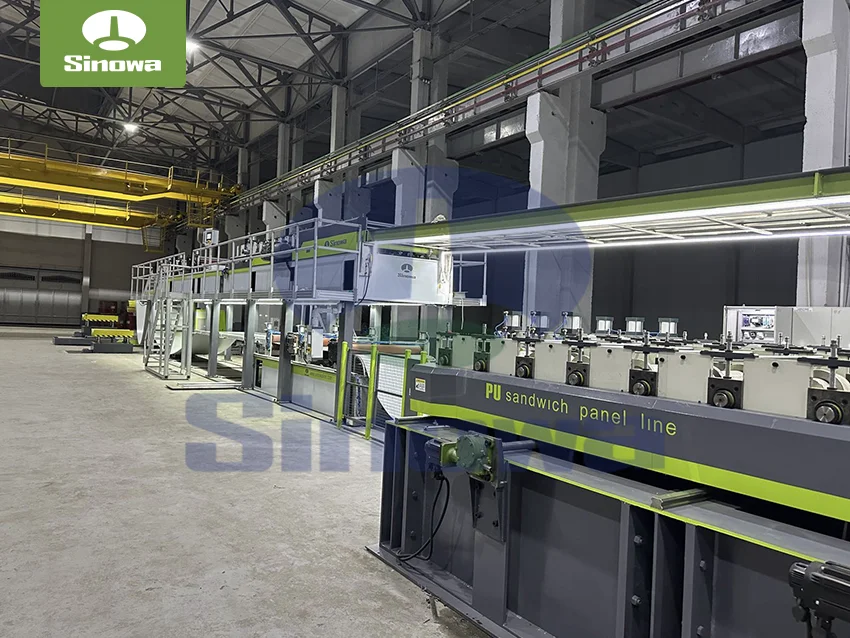
 sandwich panel line
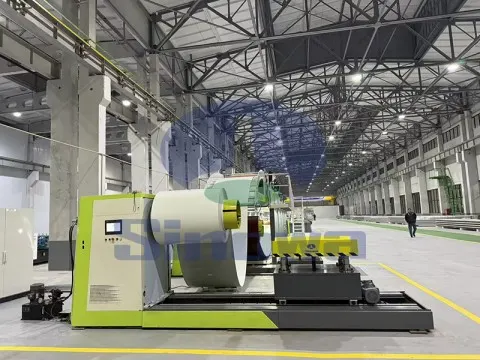
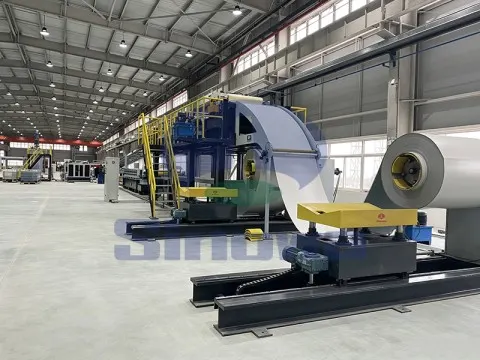
The operational framework of a PU sandwich panel production line for cold storage is a meticulously orchestrated sequence of stages, each playing a vital role in shaping the final product’s quality and functionality, with zero room for error given the critical nature of cold storage applications. The process commences with raw material handling and preparation, the foundational phase that sets the tone for all subsequent operations. The primary raw materials include flexible metal coil facings—typically steel or aluminum variants chosen for their durability, corrosion resistance, and compatibility with cold storage environments—and liquid PU chemical components, including polyols, isocyanates, and specialized additives tailored to enhance insulation, fire resistance, and dimensional stability. The metal coils, carefully selected to withstand the harsh, humid conditions of cold storage facilities, are loaded onto heavy-duty decoiling machines that unwind the coils smoothly and steadily, eliminating wrinkles, warping, or misalignment that could compromise panel integrity. Following decoiling, the metal sheets pass through a precision leveling and cleaning station, where residual contaminants, dust, or surface imperfections are removed, and the sheets are flattened to ensure a uniform, smooth surface for optimal bonding with the PU foam core. Some configurations also include a preheating module for the metal facings, raising the material to a controlled temperature that strengthens the adhesive bond between the metal and foam, a critical detail for preventing delamination in cold storage settings where temperature extremes can stress material interfaces.
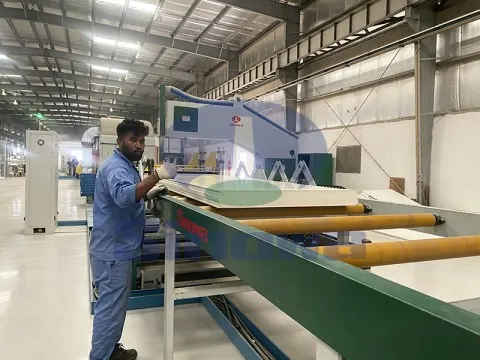
Once the facing sheets are prepped and calibrated, they move into the roll forming section, a highly precise stage that shapes the flat metal sheets into the specific profiles required for cold storage panel assembly. This section features a series of custom-engineered roller stations that incrementally bend and form the metal sheets into interlocking edge profiles, tongue-and-groove designs, or flat panel configurations, all tailored to facilitate tight, seamless installation on cold storage walls, ceilings, and floors. The roll forming process is fully automated, with computerized controls adjusting roller pressure, speed, and positioning to maintain consistent profile dimensions across every panel, ensuring uniformity in thickness, width, and edge alignment—key factors for eliminating cold bridges and air gaps in finished cold storage structures. After forming, the top and bottom facing sheets are guided into precise alignment within a continuous laminating framework, creating a controlled cavity where the PU foam core will be injected and bonded. This alignment process is critical, as even minor misalignment can lead to uneven foam distribution, reduced insulation performance, and structural weaknesses that undermine the cold storage unit’s efficiency and lifespan.
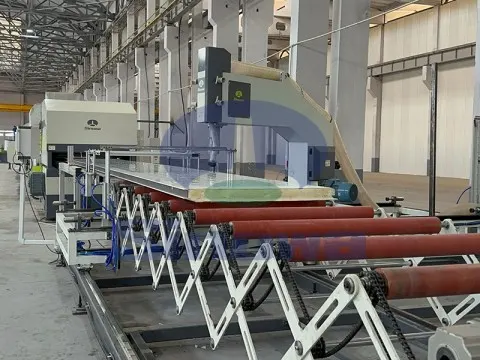
The core of the production line, and the most critical stage for cold storage panel performance, is the PU foam mixing and injection phase. This stage relies on a high-precision metering and mixing system that handles the PU chemical components with extreme accuracy, a non-negotiable requirement for achieving the uniform, closed-cell foam structure that defines superior cold storage insulation. The PU raw materials are stored in separate, temperature-controlled tanks to preserve their chemical stability, then pumped through calibrated metering pumps that deliver the exact ratio of polyol, isocyanate, and additives to a high-pressure mixing head. Here, the components are blended instantaneously and uniformly under high pressure, triggering a chemical reaction that initiates foaming and curing. The mixed PU compound is then injected continuously and evenly into the cavity between the aligned top and bottom facing sheets, with the flow rate and injection speed synchronized to match the line’s forward momentum, ensuring consistent foam thickness and density across the entire length of the panel. For cold storage applications, the foam formulation is optimized to achieve a high closed-cell content, typically exceeding 90%, which minimizes heat transfer through conduction and convection, blocks moisture penetration, and maintains stable insulation performance even in ultra-low temperature environments ranging from minus 25 degrees Celsius for frozen storage to 0 to 10 degrees Celsius for refrigerated storage. The foam density is carefully regulated as well, balancing insulation efficiency with structural rigidity to support the weight of cold storage infrastructure and resist deformation over time.
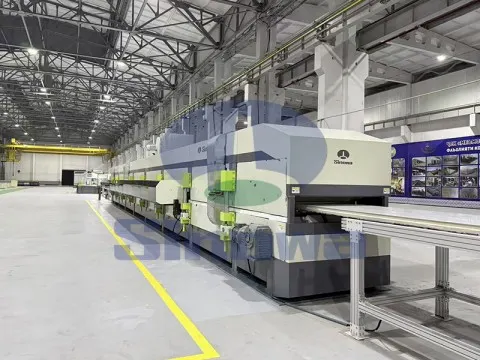
Immediately following foam injection, the semi-finished sandwich panel enters the double-belt curing and pressing system, a specialized module that shapes the panel, sets the foam core, and ensures a permanent, strong bond between the foam and metal facings. The double-belt system consists of two parallel, temperature-controlled conveyor belts that apply uniform, consistent pressure to the top and bottom of the panel as it moves through the curing zone. This pressure compresses the expanding PU foam to the desired panel thickness, eliminates air bubbles or voids within the core, and presses the facings firmly into the foam surface to maximize adhesion. The curing zone is maintained at a precisely controlled temperature range, tailored to accelerate the PU chemical reaction without compromising the foam’s cellular structure or the metal facings’ integrity. The length of the curing zone is calibrated to match the line’s production speed, ensuring the foam fully cures and solidifies before the panel exits the pressing stage—an essential step for preventing post-production shrinkage, warping, or delamination, common issues that can render panels unfit for cold storage use. Unlike standard curing setups, the cold storage-focused production line prioritizes slow, controlled curing to enhance the foam’s thermal stability and long-term durability, critical traits for withstanding the constant thermal cycling of active cold storage facilities.
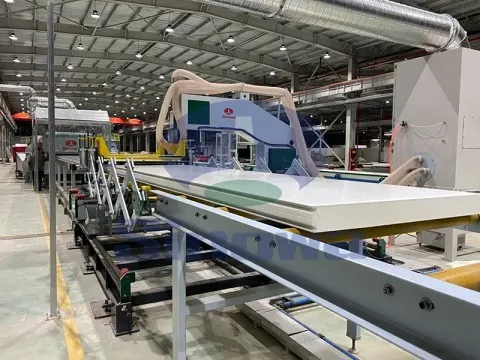
After exiting the curing and pressing module, the fully bonded PU sandwich panel moves into the finishing and processing stage, where it is refined to meet exact cold storage construction specifications. The first step in this phase is precision trimming, where automated cutting tools remove excess material from the panel edges, creating clean, straight edges that align perfectly with adjacent panels during installation. This trimming process is guided by laser positioning systems to ensure tight dimensional tolerances, typically within plus or minus one millimeter, a level of precision that is vital for creating airtight seals in cold storage enclosures. Next, the continuous panel is fed into a flying cut-off saw, a high-speed cutting unit that slices the panel into pre-determined lengths based on cold storage project requirements, whether for standard-sized warehouse panels or custom-cut segments for specialized cold rooms. The cutting process is synchronized with the panel’s forward movement, ensuring clean, burr-free cuts without halting production, preserving workflow efficiency and minimizing material waste. Some advanced production lines also include optional finishing steps for cold storage-specific enhancements, such as surface coating applications to boost corrosion resistance in high-moisture cold storage environments, or edge sealing treatments to further prevent moisture ingress and heat loss. Once cut and finished, the panels are conveyed to an automated stacking and handling system, which carefully stacks the finished panels to avoid scratching, denting, or warping before they are prepared for transport to cold storage construction sites.
A defining characteristic of PU sandwich panel production lines for cold storage is their high degree of automation and intelligent control, which not only boosts production efficiency but also ensures unwavering product quality—an absolute necessity for cold storage applications where even minor panel defects can lead to significant energy loss and compromised temperature control. The entire production line is managed by a centralized computer control system, typically featuring a user-friendly touchscreen interface that allows operators to set and monitor key parameters, including line speed, foam mixing ratios, curing temperature, panel thickness, and cutting lengths. This centralized system synchronizes every stage of production, from decoiling to stacking, eliminating manual intervention and reducing the risk of human error. Real-time monitoring sensors are integrated throughout the line, tracking material flow, temperature, pressure, and dimensional accuracy at every step; if any parameter deviates from the preset range, the system triggers instant alerts, allowing operators to make adjustments before defective panels are produced. Many modern lines also feature predictive monitoring capabilities, tracking equipment performance and identifying potential maintenance issues before they cause downtime, ensuring continuous, reliable production to meet tight cold storage construction deadlines. This level of automation also enhances workplace safety, minimizing manual handling of heavy materials and exposure to chemical components, while optimizing energy consumption across the line through efficient, targeted power usage for heating, mixing, and conveying systems.
Beyond operational efficiency, PU sandwich panel production lines for cold storage are engineered for exceptional versatility, adapting to the diverse needs of the cold storage industry and accommodating a wide range of panel specifications without extensive reconfiguration. Cold storage projects vary widely in scale, temperature requirements, and environmental conditions, and the production line can be quickly adjusted to produce panels of varying thicknesses—ranging from 50 millimeters for mild refrigeration to 200 millimeters or more for ultra-low temperature frozen storage—simply by modifying settings on the control system and adjusting the double-belt pressure. The line can also process different types of facing materials, from galvanized steel for standard cold warehouses to stainless steel for hygienic food processing cold rooms or aluminum for lightweight, corrosion-resistant pharmaceutical storage facilities. Additionally, the foam formulation can be adjusted to meet specific performance needs, such as enhanced fire resistance for cold storage facilities in commercial complexes, or improved moisture resistance for coastal cold storage sites with high humidity levels. This versatility allows manufacturers to cater to both large-scale bulk orders for industrial cold chains and small-batch custom orders for specialized cold storage projects, making the production line a highly adaptable asset in the cold storage construction supply chain.
The performance of the PU sandwich panels produced by this specialized line directly dictates the efficiency, durability, and cost-effectiveness of cold storage facilities, making the production line’s design and precision critical to the broader cold storage industry. Panels manufactured on a dedicated cold storage-focused production line offer superior thermal insulation, drastically reducing the workload of refrigeration systems and lowering long-term energy consumption—a key consideration for cold storage operators aiming to reduce operational costs. The rigid PU foam core and durable metal facings create a structurally robust panel that can support the loads of cold storage infrastructure, including shelving, insulation layers, and environmental control equipment, while resisting damage from daily operations, temperature fluctuations, and moisture exposure. The tight interlocking profiles and precise dimensional accuracy ensure seamless installation, eliminating cold bridges and air leaks that are major sources of energy loss in poorly constructed cold storage units. Furthermore, these panels are lightweight compared to traditional cold storage building materials, reducing transportation costs and simplifying on-site installation, accelerating construction timelines and minimizing labor expenses for cold storage projects of all sizes.
Long-term reliability is another hallmark of panels produced by a high-quality PU sandwich panel production line for cold storage, as the line’s precise manufacturing processes eliminate common defects that shorten panel lifespan. The strong bond between the foam core and metal facings prevents delamination, even after years of exposure to cold, humid conditions, while the closed-cell PU foam resists water absorption, preventing mold growth, material degradation, and loss of insulation performance over time. This durability translates to extended service life for cold storage facilities, reducing the need for frequent repairs or panel replacements and delivering a higher return on investment for facility owners. In an industry where temperature consistency and structural integrity are non-negotiable—particularly for food storage, pharmaceutical cold chains, and frozen goods warehousing—panels produced on a specialized production line meet and exceed the rigorous performance standards required, ensuring that cold storage facilities maintain stable, controlled temperatures consistently.
Maintenance and upkeep of the PU sandwich panel line are also streamlined to support continuous, efficient operation, with a design that prioritizes easy access to key components, minimal wear and tear, and straightforward cleaning protocols. Regular maintenance tasks, such as cleaning mixing heads, inspecting roller stations, calibrating sensors, and lubricating moving parts, can be performed quickly without extensive downtime, ensuring the line remains operational to meet fluctuating market demand for cold storage panels. The line’s durable construction, with heavy-duty frames and high-quality components, reduces the frequency of breakdowns and replacements, further enhancing operational efficiency and reducing long-term maintenance costs. Manufacturers can also scale production output based on market needs, adjusting line speed or running additional shifts to meet peak demand during periods of high cold storage construction activity, making the production line a flexible and resilient cornerstone of the cold storage building supply chain.
As the global demand for cold storage infrastructure continues to surge—driven by growth in the food and beverage industry, pharmaceutical logistics, e-commerce grocery delivery, and cold chain globalization—the role of the PU sandwich panel production line becomes increasingly pivotal. This specialized production line is not merely a manufacturing system; it is a critical enabler of high-quality, energy-efficient, and sustainable cold storage construction, addressing the industry’s most pressing challenges, including energy conservation, operational cost reduction, and compliance with strict storage standards. Unlike generic production setups, the cold storage-focused line is engineered with a deep understanding of the unique demands of low-temperature environments, integrating specialized technologies and quality controls to produce panels that perform reliably in the harshest cold storage conditions. Every stage of the production process, from raw material preparation to finished panel stacking, is optimized to prioritize thermal efficiency, structural strength, and dimensional accuracy, ensuring that each panel contributes to the creation of cold storage facilities that are durable, cost-effective, and environmentally responsible.
Looking ahead, the evolution of PU sandwich panel production lines for cold storage is poised to align with broader industry trends toward sustainability, digitalization, and enhanced performance. Future iterations will likely integrate even more advanced automation and data analytics, refining production precision and reducing material waste further, while foam formulations will continue to improve, delivering higher insulation values with lower environmental impact. The focus on energy efficiency will also intensify, with production lines designed to minimize energy consumption during manufacturing, complementing the energy-saving benefits of the finished PU panels. Additionally, advancements in material science will lead to the development of panels with enhanced fire resistance, moisture barrier properties, and environmental sustainability, further expanding their applications across diverse cold storage projects. In every iteration, the core mission of the production line remains unchanged: to produce PU sandwich panels that set the standard for cold storage construction, combining uncompromising quality, exceptional performance, and practical versatility. For cold storage facility owners, contractors, and manufacturers, investing in panels produced by a dedicated, high-performance PU sandwich panel production line is a decision that ensures long-term reliability, operational efficiency, and success in the critical and rapidly growing cold storage industry, supporting the safe, efficient storage of temperature-sensitive goods worldwide.
Sinowa is a professional manufacturer of sandwich panel machine in china, we provide diversified and high-performance sandwich panel production lines, including fully automatic continuous PU sandwich panel line and customized special lines to meet mass production and personalized order demands. These sandwich panel lines support processing multiple foam core materials, such as PU, PIR, mineral wool, rock wool and glass wool, covering different insulation and fireproof standards.
Featuring stable operation, high efficiency, energy saving and easy maintenance, our PU sandwich panel line deliver sandwich panels with excellent thermal insulation, fire resistance, sound insulation and lightweight durability. The finished panels are widely applied in industrial workshops, warehouse roofing and wall cladding, cold storage insulation, serving global construction and industrial insulation markets.
https://www.cnsinowa.com/sandwich-panel-machines/pu-sandwich-panel-production-line-for-cold-storage-construction.html