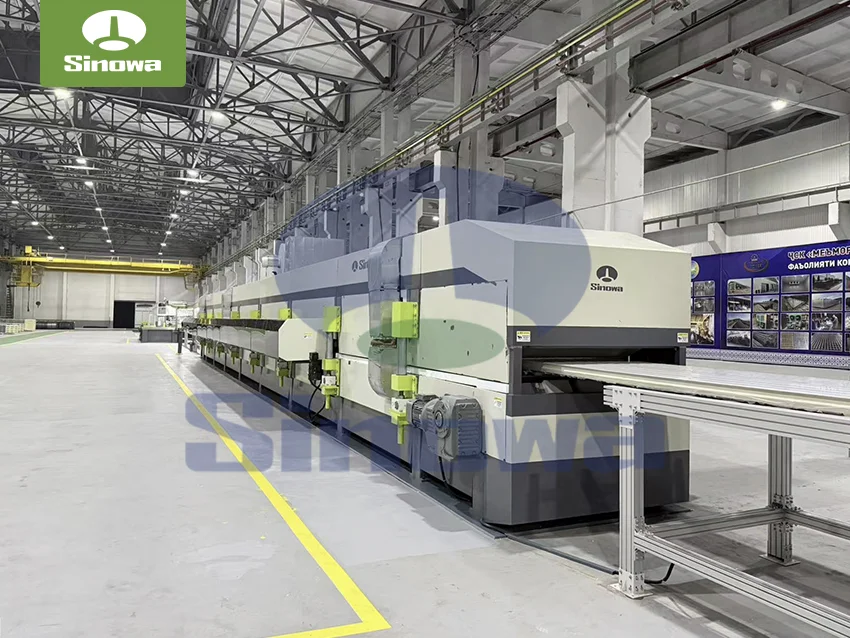
 sandwich panel line
The operational logic of a wall cladding-focused PU sandwich panel line revolves around synchronized modular units that work in tandem to complete each production stage with high precision and stability. The production process initiates with the feeding and pretreatment of surface facing materials, which are the outer protective and decorative layers of wall cladding panels. Common facing substrates include metal sheets, aluminum-based materials, and other structural decorative materials, all supplied in continuous coil forms to support uninterrupted production. The coiled raw materials are first delivered to the uncoiling and leveling unit, where mechanical tension control systems release the coils at a steady speed, while multi-stage leveling rollers eliminate surface wrinkles, material deformations, and internal stress generated during coil storage and transportation. This pretreatment step is critical for wall cladding panels, as flat and smooth base surfaces directly determine the final decorative effect and flatness of installed walls, avoiding uneven fitting and surface distortion during on-site construction.
Following pretreatment, the flat facing materials proceed to the roll forming unit, a key module that shapes the flat substrates into standardized wall panel profiles. Unlike roofing panels that prioritize drainage and wind resistance structural designs, wall cladding panel forming focuses on precise edge folding, seamless splicing structures, and flat facade surfaces to ensure neat assembly and consistent visual effects after installation. The forming process adopts multi-station gradual rolling shaping, where each roller group completes a tiny deformation of the material to prevent structural damage or surface scratches. Electronic synchronization systems control the operating speed of the forming unit to match the pace of subsequent foaming and lamination processes, ensuring no material accumulation or supply interruption throughout the continuous production cycle. After forming, the shaped facing materials are cleaned and surface-calibrated to remove dust and fine impurities, creating an optimal bonding interface for the subsequent PU foam core material.
Parallel to the surface material processing, the PU foam raw material preparation and mixing system operates independently with precise parameter control to guarantee the quality of the core insulation layer. Polyurethane foam is formed by the chemical reaction of two-component raw materials, which are stored in temperature-stabilized tanks to maintain consistent fluidity and reaction activity. Precision metering pumps deliver the two raw material components to the high-pressure mixing head at an accurate proportional ratio, where intense mechanical stirring achieves uniform molecular mixing. The fully mixed raw material solution is then evenly poured onto the lower facing material through a reciprocating sweeping nozzle, covering the entire width of the panel substrate with a consistent thickness. The uniformity of raw material distribution directly affects the thermal insulation performance and structural uniformity of the finished wall panel; uneven pouring would lead to inconsistent core density, resulting in partial heat leakage and reduced overall structural stability of the panel.
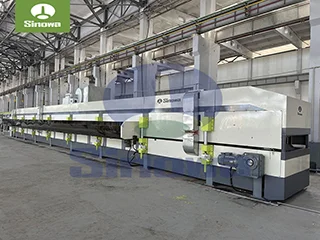
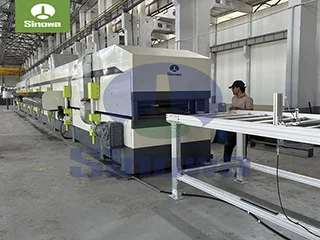
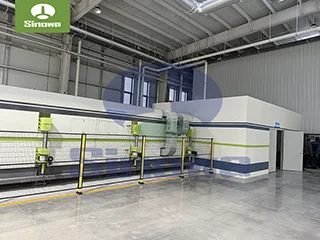
After the PU raw material is applied, the upper and lower facing materials with the intermediate foam raw material layer enter the double-belt lamination and curing module, the longest and most thermally controlled section of the polyurethane sandwich panel production line. This module consists of two parallel heat-insulated conveyor belts that apply uniform and stable pressure across the entire panel surface. The closed thermal environment inside the module maintains a constant temperature range suitable for PU foam expansion and polymerization, allowing the mixed raw materials to undergo full foaming expansion, fill the entire cavity between the upper and lower facings, and form a dense and uniform rigid foam core. During this process, the active chemical components in the PU material trigger cross-linking reactions, achieving strong adhesive bonding with the inner surfaces of the upper and lower facing materials. This integrated composite structure eliminates the risk of delamination between the core layer and surface layers, a key performance indicator for long-service-life wall cladding panels.
The curing process is meticulously calibrated to balance production efficiency and product performance. Insufficient curing time or unstable temperature will result in incomplete chemical reactions, leading to low core hardness, poor bonding strength, and easy deformation of the panels. Excessively long curing cycles, by contrast, will reduce production efficiency and increase energy consumption. The automated control system of the polyurethane sandwich panel line adjusts curing temperature, conveyor speed, and pressure parameters in real time according to ambient temperature and raw material batch characteristics, ensuring that each panel completes full polymerization and solidification within the optimal time window. After curing, the PU foam core forms a microcellular closed structure with low thermal conductivity, excellent heat insulation, and sound absorption properties, while the integrated composite structure formed with the surface layers endows the wall panel with strong bending resistance and impact resistance.
Once the composite lamination and curing process is completed, the continuous long panel enters the precision cutting unit for fixed-length segmentation. Equipped with tracking and positioning systems, the cutting device executes high-speed and smooth cutting according to preset length parameters adapted to conventional wall construction specifications. The cutting mechanism adopts non-destructive processing technology to ensure flat and burr-free panel end faces, which facilitates seamless splicing during on-site wall installation and avoids gaps that affect insulation and aesthetic effects. After cutting, the finished panels are transmitted to the output and sorting platform through the conveyor system, where preliminary manual inspection and stacking are carried out to complete the entire automated production process. The PU sandwich panel production line is designed with a cyclic alternating working mode, enabling simultaneous loading and unloading operations during panel foaming and curing, which maximizes production continuity and improves overall operational efficiency.
The structural design of the PU sandwich panel machine for wall cladding fully adapts to the diverse application scenarios of building wall engineering. The modular equipment layout allows flexible adjustment of production parameters, including panel thickness, width, and surface profile specifications, to meet the needs of exterior thermal insulation walls, interior decorative partition walls, industrial plant wall enclosures, and commercial building facade cladding. For exterior wall panels used in outdoor environments, the production line can adjust foam core density and surface forming rigidity to enhance weather resistance, anti-aging performance, and external pressure resistance, enabling the panels to withstand long-term exposure to wind, rain, and ultraviolet radiation. For indoor wall cladding products, the line optimizes surface flatness and dimensional accuracy while maintaining lightweight characteristics, improving the decoration grade and installation convenience of indoor walls.
In terms of production performance advantages, this specialized polyurethane sandwich panel machine achieves high consistency in finished product quality through full-process automated control. Traditional manual or semi-automatic production methods are prone to deviations in foaming ratio, lamination pressure, and curing time, leading to large differences in panel performance between batches. The integrated automated system unifies all production parameters, realizing precise control of core density, bonding strength, and dimensional tolerance for each panel. The closed foaming and curing environment also avoids the impact of external environmental changes on product quality, ensuring stable panel performance in different seasons and production conditions. In addition, the continuous production mode greatly improves manufacturing efficiency compared with intermittent production equipment, meeting the large-scale supply demand of modern construction projects with tight construction cycles.
Energy efficiency and environmental friendliness are also prominent features of advanced wall cladding continuous PU sandwich panel production line. The thermal circulation system of the curing module recycles residual heat generated during production, reducing overall energy consumption while maintaining stable internal temperature. The raw material metering and mixing system achieves accurate proportional feeding, avoiding raw material waste caused by excessive addition and reducing the generation of unreacted residual materials. The entire production process adopts closed operation, with no volatile pollutant emissions during foaming and curing, complying with modern environmental production standards. Moreover, the PU sandwich panels produced by this line have excellent thermal insulation performance, which effectively reduces the energy consumption of building heating and cooling after installation, realizing energy saving and emission reduction effects in the whole life cycle of building operation.
The finished wall cladding panels manufactured by this professional production line possess comprehensive superior performance that makes them widely recognized in the construction industry. The closed-cell PU foam core has extremely low thermal conductivity, which can effectively block indoor and outdoor heat transfer, significantly improving the thermal insulation and energy-saving level of building walls. The integrated composite structure of surface layer and foam core gives the panels good mechanical strength, enabling them to resist daily impact and structural deformation without damage. Meanwhile, the lightweight feature of the panels reduces the self-weight of building walls, lowering the load-bearing pressure on building structures and foundation engineering, which is conducive to simplifying building structure design and reducing overall construction costs. In terms of application adaptability, the panels can be matched with various surface decoration treatments, presenting diverse texture and color effects to adapt to different architectural style designs.
In practical engineering applications, wall cladding PU sandwich panels produced by dedicated production lines have obvious construction advantages over traditional wall materials. The standardized prefabricated panels can be directly assembled on site without complex procedures such as bricklaying, plastering, and secondary insulation treatment, greatly shortening the construction cycle of wall engineering. The unified dimensional accuracy and splicing structure of the panels ensure high installation precision, reducing on-site error correction and rework rates. In addition, the panels have good moisture-proof, mildew-proof, and sound insulation properties, which can improve the indoor living and working environment quality. For special buildings such as cold storage, clean workshops, and temporary construction facilities, the professional performance of the panels produced by this line can also meet the special functional requirements of thermal insulation, constant temperature, and dust prevention.
With the continuous upgrading of building energy-saving standards and architectural decoration requirements, the wall cladding continuous PU sandwich panel line is also evolving toward higher automation, smarter parameter adjustment, and more diversified product adaptation. Modern production lines are equipped with intelligent monitoring systems that collect real-time data on production speed, curing temperature, material ratio, and panel dimensional accuracy, realizing automatic early warning and parameter correction for abnormal production conditions. This intelligent optimization further improves product yield and production stability. At the same time, the modular equipment structure can be matched with different surface material processing modules and functional foaming modules to develop new types of wall panels with fire resistance, high weather resistance, and ultra-thin lightweight characteristics, expanding the application scope of PU sandwich wall cladding products in high-end buildings and special engineering fields.
In summary, the professional PU sandwich panel production line for wall cladding panels is a highly integrated, efficient, and stable manufacturing system tailored to the characteristics of building wall engineering. Through standardized and automated control of the entire process from raw material pretreatment, foam mixing, composite lamination, thermal curing to precision cutting, it realizes mass production of high-performance, energy-saving, and durable wall cladding panels. The panels produced by this line not only optimize the physical performance and decorative effect of building walls but also promote the development of building wall engineering toward prefabrication, high efficiency, and green energy saving. As the prefabricated construction industry continues to develop, this specialized sandwich panel line will remain a core manufacturing equipment for modern architectural wall materials, providing reliable technical and product support for the upgrading of building energy conservation and decoration quality.
https://www.cnsinowa.com/sandwich-panel-machines/pu-sandwich-panel-line-for-wall-cladding-panels.html