 sandwich panel machine
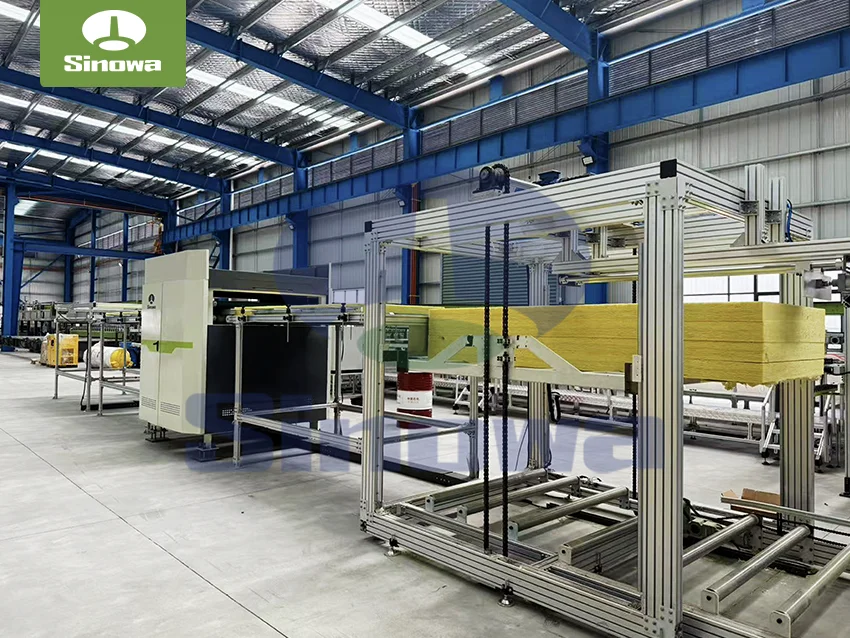
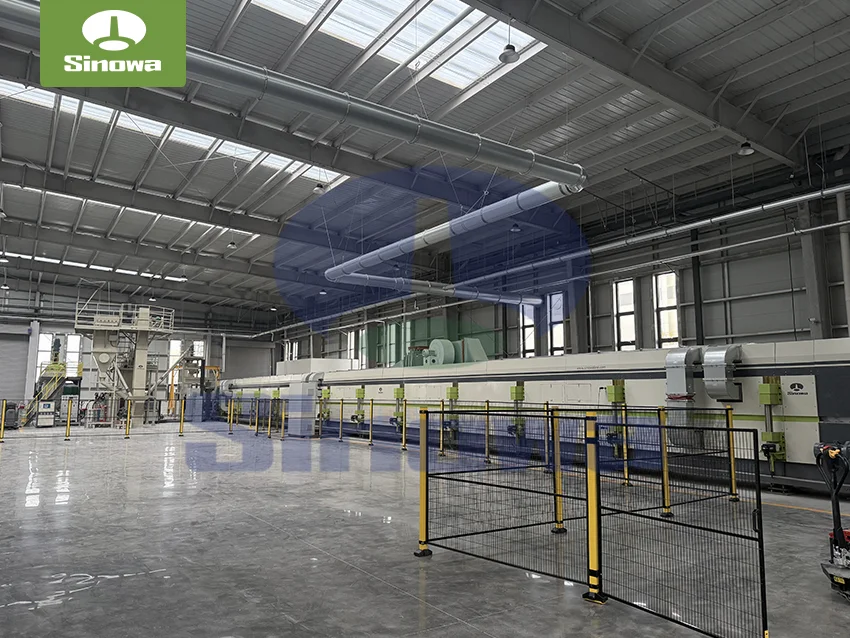
The overall structural design of the PU sandwich panel production line follows a modular and integrated manufacturing concept, with each functional unit closely coordinated to complete the entire production process from raw material processing to finished panel molding. The complete production system covers raw material unwinding, surface plate forming, precise chemical mixing, foam reaction filling, composite lamination, constant temperature curing, fixed-length cutting, and finished product sorting, forming a fully closed-loop production flow with minimal manual participation. Each functional module is precisely calibrated in terms of operating speed, pressure control, and temperature adjustment, ensuring that every link of panel production maintains consistent technical standards and effectively avoiding product quality fluctuations caused by manual operation errors. This highly integrated structural design not only improves the overall continuity of production but also optimizes the space utilization of the production workshop, making the equipment adaptable to different production site layouts and production scale requirements.
The front-end working module of the polyurethane sandwich panel production line is mainly responsible for the pretreatment and conveying of surface base materials, which lays a solid foundation for subsequent composite molding. Metal coiled materials used for panel surfaces are loaded into the automatic unwinding unit, which achieves stable and uniform unwinding through mechanical damping and speed regulation structures. The unwinded flat base materials will pass through multiple groups of leveling and shaping rollers to eliminate material bending, warping, and surface irregularities generated during coiling and transportation, ensuring the flatness and dimensional accuracy of the surface materials before composite processing. In addition to metal surface materials, the equipment can also adapt to different types of flexible and rigid surface base materials by adjusting the gap and operating parameters of the forming rollers, meeting the production needs of composite panels for different application scenarios. The entire material conveying process adopts synchronous speed control technology, which keeps the conveying speed of upper and lower surface materials completely consistent, avoiding material deviation and wrinkling during the high-speed production process, and ensuring the flat and neat appearance of the final composite panel.
The core functional part of the PU sandwich panel line lies in the high-precision foam mixing and injection system, which directly determines the thermal insulation performance, structural density, and bonding strength of the foam core layer. Polyurethane foam is formed by the chemical reaction of two main raw material components with auxiliary additives, and the equipment is equipped with independent sealed storage and temperature regulation units for different raw materials to maintain the stability of raw material activity. The raw material delivery system adopts quantitative pumping technology to accurately control the proportion of each component, which is the key to ensuring uniform foam reaction and stable product performance. After being pumped into the high-pressure mixing head, the raw materials are fully mixed through strong hydraulic impact and turbulence, triggering a rapid chemical cross-linking reaction and starting uniform foaming expansion. The optimized structural design of the mixing head ensures no dead corners in the mixing process, completely avoiding uneven mixing, material precipitation, or residual raw materials, so that the foam components can fully react and give play to the best material performance.
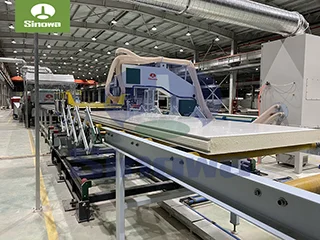
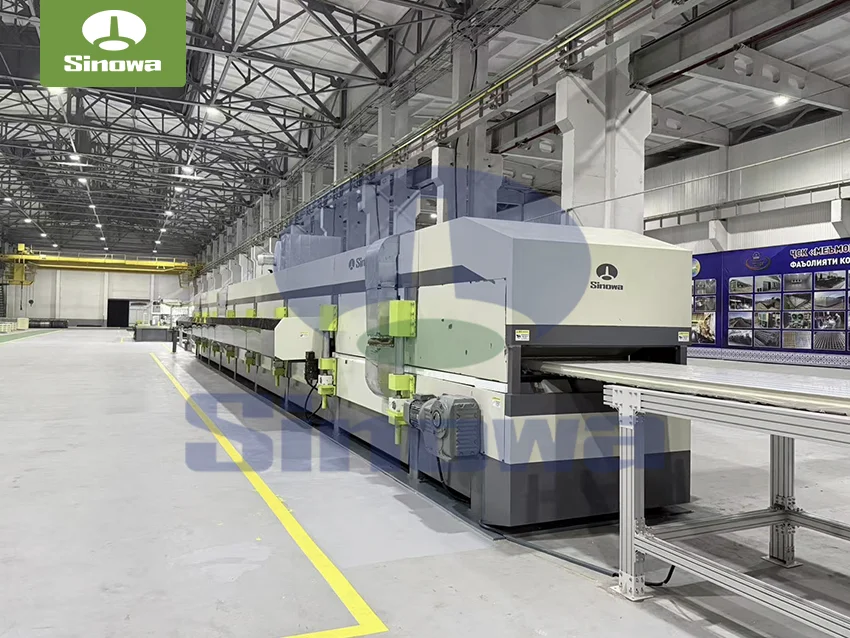
After the completion of raw material mixing and foaming injection, the semi-finished panel enters the lamination and composite molding stage, which is a critical link to determine the overall structural firmness of the sandwich panel. The foaming raw materials are evenly injected between the upper and lower surface base materials that are synchronously conveyed, and with the continuous advancement of the conveyor system, the foam gradually expands and fills the entire gap between the two layers of surface materials. The polyurethane sandwich panel line is equipped with a double-belt pressing structure with uniform pressure distribution, which can apply stable and balanced mechanical pressure on the surface of the panel during the foam expansion process. This uniform pressure constrains the free expansion of the foam, enabling the foam core layer to form a dense and uniform cellular structure, while promoting the close integration between the foam core and the surface materials to form a strong bonding interface. Different from traditional single-roller pressing equipment, the double-belt pressing system realizes full-width and full-length uniform pressure bearing, effectively preventing local depressions, uneven thickness, and delamination defects of the panel, and greatly improving the overall flatness and structural uniformity of the composite panel.
The constant temperature curing system matched with the pressing unit is an indispensable part of optimizing the performance of PU foam composite panels. The curing area adopts segmented temperature control technology, which sets different temperature gradients according to the reaction characteristics of polyurethane foam in different stages. In the initial curing stage, a moderate temperature environment accelerates the cross-linking reaction of foam molecules, promoting rapid shaping of the foam structure and preliminary bonding with the surface materials. In the middle and later stages of curing, the temperature is finely adjusted to ensure that the internal reaction of the foam is fully completed, eliminating residual reaction stress, and enabling the foam core layer to achieve stable density, hardness, and thermal insulation properties. The closed thermal insulation structure of the curing area reduces external temperature interference, maintains the stability of the internal curing environment, and ensures that each batch of panels completes the curing reaction under consistent temperature conditions. Sufficient and stable curing treatment can significantly improve the weather resistance and structural stability of the panel, avoid core layer shrinkage, cracking or delamination after long-term use, and extend the service life of the foam composite panel.
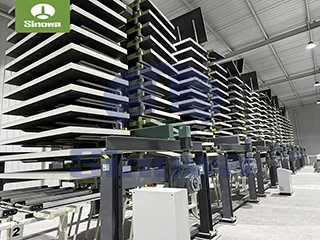
After curing and shaping, the continuous integrated panel will enter the automatic cutting and finishing stage. The high-precision cutting system of the polyurethane sandwich panel machine can automatically identify the production progress and complete fixed-length cutting according to preset dimensional parameters. The cutting tool adopts high-speed rotating cutting structure with smooth and flat cutting surface, no burrs, no cracks, and no damage to the edge structure of the panel, which ensures the dimensional accuracy and appearance quality of the finished panel. The cutting system is linked with the front-end production speed in real time, realizing dynamic cutting without stopping the machine, which effectively improves the continuity and efficiency of the entire production line. After cutting, the finished panels are transmitted to the sorting and stacking unit through the conveying system, which automatically completes panel arrangement, stacking and preliminary finishing, reducing manual handling links and avoiding panel surface scratches and deformation caused by manual operation.
The technical advantages of continuous PU sandwich panel line are mainly reflected in high production efficiency, stable product quality, and strong production flexibility. Compared with traditional semi-automatic production equipment that relies on manual auxiliary operation, the fully continuous production mode of this equipment realizes one-stop molding from raw material input to finished product output, greatly shortening the production cycle of a single panel and significantly improving hourly output and annual production capacity. The whole production process is controlled by an intelligent linkage system, with real-time monitoring and fine adjustment of key parameters such as raw material ratio, mixing pressure, curing temperature, and conveying speed. The closed-loop control mode effectively suppresses product quality differences, making the thermal insulation performance, thickness uniformity, bonding strength and other core indicators of each panel maintain a high consistency level.
In terms of production flexibility, the sandwich panel equipment can adapt to the production of composite panels with different thicknesses, surface materials and core layer densities by simply adjusting equipment parameters and replacing a small number of auxiliary molds. It can meet the diversified production needs of thin lightweight decorative insulation panels and thick load-bearing structural insulation panels, covering multiple application fields such as building exterior wall insulation, roof waterproof insulation, industrial factory enclosure, cold storage thermal insulation, and indoor partition engineering. This flexible production characteristic enables manufacturing enterprises to quickly respond to market demand changes, adjust product production specifications in a timely manner, and improve market adaptability and comprehensive competitiveness.
From the perspective of product performance, the foam composite panels produced by professional continuous PU sandwich panel production line have unparalleled comprehensive advantages over traditional building and industrial panels. The polyurethane foam core layer formed by precise reaction and molding has a closed-cell structure with high density uniformity, which endows the panel with excellent low thermal conductivity and outstanding thermal insulation and heat preservation effects. It can effectively block indoor and outdoor heat exchange, reduce building heating and cooling energy consumption, and meet the current global energy-saving and emission-reduction development requirements. At the same time, the composite structure formed by the tight combination of the foam core and the surface material gives the panel good bending resistance, compression resistance and impact resistance. The lightweight characteristics of the panel itself can reduce the overall load of the building and industrial equipment, while ensuring structural safety, reducing construction difficulty and engineering comprehensive cost.
In addition to basic thermal insulation and structural performance, the panels produced by this sandwich panel production equipment also have good sound insulation, moisture-proof and weather resistance. The dense closed-cell foam structure can effectively block sound wave transmission and reduce noise interference, suitable for noise-sensitive places such as industrial workshops and public buildings. The stable chemical properties of polyurethane foam enable the core layer to resist moisture erosion and avoid mildew, rot and performance degradation caused by humid environments. After special molding and curing treatment, the panel has strong adaptability to temperature changes, and will not undergo obvious deformation, aging or performance attenuation in high-temperature and low-temperature environments, ensuring long-term stable use in complex working conditions.
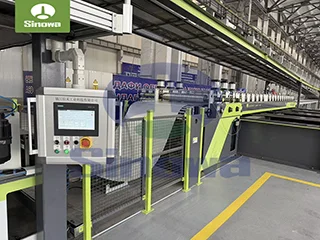
With the continuous improvement of industrial intelligent manufacturing standards, the technical upgrading of PU sandwich panel machine is also moving towards intelligence, energy saving and environmental protection. The new generation of equipment is equipped with an intelligent operation and monitoring system, which can realize real-time collection, analysis and feedback of production data. Operators can view the operating status of each module, production progress and product parameter indicators through the human-computer interaction interface, and the system can automatically alarm and adjust parameters for abnormal conditions in the production process, realizing intelligent management of the production process. The optimized mechanical structure and power system reduce equipment operation energy consumption and material waste in the production process, realizing efficient utilization of production raw materials and reducing the generation of production waste, which conforms to the green manufacturing development concept of the modern industry.
In practical industrial production applications, the stable operation of the PU sandwich panel production machinery directly affects the economic benefits and product reputation of composite panel manufacturing enterprises. The high degree of automation of the equipment reduces the demand for on-site operating personnel, lowers labor costs and human error risks in the production process. The stable and consistent product quality reduces the defective rate and rework rate of products, improves the yield of finished products, and creates higher economic value for enterprises. At the same time, the continuous production mode of the equipment is suitable for large-scale centralized production, which can effectively shorten the product delivery cycle, meet the bulk order demand of engineering projects, and provide reliable equipment support for the rapid development of the downstream building materials and industrial manufacturing industries.
Looking at the future development trend of the composite panel industry, with the continuous promotion of building energy conservation policies and the continuous expansion of lightweight industrial material application scenarios, the market demand for high-performance PU foam composite panels will continue to grow, which will further drive the technical iteration and performance upgrading of sandwich panel production equipment. Future PU sandwich panel machine will further improve the level of intelligent automation, realize more accurate parameter control and more flexible product switching capabilities, and develop towards higher production speed, lower energy consumption and stronger adaptability. At the same time, combined with the development of new material technology, the equipment will be able to adapt to more new environmental-friendly raw materials and composite processes, produce more diversified and high-performance foam composite panels, and provide more innovative and efficient solutions for modern construction, industrial manufacturing, cold storage logistics and other fields. As the core equipment of the composite panel industry, PU sandwich panel manufacturing machine will always play an irreplaceable role in promoting the high-quality development of the entire industrial chain.
https://www.cnsinowa.com/sandwich-panel-machines/pu-sandwich-panel-machine-for-foam-composite-panel-production.html