 sandwich panel line
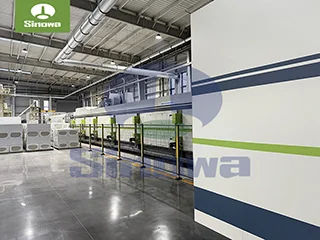
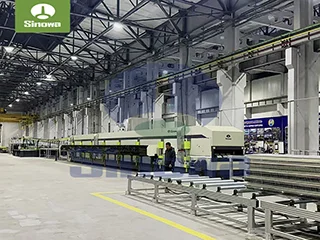
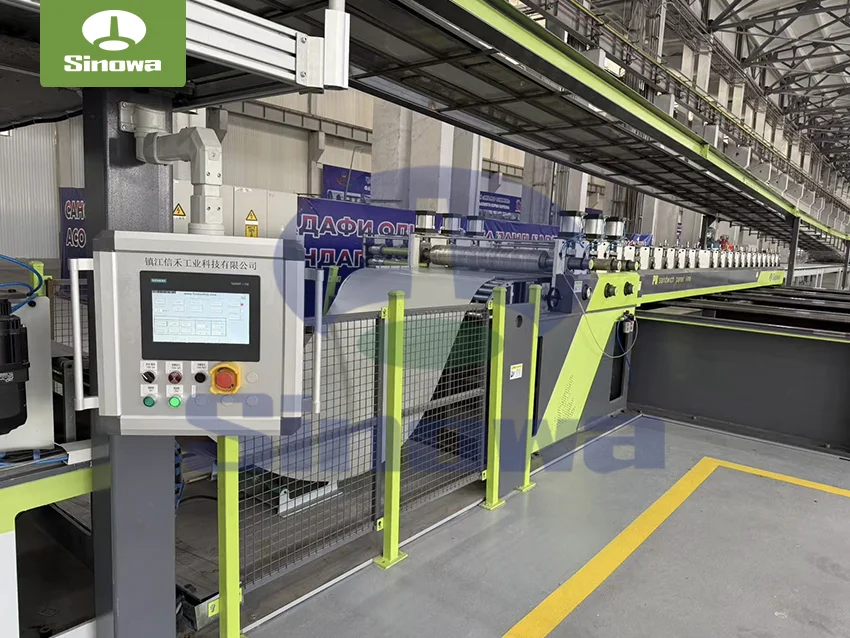
The overall operation logic of the PU sandwich panel production line with CNC control system follows a closed-loop intelligent control mechanism, which takes digital program instructions as the core to coordinate the linkage operation of each mechanical unit of the production line. The entire production process is fully automated without frequent manual intervention. Operators only need to input preset production parameters through the human-machine interaction interface at the initial stage of production, including panel thickness, finished product length, foaming density, production operating speed and material feeding proportion. The CNC system will automatically store the parameter formulas and convert digital instructions into mechanical execution signals to drive the coordinated operation of feeding mechanism, forming system, high-pressure foaming unit, lamination curing equipment and cutting device. In the whole production cycle, the system collects real-time operating data of each module through built-in sensors, compares the collected data with preset standard parameters, and automatically completes micro-adjustments of operating parameters once slight deviations are detected, so as to ensure the continuity and accuracy of the production process and maintain the consistency of finished product quality in batch production.
The front-end raw material processing and feeding link is the starting point of the entire production process, and the CNC control system realizes precise and stable control of this basic link. Different from the simple mechanical feeding of traditional equipment, the feeding system under CNC intelligent control can realize constant-speed and quantitative feeding of different surface materials and core raw materials. For metal surface coils and flexible decorative surface materials used for sandwich panels, the CNC system can accurately adjust the feeding tension and conveying speed according to the material thickness and hardness, effectively avoiding material deviation, wrinkling and stretching deformation during the conveying process. At the same time, the system realizes synchronous matching between the feeding speed of surface materials and the operating speed of subsequent foaming and lamination processes. The intelligent linkage program inside the CNC system can automatically adjust the feeding rhythm in real time according to the operating state of the subsequent process units. When the subsequent curing and lamination process is in a stable operating state, the feeding speed is maintained at a constant rated value; when the subsequent process needs slight parameter adjustment, the feeding link will synchronously complete speed matching, avoiding material accumulation or material shortage interruption caused by asynchronous operation of each process, thus laying a foundation for continuous and uninterrupted batch production.
The core foaming and material mixing process of PU sandwich panels is the key to determine the thermal insulation performance and structural stability of finished products, and also the most advantageous link of CNC control system compared with traditional mechanical control. The quality of PU foam core material depends entirely on the precise proportioning of polyol, isocyanate and various functional additives, as well as uniform mixing and stable foaming reaction. Traditional sandwich panel production equipment relies on manual debugging of proportioning parameters, which is prone to proportion deviation, resulting in uneven foam density, inconsistent pore structure and unstable bonding performance between core material and surface layer. The CNC control system adopts high-precision digital metering control, which can lock the proportion parameters of each raw material in the system program. The built-in digital metering unit continuously feeds back the flow data of raw materials, and the system dynamically adjusts the operating frequency of the metering pump in real time to ensure that the feeding error of each raw material is controlled within an extremely small range during the continuous production process.
In the foaming operation link, the CNC system realizes integrated control of mixing pressure, mixing time and spraying uniformity. The high-pressure mixing head operates stably under digital instruction control, and the system can adjust the mixing intensity and spraying range according to the set panel thickness and production speed. This precise control mode makes the PU foam material form a uniform and fine pore structure after chemical reaction and foaming, ensuring that the core material has consistent density, excellent thermal insulation performance and stable compressive strength. In addition, the CNC system can store multiple sets of foaming parameter formulas corresponding to different product specifications. When switching production of sandwich panels with different thicknesses and performance requirements, operators can complete one-key switching of production formulas through the interaction interface, avoiding repeated manual debugging, greatly shortening the product switching cycle and improving the flexible production capacity of the equipment.
The lamination and constant-temperature curing process directly affects the bonding firmness and overall flatness of PU sandwich panels, and the CNC control system realizes closed-loop precise control of temperature, pressure and time in this link. After the PU foam material is evenly sprayed on the lower surface material, the upper and lower surface materials enter the laminating conveyor together with the foam core material. The CNC system accurately adjusts the lamination pressure of the conveyor according to the panel thickness and material characteristics, ensuring that the foam core material is fully spread and closely bonded with the surface materials without excessive extrusion deformation or insufficient bonding gap. In terms of temperature control of the curing channel, the system adopts multi-point temperature sensing and zoning temperature control technology. The internal temperature of the curing channel is divided into multiple independent temperature control areas, and the CNC system monitors the temperature data of each area in real time, automatically adjusting the heating power to maintain a constant temperature difference in each area. This zoned constant-temperature control mode enables the PU foam to complete foaming, curing and shaping in the most stable temperature environment, effectively avoiding product quality problems such as uneven curing, local bulging and delamination of finished panels caused by temperature fluctuation, and significantly improving the structural stability and service life of sandwich panels.
The fixed-length cutting and post-forming process of finished products is another key link where the CNC control system exerts its precise control advantage. Traditional sandwich panel line mostly adopts mechanical positioning cutting, which has large positioning errors and low cutting accuracy, and it is difficult to guarantee the consistency of product length and flatness in batch production. The CNC-controlled cutting unit realizes fully digital fixed-length positioning and automatic cutting. Operators only need to input the required finished product length parameters in the system, and the CNC system will automatically calculate the conveying distance and complete accurate positioning. The high-sensitivity counting and positioning sensor cooperates with the digital control program to realize zero-error fixed-length cutting, and the cutting flatness and dimensional accuracy of finished products reach a high standard. At the same time, the system can set automatic counting and sorting programs, realizing automatic counting of finished products in the production process, and automatically sorting and discharging products according to preset specifications, which reduces manual sorting errors and improves the neatness and uniformity of finished product output.
In addition to the precise control of each single production process, the core value of the CNC control system lies in the overall synchronous scheduling and intelligent fault diagnosis of the entire production line. The entire PU sandwich panel line is composed of multiple independent functional units, and the CNC system acts as the central control hub to realize seamless linkage and synchronous operation of all units. The system transmits digital instructions in real time to coordinate the operating speed and working rhythm of feeding, forming, foaming, lamination, curing and cutting units, so that the entire production process forms a continuous and stable closed-loop operation state, eliminating the production pause and quality fluctuation problems caused by asynchronous operation of each process. In the daily production operation process, the CNC system has a real-time monitoring function for the operating state of the equipment. It can automatically collect the operating parameters of motors, pumps, sensors and other components, and judge the operating state of the equipment through data analysis.
Once abnormal parameters such as excessive temperature of operating components, unstable material flow and abnormal operating speed are detected, the system will immediately trigger an intelligent early warning mechanism, and display the abnormal position and fault cause on the human-machine interaction interface in real time. For minor abnormal problems that do not affect continuous production, the system can automatically complete parameter correction and fault self-repair; for major faults that need manual intervention, the system will automatically pause the production line to avoid equipment damage and defective product output, which greatly improves the safety and stability of equipment operation, and reduces the failure rate and maintenance cost of the production line. Meanwhile, the CNC system supports production data statistics and storage, which can automatically record daily production output, product specification parameters, polyurethane sandwich panel production line operating time and parameter adjustment records, providing accurate data support for production management, production schedule optimization and product quality traceability.
The application of CNC control system also greatly optimizes the production efficiency and production flexibility of the PU sandwich panel machine, meeting the diversified production needs of modern industrial manufacturing. In terms of production efficiency, the full digital synchronous control mode eliminates the idle time and debugging time of each process link. The continuous and uninterrupted production mode effectively improves the unit time output of the production line. The stable parameter control reduces the generation of defective products and rework rate, and the comprehensive qualified rate of batch products is significantly improved, which indirectly reduces the production cost and improves the overall production benefit. In terms of production flexibility, the programmable control mode of the CNC system enables the equipment to adapt to the production of sandwich panels with different thicknesses, different surface materials and different performance parameters. By switching different preset production programs, the production line can quickly switch between different product types, realizing small-batch, multi-variety flexible production on the same equipment, which perfectly adapts to the personalized customization needs of the current building materials market.
From the perspective of product performance, the CNC-controlled precise production process comprehensively improves the comprehensive quality of PU sandwich panels. The accurately proportioned PU foam core material has uniform density and stable thermal insulation performance, which ensures that the finished panel has excellent heat insulation, cold preservation and sound insulation effects. The precise lamination pressure and constant-temperature curing treatment make the bonding strength between the core material and the surface layer uniform and stable, avoiding delamination and cracking during long-term use. The high-precision fixed-length cutting and forming process ensures that the dimensional error of finished products is extremely small, and the product flatness and assembly accuracy are higher, which is more conducive to the rapid construction and assembly of engineering projects. These high-quality performance characteristics make the CNC-controlled PU sandwich panels widely used in building exterior wall insulation, roof waterproof insulation, cold storage insulation enclosure, industrial factory building enclosure and other fields, and can adapt to different climatic environments and engineering use requirements.
With the continuous upgrading of industrial intelligent manufacturing technology, the CNC control system of polyurethane sandwich panel line is also evolving towards more intelligent, digital and humanized directions. The modern optimized CNC control system supports remote parameter viewing and data interaction, realizing remote monitoring of equipment operating state and production progress. The optimized program algorithm further improves the parameter adjustment accuracy and response speed of the system, making the production process more stable and efficient. At the same time, the human-machine interaction interface is more simplified and intelligent, with intuitive parameter display and simple operation logic, which reduces the operation threshold of equipment and enables ordinary operators to master the production debugging and equipment operation skills in a short time. In addition, the system's energy-saving control program is continuously optimized, which can automatically adjust the operating power of each equipment unit according to the production load, effectively reducing invalid energy consumption in the production process and realizing energy-saving and environmentally friendly production.
In the field of building material manufacturing that is increasingly pursuing refinement, standardization and intelligence, the combination of PU sandwich panel production technology and CNC digital control system has become an inevitable development trend. It completely breaks through the technical bottlenecks of traditional production equipment in precision, stability and flexibility, realizes the full-process digital control from raw material processing to finished product forming, and promotes the PU sandwich panel manufacturing industry to move from extensive manual auxiliary production to intensive intelligent production. For production enterprises, the CNC-controlled polyurethane sandwich panel machine not only improves production efficiency and product quality stability, but also enhances the market competitiveness of products through standardized and refined production. For the downstream engineering application field, the high-precision and high-performance PU sandwich panels produced by intelligent equipment provide more reliable material guarantee for the safety, energy saving and durability of construction and industrial facilities, and play an important supporting role in the upgrading and development of the modern building insulation material industry.
https://www.cnsinowa.com/sandwich-panel-machines/pu-sandwich-panel-line-with-cnc-control-system.html