 sandwich panel machine
Polyurethane (PU) sandwich panels, composed of a PU core and two outer facing materials (such as aluminum, steel, or wood-based panels), are widely used in decorative applications due to their excellent thermal insulation, soundproofing, lightweight, and durability. The PU sandwich panel machine is specifically designed to automate the production of these panels, integrating multiple processes into a seamless workflow. Unlike traditional manual or semi-automatic production methods, this machine ensures precise control over every stage of manufacturing, from material feeding to final cutting, thereby optimizing the quality and performance of the end products.
Working Principles of PU Sandwich Panel Machines
The operation of a PU sandwich panel machine is based on the principle of continuous composite molding, which involves several interconnected stages working in harmony. The core process revolves around the foaming of polyurethane and its bonding with the facing materials to form a solid, integrated panel. To understand the working mechanism thoroughly, it is necessary to break down the key components and their functions.
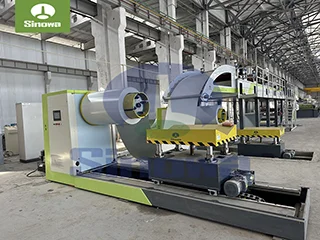
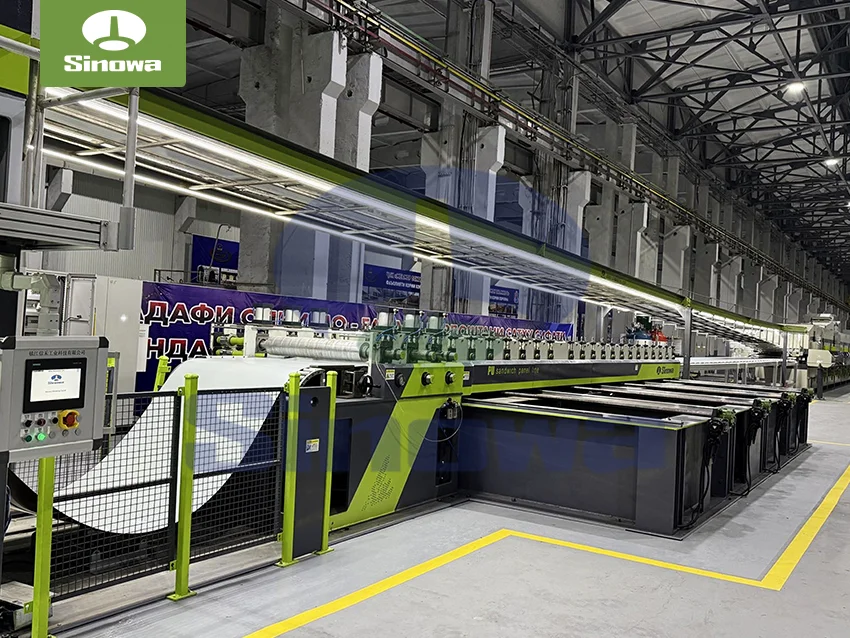
First, the machine consists of feeding systems for the facing materials and the PU raw materials. The facing materials, which can be selected according to the specific requirements of decorative boards (e.g., color, texture, thickness), are unwound from rolls and guided into the machine through a series of rollers. These rollers ensure that the facing materials are flat and tension-controlled, preventing wrinkles or deviations during the composite process. Meanwhile, the PU raw materials—mainly polyol and isocyanate, along with additives such as foaming agents, catalysts, and flame retardants—are stored in separate tanks. Through a high-pressure mixing head, these raw materials are precisely metered, mixed uniformly, and injected onto the lower facing material.
Once the PU mixture is applied, the upper facing material is laminated onto the PU layer. The combined materials then enter a molding zone, where they pass through a pair of large-diameter forming rollers or a continuous belt press. During this stage, the PU mixture undergoes a chemical reaction, expanding and foaming to fill the space between the two facing materials. The forming rollers or press apply a certain amount of pressure to ensure that the PU core is evenly distributed and tightly bonded to the facing materials. The temperature in the molding zone is also carefully controlled to accelerate the curing of the PU core, which is crucial for maintaining the structural stability of the panel.
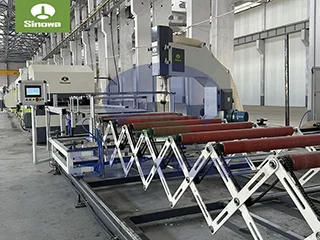
After the molding and curing stage, the continuous sandwich panel is conveyed to a cutting system. Equipped with high-precision cutting tools (such as circular saws or CNC cutting machines), the system trims the panel to the required length and width according to pre-set parameters. Some advanced PU sandwich panel machines also feature edge trimming functions to ensure smooth, neat edges, eliminating the need for additional post-processing. Finally, the finished decorative panels are stacked automatically by a stacking system, ready for packaging and delivery.
Throughout the entire process, a central control system monitors and regulates each parameter, including the speed of material feeding, the ratio of PU raw materials, the temperature and pressure in the molding zone, and the cutting dimensions. This automated control ensures that every panel produced meets the same high standards, reducing the risk of human error and improving production efficiency.
Key Advantages of PU Sandwich Panel Machines in Decorative Board Production
The adoption of PU sandwich panel machines brings numerous benefits to decorative board manufacturers, making them a preferred choice over traditional production methods. These advantages can be summarized in terms of production efficiency, product quality, versatility, cost-effectiveness, and environmental performance.
First and foremost, high production efficiency is one of the most prominent advantages of PU sandwich panel machines. These machines operate continuously, with a production speed that can reach several meters per minute, far exceeding the output of manual or semi-automatic processes. The automated workflow eliminates the need for frequent manual intervention, reducing production time and increasing throughput. For manufacturers facing large-order volumes, this efficiency gain is crucial for meeting delivery deadlines and maintaining market competitiveness.
Secondly, superior product quality and consistency are guaranteed by the precise control of the machine. The high-pressure mixing head ensures that the PU raw materials are mixed uniformly, resulting in a PU core with consistent density and performance. The tension control system for the facing materials prevents wrinkles and uneven bonding, while the precise cutting system ensures that the panels have accurate dimensions and smooth edges. This consistency is particularly important for decorative boards, as any variation in appearance or size can affect their applicability in interior design projects. With PU sandwich panel machines, manufacturers can produce panels that meet strict quality standards, enhancing customer satisfaction and brand reputation.
Thirdly, versatility in product customization makes PU sandwich panel machines suitable for a wide range of decorative board applications. These machines can accommodate different types of facing materials, including aluminum composite panels, steel plates, wood veneers, and PVC films, allowing manufacturers to produce panels with various textures, colors, and surface finishes. Additionally, the thickness of the PU core and the overall panel can be adjusted by modifying the parameters of the machine, enabling the production of panels with different thermal insulation, soundproofing, and load-bearing properties. Whether it is for wall decoration, ceiling panels, or furniture surfaces, PU sandwich panel machines can be tailored to meet specific customer requirements, expanding the product portfolio of manufacturers.
Fourthly, cost-effectiveness is achieved through the reduction of raw material waste and labor costs. The precise metering system of the machine ensures that the PU raw materials are used efficiently, minimizing waste. The automated production process also reduces the need for a large number of manual workers, lowering labor costs and the risk of labor-related errors. Furthermore, the durability and long service life of the PU sandwich panels produced by these machines reduce the maintenance and replacement costs for end-users, making the products more competitive in the market.
Finally, environmental friendliness is an increasingly important advantage in today's sustainable development context. Modern PU sandwich panel machines are designed to minimize environmental impact by using low-VOC (volatile organic compound) PU raw materials and optimizing energy consumption. The closed-loop production system reduces the emission of harmful gases and waste, while the recyclability of some facing materials and the PU core further enhances the environmental performance of the products. As more and more consumers and governments prioritize sustainable building materials, the environmental advantages of PU sandwich panel machines will become a key factor in their widespread adoption.
Production Process of Decorative Boards Using PU Sandwich Panel Machines
The production of decorative boards using PU sandwich panel machines involves a series of well-defined steps, each of which is critical to the final quality of the product. Below is a detailed overview of the typical production process:
Raw Material Preparation: Before production starts, the raw materials need to be prepared and inspected. The facing materials are checked for surface defects, such as scratches, stains, or uneven thickness, and are unwound and cut into appropriate lengths if necessary. The PU raw materials are tested for their viscosity, reactivity, and other properties to ensure they meet the production requirements. Additives, such as flame retardants or colorants, are added to the PU mixture according to the specific product specifications.
Feeding and Laminating: The lower facing material is fed into the machine through the unwinding system and guided by the tension control rollers to ensure it is flat and stable. The PU raw materials are pumped from their respective tanks to the high-pressure mixing head, where they are mixed at a precise ratio. The mixed PU foam is then injected evenly onto the lower facing material. The upper facing material is then fed into the machine and laminated onto the PU foam layer, forming a three-layer structure (lower facing + PU core + upper facing).
Molding and Curing: The laminated structure enters the molding zone, where it is pressed by forming rollers or a continuous belt press. The pressure applied ensures that the PU foam is evenly distributed and tightly bonded to the facing materials. The temperature in the molding zone is maintained at a specific level (usually between 40°C and 60°C) to promote the curing of the PU foam. The curing time depends on the type of PU raw materials and the thickness of the panel, and is controlled by the speed of the conveyor system.
Trimming and Cutting: After the PU core is fully cured, the continuous panel is conveyed to the trimming and cutting system. The edge trimming tools remove the excess material from the sides of the panel, ensuring smooth and neat edges. The panel is then cut into the required length and width by the cutting machine, which is controlled by a CNC system for high precision.
Quality Inspection and Stacking: The finished decorative panels are subjected to strict quality inspection, including checks for dimensions, surface flatness, bonding strength, and core density. Any defective panels are removed from the production line. Qualified panels are then stacked automatically by the stacking system, which arranges them in an orderly manner to prevent damage during packaging and transportation.
Packaging and Delivery: The stacked panels are packaged using protective materials, such as plastic film or cardboard, to prevent scratches and moisture damage. The packaged panels are then loaded onto trucks and delivered to customers or stored in warehouses.
Application Scenarios of Decorative Boards Produced by PU Sandwich Panel Machines
Decorative boards produced by PU sandwich panel machines have a wide range of application scenarios, covering residential, commercial, and industrial fields. Their unique combination of aesthetic appeal and functional performance makes them suitable for various interior and exterior decoration projects.
In residential buildings, these decorative boards are commonly used for wall decoration, ceiling panels, floor coverings, and furniture surfaces. For example, in living rooms and bedrooms, decorative panels with wood grain or stone texture can create a warm and natural atmosphere. In kitchens and bathrooms, waterproof and moisture-resistant decorative panels are preferred, as they can withstand the humid environment. The thermal insulation and soundproofing properties of PU sandwich panels also make them ideal for use in partition walls, improving the comfort of living spaces.
In commercial buildings, such as shopping malls, hotels, restaurants, and office buildings, decorative boards play a crucial role in enhancing the overall aesthetic appeal and brand image. High-gloss decorative panels are often used in shopping mall facades and hotel lobbies to create a modern and luxurious look. Soundproof decorative panels are used in conference rooms and restaurants to improve the acoustic environment. Additionally, the lightweight nature of PU sandwich panels reduces the load on the building structure, making them suitable for high-rise commercial buildings.
In industrial buildings, decorative boards produced by PU sandwich panel machines are used for interior decoration of factories, warehouses, and workshops. These panels are resistant to wear, impact, and chemical corrosion, making them suitable for harsh industrial environments. They can also be used to decorate the exterior walls of industrial buildings, improving their appearance while providing thermal insulation and energy-saving effects.
Furthermore, these decorative boards are widely used in transportation vehicles, such as trains, ships, and RVs. The lightweight and fire-retardant properties of PU sandwich panels make them ideal for interior decoration of these vehicles, as they can reduce fuel consumption and improve safety. In addition, decorative boards with custom patterns and colors can be used to create a comfortable and personalized interior environment for passengers.
Future Development Trends of PU Sandwich Panel Machines
With the continuous advancement of technology and the growing demand for high-quality, sustainable decorative materials, PU sandwich panel machines are poised to undergo significant developments in the future. Several key trends are likely to shape the evolution of these machines:
Intelligentization and Digitization: The integration of artificial intelligence (AI), Internet of Things (IoT), and big data analytics into PU sandwich panel machines will become more prevalent. Intelligent control systems will be able to monitor production processes in real-time, predict potential equipment failures, and adjust parameters automatically to optimize product quality and production efficiency. Digitization will enable manufacturers to track the entire production process, from raw material input to finished product delivery, improving supply chain management and traceability.
Energy Conservation and Environmental Protection: As global attention to environmental protection increases, PU sandwich panel machines will be designed to be more energy-efficient and eco-friendly. Manufacturers will adopt more advanced energy-saving technologies, such as variable frequency drives and heat recovery systems, to reduce energy consumption. The use of biodegradable PU raw materials and recyclable facing materials will also become more widespread, further reducing the environmental impact of the production process.
High-Speed and High-Precision Production: To meet the growing demand for decorative boards, PU sandwich panel machines will continue to move towards higher production speeds and greater precision. The development of advanced forming technologies and cutting systems will enable machines to produce panels with even more accurate dimensions and smoother surfaces. High-speed production will also help manufacturers reduce costs and improve market responsiveness.
Customization and Flexibility: The trend towards personalized and customized decorative boards will drive the development of more flexible PU sandwich panel machines. These machines will be able to quickly switch between different product specifications, such as different panel thicknesses, facing materials, and surface finishes, without the need for extensive retooling. This flexibility will allow manufacturers to meet the diverse needs of customers and gain a competitive edge in the market.
Integration of Multiple Functions: Future PU sandwich panel machines will integrate more functions into a single production line, such as surface printing, embossing, and coating. This integration will eliminate the need for additional post-processing equipment, reducing production costs and improving efficiency. For example, a machine that can print custom patterns directly onto the facing materials during production will enable manufacturers to produce highly personalized decorative boards in a single step.
Conclusion
The PU sandwich panel machine has revolutionized the decorative board production industry, offering a combination of high efficiency, superior quality, versatility, and cost-effectiveness. Its automated working principle ensures consistent production of high-quality PU sandwich panels, which are widely used in residential, commercial, industrial, and transportation applications. As technology continues to advance, PU sandwich panel machines will become more intelligent, energy-efficient, and flexible, further expanding their application scope and market potential.
For manufacturers in the decorative board industry, investing in advanced PU sandwich panel machines is not only a way to improve production efficiency and product quality but also a strategic move to adapt to the changing market demands and achieve sustainable development. With their pivotal role in shaping the future of decorative board production, PU sandwich panel machines will continue to be a key driver of innovation and growth in the industry.
https://www.cnsinowa.com/sandwich-panel-machines/pu-sandwich-panel-machine-for-decorative-board-production.html