 sandwich panel machine
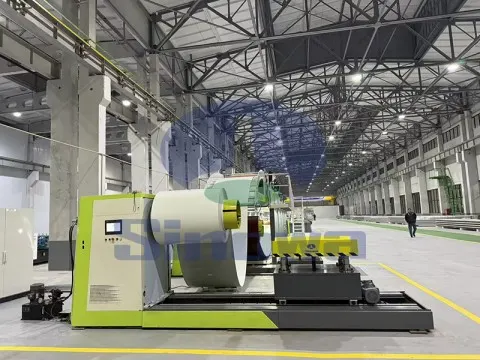
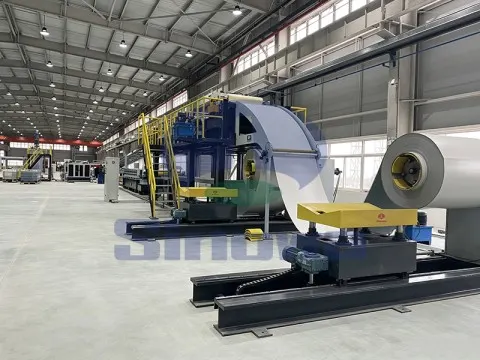
At its core, the PUR sandwich panel machine is a comprehensive production line composed of multiple interconnected mechanical modules, each tasked with a specific function, all orchestrated seamlessly by the PLC (Programmable Logic Controller) system. The foundational module is the raw material handling and uncoiling unit, designed to feed and unwind the outer facing materials—typically metal sheets such as galvanized steel, aluminum, or colored steel coils—with consistent tension and alignment. This unit is equipped with precision tension control mechanisms and leveling devices to ensure the facing materials remain flat and free of wrinkles or deformities, a critical prerequisite for high-quality panel formation. Following the uncoiling stage, the materials move through a pre-treatment and pre-heating module, which cleans the surface of the facing sheets and raises them to an optimal temperature to facilitate better adhesion with the polyurethane foam core and accelerate the foaming and curing process. The pre-heating function is meticulously regulated by the PLC, which monitors and adjusts temperature levels in real time to match the specific requirements of the raw materials and production speed, eliminating the risk of overheating or insufficient heating that could compromise panel integrity.
Moving along the production line, the next key stage is the roll forming and profiling module, which shapes the flat metal sheets into the desired profile with precise dimensions, including edge locking structures, ribbing, and dimensional tolerances. This module relies on a series of precision rollers and hydraulic adjustment systems, all governed by PLC commands that dictate the speed, pressure, and forming angle to ensure uniformity across every panel. Once profiled, the upper and lower facing sheets are guided into the laminating and foaming zone, the heart of the PU sandwich panel production process. Here, a high-precision foaming injection system dispenses the mixed polyurethane raw materials in a controlled, uniform manner between the two facing layers. The PLC system plays a pivotal role in this stage, regulating the injection flow rate, material ratio, and injection timing with micro-level accuracy, ensuring the foam core is evenly distributed, free of voids or uneven density, and bonds firmly to both outer layers. The foaming reaction is a time-sensitive and temperature-dependent chemical process, and the PLC’s real-time monitoring and adjustment capabilities prevent issues such as incomplete curing, foam shrinkage, or delamination, which are common in less controlled production environments.
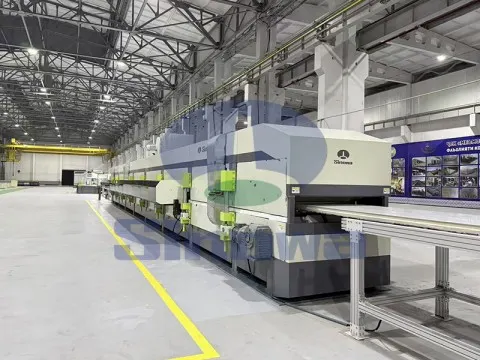
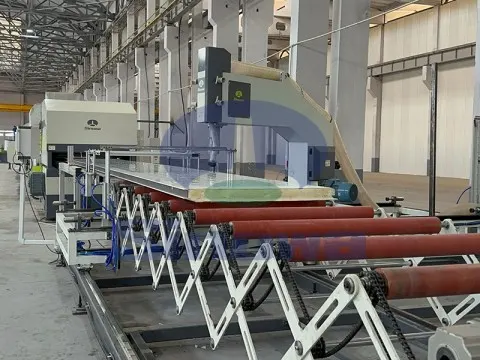
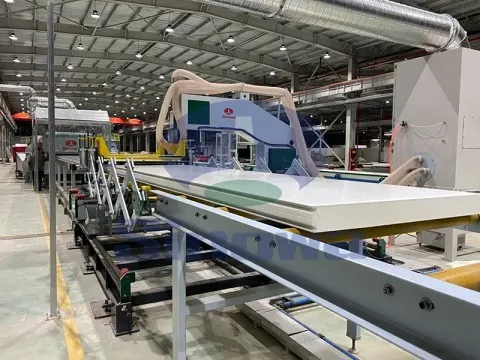
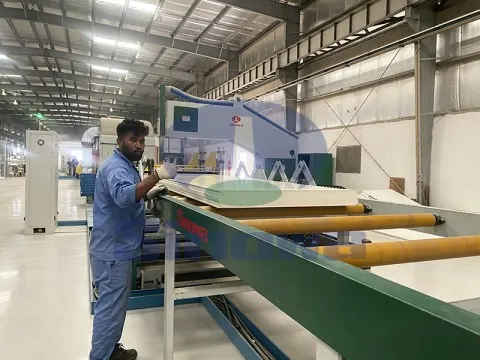
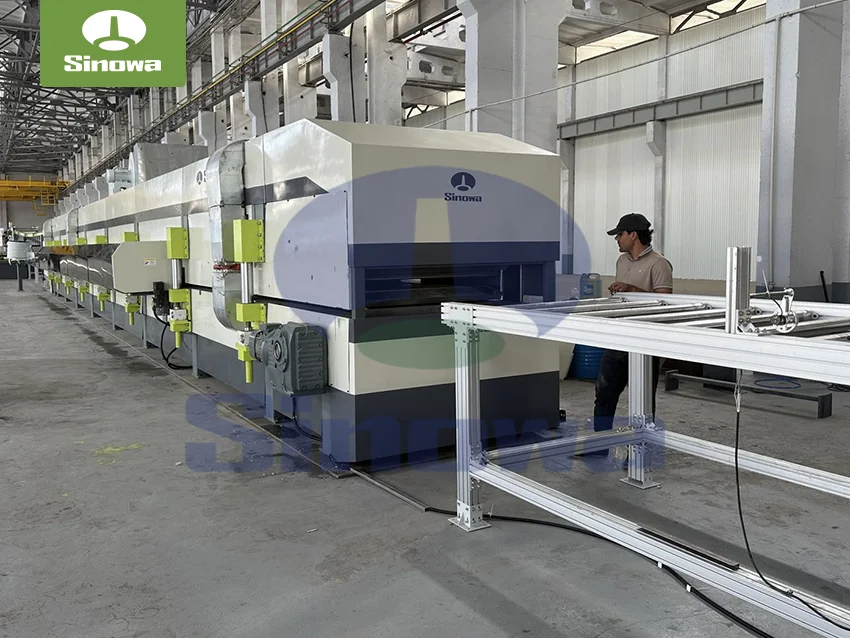
The laminated panels then proceed through a double-belt conveyor and curing module, which maintains consistent pressure and temperature as the polyurethane foam fully expands, cures, and solidifies to form a rigid, integrated composite structure. The double-belt system is engineered to keep the panels flat and maintain uniform thickness throughout the curing process, with the PLC controlling the conveyor speed, belt tension, and curing chamber temperature to align with the foaming kinetics of the polyurethane material. This synchronized control ensures that each panel achieves the optimal density, compressive strength, and bonding performance, regardless of production volume or panel specifications. After curing, the panels enter the cutting and trimming module, where a high-precision cutting mechanism trims the edges to the required width and cuts the continuous panel strip into fixed lengths as per production demands. The PLC system enables non-stop, tracking cutting functionality, eliminating production downtime and ensuring clean, burr-free cuts with exact dimensional accuracy. This level of precision is vital for meeting on-site installation requirements, as even minor deviations in panel size can lead to fitting issues and increased construction waste.
Beyond the core production modules, the PLC control system serves as the central nervous system of the entire machine, integrating data collection, logic processing, command execution, and fault diagnosis into a unified operational framework. Unlike traditional relay control systems, which are rigid, difficult to modify, and prone to wiring faults, the PLC offers exceptional flexibility and adaptability, allowing operators to adjust production parameters such as panel thickness, length, foaming ratio, production speed, and curing temperature with simple input modifications via a human-machine interface (HMI). The PLC operates on a cyclic scanning mechanism, continuously collecting data from various sensors positioned across the production line—including temperature sensors, pressure sensors, speed sensors, and position detectors—processing this data through pre-programmed logic programs, and sending real-time commands to actuators, motors, and hydraulic systems to maintain optimal operational conditions. This closed-loop control mechanism ensures that any deviations from set parameters are detected and corrected instantaneously, minimizing production defects and maintaining consistent product quality batch after batch.
One of the most significant advantages of the PLC-controlled PU sandwich panel machine is its ability to deliver stable, uninterrupted production with minimal human intervention. In traditional production setups, operators are required to monitor each stage manually, adjust parameters on the fly, and address issues as they arise, leading to high labor intensity, frequent production pauses, and inconsistent output. With PLC automation, the entire production line can run continuously for extended periods once the parameters are set, with only a small team of operators needed to oversee the system, conduct routine checks, and perform minor adjustments. This reduction in labor dependency not only cuts down on operational costs but also mitigates the risk of human error, a leading cause of product defects and production delays. Additionally, the PLC system features built-in self-diagnostic capabilities, which can detect faults such as sensor malfunctions, motor overloads, material jams, or abnormal temperature fluctuations in real time. When a fault is identified, the system immediately triggers an alarm, displays detailed fault information on the HMI, and can even initiate emergency shutdown protocols if necessary, preventing equipment damage and ensuring workplace safety. This proactive fault detection significantly reduces downtime for maintenance and repairs, boosting overall equipment effectiveness and production throughput.
The versatility of the PLC-controlled PUR sandwich panel machine further enhances its industrial value, as it can be easily adapted to produce a wide range of panel specifications to meet diverse market demands. Whether manufacturing thin panels for interior partition walls, thick panels for cold storage facilities with high insulation requirements, or profiled panels for roofing and exterior cladding, the PLC system allows for quick parameter reconfiguration without the need for extensive mechanical modifications. This flexibility enables manufacturers to respond rapidly to changing customer orders and market trends, switching between different product types with minimal downtime and maximizing production capacity utilization. Moreover, the machine’s automated control system optimizes raw material usage, minimizing waste from off-cuts, uneven foaming, or defective panels. By precisely regulating material flow, injection ratios, and cutting dimensions, the PLC ensures that raw materials are used efficiently, reducing material costs and aligning with sustainable manufacturing practices that prioritize resource conservation.
Energy efficiency is another standout benefit of integrating PLC control into PUR sandwich panel machines. Traditional production lines often operate at fixed energy consumption levels, regardless of actual production load, leading to unnecessary energy waste. The PLC system, however, can adjust the power output of motors, heating elements, and hydraulic systems based on real-time production requirements. For example, during periods of slower production or standby mode, the system can reduce energy supply to non-critical components, and during peak production, it can allocate power precisely where it is needed. This intelligent energy management not only lowers operational energy costs but also reduces the carbon footprint of the manufacturing process, aligning with global efforts to promote green and sustainable industrial production. Additionally, the consistent operational control provided by the PLC reduces wear and tear on mechanical components, as the system avoids sudden starts, stops, or overloading that can accelerate equipment degradation. This translates to longer service life for the machine, reduced maintenance frequency, and lower long-term maintenance costs, further enhancing the economic viability of the equipment for manufacturers.
In terms of operational usability, the PLC control system is designed with user-friendliness in mind, making it accessible to operators with varying levels of technical expertise. The HMI provides a clear, intuitive interface that displays real-time production data, including running speed, temperature readings, production count, and fault alerts, allowing operators to monitor the entire production line at a glance. Programming and parameter adjustments are simplified through visual interfaces and pre-set operational modes, eliminating the need for complex coding knowledge. Training new operators to run the machine efficiently is therefore a streamlined process, reducing the time and resources spent on workforce training. Furthermore, the PLC system supports data storage and production tracking, recording key operational parameters and production output over time. This data can be analyzed to identify production trends, optimize performance, and implement continuous improvement initiatives, empowering manufacturers to enhance operational efficiency and product quality over time.
The impact of the PLC-controlled PUR sandwich panel machine extends far beyond the factory floor, influencing the entire supply chain and end-use applications of PU sandwich panels. By consistently producing high-quality, dimensionally accurate panels, the machine ensures that construction projects using these panels progress smoothly, with reduced on-site modification and installation time. The superior thermal insulation properties of PLC-manufactured panels also contribute to improved energy efficiency in buildings, reducing heating and cooling costs for building owners and aligning with global energy conservation goals. In the cold storage industry, for instance, the precise insulation performance of these panels is critical for maintaining stable low temperatures, preserving perishable goods, and reducing energy consumption for refrigeration systems. In industrial construction, the structural stability and durability of PLC-produced panels ensure the longevity of warehouses, factories, and logistics centers, providing a reliable and cost-effective building solution.
As the global construction industry continues to shift towards prefabricated, energy-efficient building materials, the demand for advanced, automated production equipment like the PLC-controlled PUR sandwich panel machine is set to rise steadily. Manufacturers are increasingly prioritizing automation to stay competitive in a fast-paced market, and the PLC system remains at the forefront of industrial control technology due to its reliability, flexibility, and scalability. Ongoing technological advancements are further enhancing the capabilities of these machines, with integration of IoT (Internet of Things) connectivity for remote monitoring and control, enhanced data analytics for predictive maintenance, and improved precision control for even more complex panel designs. These developments will continue to elevate the performance of PUR sandwich panel machines, making them more efficient, intelligent, and adaptable to future industry needs.
It is important to note that the optimal performance of the PLC-controlled PUR sandwich panel machine relies on proper installation, routine maintenance, and adherence to recommended operational protocols. Regular cleaning of mechanical components, calibration of sensors, inspection of wiring connections, and software updates for the PLC system are essential to ensure long-term stable operation. While the machine’s automation reduces the need for constant manual oversight, proactive maintenance practices are crucial to prevent unexpected breakdowns and extend the equipment’s service life. Manufacturers and operators who prioritize proper maintenance will maximize the return on investment, enjoying consistent high-quality output and efficient production for years to come.
In conclusion, the PUR sandwich panel machine equipped with a PLC control system represents a transformative leap in building material manufacturing, merging cutting-edge automation technology with robust mechanical design to deliver unmatched precision, efficiency, and reliability. From raw material handling to finished panel output, every stage of production is optimized by the PLC’s intelligent control, addressing the limitations of traditional manufacturing methods and meeting the stringent demands of modern construction and industrial applications. The machine’s ability to reduce labor costs, minimize waste, enhance product consistency, improve energy efficiency, and adapt to diverse production needs makes it an indispensable asset for manufacturers worldwide. As industrial automation continues to evolve and the demand for high-performance PU sandwich panels grows, this advanced production equipment will remain a cornerstone of the building material industry, driving innovation, sustainability, and economic efficiency across the entire supply chain. Its enduring value lies not only in its immediate operational benefits but also in its ability to adapt to future technological advancements and market shifts, solidifying its position as a key player in the future of automated manufacturing.
Sinowa is a professional manufacturer of sandwich panel machine in china, we provide diversified and high-performance sandwich panel production lines, including fully automatic continuous PU sandwich panel line and customized special lines to meet mass production and personalized order demands. These sandwich panel lines support processing multiple foam core materials, such as PU, PIR, mineral wool, rock wool and glass wool, covering different insulation and fireproof standards.
Featuring stable operation, high efficiency, energy saving and easy maintenance, our PU sandwich panel line deliver sandwich panels with excellent thermal insulation, fire resistance, sound insulation and lightweight durability. The finished panels are widely applied in industrial workshops, warehouse roofing and wall cladding, cold storage insulation, serving global construction and industrial insulation markets.
https://www.cnsinowa.com/sandwich-panel-machines/pur-sandwich-panel-machine-with-plc-control-system.html