 sandwich panel line
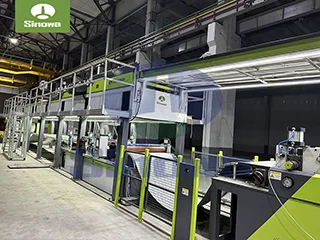
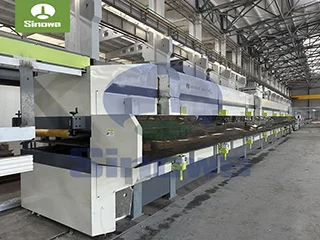
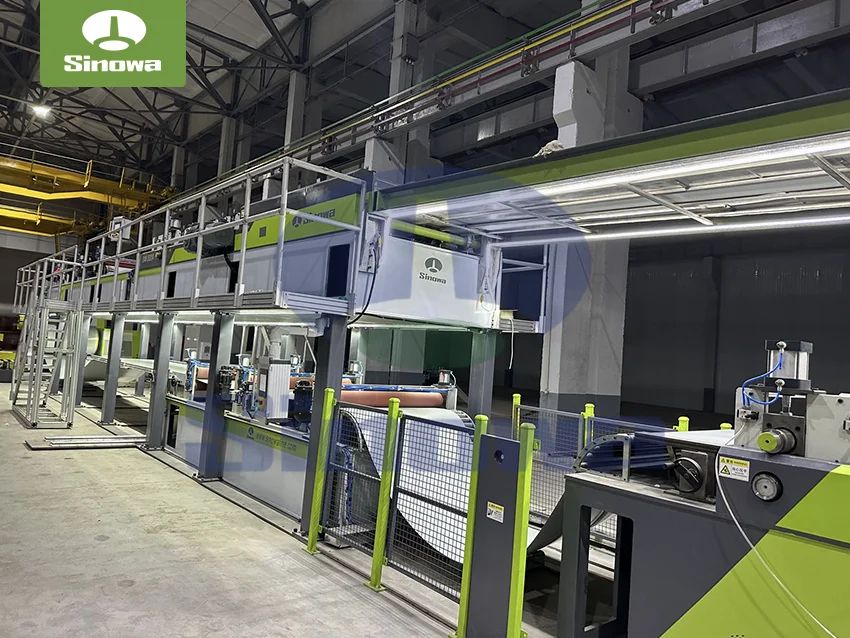
The structure of a wall insulation board production line is a sophisticated system composed of multiple functional units, each collaborating seamlessly to complete the entire production process from raw material processing to finished product packaging. The raw material processing system is the starting point of the production line, responsible for the pretreatment, proportioning, and mixing of various raw materials. This system typically includes equipment for crushing, screening, metering, and mixing, which handle a variety of raw materials such as cement, fly ash, lightweight aggregates, insulation cores, and reinforcing fibers. The accuracy of raw material proportioning directly affects the final performance of insulation boards, so the metering equipment in this system is designed to ensure precise control of ingredient ratios, minimizing errors to maintain product consistency. For instance, lightweight aggregates and insulation cores need to be screened to remove impurities and ensure uniform particle size, while powdery materials like cement and fly ash are stored in sealed silos to prevent moisture absorption and contamination. After pretreatment, the raw materials are transported to the mixing system through automated conveyor devices.
The mixing system is a key component that determines the homogeneity of the material mixture. Equipped with high-efficiency mixing equipment, this system uses mechanical stirring to fully blend different raw materials, including dry powders, aggregates, and additives, into a uniform mixture with appropriate viscosity and fluidity. The mixing speed and time are strictly controlled to avoid under-mixing or over-mixing—under-mixing leads to uneven material distribution, affecting the strength and insulation performance of the boards, while over-mixing may damage the structure of the insulation core and reduce product quality. Some advanced mixing systems are equipped with automatic cleaning functions to prevent cross-contamination between different batches of materials and reduce maintenance costs. After mixing, the homogeneous mixture is transferred to the forming system for shaping.
The forming system is responsible for converting the mixed material into insulation boards of specific shapes and sizes. Common forming processes include mold pressing, roller pressing, and casting, depending on the type of insulation board being produced. For rigid insulation boards, mold pressing technology is often adopted, where the mixture is injected into pre-designed molds and pressed under a certain pressure to form a dense structure. The molds are made of high-strength materials to ensure dimensional accuracy and surface smoothness of the products. Roller pressing technology, on the other hand, is suitable for continuous production of thin insulation boards, where the material is pressed into sheets through a set of rotating rollers with adjustable pressure and speed. This process enables high-efficiency continuous production, improving output while maintaining product flatness. After forming, the semi-finished boards are sent to the curing system to enhance their mechanical strength and stability.
The curing system is crucial for improving the performance of insulation boards, as it promotes the hydration reaction of cement-based materials and the stabilization of the insulation core structure. Curing conditions, including temperature, humidity, and curing time, are strictly controlled to ensure the boards achieve optimal strength and durability. In most production lines, the curing process is carried out in closed curing chambers equipped with temperature and humidity control systems. For cement-based insulation boards, the curing temperature is usually maintained between 20°C and 30°C, and the relative humidity is controlled above 80% to facilitate the hydration reaction. The curing time varies according to the product type, ranging from several hours to several days. After curing, the boards are transported to the cutting and packaging system for final processing.
The cutting and packaging system completes the final steps of production, ensuring the products meet the required specifications and are properly protected for transportation and storage. High-precision cutting equipment, such as CNC cutting machines, is used to cut the cured boards into standard sizes, with cutting accuracy controlled within a small range to avoid dimensional deviations. Some production lines are also equipped with edge trimming devices to ensure the edges of the boards are smooth and free of burrs. After cutting, the boards are sorted, stacked, and packaged using waterproof and shockproof materials to prevent damage during transportation. The packaging process can also be automated to improve efficiency and reduce labor costs.
The performance of a wall insulation board production line is reflected in multiple aspects, including production efficiency, product quality stability, energy conservation, environmental friendliness, and operational flexibility. Production efficiency is a key indicator for evaluating the performance of the production line, which is determined by the speed of each process unit and the degree of automation. Modern production lines adopt advanced automated control systems, which realize the integration of raw material feeding, mixing, forming, curing, cutting, and packaging, reducing manual intervention and improving production efficiency. The output of a single production line can vary according to its scale, ranging from several hundred to several thousand square meters per day, meeting the needs of different production scales.
Product quality stability is another core performance characteristic of the production line. Through precise control of raw material proportioning, mixing parameters, forming pressure, and curing conditions, the production line can ensure that the performance indicators of each batch of products are consistent. Key performance indicators of insulation boards, such as thermal conductivity, compressive strength, water absorption, and fire resistance, are closely related to the production process parameters. For example, the thermal conductivity of insulation boards is affected by the type and content of the insulation core, as well as the density of the board. The production line adjusts these parameters according to product requirements to ensure the thermal insulation performance meets the application needs. In addition, the production line is equipped with online detection equipment to monitor product thickness, flatness, and other indicators in real time, promptly adjusting process parameters to avoid defective products.
Energy conservation and environmental friendliness have become important performance requirements for modern wall insulation board production lines, in line with the global trend of green development. These production lines adopt a series of energy-saving measures, such as using high-efficiency motors, optimizing heating systems, and recycling waste heat, to reduce energy consumption. For example, the waste heat generated during the curing process can be recycled to heat the raw materials or the curing chamber, reducing energy waste. In terms of environmental protection, the production line is equipped with dust removal, waste water treatment, and noise reduction equipment to minimize environmental impact. Dust generated during raw material processing is collected by bag-type dust collectors to avoid air pollution; waste water from cleaning equipment is treated and recycled, reducing water resource consumption; and noise from mechanical operation is controlled through sound insulation and damping measures, ensuring compliance with environmental standards. Moreover, many production lines use renewable or waste materials as raw materials, such as fly ash and recycled aggregates, realizing the resource utilization of waste and reducing environmental pressure.
Operational flexibility is also an important performance feature of wall insulation board production lines, allowing them to adapt to the production of different types and specifications of insulation boards. By adjusting raw material ratios, mold sizes, forming pressure, and other parameters, the production line can produce insulation boards with different thicknesses, densities, and performance characteristics to meet the diverse needs of architectural projects. For example, it can switch between producing rock wool insulation boards, expanded polystyrene (EPS) insulation boards, and extruded polystyrene (XPS) insulation boards by changing the insulation core material and adjusting the mixing and forming parameters. This flexibility enables manufacturers to respond quickly to market changes, expand product ranges, and improve market competitiveness.
Based on the type of insulation core material and production process, the insulation boards produced by the production line can be divided into multiple categories, each with unique performance characteristics and application scenarios. Rock wool insulation boards are made of natural rock or slag as the main raw material, processed through melting, fiberization, and molding. They have excellent fire resistance, belonging to non-combustible materials, and also exhibit good sound insulation and high-temperature resistance. The thermal conductivity of rock wool insulation boards is approximately 0.040 W/(m·K), making them suitable for applications with high fire safety requirements, such as high-rise buildings, public buildings, and crowded places. However, rock wool boards have high water absorption, requiring strict waterproof treatment during construction, and their brittle texture may bring inconvenience to construction.
Expanded polystyrene (EPS) insulation boards are produced by expanding and molding polystyrene resin. They have the advantages of low cost, light weight, and easy processing, with a thermal conductivity ranging from 0.030 to 0.039 W/(m·K). EPS boards are widely used in external and internal insulation of low-rise buildings due to their cost-effectiveness. However, they have poor aging resistance, with performance declining after 5 to 10 years of use, and their fire resistance is relatively general, belonging to flame-retardant or combustible materials. Extruded polystyrene (XPS) insulation boards are manufactured through extrusion molding of polystyrene resin, featuring better thermal insulation performance, higher strength, and stronger moisture resistance than EPS boards. Their thermal conductivity is between 0.024 and 0.034 W/(m·K), and they have low water absorption, making them suitable for applications in damp and load-bearing parts such as roofs, floors, and basements. Nevertheless, XPS boards have poor air permeability and dimensional stability, with a risk of falling off if not installed properly.
Rigid polyurethane foam insulation boards are produced by foaming and curing polyurethane raw materials, boasting the best thermal insulation performance among common insulation boards, with a thermal conductivity of ≤0.024 W/(m·K). They also have excellent waterproof performance and strong adhesion, making them suitable for roofs, cold storage, and other projects with high requirements for thermal insulation and waterproofing. However, their production cost is relatively high, and on-site spraying construction requires strict technical control. Homogeneous insulation boards, also known as true gold boards, are improved products based on traditional EPS boards, with enhanced fire resistance reaching non-combustible levels. They solve the flammability problem of EPS boards but have higher density and lower thermal insulation performance compared to EPS boards, with a thermal conductivity ranging from 0.045 to 0.060 W/(m·K). They are mainly used in external wall insulation systems with fire safety requirements.
Insulation and decoration integrated boards are composite products integrating insulation, decoration, and protection functions, adopting a "sandwich" structure consisting of a decorative surface layer, a reinforcing layer, an insulation core layer, and an adhesive layer. The decorative surface layer is usually made of fluorocarbon paint, real stone paint, or ceramic thin plates, providing good weather resistance and aesthetic appearance. The reinforcing layer, made of high-strength inorganic materials such as calcium silicate board, ensures the structural stability of the board. The insulation core layer can be EPS, XPS, rock wool, or polyurethane, with thermal conductivity depending on the core material. These integrated boards are prefabricated in factories, enabling fast construction and beautiful appearance, making them suitable for external wall insulation and decoration of various buildings, especially for energy-saving renovation of existing buildings. However, their manufacturing cost is high, and the installation process requires high precision.
Inorganic lightweight aggregate insulation boards, such as foamed cement boards and ceramic insulation boards, are made of inorganic materials through foaming or sintering. They have excellent fire resistance, durability, and compatibility with building structures, with a service life consistent with that of the building. Their thermal conductivity ranges from 0.050 to 0.068 W/(m·K), which is lower than that of organic insulation boards, but they have higher density and self-weight. They are mainly used in parts with extremely high fire safety requirements or specific architectural designs.
The applications of wall insulation boards produced by the production line cover a wide range of architectural scenarios, including residential buildings, commercial buildings, public facilities, and industrial buildings, playing a crucial role in improving building energy efficiency, comfort, and safety. In residential buildings, insulation boards are widely used in external walls, roofs, and basements to reduce heat transfer between the indoor and outdoor environments. In cold northern regions, they help maintain indoor temperature stability in winter, reducing heating energy consumption; in hot southern regions, they block outdoor heat from entering the room, reducing air conditioning energy consumption. For example, external wall insulation systems using EPS or XPS boards can reduce the overall heat transfer coefficient of the wall to 0.3-0.8 W/(m²·K), far lower than that of traditional walls, significantly improving energy efficiency and reducing household energy bills.
In commercial buildings such as shopping malls, office buildings, and hotels, insulation boards not only provide thermal insulation but also contribute to sound insulation and fire safety. Shopping malls and hotels with large indoor spaces and high personnel density have strict requirements for fire safety, so rock wool insulation boards or homogeneous insulation boards with A-level fire resistance are often used. These boards can effectively prevent the spread of fire and reduce casualties and property losses in case of fire. Meanwhile, the sound insulation performance of insulation boards helps reduce noise transmission between different areas of the building, improving the comfort of the indoor environment for customers and employees.
Public facilities such as schools, hospitals, and stadiums have higher requirements for building safety and durability, making insulation boards an essential part of their construction. Schools and hospitals, as crowded places, are required by relevant regulations to use non-combustible insulation materials, so rock wool insulation boards are the preferred choice. They not only meet fire safety standards but also have good thermal insulation and sound insulation performance, creating a comfortable learning and medical environment. Stadiums and other large-span buildings often use insulation and decoration integrated boards, which combine thermal insulation and aesthetic functions, meeting the requirements of architectural design while ensuring energy efficiency.
In industrial buildings such as factories and cold storage, insulation boards play a vital role in maintaining stable indoor temperatures and protecting equipment and products. Cold storage requires strict temperature control, so rigid polyurethane foam insulation boards with excellent thermal insulation and waterproof performance are widely used. These boards can effectively prevent cold air leakage, reduce refrigeration energy consumption, and ensure the quality of stored goods. Factories with high-temperature production processes use insulation boards to insulate walls and equipment, reducing heat loss and improving production efficiency, while also protecting the safety of workers.
In addition to new building construction, insulation boards are also widely used in the energy-saving renovation of existing buildings. Many old buildings have poor thermal insulation performance, resulting in high energy consumption and poor indoor comfort. By adding insulation boards to the external walls, roofs, and other parts of these buildings, their energy efficiency can be significantly improved, reducing energy consumption and enhancing living comfort. Insulation and decoration integrated boards are particularly suitable for such renovation projects due to their fast construction speed and beautiful appearance, minimizing the impact on residents' lives during the renovation process.
The application of wall insulation board production lines also extends to special architectural scenarios, such as high-altitude buildings, coastal buildings, and cold-region buildings. High-altitude buildings are subject to strong wind pressure, requiring insulation boards with high compressive strength and wind resistance, which can be produced by adjusting the forming pressure and reinforcing material content of the production line. Coastal buildings face harsh environments such as high humidity and salt spray corrosion, so insulation boards with good corrosion resistance and moisture resistance are needed, and the production line can optimize the raw material ratio and surface treatment process to meet these requirements. Cold-region buildings require insulation boards with thicker insulation layers and better thermal insulation performance, and the production line can adjust the thickness of the insulation core and the density of the board to adapt to the local climate conditions.
Looking forward, with the continuous advancement of building energy efficiency standards and the deepening of green building concepts, the demand for wall insulation boards will continue to grow, and the wall insulation board production line will also face new development opportunities and challenges. Technological innovation will be the core driving force for the development of production lines, with trends towards higher automation, more precise process control, and greener production. For example, the integration of intelligent control systems will realize real-time monitoring and optimization of the entire production process, further improving product quality and production efficiency; the development of new environmentally friendly raw materials and processes will reduce the environmental impact of production and enhance the sustainability of products. At the same time, the production line will continue to expand its product range, developing insulation boards with more excellent performance to meet the increasingly diverse needs of the construction industry.
In conclusion, the wall insulation board production line is a complex and sophisticated equipment system that integrates multiple technological processes. Its reasonable structure, excellent performance, and diverse product types provide strong support for the production of high-quality wall insulation boards. The wide application of these insulation boards in various architectural scenarios not only improves building energy efficiency and comfort but also promotes the sustainable development of the construction industry. With the continuous progress of technology and the increasing emphasis on energy conservation and environmental protection, the wall insulation board production line will play an even more important role in the future, contributing to the construction of a greener and more energy-efficient built environment.
https://www.cnsinowa.com/sandwich-panel-machines/wall-insulation-board-production-line.html