sandwich panel machine
The overall structural composition of the PU sandwich panel machine is highly systematic and modular, with each functional unit closely coordinated and mutually restricted to form a complete closed-loop production system. The entire production line can be divided into multiple core functional modules according to the production sequence, including the surface material feeding and pretreatment module, roll forming shaping module, high-precision PU foam mixing and injection module, constant-temperature lamination and curing module, fixed-length cutting module, cooling shaping module, and automatic stacking module. Each module is equipped with independent power and control units, and the whole line is unified and coordinated by the central control system, ensuring that each production link operates in precise rhythm and stable state. The roof sandwich panel production equipment is designed based on the structural characteristics and performance requirements of roof panels, fully adapting to the special needs of roof panels such as wind resistance, waterproofing, thermal insulation, and structural bearing, avoiding the performance defects of ordinary wall sandwich panels in roof application scenarios.
The front-end feeding and pretreatment system is the foundation of stable production, mainly responsible for the supply and preprocessing of metal surface materials for roof panels. The system is equipped with multi-station unwinding devices, which can carry and release coiled metal materials such as galvanized steel sheets, aluminum sheets, and color-coated steel sheets that are commonly used for roof panels. Different from ordinary flat panel production, the unwinding unit for roof panel production is optimized with deviation correction and tension control structures. In the process of material releasing, it can dynamically adjust the material conveying tension according to the material thickness and running speed, effectively preventing the metal sheet from deviation, wrinkling, and stretching deformation during high-speed operation. After unwinding, the metal sheet will pass through the surface pretreatment unit, which completes surface cleaning, oil removal, and preheating treatment. The surface cleaning process removes dust, oil stains, and oxide layers on the surface of the metal sheet, eliminating the barrier between the metal surface and PU foam, while the preheating operation raises the surface temperature of the metal sheet to the optimal range for foam bonding, laying a solid foundation for improving the bonding strength between the surface material and the core material and enhancing the overall structural stability of the finished roof panel.
The roll forming module is a key unit to shape the geometric structure of roof panels, directly determining the dimensional accuracy and structural adaptability of the final product. This module consists of multiple groups of precision forming roller sets and transmission mechanisms, and the number of forming stations is configured according to the profile requirements of different roof panels. In the working process, the flat metal sheet is gradually pressed, bent, and shaped by the orderly arranged forming rollers, completing the processing of special structures such as roof board wave crests, grooves, and connecting bite edges. The roller shafts of the forming equipment are processed with high-precision machining and surface hardening treatment, which can maintain stable forming accuracy during long-term continuous operation and avoid profile deformation and size deviation caused by roller wear. The transmission system adopts synchronous driving structure, ensuring the consistent running speed of each forming section, so that the metal sheet can complete continuous and smooth shaping without indentation or distortion. Through parameter adjustment, the equipment can adapt to the forming processing of metal sheets with different thicknesses and different roof panel profile specifications, realizing flexible production of diversified products and meeting the personalized structural needs of different building roof projects.
The PU foam mixing and injection system is the core functional unit that determines the thermal insulation performance and internal structural quality of sandwich roof panels, relying on precise chemical proportioning and dynamic mixing technology to complete the foaming core material production. Polyurethane foam is formed by the chemical reaction of two main raw materials, polyol and isocyanate, and the system is equipped with independent sealed storage and temperature control devices for the two raw materials. The constant-temperature control system keeps the raw materials in the most active reaction temperature state at all times, avoiding the change of raw material viscosity and reaction activity caused by ambient temperature fluctuation, which affects the foaming quality. The high-precision metering pump in the system can accurately control the proportion and flow rate of the two raw materials, ensuring that the raw materials are mixed in the optimal reaction ratio. After entering the dynamic mixing chamber, the raw materials are fully stirred and blended at high speed to form a uniform liquid mixed material, which is free of particle agglomeration and component stratification.
The uniformly mixed PU liquid material is continuously and evenly injected into the closed cavity between the pre-formed upper and lower metal surface sheets through the movable injection nozzle. The injection nozzle adopts reciprocating sweeping injection mode, which can cover the entire width of the panel, ensuring that the liquid foam is evenly distributed in the cavity without missing injection or accumulation. In a short time after injection, the PU liquid undergoes rapid chemical reaction, producing foaming expansion and gradually filling the entire gap between the upper and lower surface materials. The foaming speed and expansion multiple are precisely controlled by the system parameters, so that the foam core material can reach uniform density and compact structure after molding. This precise foaming control mode effectively avoids common quality problems such as hollow core, uneven density, and local bulging of traditional foaming products, ensuring that each finished roof panel has consistent thermal insulation performance and internal structural uniformity.
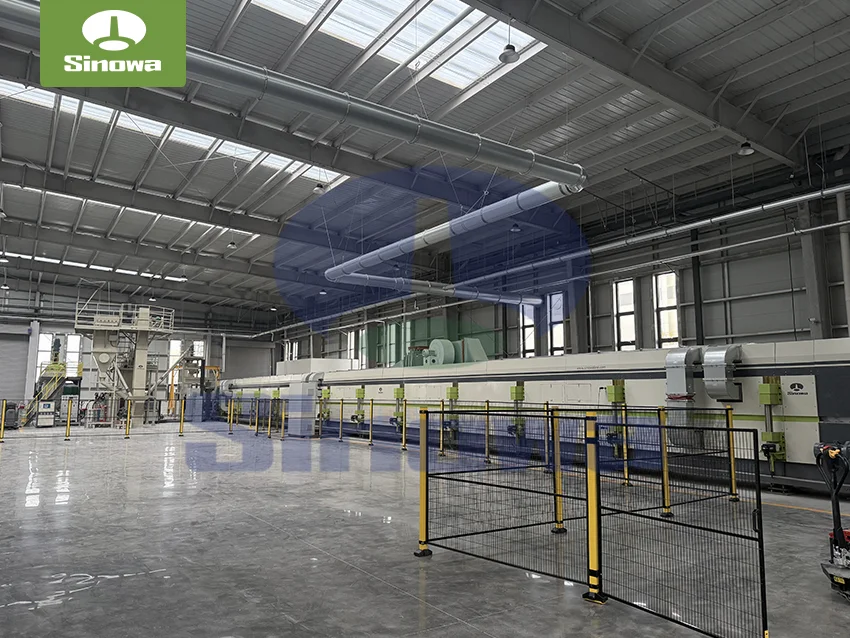
The lamination and curing system undertakes the key process of composite molding and solidification of roof panels, which is the key link to realize the tight bonding of metal surface materials and PU foam core materials. The system adopts a double-belt continuous pressing structure, and the upper and lower circulating belts form a closed pressing channel. The composite plate embryo after foam injection enters the pressing channel and moves forward synchronously with the circulating belt. The constant-pressure and constant-temperature environment inside the channel provides optimal conditions for foam curing and interface bonding. The pressure of the lamination system is uniformly distributed in the entire pressing area, which can tightly laminate the expanded foam core material with the upper and lower metal sheets, eliminating the gap between layers. At the same time, the constant-temperature curing environment accelerates the cross-linking and solidification reaction of polyurethane molecules, enabling the foam to quickly form a stable three-dimensional porous structure and form a firm integrated bonding state with the metal surface.
The length of the curing channel is scientifically designed according to the production speed and foam curing cycle, ensuring that the PU foam can complete sufficient curing reaction before leaving the lamination system. The fully cured sandwich panel has no relative sliding or peeling trend between the surface layer and the core layer, and the overall structural rigidity and integrity are significantly improved. Different from wall sandwich panels, the lamination process of roof panels properly optimizes the pressure distribution and curing time according to the roof's bearing and wind resistance requirements, enhancing the overall compactness and structural strength of the panel, so that the product can adapt to the outdoor complex wind and rain erosion environment and long-term load-bearing working conditions.
The fixed-length cutting and post-processing system realizes the precise sizing and finishing of finished roof panels. After continuous lamination and curing, the integral long strip of sandwich panel is conveyed to the cutting station at a constant speed. The automatic cutting system adopts tracking and synchronous cutting technology, which can follow the running speed of the panel in real time to complete fixed-length cutting, avoiding the size error caused by speed fluctuation. The cutting tool is made of high-hardness materials, which can complete smooth cutting of composite structures of metal sheets and PU foam without burrs, edge collapse, or foam peeling, ensuring flat and neat cutting sections. After cutting, the finished panels enter the cooling and shaping area, and the natural air cooling mode is used to gradually release the internal stress generated during the pressing and curing process, effectively preventing the panels from bending and deforming after molding and further stabilizing the overall flatness and structural performance of the products.
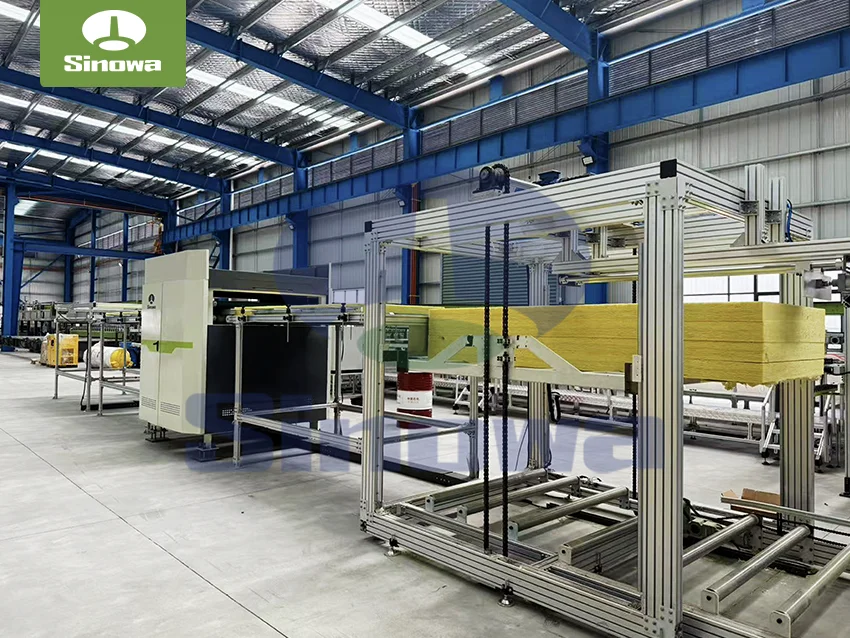
The final automatic stacking system completes the orderly collection and arrangement of finished roof panels. The system can automatically complete plate picking, transferring, and stacking according to the set parameters, realizing unmanned finished product sorting and storage. The mechanical clamping and transferring structure is equipped with buffer protection devices, which can avoid surface scratch and edge damage of the panels during the handling process, ensuring the appearance quality of finished products. The whole production process from raw material feeding to finished product stacking is automatically completed by the equipment, with minimal manual intervention, which greatly reduces the labor cost and human error in the production process and improves the overall production efficiency and product yield.
The intelligent control system runs through the entire production process of the PU sandwich panel line and is the brain to ensure the stable and efficient operation of the production line. The centralized control platform integrates parameter setting, real-time monitoring, fault diagnosis, and data statistics functions. Operators can set production parameters such as panel width, thickness, fixed-length size, production speed, and foam density through the control interface. The system can automatically adjust the operating state of each functional module in real time, realizing the synchronous matching of unwinding speed, forming frequency, foam injection volume, lamination pressure, and cutting rhythm. In the production process, the control system continuously monitors key data such as raw material temperature, metering ratio, lamination pressure, and curing temperature. Once abnormal parameter fluctuations occur, the system will automatically adjust or send out early warning signals to avoid batch quality problems and equipment failures.
In terms of production performance, the PU sandwich panel production line has significant advantages in production efficiency and product quality stability. The continuous production mode breaks through the bottleneck of low efficiency of traditional intermittent production equipment, realizing uninterrupted continuous production, and the unit time output is greatly improved. The precise parameter control system ensures that the thickness, density, bonding strength, and appearance size of each batch of roof panels maintain high consistency, effectively solving the problems of uneven product quality and large performance difference in manual and semi-automatic production modes. The roof panels produced by this equipment have excellent overall performance, with tight integration of metal surface and PU core layer, good thermal insulation, heat preservation, sound insulation and shock absorption effects, and outstanding structural wind resistance, pressure resistance and waterproof performance, fully meeting the harsh use requirements of building roof parts.
In terms of equipment operation and maintenance, the modular structural design brings great convenience to daily use and later maintenance. Each functional module is independent and interconnected, which is convenient for daily inspection, component replacement and fault maintenance. The key transmission and working components are equipped with wear-resistant and protective structures, which reduce the loss rate of parts and extend the stable service life of the equipment. The equipment is also optimized for energy-saving design, with the temperature control system and power system automatically adjusting the operating power according to the production load, reducing invalid energy consumption in the production process and improving the overall energy utilization efficiency of production.
With the continuous upgrading of modern building energy-saving and environmental protection requirements, PU sandwich roof panels have become the mainstream thermal insulation and waterproof roof materials for new industrial and civil buildings, and the market demand for supporting production equipment is also constantly improving. The professional polyurethane sandwich panel production line, targeting the personalized performance needs of roof products, realizes standardized, efficient and high-quality batch production of roof panels through systematic technological optimization and structural upgrading. It not only improves the production level of the sandwich panel industry, but also provides reliable equipment support for the popularization and application of high-performance energy-saving building materials. In the future, with the continuous development of intelligent manufacturing technology, such production equipment will further develop towards higher automation, more precise control, stronger flexibility and lower energy consumption, continuously adapting to the iterative upgrading needs of the construction industry for energy-saving, environmental protection and high-strength building enclosure materials.
https://www.cnsinowa.com/sandwich-panel-machines/pu-sandwich-panel-roof-panel-production-machine.html