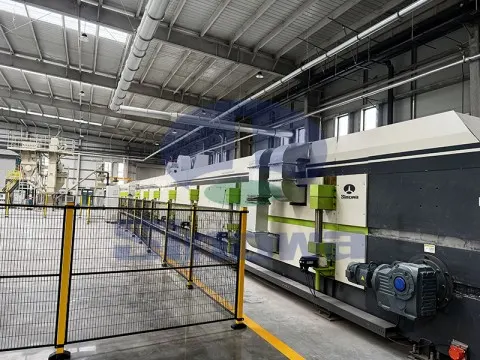
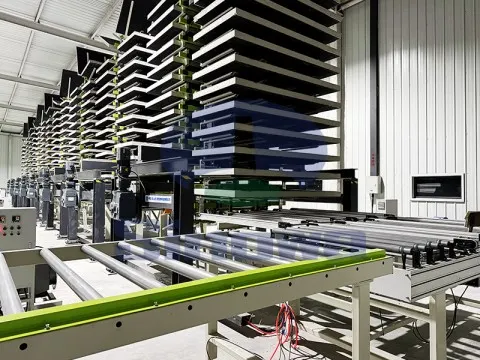
sandwich panel line
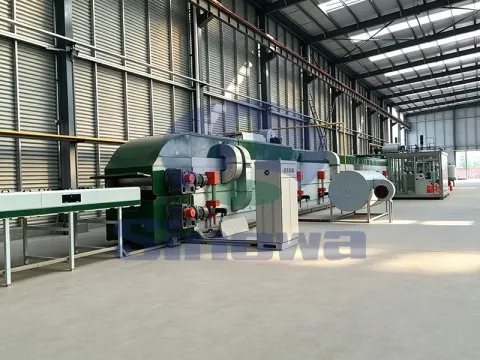
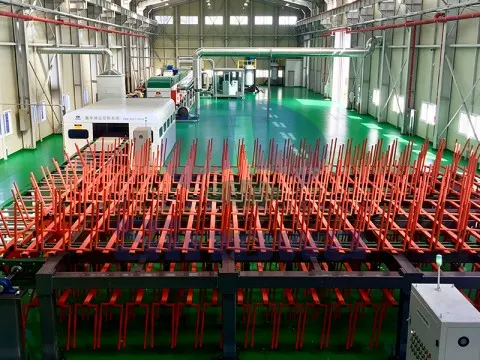
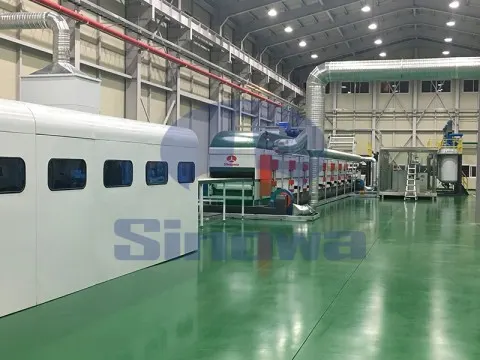
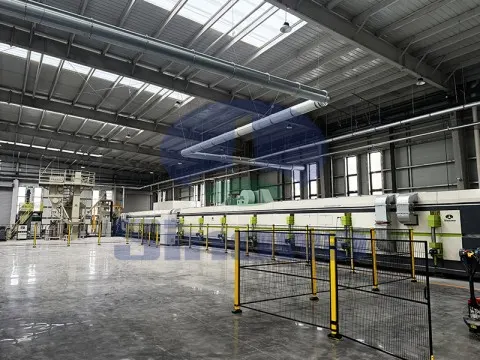
Delving into the structural composition of the thermal insulation board manufacturing line, it comprises several interconnected functional modules that work in tandem to execute specialized tasks, each critical to the final product’s integrity. The initial stage is the raw material preparation and batching unit, which handles the precise measurement and mixing of base materials—ranging from polymer resins and foaming agents to mineral fibers and binding compounds—based on the desired board type. This unit is equipped with automated dosing systems to eliminate human error in material ratios, a key factor in maintaining consistent performance characteristics; for foam-based boards, it ensures uniform distribution of foaming agents to create consistent cell structures, while for mineral-based boards, it blends fibers and binders to achieve optimal cohesion. Following batching is the forming and molding section, the heart of the production line, where mixed materials are shaped into continuous panels through extrusion, molding, or lamination processes. Extrusion-based setups push heated materials through calibrated dies to form dense, uniform boards, ideal for closed-cell foam products, while molding systems use pressure and heat to cure loose fibers or foam beads into rigid panel structures, suitable for mineral wool and expanded foam boards. Next comes the curing and conditioning module, which stabilizes the newly formed boards by controlling temperature, humidity, and cooling rates to enhance structural strength, prevent warping, and lock in thermal properties; this stage is vital for eliminating internal stresses within the boards, ensuring they maintain their shape and performance under long-term use. The line also includes a finishing and cutting unit, equipped with high-precision saws and edge trimmers to cut boards to standard or custom sizes, smooth edges, and apply surface treatments that improve compatibility with adhesives or building materials. Finally, the quality inspection and packaging unit conducts non-destructive checks for density, thickness, and surface defects, then packages finished boards for storage and transport, completing the end-to-end production cycle. Every module is linked by automated conveyor systems, reducing manual handling and boosting production efficiency while minimizing material waste.
The performance attributes of insulation boards produced via these manufacturing lines are defined by a set of core characteristics that dictate their suitability for specific applications, with each property shaped by both raw material selection and line processing parameters. Foremost among these is thermal conductivity, the defining performance metric that measures a board’s ability to resist heat transfer; low thermal conductivity values signify superior insulation efficiency, as they minimize heat gain in warm climates and heat loss in cold regions, directly reducing energy consumption for heating and cooling systems. Compressive strength is another critical performance trait, determining the board’s ability to withstand static and dynamic loads without deformation or breakage. Boards with high compressive strength are engineered to support heavy weights, making them suitable for flooring, roofing, and underground applications where structural load-bearing is essential, while those with moderate compressive strength excel in wall insulation and non-load-bearing scenarios. Moisture resistance and water absorption rates are equally vital, especially in humid or damp environments; boards with low water absorption prevent moisture penetration, which not only preserves thermal performance (wet insulation loses much of its insulating capacity) but also resists mold growth, rot, and structural degradation over time. Dimensional stability is a key durability indicator, referring to the board’s ability to retain its original shape and size despite fluctuations in temperature, humidity, and external pressure; boards with high dimensional stability avoid warping, shrinking, or expanding, ensuring a tight fit in building assemblies and long-term structural integrity. Additional performance features include fire resistance, sound absorption, and aging resistance, which further expand the boards’ functional versatility. Fire-resistant grades slow the spread of flames and reduce smoke emission, a non-negotiable feature for commercial and residential construction; sound-absorbent properties dampen airborne and impact noise, enhancing acoustic comfort in buildings; and aging resistance ensures the boards retain their performance characteristics for decades, even when exposed to UV radiation, extreme temperatures, or chemical exposure. Collectively, these performance traits are not arbitrary but are fine-tuned during the manufacturing process, with adjustments to material ratios, curing temperatures, and molding pressure directly altering the final product’s capabilities.
Thermal insulation boards are categorized into distinct types based on their raw material composition and structural makeup, each offering a unique blend of performance features to suit specific use cases, all efficiently produced on adaptable manufacturing lines. One of the most prevalent categories is expanded polystyrene (EPS) boards, manufactured from polystyrene beads expanded through heat and foaming agents to form a lightweight, closed-cell structure. EPS boards are characterized by low thermal conductivity, moderate compressive strength, and excellent moisture resistance, with a porous yet rigid cell structure that balances insulation performance and cost-effectiveness. The manufacturing line for EPS boards leverages pre-expansion, molding, and curing stages to create boards of varying densities, making them suitable for a wide range of general construction applications. Extruded polystyrene (XPS) boards represent a higher-density alternative, produced through extrusion processes that create a seamless, closed-cell structure with minimal voids; this structure grants XPS boards exceptional compressive strength, near-zero water absorption, and enhanced durability compared to EPS, making them ideal for high-load and moisture-prone environments. The extrusion-based manufacturing line maintains tight control over temperature and pressure to form dense, uniform panels, ensuring consistent performance across all thicknesses. Polyisocyanurate (PIR) and polyurethane (PUR) boards fall under the rigid foam category, formulated from polymer resins that react to form a highly efficient insulating cell structure; these boards boast the lowest thermal conductivity among common foam insulation boards, delivering superior thermal performance in thinner profiles, along with good compressive strength and moderate moisture resistance. The manufacturing line for PIR/PUR boards involves chemical foaming and continuous lamination, producing panels that are lightweight yet highly efficient, ideal for space-constrained applications. Mineral wool boards, including stone wool and slag wool variants, are inorganic insulation products made from molten natural stone or industrial slag spun into fine fibers and bonded under heat and pressure. These boards feature a fibrous, open-cell structure that excels in fire resistance, sound absorption, and high-temperature stability, with negligible thermal expansion and excellent vapor permeability. The manufacturing line for mineral wool boards processes molten minerals into fibers, compresses them into rigid panels, and cures the binder to create durable, non-combustible insulation suitable for high-safety and high-temperature environments. Other specialized types include cellular glass boards, made from crushed glass fused and foamed into a rigid, closed-cell structure, offering exceptional fire resistance, moisture resistance, and compressive strength for extreme industrial and underground applications, and wood fiber boards, crafted from natural wood fibers bonded with eco-friendly binders, providing breathable, sustainable insulation with good thermal and acoustic performance for green building projects. Each type is manufactured with targeted adjustments to the production line, highlighting the system’s flexibility to cater to diverse material and performance requirements.
The versatility of thermal insulation boards, enabled by advanced manufacturing lines, translates to a vast array of applications across residential, commercial, industrial, and infrastructure sectors, with each type deployed to address specific thermal, structural, and environmental needs. In the residential construction sector, insulation boards are ubiquitous in wall, roof, floor, and foundation insulation, enhancing the energy efficiency of homes and improving indoor thermal comfort. EPS and XPS boards are commonly used in exterior wall sheathing and attic insulation, reducing heat transfer through building envelopes and lowering household energy bills, while mineral wool boards are favored for interior wall and floor insulation due to their sound-dampening and fire-resistant properties, creating safer, quieter living spaces. For commercial buildings, including offices, shopping centers, and hospitals, the demand for high-performance insulation is even greater, and PIR/PUR boards are often selected for their superior thermal efficiency, allowing for thinner insulation layers that maximize usable interior space without compromising energy performance. These boards are also used in flat and sloped roofing systems, where their compressive strength and moisture resistance protect roofing membranes and extend the lifespan of the entire roof structure. Industrial applications demand insulation boards with extreme durability and specialized performance, making XPS, mineral wool, and cellular glass boards the top choices. These boards insulate industrial warehouses, manufacturing facilities, and cold storage units, maintaining stable internal temperatures to protect goods, equipment, and production processes; cold storage facilities, in particular, rely on moisture-resistant, high-insulation boards to prevent temperature fluctuations and frost buildup, ensuring the integrity of perishable items. In infrastructure projects, insulation boards play a critical role in transportation and civil engineering, used to insulate highway and bridge decks to prevent frost heave, protect underground pipelines from temperature extremes, and stabilize soil temperatures in tunnel construction. XPS boards are ideal for below-grade infrastructure applications due to their exceptional moisture resistance and load-bearing capacity, while mineral wool boards insulate industrial chimneys and high-temperature equipment, withstanding extreme heat without degradation. The green building and sustainable construction sector has also driven increased demand for eco-friendly insulation boards, such as wood fiber and low-carbon foam boards, which are produced on modified manufacturing lines to minimize environmental impact; these boards are used in passive house designs and net-zero energy buildings, aligning with global sustainability goals to reduce carbon emissions from the construction industry. Beyond construction and infrastructure, insulation boards find niche applications in automotive manufacturing, marine vessels, and HVAC systems, where compact, high-efficiency thermal insulation is required to regulate temperatures and improve energy performance. Across every application, the consistent quality and tailored performance of insulation boards, made possible by robust, adaptable manufacturing lines, ensure they meet the strict functional requirements of each sector, solidifying their role as indispensable materials in modern engineering and construction.
In summary, the thermal insulation board manufacturing line is a sophisticated, adaptable system that bridges material production and real-world performance, delivering insulation panels with diverse structural designs, performance profiles, and functional capabilities. The line’s integrated structural modules ensure efficient, consistent production, while the careful calibration of processing parameters shapes the core performance traits of thermal conductivity, compressive strength, moisture resistance, and durability. The wide range of insulation board types—from foam-based EPS and XPS to inorganic mineral wool and sustainable wood fiber—caters to every conceivable application, from residential energy efficiency to industrial high-temperature insulation. As global focus on energy conservation and sustainable building practices intensifies, the role of advanced thermal insulation board manufacturing lines becomes increasingly pivotal, driving the development of higher-performance, more eco-friendly insulation solutions. By continuously refining production processes and material formulations, manufacturers can enhance the quality and versatility of insulation boards, further expanding their applications and contributing to a more energy-efficient, sustainable built environment for years to come.
Sinowa is a professional manufacturer of sandwich panel machine in china, we provide diversified and high-performance sandwich panel production lines, including fully automatic continuous PU sandwich panel line and customized special lines to meet mass production and personalized order demands. These sandwich panel lines support processing multiple foam core materials, such as PU, PIR, mineral wool, rock wool and glass wool, covering different insulation and fireproof standards.
Featuring stable operation, high efficiency, energy saving and easy maintenance, our PU sandwich panel line deliver sandwich panels with excellent thermal insulation, fire resistance, sound insulation and lightweight durability. The finished panels are widely applied in industrial workshops, warehouse roofing and wall cladding, cold storage insulation, serving global construction and industrial insulation markets.
https://www.cnsinowa.com/sandwich-panel-machines/thermal-insulation-board-manufacturing-line.html