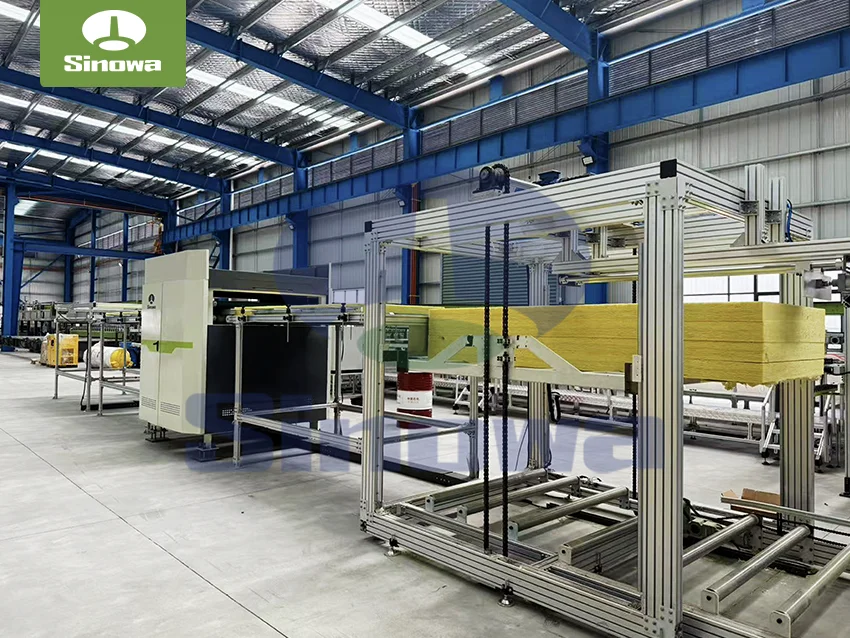
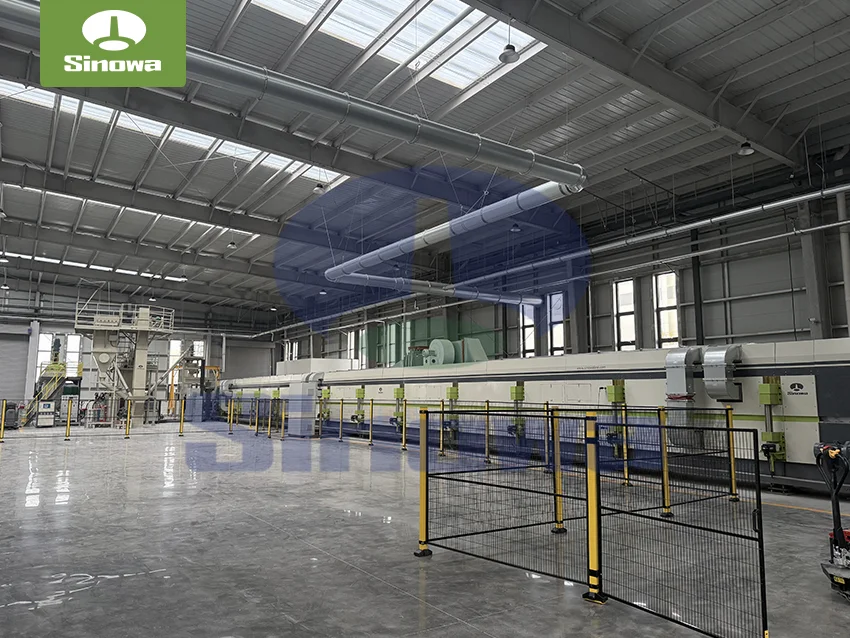
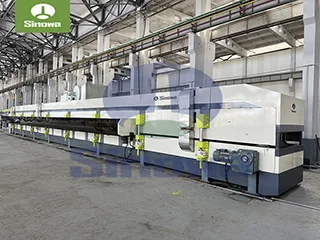
sandwich panel machine
The core operational logic of the PU sandwich panel production line with multi-component foaming system lies in the independent delivery, accurate metering and synchronous collaborative reaction of multiple raw material components. The basic reaction matrix of polyurethane foam is composed of polyol and isocyanate, which determine the basic forming structure and mechanical properties of the foam core layer. On this basis, the multi-component system adds multiple functional auxiliary materials including composite catalysts, foam stabilizers, viscosity regulators, flame retardant additives and pore refining agents. Each component is stored in independent sealed temperature-preservation tanks inside the equipment, avoiding cross-contamination between different raw materials and ensuring the activity stability of chemical materials during long-term continuous production. All material conveying pipelines are independently arranged and matched with high-precision dynamic metering units, which can adjust the conveying flow of each component in real time according to production parameters, realizing micro-level proportional control that cannot be achieved by traditional foaming equipment.
In the actual production process, the polyurethane sandwich panel production line first completes the pre-regulation of raw material temperature and fluid state. The built-in constant temperature control system maintains all raw materials in the optimal reaction temperature range, eliminating the quality fluctuation problems caused by ambient temperature changes and raw material viscosity differences. After pretreatment, each component is transported to the high-pressure dynamic mixing chamber according to the set proportion. Different from the static mixing mode of traditional equipment, the multi-component mixing structure adopts high-speed turbulent mixing technology, which can fully fuse multiple functional components with basic polyurethane raw materials in an instant, ensuring that each micro-unit of the mixed liquid contains uniform reaction components. This uniform mixing state lays a foundation for the subsequent consistent foaming reaction, avoiding common defects such as uneven foam density, large pore size difference and local hollowing in traditional single or two-component foaming processes.
The foaming reaction process is the key link determining the performance of PU sandwich panel core material, and the multi-component system shows unique technical advantages in reaction regulation. The composite catalyst components in the system can intelligently adjust the reaction rate of polyurethane polymerization and gas foaming. In the early stage of injection, the low-dose catalytic components delay the rapid reaction of the mixed liquid, ensuring that the foaming liquid can fully and evenly fill the gap between the upper and lower surface sheets of the sandwich panel. When the filling process is completed and enters the laminating curing stage, the catalytic efficiency is dynamically improved to accelerate the cross-linking curing reaction of polyurethane molecules, realizing rapid molding and shortening the production cycle. The foam stabilizer and pore refining agent cooperate with each other to standardize the growth track of bubble pores during the foaming expansion process, inhibit the generation of large pores and broken pores, and form a closed-cell structure with uniform size and dense arrangement inside the foam core layer. This fine and uniform closed-cell structure greatly improves the thermal insulation performance, compressive strength and dimensional stability of the panel.
Viscosity regulation components are another key functional part of the multi-component foaming system, solving the technical bottleneck of poor fluidity and uneven spreading of foaming liquid in large-width panel production. In the production of wide-specification PU sandwich panels, the foaming liquid needs to spread horizontally in a large area between two layers of metal or non-metal surface sheets. Improper viscosity of the mixed liquid will lead to excessive flow speed, resulting in material accumulation at the edge of the panel and insufficient filling in the middle area, or excessive viscosity leading to incomplete spreading and local blank areas. The multi-component system can adjust the fluid viscosity of the mixed foaming liquid in real time according to the panel width, production speed and process temperature, maintaining the optimal fluidity and leveling performance. This enables the foaming liquid to complete uniform and flat spreading in the set gap, and form a core layer with consistent thickness and density after foaming and curing, effectively improving the overall flatness and structural uniformity of the finished sandwich panel.
Compared with traditional polyurethane sandwich panel line, the equipment equipped with multi-component foaming system has achieved comprehensive upgrades in production stability and product performance consistency. Traditional two-component foaming equipment has a single reaction regulation means, and the foaming state is easily affected by external environmental factors and raw material batch differences, resulting in obvious differences in density, hardness and thermal insulation performance of panels produced in different time periods. The multi-component collaborative control system builds a multi-dimensional regulation mechanism for the foaming reaction process. Through the coordinated action of multiple functional components, it can offset the performance fluctuations caused by raw material subtle differences and environmental changes, so that the core material performance of each batch of panels can be maintained within a narrow and stable range. The finished panels produced by this equipment have more uniform internal stress, better flatness after long-term use, and effectively avoid quality problems such as warping, deformation and cracking of the core layer.
In terms of structural bonding performance, the multi-component foaming system also brings significant improvements to the composite quality of sandwich panels. The optimized formula of mixed components can enhance the interfacial adhesion between polyurethane foam core layer and various surface materials, including metal color steel plates, aluminum alloy plates, glass magnesium plates and other building decorative plates. During the foaming and curing process, the functional components in the foaming liquid can form a micro-adsorption structure on the surface of the facing sheet, enhancing the mechanical bite force between the foam core and the surface material. This composite structure can maintain stable bonding performance under long-term temperature alternating changes and external wind pressure load, avoiding delamination and peeling failure between layers, and greatly improving the service life and structural reliability of the sandwich panel in building enclosure, industrial workshop wall and roof systems.
The polyurethane sandwich panel machine automated control system perfectly matches the operating characteristics of the multi-component foaming system, realizing intelligent and unmanned precise production. The central control module can monitor multiple operating parameters in real time, including the conveying flow of each raw material component, mixing pressure, reaction temperature, foaming expansion rate and curing time. When the production process needs to be adjusted for different panel specifications and performance requirements, the system can automatically match the optimal component proportion and process parameters without manual repeated debugging. This intelligent parameter adjustment mode not only simplifies the production operation process and reduces the dependence on manual experience, but also eliminates the process errors caused by human operation, further improving the consistency rate of finished products. In continuous industrial production, this stable intelligent control capability can support long-term uninterrupted operation of the production line, effectively improving production efficiency and reducing comprehensive production consumption.
From the perspective of material application and performance optimization, the multi-component foaming system can realize personalized customization of panel performance through flexible adjustment of component formulas. By adjusting the proportion of flame retardant components, the equipment can produce sandwich panels with different fire resistance levels to meet the fire protection requirements of different building scenarios. By optimizing the proportion of catalytic and toughening components, the toughness and compressive resistance of the foam core layer can be improved, producing high-strength sandwich panels suitable for load-bearing enclosure structures. By adjusting the pore-forming components, the closed-cell rate of the foam can be precisely controlled, so as to adjust the thermal insulation and sound insulation performance of the panels, adapting to the production needs of thermal insulation panels for cold storage, sound insulation panels for industrial workshops and energy-saving enclosure panels for civil buildings. This flexible performance customization capability makes the equipment have wider market adaptability than traditional single-function foaming production equipment.
In terms of production energy consumption and material utilization, the advanced design of the multi-component foaming system also achieves effective cost optimization. The precise metering and proportional conveying structure completely avoids the waste of raw materials caused by excessive feeding and uneven mixing in traditional production processes. The efficient reaction regulation mechanism enables the polyurethane raw materials to complete sufficient cross-linking reaction, maximizing the conversion rate of raw materials into effective foam structures and reducing the generation of unreacted residual materials. At the same time, the stable foaming and curing process reduces the defective rate of finished products caused by process fluctuations, avoiding material waste and energy consumption loss caused by reworking and scrapping. In the long-term continuous production process, the excellent material utilization efficiency and low defective rate can effectively reduce the comprehensive production cost of enterprises, bringing better economic benefits to large-scale panel production.
The technological innovation of multi-component foaming system also promotes the upgrading of the overall production process of PU sandwich panels. The traditional discontinuous production process has the problems of intermittent feeding, unstable foaming state and low production efficiency, while the PU sandwich panel line with multi-component foaming technology supports fully continuous streamlined production. From the uncoiling and leveling of surface sheet raw materials, continuous feeding of foaming raw materials, uniform injection and foaming, double-belt laminating and curing to fixed-length cutting and finished product output, all links are seamlessly connected. The dynamic balance of each production link is maintained through the coordinated operation of the multi-component foaming system and the follow-up lamination and curing system. The foam injected in real time can complete synchronous foaming and curing with the advancing speed of the panel, ensuring the continuity and stability of the entire production line operation, and greatly improving the overall production efficiency while ensuring product quality.
In practical industrial application scenarios, this type of continuous PU sandwich panel line shows strong stability and environmental adaptability. The sealed raw material storage and conveying system can effectively isolate external dust and humid air, prevent raw material deterioration and moisture-induced reaction defects, and adapt to different production workshop environments. The temperature and pressure self-adjusting system can automatically compensate for process parameter changes caused by seasonal temperature differences and equipment operating heat generation, ensuring that the foaming reaction state remains optimal in different working environments. The finished PU sandwich panels produced by this equipment have fine and uniform internal structure, stable physical and chemical properties, excellent thermal insulation, sound insulation, waterproof and structural performance, and can adapt to harsh working environments such as high temperature, low temperature and high humidity, which is widely applicable to building energy-saving enclosure, industrial equipment thermal insulation, transportation facility decoration and other fields.
With the continuous improvement of social requirements for building energy conservation, environmental protection and structural safety, the market demand for high-performance PU sandwich panels is constantly upgrading, which also puts forward higher technical requirements for panel production equipment. The multi-component foaming system, as the core advanced technology of modern PU sandwich panel machine, breaks through the performance limitations of traditional foaming processes, realizes precise control and flexible customization of foam materials, and promotes the development of sandwich panel manufacturing industry towards high precision, high performance and high efficiency. In the future, with the further optimization of fluid control technology and chemical formula regulation technology, the multi-component foaming system will achieve more refined reaction control and more diverse performance customization, further expand the application boundary of PU sandwich panels, and provide more reliable technical support for the upgrading of modern building energy-saving materials and industrial composite materials.
https://www.cnsinowa.com/sandwich-panel-machines/pu-sandwich-panel-machine-with-multi-component-foaming-system.html