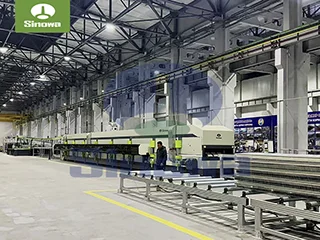
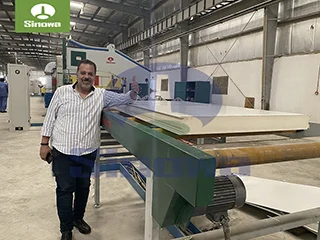
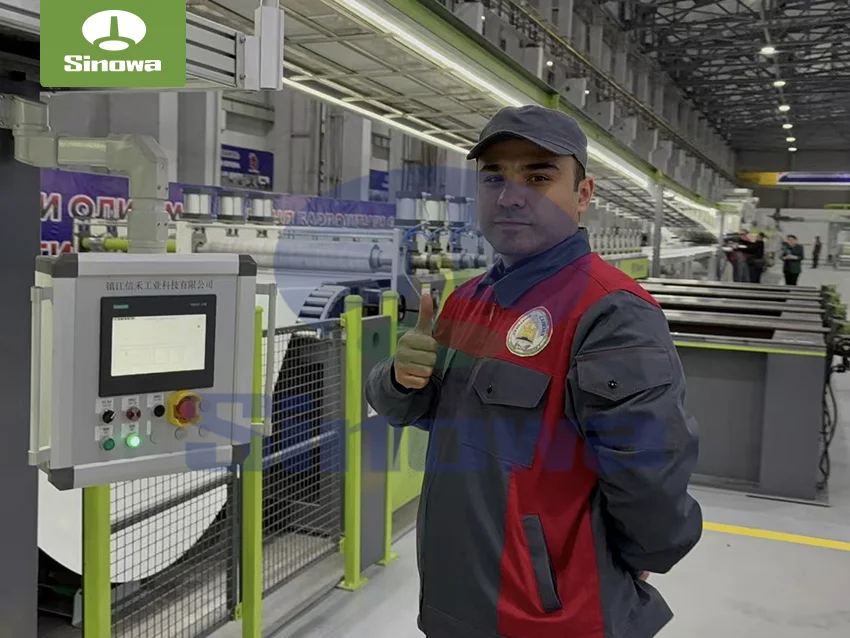
 sandwich panel line
The structural performance of products processed by the sandwich panel line system is the core core competitiveness that distinguishes sandwich composite panels from traditional single-layer building plates, and all structural performance indicators are directly determined by the integrated configuration and processing precision of the entire production line as well as the matching combination of raw materials selected for production. The most prominent core structural performance of finished sandwich panels is the excellent high strength-to-weight ratio, a key mechanical advantage realized through the precise collaborative processing of each unit of the sandwich panel line system. The outer facing materials used in production are mostly high-toughness metal sheets or durable non-metal rigid plates with thin thickness and high tensile strength, which can effectively resist external impact load, wind pressure load, building structural bending stress and daily mechanical abrasion without excessive weight gain, while the middle core layer uses low-density porous or fibrous lightweight materials, which greatly reduces the overall dead weight of the panel on the premise of not weakening the overall structural coordination performance. This unique structural collocation makes the sandwich panels produced by the professional line system far lighter than traditional solid concrete plates, solid wood plates and single-layer thick metal plates under the same bearing capacity, and far higher in structural rigidity and deformation resistance than lightweight single-layer insulation plates under the same weight condition. In practical stress-bearing tests and long-term engineering application verification, these sandwich panels can maintain stable structural shape without obvious bending deformation, surface warping or internal layer separation under long-term static load and frequent dynamic load, and can effectively disperse local concentrated stress to the surrounding panel area through the integral composite structure, avoiding local damage and overall structural collapse caused by stress concentration, which is essential for maintaining the long-term structural safety of building enclosure structures and industrial supporting facilities.
Another vital structural performance feature of the sandwich panel production line system products is excellent overall structural integrity and layer bonding stability, an performance guarantee achieved by the precise lamination and constant-temperature bonding process links of the production line. The automated production process of the line system ensures that the bonding interface between the outer facing layer and the inner core layer is fully fitted without gaps, bubbles or local debonding, and the bonding strength between layers is evenly distributed across the entire panel area, enabling the three-layer structure to always work as an integral whole under various external force conditions rather than three independent separated layers. In the face of natural temperature changes, seasonal cold and hot alternation, and slight structural displacement of the main building body, the integral composite structure of the sandwich panel can coordinate deformation synchronously, effectively resisting structural cracking, layer separation and edge damage caused by thermal expansion and cold contraction and structural displacement. Meanwhile, the edge sealing and trimming process configured in the sandwich panel line system further optimizes the structural stress performance of the panel edge parts, avoiding structural damage and performance attenuation caused by edge material shedding and internal core exposure during installation and long-term use. In addition to mechanical bearing and structural stability, the structural performance of sandwich panels also includes good structural durability and environmental adaptability. The integrated production process of the line system can effectively isolate the internal core material from external humid air, corrosive gas and environmental erosion, prevent the core material from moisture absorption, mildew and structural aging, and avoid the corrosion and oxidation of the inner surface of the outer facing layer, ensuring that the overall structural performance of the sandwich panel remains stable for a long time in different climatic environments and industrial production environments without rapid attenuation.
According to the differences of core materials matched and processed by the sandwich panel manufacturing line system and the corresponding differentiated structural performance characteristics, sandwich panel products can be divided into several mainstream structural performance categories, each tailored to different stress environments and usage scenarios through targeted production parameter adjustment of the production line. The first category is thermal insulation and light-load structural sandwich panels, which use low-density foam polymer materials as the middle core layer and are processed by the basic standard configuration of the sandwich panel line system. This type of panel focuses on optimizing thermal insulation structural performance on the basis of maintaining basic mechanical bearing capacity, with the core material featuring fine and uniform porous internal structure, low thermal conductivity and excellent heat and cold isolation effect. Its overall structural design prioritizes lightweight and thermal insulation functions, with moderate bending and shear resistance, suitable for structural parts that do not need to bear heavy load but have high requirements for temperature isolation and light dead weight. The production line adjusts the core material filling density and lamination bonding pressure according to the performance positioning of such panels, ensuring that the thermal insulation structure is not damaged while meeting basic structural stability requirements, and the finished panels can effectively block heat transfer inside and outside the building, reduce energy consumption for temperature regulation, and maintain the stability of internal environmental temperature.
The second category is fire-resistant and high-shear structural sandwich panels, which adopt inorganic fibrous non-combustible materials as the core layer and need to be produced by the enhanced functional configuration of the sandwich panel line system with high-pressure lamination and dense core material compaction process. Different from foam core materials, the inorganic fibrous core layer has excellent high-temperature resistance and non-combustible structural characteristics, and the production line compacts the core material structure through mechanical pressing to improve the internal shear resistance and overall structural rigidity of the panel. This type of sandwich panel has outstanding fireproof structural performance, can resist high-temperature baking and flame spread for a long time without structural combustion, collapse or toxic gas release, and also has significantly improved shear bearing capacity and impact resistance compared with ordinary thermal insulation panels. The structural performance positioning of such products focuses on fire safety and high structural shear resistance, meeting the special structural safety requirements of building fire partition, high-temperature workshop enclosure and fire-resistant enclosure engineering. The production line precisely controls the compaction degree of the inorganic core material and the bonding firmness between layers, ensuring that the fire-resistant structure and mechanical structure are perfectly integrated, and the panel can maintain complete structural integrity and fire isolation function in extreme fire environments.
The third category is high-strength load-bearing and impact-resistant structural sandwich panels, which use high-density reinforced composite core materials or honeycomb structural core materials, and are produced by the high-strength customized processing mode of the sandwich panel line system. This kind of panel abandons the single lightweight orientation of ordinary panels, and takes high structural strength, strong impact resistance and excellent fatigue resistance as the core structural performance indicators. The honeycomb or reinforced composite core structure inside the panel can disperse external impact force and dynamic load in all directions, with strong deformation resistance and structural recovery ability, and the outer facing layer adopts thicker high-toughness plates to cooperate with the core structure to jointly bear heavy static load and frequent dynamic impact load. The sandwich panel line system adopts enhanced rolling and thickened lamination process in production to ensure the firm combination of the reinforced core and the outer facing layer, avoiding structural layer separation under heavy load and strong impact. Such panels have the highest overall structural rigidity and bearing capacity among all types of sandwich panel products, and can adapt to harsh working conditions with high structural load requirements and frequent external impact.
The fourth category is sound-insulating and shock-absorbing structural sandwich panels, which use porous sound-absorbing and elastic buffer core materials and are processed by the sound insulation optimization process of the sandwich panel line system. The structural design of this type of panel focuses on vibration damping and sound transmission isolation performance on the basis of conventional structural stability. The internal porous core structure can absorb and weaken sound wave vibration and mechanical vibration energy, reduce sound wave reflection and vibration resonance, and the integral composite structure can effectively block the transmission of external noise and structural vibration. The production line adjusts the core material porosity and bonding elasticity parameters according to the sound insulation and shock absorption requirements, ensuring that the panel maintains good structural stability while realizing efficient sound and vibration isolation. This type of panel has balanced structural performance and special acoustic and vibration control functions, suitable for structural occasions that require both basic enclosure structure stability and strict noise and vibration control.
The diverse structural performance advantages and differentiated performance classifications of sandwich panels produced by the continuous sandwich panel line system determine their wide range of practical uses covering civil construction, industrial engineering, cold chain logistics, transportation facilities, agricultural facilities and special functional enclosure fields, realizing the integration of structural enclosure, functional protection and energy-saving optimization in different industries. In the field of civil and commercial building construction, these sandwich panels are widely used as external wall enclosure structures, roof covering structures, internal functional partition walls and ceiling structures of various low-rise and multi-story buildings. The lightweight and high-strength structural performance reduces the self-weight load of the building main structure, lowers the foundation construction cost and structural design difficulty of the building, while the thermal insulation and temperature control structural performance reduces the long-term energy consumption of building heating and cooling. The good structural integrity and weather resistance enable the panels to adapt to different natural climatic conditions, resisting wind and rain erosion, temperature change and ultraviolet aging, maintaining the long-term stability and beauty of building exterior walls and roofs, and the convenient installation characteristics brought by standardized production of the production line greatly shorten the construction cycle of building enclosure projects and improve construction efficiency.
In the field of industrial production and factory enclosure engineering, sandwich panels produced by professional line systems are used for workshop wall and roof enclosure, internal production area partition, purification workshop enclosure and special industrial anti-corrosion and anti-pollution enclosure structures. Fire-resistant high-shear structural sandwich panels are applied to production workshops with fire hazard risks and fire isolation partition positions, relying on excellent fire-resistant structural performance to block flame spread and ensure production safety. High-strength load-bearing structural panels are used for industrial plant partition structures that need to bear mechanical equipment load and frequent personnel and cargo collision, maintaining structural stability under long-term industrial dynamic load. Purification and anti-corrosion type sandwich panels with smooth and seamless surface structure produced by the production line are used for pharmaceutical production workshops, electronic precision manufacturing workshops and food processing workshops, with the smooth surface structure not easy to accumulate dust and bacteria, convenient for daily cleaning and disinfection, and the anti-corrosion structural performance resisting the erosion of chemical raw materials and production waste gas, meeting the high environmental and structural requirements of industrial precision production.
In the cold chain logistics and low-temperature storage industry, thermal insulation lightweight structural sandwich panels are the core special materials for building various cold storage, constant-temperature warehouses and refrigerated logistics distribution centers. The excellent thermal insulation structural performance of the panels effectively locks the internal low-temperature environment, blocks the infiltration of external high-temperature heat flow, reduces the operating load of refrigeration equipment, and realizes energy-saving and low-consumption operation of cold chain storage facilities. The lightweight and integral structural stability of the panels facilitates the rapid assembly and construction of cold storage space, and the good sealing performance formed by the standardized production and edge sealing process of the production line avoids cold air leakage and temperature fluctuation inside the cold storage, ensuring the constant-temperature storage effect of food, medicine and other temperature-sensitive goods. At the same time, the structural durability of the panels can resist the long-term low-temperature and high-humidity internal environment of the cold storage, without structural aging, core material moisture absorption and thermal insulation performance attenuation, ensuring the long-term stable operation of cold chain facilities.
In the transportation and mobile facility manufacturing industry, sandwich panels with high-strength impact resistance and light-weight structural performance are widely used for the interior and exterior structural enclosure of mobile buildings, transportation vehicle carriages and temporary mobile facilities. The high strength-to-weight ratio structural advantage reduces the overall weight of transportation vehicles and mobile facilities, reducing energy consumption in the moving process, while the strong impact resistance and structural deformation resistance can resist vibration and impact during transportation and movement, avoiding structural damage and performance attenuation of mobile facilities. Sound-insulating and shock-absorbing structural sandwich panels are used for the interior decoration and partition structure of transportation vehicles, isolating external road noise and mechanical vibration, improving the internal comfort of transportation tools, and the durable structural performance adapts to the frequent movement and vibration working conditions of mobile facilities, extending the service life of mobile transportation equipment.
In agricultural facility construction and special environmental protection engineering, sandwich panels produced by the continuous sandwich panel production line system are used for the enclosure structure of agricultural greenhouses, livestock breeding houses and environmental protection treatment facilities. The thermal insulation and weather resistance structural performance of the panels maintains the stable internal temperature of agricultural breeding and planting facilities, resists the interference of external bad weather on agricultural production, and the anti-corrosion and moisture-proof structural performance adapts to the high-humidity and corrosive internal environment of breeding houses, avoiding structural corrosion and damage of facility enclosure. For environmental protection waste gas and sewage treatment facilities, the anti-corrosion and high structural stability of sandwich panels can adapt to harsh corrosive working environments, ensuring the long-term safe operation of environmental protection facilities. With the continuous development of modern construction industrialization and energy-saving green construction concepts, the sandwich panel line system is also constantly upgraded in processing technology and structural performance regulation, and the structural performance types and application fields of its products will continue to be expanded, providing more efficient, energy-saving and reliable composite structural material support for various social construction and industrial development fields.
https://www.cnsinowa.com/sandwich-panel-machines/sandwich-panel-line-system.html