 sandwich panel machine
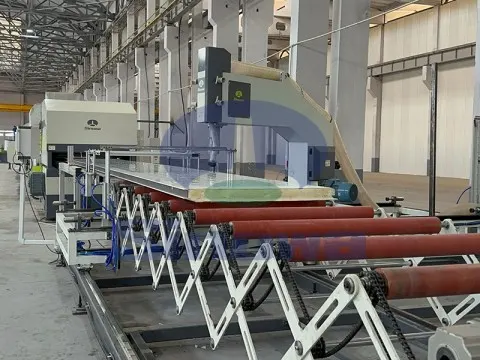
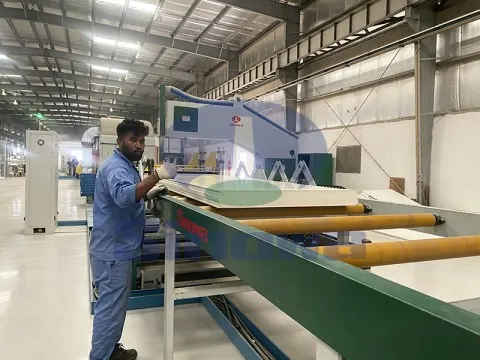
The PU sandwich panel production machine is a fully integrated, continuous-operation system designed to streamline the entire manufacturing process from raw material handling to finished panel cutting and stacking, eliminating manual intervention wherever possible to enhance efficiency and reduce variability. Structurally, the machine comprises several interconnected core modules, each performing a specialized function while operating in seamless synchronization: raw material feeding and pretreatment units, facing material forming and conveying systems, high-pressure foam mixing and injection assemblies, continuous lamination and curing presses, cooling and shaping segments, and precision cutting and finishing stations. Each of these modules relies on precise temperature control to varying degrees, with the most critical thermal regulation occurring during the foam mixing, injection, and curing stages, where chemical kinetics of PU polymerization are highly temperature-sensitive. The temperature control system embedded within the machine is not a single standalone unit but a distributed network of sensors, heating and cooling elements, feedback loops, and central processing units that monitor, adjust, and maintain thermal parameters in real time across every temperature-critical zone of the production line.
To understand the synergy between the production machine and its temperature control system, it is essential to break down the sequential production process and the specific thermal requirements at each stage. The process initiates with the preparation and feeding of raw materials, a phase where temperature control lays the groundwork for consistent subsequent reactions. The primary chemical raw materials for PU foam—polyols and isocyanates—are stored in insulated, temperature-stabilized storage tanks integrated with the production machine’s auxiliary thermal system. These tanks maintain the raw materials within a narrow, optimal temperature range, preventing viscosity fluctuations that could disrupt mixing ratios and reaction kinetics. If the raw materials are too cold, their viscosity rises excessively, leading to uneven mixing, incomplete chemical fusion, and the formation of weak, porous foam; if too warm, the materials may initiate premature polymerization, clogging injection nozzles and ruining batch consistency. The temperature control system here operates with high precision, using submerged sensors to track material temperature and activating gentle heating or passive cooling elements to counteract ambient temperature shifts, ensuring that polyols and isocyanates are delivered to the mixing head at a consistent, reaction-ready state.
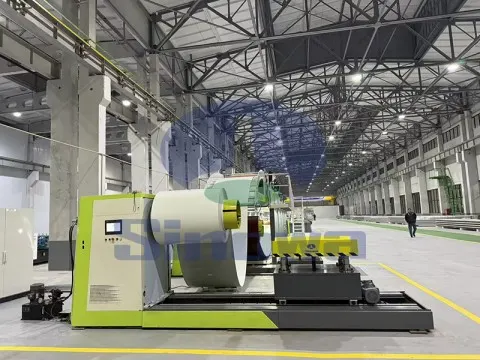
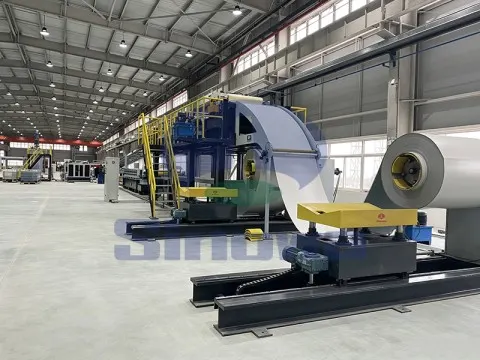
Parallel to chemical raw material preparation, the facing materials—typically metal sheets such as galvanized steel, aluminum, or coated alloy panels—undergo pretreatment and forming within the production machine, a process that also benefits from targeted temperature control. The facing sheets are unwound from coils, straightened, and profiled via roll-forming stations to achieve the desired edge configurations and surface flatness, with some configurations requiring mild preheating to enhance ductility and prevent cracking during forming. The temperature control system regulates low-intensity heating elements along the roll-forming line, raising the sheet temperature just enough to optimize malleability without compromising the structural integrity or surface coating of the facing material. Once formed, the upper and lower facing sheets are conveyed toward the lamination zone at a controlled, steady speed, with the temperature control system maintaining a consistent ambient temperature along the conveying path to prevent thermal expansion or contraction that could misalign the sheets relative to the foam core. This preliminary thermal management ensures that the facing materials are perfectly positioned and thermally conditioned to bond effectively with the expanding PU foam, a critical prerequisite for a fully integrated sandwich panel structure.
The core of the entire production process, and the stage where the temperature control system proves most pivotal, is the high-pressure mixing, injection, and in-situ foaming of the PU material. The production machine’s mixing head is a precision-engineered component that combines the temperature-stabilized polyols and isocyanates at extreme pressure, creating a homogenous liquid mixture that begins the polymerization and foaming reaction instantaneously upon exiting the nozzle. The temperature of the mixing head itself is tightly regulated by the temperature control system, as even minor deviations can alter the reaction rate and foam cell structure. A mixing head that is too cold slows the reaction, leading to delayed foaming and uneven distribution between the facing sheets; an overheated mixing head accelerates the reaction excessively, causing the foam to set before fully expanding and filling the panel cavity, resulting in voids, uneven density, and poor insulation performance. The temperature control system employs direct heating and cooling channels within the mixing head, paired with real-time thermal sensors, to maintain a constant operating temperature, synchronizing the reaction rate with the conveying speed of the facing materials to ensure uniform foam deposition.
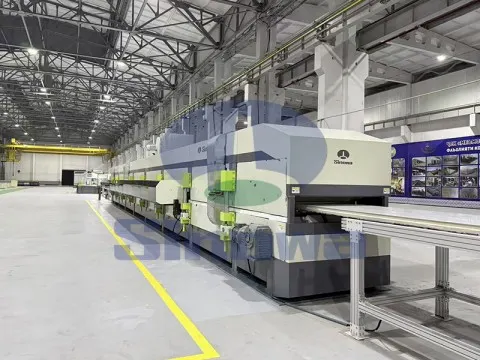
Immediately after injection, the sandwiched assembly of lower facing sheet, liquid PU mixture, and upper facing sheet enters the continuous lamination and curing press, the most thermally intensive segment of the production machine. This press consists of dual, parallel conveyor belts fitted with integrated heating and cooling elements, designed to apply uniform pressure and precise thermal energy to the panel as it moves through the curing zone. The temperature control system here operates in a multi-zone configuration, dividing the press into sequential thermal segments that guide the PU foam through a controlled curing trajectory: initial gentle heating to promote uniform expansion, a sustained thermal plateau to drive complete polymerization, and gradual cooling to lock in the foam’s closed-cell structure. This multi-zone approach is critical, as rapid temperature spikes can cause the foam to over-expand and rupture cell walls, while insufficient heat leaves the foam under-cured, lacking structural rigidity and thermal efficiency. The temperature control system continuously collects data from hundreds of micro-sensors embedded in the press belts, adjusting heating output and cooling flow in milliseconds to counteract variables such as production speed fluctuations, ambient temperature changes, and minor variations in raw material composition. This dynamic adjustment ensures that every section of the panel, regardless of its position on the production line, experiences the exact thermal profile required for optimal curing.
The closed-cell structure of the PU foam, which defines the panel’s thermal insulation capabilities, is entirely dependent on the precision of the temperature control system during curing. A well-regulated thermal environment fosters the formation of small, uniform, tightly packed closed cells, which minimize heat transfer through conduction and convection, delivering superior thermal resistance. In contrast, inconsistent temperature control disrupts cell formation, creating large, irregular cells or open-cell structures that compromise insulation performance and reduce the panel’s ability to resist moisture penetration. Additionally, temperature uniformity across the entire width and length of the panel is essential to prevent warping, bowing, or delamination between the foam core and facing materials. Even slight temperature gradients across the panel surface can cause differential curing rates, leading to internal stresses that manifest as dimensional instability over time. The temperature control system mitigates this risk by balancing thermal output across the entire press zone, ensuring that edge sections and central sections of the panel cure at identical rates, preserving flatness and structural coherence.
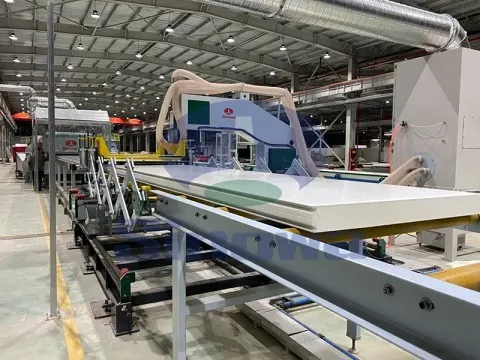
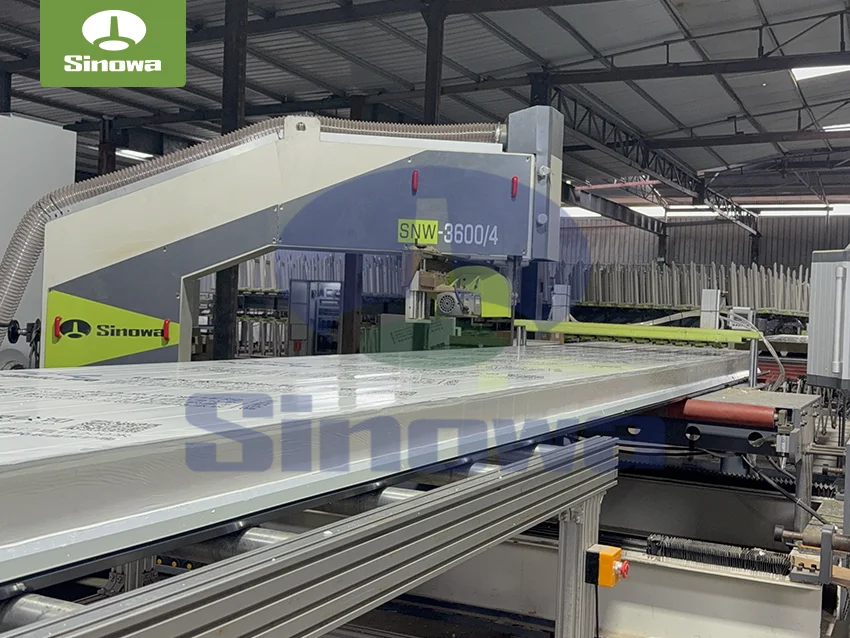
Beyond the core foaming and curing stages, the temperature control system continues to support the production process through the cooling and finishing segments of the machine. After exiting the curing press, the semi-finished panels enter a controlled cooling zone, where the temperature system orchestrates gradual, uniform cooling to solidify the foam fully and stabilize the panel’s dimensions. Abrupt cooling would trap internal stresses and cause surface defects, so the system regulates airflow and passive cooling elements to lower the panel temperature steadily to ambient levels. Once cooled, the panels proceed to cutting and trimming stations, where dimensional accuracy is paramount; the stable thermal condition maintained by the control system ensures that the panels retain their precise shape during cutting, eliminating errors caused by thermal expansion or contraction. The temperature control system also plays a role in equipment longevity, preventing overheating of mechanical components, motors, and electronic controls within the production machine, reducing wear and tear and minimizing unplanned downtime. By maintaining optimal operating temperatures for both the production process and the machinery itself, the system enhances overall operational reliability and extends the service life of the entire production unit.
In practical manufacturing operations, the adaptability of the temperature control system is a key advantage, allowing the production machine to accommodate diverse panel specifications and production demands. Manufacturers frequently produce PU sandwich panels of varying thicknesses, densities, and facing materials, each requiring a unique thermal curing profile. The temperature control system supports programmable thermal settings, enabling operators to input customized temperature curves, zone-specific thermal parameters, and curing durations tailored to the specific panel type being produced. This flexibility eliminates the need for extensive reconfiguration of the production machine, facilitating quick transitions between different product runs and boosting overall production efficiency. Whether manufacturing thin, lightweight panels for interior partition walls or thick, high-density panels for cold storage facilities, the temperature control system adjusts seamlessly to deliver the precise thermal conditions required, ensuring consistent quality across all product variants.
Energy efficiency is another critical benefit of a well-designed temperature control system for the PU sandwich panel production machine. Modern thermal control systems are engineered to minimize energy consumption through intelligent heating and cooling strategies, such as heat recovery from cooling cycles to preheat incoming raw materials or facing materials, and adaptive thermal output that reduces power usage during steady-state production. Unlike outdated systems that operate at full power continuously, these smart control systems only deploy the necessary energy to maintain set temperatures, reducing operational costs and aligning with global sustainability goals for low-carbon manufacturing. Additionally, the precision of the temperature control system reduces material waste by minimizing defective panels caused by thermal inconsistencies, further enhancing the environmental and economic efficiency of the production process. Reduced waste means fewer raw materials are discarded, and less energy is wasted on producing substandard products, creating a more sustainable manufacturing cycle.
Operational safety is also inherently tied to the performance of the temperature control system within the production machine. The chemical reactions involved in PU foaming generate heat, and uncontrolled temperature spikes can pose safety risks, including overheating of components, chemical degradation, or even fire hazards in extreme cases. The temperature control system includes built-in safety protocols, such as over-temperature alarms, automatic shutdown mechanisms, and emergency cooling activation, which activate instantly if thermal parameters exceed safe thresholds. These safety features protect both the production equipment and operating personnel, creating a secure working environment. Furthermore, by maintaining stable thermal conditions, the system prevents the release of volatile organic compounds (VOCs) that can occur with overheated PU materials, improving air quality within the production facility and adhering to occupational health and safety standards for industrial manufacturing.
As manufacturing technology continues to advance, the integration of the temperature control system with the PU sandwich panel production machine has evolved beyond basic thermal regulation, embracing digitalization and smart automation for enhanced performance. Contemporary temperature control systems feature intuitive digital interfaces that provide real-time visibility of thermal parameters across every production zone, allowing operators to monitor conditions, adjust settings, and troubleshoot issues remotely. Data logging capabilities enable manufacturers to track thermal performance over time, identify trends, and refine production parameters to further improve product quality and efficiency. Some advanced systems also incorporate predictive thermal management, using historical production data to anticipate temperature fluctuations and proactively adjust settings before deviations occur, elevating production consistency to new heights. This fusion of precision temperature control and digital intelligence positions the modern PU sandwich panel production machine as a pinnacle of efficiency and quality in the insulation manufacturing industry.
In summary, the PU sandwich panel machine equipped with a comprehensive temperature control system represents a harmonious blend of mechanical engineering, chemical process control, and thermal management technology. Every facet of the production process, from raw material preparation to finished panel finishing, relies on the precise, dynamic regulation of temperature to ensure chemical reaction fidelity, foam structure perfection, bonding integrity, and dimensional stability. The temperature control system is not merely an auxiliary component but a core functional element that defines the quality, efficiency, and reliability of the entire production operation. As demand for high-performance, energy-efficient building insulation materials continues to rise globally, the role of this advanced production equipment with sophisticated temperature control becomes increasingly vital, driving innovation in manufacturing practices and enabling the production of PU sandwich panels that meet the most stringent industry requirements for performance, durability, and sustainability. Investing in a production machine with a robust temperature control system is not just a choice for enhanced product quality; it is a strategic decision to optimize operational efficiency, reduce waste, and maintain competitiveness in the evolving landscape of modern construction material manufacturing.
Sinowa is a professional manufacturer of sandwich panel machine in china, we provide diversified and high-performance sandwich panel production lines, including fully automatic continuous PU sandwich panel line and customized special lines to meet mass production and personalized order demands. These sandwich panel lines support processing multiple foam core materials, such as PU, PIR, mineral wool, rock wool and glass wool, covering different insulation and fireproof standards.
Featuring stable operation, high efficiency, energy saving and easy maintenance, our PU sandwich panel line deliver sandwich panels with excellent thermal insulation, fire resistance, sound insulation and lightweight durability. The finished panels are widely applied in industrial workshops, warehouse roofing and wall cladding, cold storage insulation, serving global construction and industrial insulation markets.
https://www.cnsinowa.com/sandwich-panel-machines/pu-sandwich-panel-production-machine-with-temperature-control-system.html