sandwich panel machine
To fully grasp the value of the PU sandwich panel machine with heating system, it is essential to first understand the fundamental characteristics of PU sandwich panels themselves. These panels consist of a rigid PU foam core sandwiched between two outer facing sheets, typically made of metal alloys known for their high strength, corrosion resistance, and weather durability. The PU foam core delivers exceptional thermal insulation, sound absorption, and lightweight properties, making the panels ideal for a wide range of applications, from industrial warehouse roofing and wall cladding to cold storage facilities, clean room construction, and prefabricated building envelopes. However, the quality of the PU foam core is highly dependent on temperature conditions during the foaming and curing stages: polyurethane foaming is a exothermic chemical reaction between polyol and isocyanate components, and deviations from the optimal temperature range can lead to a host of defects, including uneven cell structure, incomplete curing, delamination between the core and facing sheets, foam shrinkage, or even structural brittleness. This is where the dedicated heating system of the production machine becomes indispensable, as it provides a stable, controllable thermal environment that aligns with the precise temperature requirements of the PU foaming reaction, ensuring the foam forms uniformly and bonds securely to the outer layers.
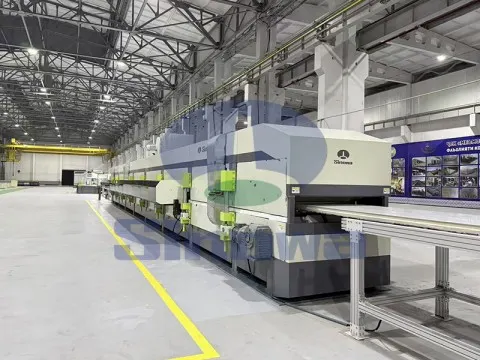
The heating system integrated into the PU sandwich panel machine is designed with versatility and precision at its core, featuring multiple heating modes and intelligent temperature regulation to adapt to different production specifications and environmental conditions. Most advanced configurations adopt a hot air circulation heating mechanism, which distributes heated air evenly across the entire processing zone through a network of ducts, fans, and baffles, eliminating hot or cold spots that could compromise panel quality. This circulation design ensures that every section of the moving panel receives consistent thermal input, regardless of its width or thickness, and maintains a steady temperature throughout the foaming and curing phases. Some models also incorporate contact heating elements, such as heated rollers or heated conveyor belts, which transfer heat directly to the facing sheets and the PU foam layer, accelerating the reaction rate and improving the adhesion between the core and the outer sheets. The heating system is paired with a sophisticated temperature monitoring and control unit, equipped with high-sensitivity sensors placed at key points along the production line to collect real-time temperature data. This data is fed into a centralized control system that automatically adjusts heating power, air flow rate, and heating duration to keep the temperature within a narrow, optimal range, typically tailored to the specific formulation of the PU raw materials being used. This level of precision temperature control is far beyond what manual or semi-automated heating setups can achieve, making the machine suitable for producing PU sandwich panels with varying foam densities, thicknesses, and performance grades.
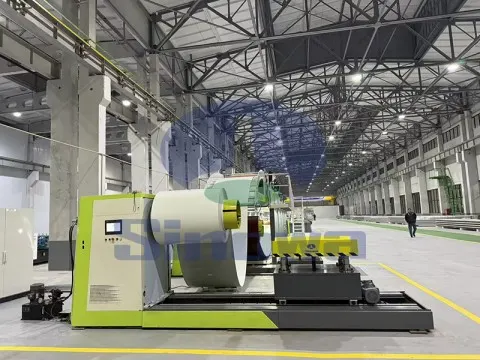
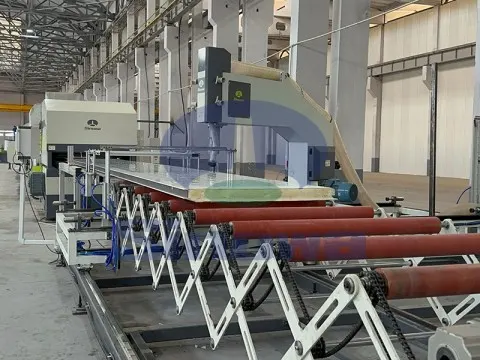
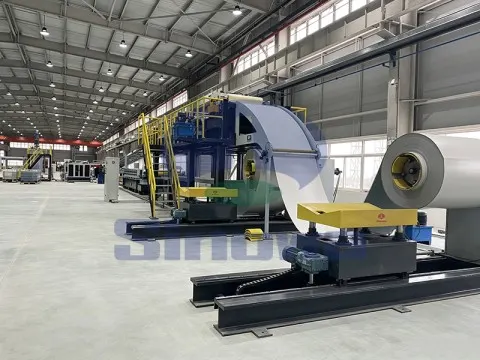
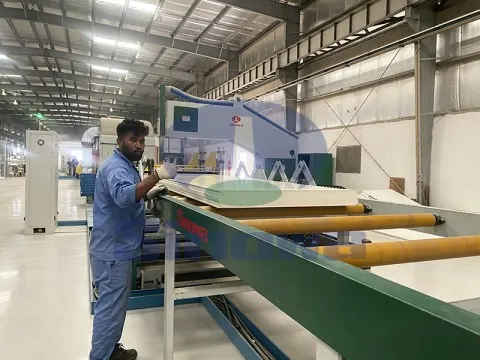
The operational workflow of the PU sandwich panel machine with heating system is a fully integrated, continuous process that streamlines raw material handling, forming, foaming, heating curing, and finished product output, minimizing manual intervention and maximizing production efficiency. The process begins with the uncoiling and pretreatment of the outer facing sheets, which are loaded onto precision uncoiling devices that maintain consistent tension to prevent wrinkling, warping, or misalignment during feeding. The sheets then pass through a leveling and profiling section, where a series of calibrated rollers bend and shape the metal sheets into the desired profile, whether flat, corrugated, or custom-contoured, ensuring a smooth, uniform surface for subsequent bonding. Before entering the foaming zone, the sheets may pass through a preheating segment of the main heating system, which raises the temperature of the facing sheets to a moderate level to enhance the wetting and bonding of the PU foam mixture, a critical step for preventing interlayer separation. Next, the precisely mixed PU raw materials are injected evenly between the two shaped facing sheets through a high-pressure foaming nozzle, which ensures uniform distribution of the foam mixture across the entire width of the panel. The sandwiched assembly then moves into the main heating curing chamber, the heart of the machine’s heating system, where the controlled thermal environment triggers the full foaming and cross-linking reaction of the PU components. As the panel advances slowly through the heating chamber, the foam expands to fill the entire cavity between the facing sheets, forming a rigid, closed-cell structure, while the consistent heat accelerates the curing process, locking in the foam’s structure and strengthening the bond with the outer sheets.
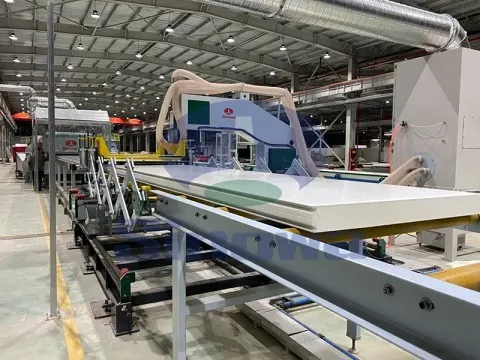
Once the PU foam is fully cured in the heating chamber, the panel proceeds to the cooling and shaping section, where gradual temperature reduction prevents thermal stress, foam cracking, or dimensional distortion that can occur with rapid cooling. The cooling process is carefully calibrated to complement the heating cycle, ensuring the panel retains its structural stability and precise dimensions as it exits the temperature-controlled zone. Following cooling, the continuous panel strip moves through a precision cutting unit, which trims the panel to the specified length without halting the production line, maintaining the continuity of the workflow and reducing production downtime. The finished PU sandwich panels are then automatically conveyed to a stacking and collection area, ready for further processing, packaging, or direct delivery to end users. Throughout this entire workflow, the heating system operates in perfect synchronization with every other module of the machine: the uncoiling speed, foaming injection rate, panel advancement speed, and heating parameters are all interlocked and adjusted in real time via the machine’s control system. This synchronization ensures that each panel undergoes the exact same thermal treatment and processing steps, resulting in exceptional product consistency, with uniform thickness, density, and performance across every batch of production.
One of the most prominent advantages of the PU sandwich panel machine with heating system is its ability to elevate product quality while boosting production efficiency, addressing the key pain points of traditional PU panel manufacturing. In conventional production setups without a dedicated, precision heating system, workers often struggle to maintain stable thermal conditions, leading to high rejection rates, inconsistent panel performance, and slow production speeds. The integrated heating system eliminates these issues by providing a controlled, repeatable thermal environment, reducing the rate of defective panels significantly and minimizing material waste. Additionally, the optimized heating cycle shortens the PU foam curing time compared to natural cooling or basic heating methods, allowing the machine to operate at a faster continuous production speed without sacrificing quality. This combination of higher output and lower waste translates to improved overall production efficiency and reduced operational costs for manufacturers, even without considering specific pricing metrics. The machine’s design also prioritizes adaptability, with adjustable heating parameters, forming rollers, and cutting settings that enable manufacturers to switch between different panel specifications quickly, from thin insulation panels for interior use to thick, heavy-duty panels for industrial cold storage, making the machine a versatile asset for diverse production needs.
Beyond quality and efficiency, the PU sandwich panel machine with heating system also offers notable benefits in terms of operational safety and production sustainability. The fully enclosed heating chamber and automated temperature control reduce the risk of operator exposure to high temperatures and chemical fumes associated with the PU foaming process, creating a safer working environment on the production floor. The machine’s efficient heating design, which utilizes hot air circulation or direct contact heating with minimal heat loss, also reduces energy consumption compared to outdated heating systems that waste thermal energy through uneven distribution or poor insulation. This energy efficiency aligns with the growing global focus on sustainable manufacturing practices, helping manufacturers reduce their carbon footprint while maintaining high production volumes. Furthermore, the consistent curing enabled by the heating system ensures that the PU sandwich panels meet strict performance standards for thermal insulation, fire resistance, and structural load-bearing capacity, making them compliant with the rigorous requirements of modern construction and industrial projects. Whether used in extreme temperature environments, such as cold storage facilities operating at sub-zero temperatures or industrial buildings in hot and humid climates, the panels produced by this machine deliver reliable, long-lasting performance, enhancing the durability and functionality of the structures they are used to build.
Proper operation and routine maintenance are essential to maximize the service life and consistent performance of the PU sandwich panel machine with heating system, and the design of the machine simplifies these tasks to minimize downtime and operational complexity. Operators can monitor and adjust all key parameters, including heating temperature, production speed, foaming pressure, and cutting length, through a user-friendly control interface, which provides real-time feedback on machine status and production progress. Basic training is sufficient for operators to master the machine’s functions, as the automated control system handles most of the precision adjustments, reducing the reliance on highly skilled labor. For maintenance, the machine is designed with easy access to critical components, including the heating elements, sensors, rollers, and foaming nozzles, allowing for quick cleaning, inspection, and replacement of worn parts. Regular maintenance tasks, such as cleaning the heating chamber to remove foam residue, calibrating temperature sensors, and lubricating moving mechanical parts, are straightforward and can be performed during scheduled downtime, preventing unexpected breakdowns and ensuring the machine operates at peak efficiency for years. The robust construction of the machine, with heavy-duty frames and wear-resistant components, also enhances its durability, enabling it to withstand the demands of continuous, high-volume production in industrial settings.
As the global construction industry continues to shift towards energy-efficient, prefabricated, and sustainable building solutions, the role of the PU sandwich panel machine with heating system becomes increasingly vital. PU sandwich panels are at the forefront of green building materials due to their exceptional thermal insulation properties, which reduce energy consumption for heating and cooling in residential, commercial, and industrial structures, and the machine’s ability to produce these panels at scale with consistent quality supports the widespread adoption of such sustainable materials. Additionally, the versatility of the machine extends beyond traditional construction, catering to emerging sectors such as renewable energy infrastructure, agricultural buildings, and marine insulation, where high-performance composite panels are in high demand. The ongoing advancements in heating system technology, including smarter temperature control algorithms, more energy-efficient heating elements, and better integration with automated production lines, continue to enhance the machine’s capabilities, making it even more adaptable to evolving industry requirements. Unlike specialized equipment that serves a narrow range of applications, this machine remains a flexible, future-proof investment for manufacturers, capable of adapting to new panel designs, raw material formulations, and market demands without requiring extensive overhauls.
In summary, the PU sandwich panel machine with heating system represents a pinnacle of integrated manufacturing technology for composite insulation panels, merging mechanical precision, chemical process control, and thermal management into a single, efficient production solution. Its core heating system is the driving force behind superior product quality, uniform performance, and efficient production, solving the inherent challenges of PU foam curing and setting a new standard for the industry. From the initial feeding of raw materials to the final output of finished panels, every aspect of the machine’s design is optimized to work in harmony with the heating system, delivering consistent, high-quality results while boosting productivity and reducing waste. With its versatility, safety, sustainability, and ease of operation, this machine not only meets the current needs of the construction and industrial insulation sectors but also paves the way for future innovations in composite panel production. As the demand for high-performance, energy-efficient building materials continues to grow, the PU sandwich panel machine with heating system will remain an indispensable tool for manufacturers worldwide, enabling the mass production of reliable, sustainable PU sandwich panels that support the development of modern, eco-friendly infrastructure across diverse applications.
Sinowa is a professional manufacturer of sandwich panel machine in china, we provide diversified and high-performance sandwich panel production lines, including fully automatic continuous PU sandwich panel line and customized special lines to meet mass production and personalized order demands. These sandwich panel lines support processing multiple foam core materials, such as PU, PIR, mineral wool, rock wool and glass wool, covering different insulation and fireproof standards.
Featuring stable operation, high efficiency, energy saving and easy maintenance, our PU sandwich panel line deliver sandwich panels with excellent thermal insulation, fire resistance, sound insulation and lightweight durability. The finished panels are widely applied in industrial workshops, warehouse roofing and wall cladding, cold storage insulation, serving global construction and industrial insulation markets.
https://www.cnsinowa.com/sandwich-panel-machines/pu-sandwich-panel-machine-with-heating-system.html