sandwich panel machine
To understand the functionality and significance of the PU sandwich panel production machine with a two-component foaming system, it is essential to first grasp the basic composition and working principle of the two-component foaming system itself. The two components involved in the foaming process are typically polyether polyol (often referred to as the "white material") and isocyanate (known as the "black material"). Polyether polyol is a multi-functional compound that serves as the base material, combined with additives such as foam stabilizers, catalysts, and foaming agents to enhance the foam's structure and performance. Isocyanate, on the other hand, acts as a curing agent that reacts with polyether polyol to form the rigid polyurethane foam core. The key to the two-component system is the precise mixing of these two materials in a specific ratio, as even minor deviations can significantly affect the quality of the foam, leading to issues such as uneven density, poor adhesion, or insufficient structural strength. The production machine is designed to control this mixing process with high precision, ensuring that the two components are blended uniformly and efficiently before being applied to the facing materials.
The PU sandwich panel machine with a two-component foaming system consists of several core components that work together seamlessly to complete the entire production process from raw material feeding to finished panel cutting. The first critical component is the material storage and delivery system, which includes separate tanks for polyether polyol and isocyanate. These tanks are equipped with temperature control devices to maintain the materials at an optimal temperature, typically between 22 and 25 degrees Celsius, as temperature fluctuations can affect the chemical reaction between the two components. The tanks also feature level sensors to monitor the material volume, ensuring a continuous supply of raw materials to avoid production interruptions. Connected to the storage tanks are high-precision metering pumps, which are responsible for delivering the two components to the mixing unit in the exact ratio required. These metering pumps are equipped with frequency converters and high-precision volumetric flow meters to achieve closed-loop flow control, allowing for real-time adjustments to the flow rate and mixing ratio according to production needs. This level of precision ensures that the foam core has a consistent density and structure, which is crucial for the overall performance of the PU sandwich panel.
The mixing unit is another core component of the machine, serving as the site where the two components react to form the polyurethane foam. The mixing process is typically carried out in a dynamic mixer or a high-pressure mixing head, depending on the specific design of the machine. In high-pressure systems, the two components are pumped into the mixing head at high pressure, usually between 12 and 18 MPa, where they collide and mix violently due to the high shear force generated by the pressure difference. This intense mixing ensures that the polyether polyol and isocyanate are fully integrated at a microscopic level, promoting a uniform chemical reaction. Some advanced machines also incorporate a gas metering device to inject foaming gas into the mixture, enhancing the foaming effect and ensuring that the foam core has a closed-cell structure with high insulation performance. Additionally, the mixing head is often equipped with a self-cleaning function to prevent material buildup and ensure consistent mixing performance over time. After mixing, the foam mixture is sprayed onto the bottom facing material through a movable distribution device, which can be adjusted according to the width of the panel to ensure uniform coverage.
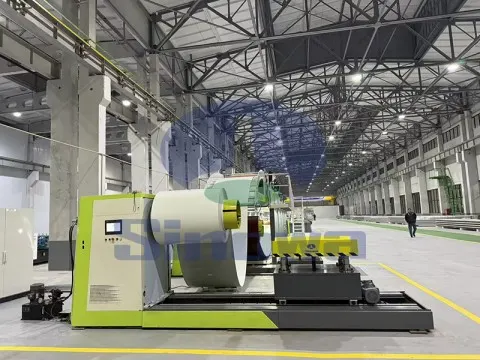
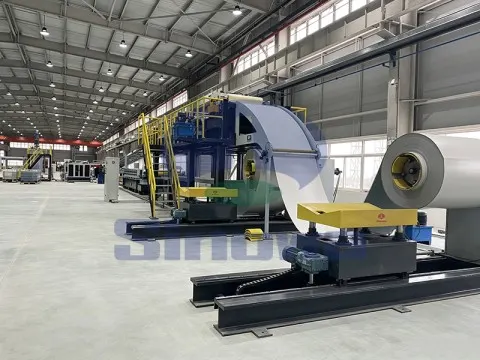
The facing material handling system is also an essential part of the production machine, as it ensures that the outer layers of the sandwich panel are properly aligned and bonded with the foam core. The facing materials can vary depending on the application, including metal coils (such as color steel), fiberglass sheets, or other structural materials. The machine is equipped with uncoiling units that hold the facing material coils and feed them into the production line at a constant speed. Before reaching the foaming station, the facing materials are preheated to a specific temperature to improve the adhesion between the foam core and the facing, as well as to enhance the structural stability of the final panel. The preheating process is controlled by a temperature control system with an error margin of ±2℃, ensuring that the facing materials are heated uniformly without being damaged. After the foam mixture is sprayed onto the bottom facing material, the top facing material is fed into the line and aligned with the bottom layer, forming a sandwich structure that is then conveyed to the pressing and curing section.
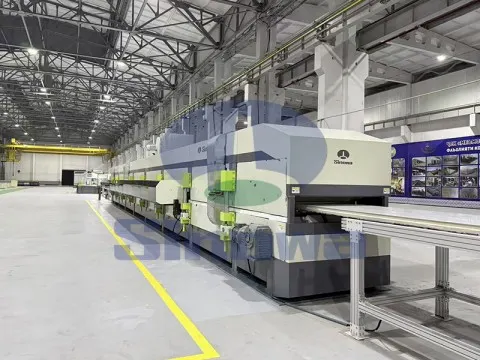
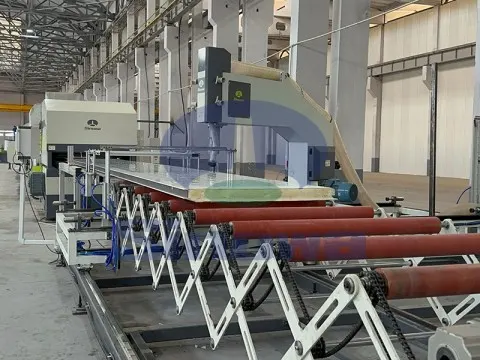
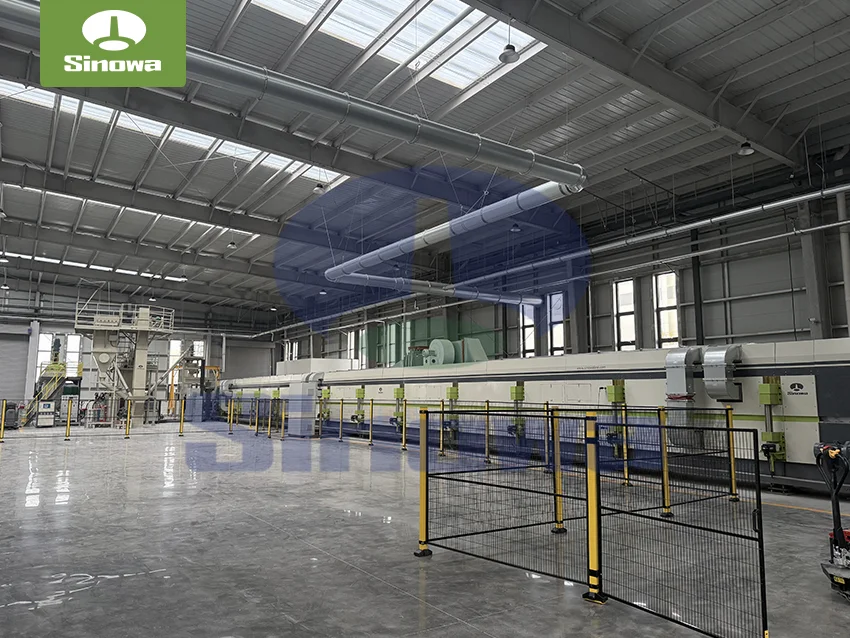
The pressing and curing section is where the foam core undergoes expansion and curing, forming a solid bond with the facing materials. This section typically consists of a double belt conveyor system, which applies uniform pressure to the sandwich structure as it moves through the machine. The double belt conveyor is equipped with heating elements that maintain a constant temperature, usually around 60℃, which is the optimal temperature for the polyurethane foam to cure. The length of the conveyor is designed to allow sufficient time for the foam to fully expand and cure, ensuring that the final panel has a stable structure and consistent thickness. The conveyor's height can be adjusted using a precision hydraulic lifting system to control the thickness of the panel, which can range from 40mm to 200mm depending on the application. During the curing process, the foam core expands to fill the space between the two facing materials, forming a tight bond that prevents delamination and ensures the panel's structural integrity.
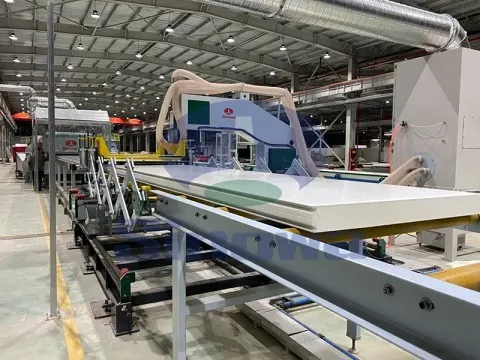
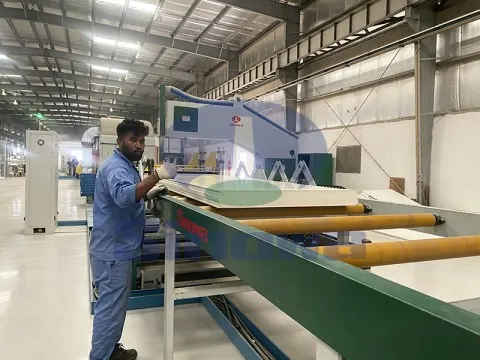
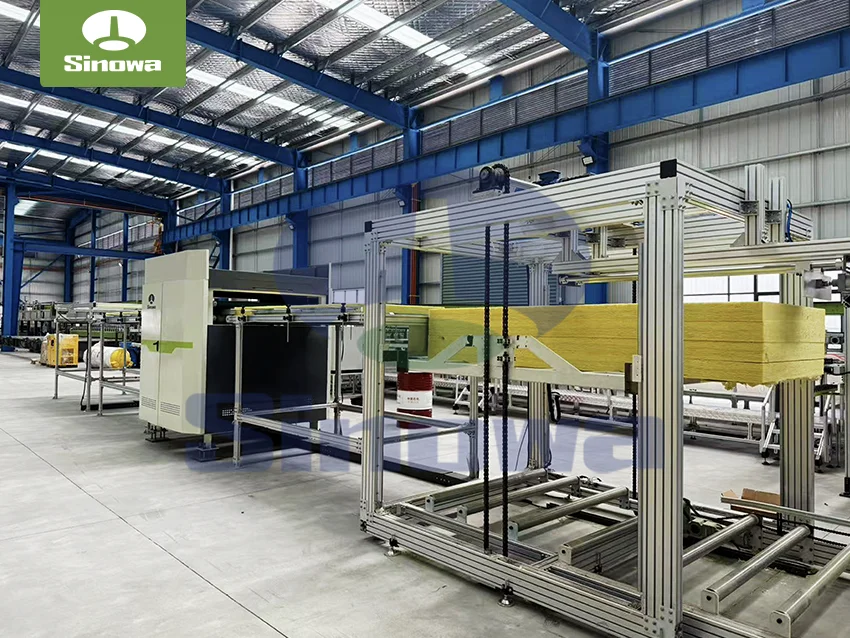
After the curing process, the sandwich panel is conveyed to the cutting section, where it is cut to the desired length using an automatic cutting machine. The cutting machine is equipped with a high-precision encoder to measure the length of the panel, ensuring accurate cutting with minimal waste. The cutting blade is made of high-strength steel that has been quenched to ensure durability and sharpness, allowing for clean, smooth cuts without damaging the panel's surface or foam core. Some advanced machines also feature a cooling section before cutting, where the panel is cooled to room temperature to prevent deformation during the cutting process. Once cut, the finished panels are conveyed to a stacking unit, where they are stacked neatly for storage or further processing. The stacking unit can be adjusted to accommodate different panel lengths and thicknesses, ensuring efficient handling and storage.
One of the key advantages of the PU sandwich panel production machine with a two-component foaming system is its high level of automation, which significantly reduces the need for manual intervention and improves production efficiency. The machine is equipped with a human-machine interface (HMI) that allows operators to set and adjust various production parameters, including the mixing ratio, flow rate, conveyor speed, panel thickness, and cutting length. The HMI displays the production process in real time with animated graphics, making it easy for operators to monitor the machine's performance and identify any issues. The electrical control system is connected to all components of the machine, ensuring that all operations are synchronized. For example, when the conveyor speed is adjusted, the flow rate of the two components is automatically adjusted proportionally to maintain the foam density and panel quality. This level of automation not only improves production efficiency but also reduces human error, ensuring consistent product quality batch after batch.
Another significant advantage of this production machine is its flexibility and adaptability to different production needs. The two-component foaming system allows for adjustments to the mixing ratio, which in turn allows for customization of the foam core's properties, such as density, hardness, and thermal insulation performance. This means that the machine can produce PU sandwich panels for a wide range of applications, from lightweight panels for temporary buildings to high-strength panels for industrial structures. Additionally, the machine can accommodate different types of facing materials, including different thicknesses and colors of metal coils, as well as non-metal facing materials such as fiberglass. This flexibility makes the machine suitable for small-scale production of custom panels as well as large-scale mass production, meeting the diverse needs of different customers and industries.
In recent years, with the increasing emphasis on environmental protection and energy conservation, the PU sandwich panel production machine with a two-component foaming system has also been optimized to adopt more environmentally friendly production processes. One notable improvement is the use of pentane as a foaming agent, replacing traditional chlorofluorocarbons (CFCs) and hydrochlorofluorocarbons (HCFCs), which are harmful to the ozone layer. Pentane is a non-toxic, environmentally friendly foaming agent that meets the requirements of the Montreal Protocol on Substances that Deplete the Ozone Layer. The machine is equipped with a dedicated pentane storage and delivery system, which includes explosion-proof tanks, leak detection sensors, and ventilation systems to ensure safe operation. The pentane system is controlled by an independent electrical cabinet, separate from the main operation cabinet, to further enhance safety. This environmental optimization not only reduces the machine's impact on the environment but also ensures compliance with global environmental standards, making the produced PU sandwich panels more competitive in the international market.
The application of PU sandwich panels produced by this machine is widespread, covering various industries and fields. In the construction industry, these panels are used as wall and roof materials for industrial workshops, commercial buildings, residential buildings, and temporary structures. Their excellent thermal insulation performance helps reduce energy consumption for heating and cooling, contributing to the construction of energy-efficient buildings. In the cold chain logistics industry, PU sandwich panels are used to construct cold storage warehouses, refrigerated trucks, and containers, as their low thermal conductivity ensures stable internal temperatures, protecting perishable goods such as food, medicine, and chemicals. In the industrial sector, the panels are used for thermal insulation of industrial pipelines, equipment, and tanks, helping to reduce energy loss and improve operational efficiency. Additionally, the panels are also used in the automotive industry, aerospace industry, and marine industry, thanks to their lightweight and high-strength properties.
To ensure the long-term and stable operation of the PU sandwich panel production machine with a two-component foaming system, regular maintenance and inspection are essential. The maintenance work includes cleaning the mixing head and pipelines to prevent material buildup, checking the metering pumps for accuracy, inspecting the conveyor belts for wear and tear, and testing the temperature control system to ensure it is functioning properly. The machine's electrical system should also be inspected regularly to prevent short circuits or other electrical issues. Additionally, operators should be trained to operate the machine correctly, understand the production process, and identify and resolve common issues. Proper maintenance not only extends the service life of the machine but also ensures consistent production quality and reduces downtime.
As technology continues to advance, the PU sandwich panel production machine with a two-component foaming system is also evolving to meet the changing needs of the industry. Future developments are likely to focus on further improving automation and intelligence, with the integration of artificial intelligence and Internet of Things (IoT) technologies. This could include real-time monitoring of production parameters using sensors, predictive maintenance to identify potential issues before they occur, and remote control of the machine for greater convenience. Additionally, there will be a continued focus on environmental protection, with the development of more eco-friendly materials and production processes to further reduce the machine's carbon footprint. The machine may also be optimized to produce thinner, lighter, and more high-performance PU sandwich panels, meeting the growing demand for sustainable and efficient building materials.
In conclusion, the PU sandwich panel production machine with a two-component foaming system is a sophisticated and essential piece of equipment in modern manufacturing. Its ability to produce high-quality, consistent, and customizable PU sandwich panels has made it a cornerstone of industries such as construction, cold chain logistics, and industrial insulation. By integrating precision metering, efficient mixing, automated control, and environmentally friendly processes, this machine not only improves production efficiency and product quality but also contributes to the development of sustainable and energy-efficient solutions. As the demand for PU sandwich panels continues to grow, the machine will play an increasingly important role in shaping the future of manufacturing, driving innovation and progress in the industry. Whether for small-scale custom production or large-scale mass production, this machine offers a reliable and efficient solution for producing high-performance PU sandwich panels that meet the diverse needs of today's market.
Sinowa is a professional manufacturer of sandwich panel machine in china, we provide diversified and high-performance sandwich panel production lines, including fully automatic continuous PU sandwich panel line and customized special lines to meet mass production and personalized order demands. These sandwich panel lines support processing multiple foam core materials, such as PU, PIR, mineral wool, rock wool and glass wool, covering different insulation and fireproof standards.
Featuring stable operation, high efficiency, energy saving and easy maintenance, our PU sandwich panel line deliver sandwich panels with excellent thermal insulation, fire resistance, sound insulation and lightweight durability. The finished panels are widely applied in industrial workshops, warehouse roofing and wall cladding, cold storage insulation, serving global construction and industrial insulation markets.
https://www.cnsinowa.com/sandwich-panel-machines/pu-sandwich-panel-production-machine-with-two-component-foaming-system.html