sandwich panel machine
The core of the PU sandwich panel machine with high pressure foaming system lies in its high pressure foaming technology, which differentiates it from conventional low-pressure foaming equipment. High pressure foaming works by injecting a precise mixture of polyurethane raw materials—typically isocyanate and polyether polyol—into the gap between two facing materials at high pressure, usually ranging from 150 to 200 bar. This high pressure ensures that the raw materials are thoroughly mixed, eliminating any air bubbles or uneven distribution that might occur in low-pressure systems. The result is a PU foam core with a uniform cell structure, with a closed-cell rate consistently above 95%, which directly contributes to the panel’s superior thermal insulation and water resistance. The closed-cell structure traps air effectively, shortening heat transfer paths and maintaining long-term insulation stability, while also preventing moisture penetration from the outside, thus extending the service life of the panels. In contrast, low-pressure foaming often results in uneven foam density, larger cell sizes, and a higher number of open cells, which compromise the panel’s performance and durability over time.
The working process of the PU sandwich panel machine with high pressure foaming system is a seamless integration of multiple functional units, each playing a crucial role in ensuring the efficiency and quality of production. The process begins with the preparation of raw materials, where the isocyanate and polyether polyol are stored in separate tanks and heated to the optimal temperature—usually between 20 and 30 degrees Celsius—to ensure their fluidity and reactivity. The raw materials are then pumped into a high-pressure mixing head through precision metering pumps, which control the ratio of the two components with extreme accuracy. This precise ratio is essential because even a small deviation can affect the foaming reaction and the final properties of the PU core. The mixing head, which operates at high pressure, thoroughly blends the two components in a matter of milliseconds, creating a homogeneous mixture that is immediately injected into the gap between the two facing materials.
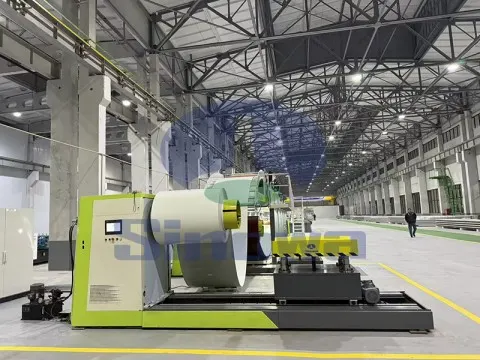
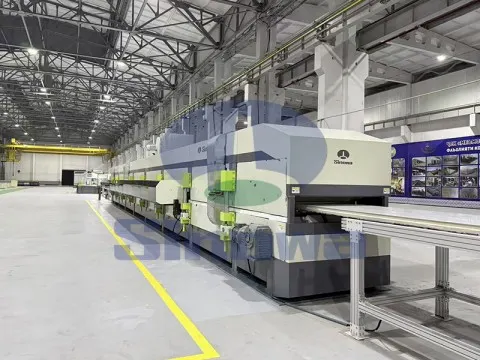
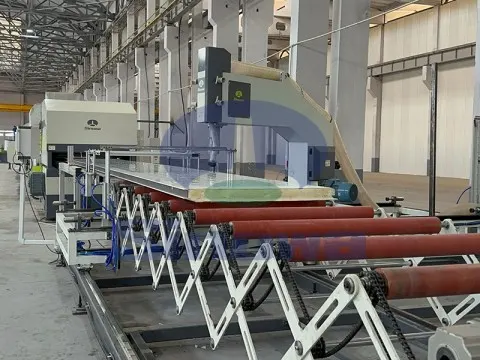
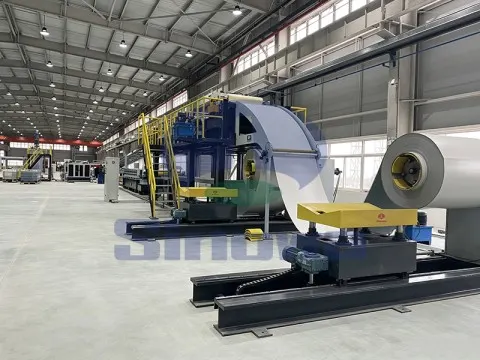
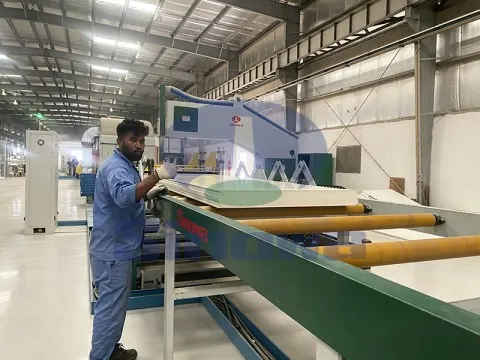
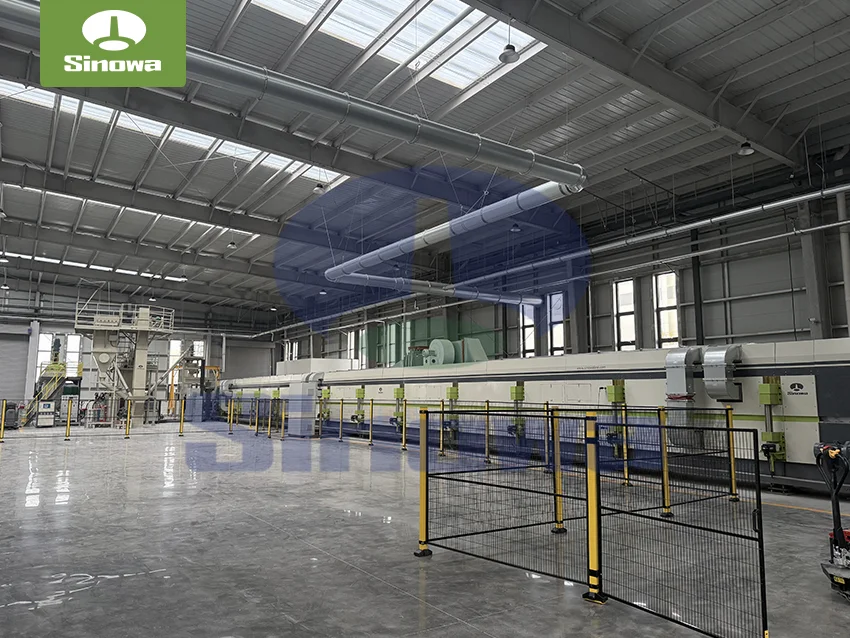
The facing materials, which can be metal sheets (such as color-coated steel, galvanized steel, or aluminum), fiberglass sheets, or other composite materials, are fed into the machine through decoiler units. These decoilers ensure that the facing materials are unrolled smoothly and evenly, with tension control mechanisms to prevent wrinkling or deviation. Before the foaming process, the facing materials are often preheated to a specific temperature to enhance the adhesion between the foam core and the facings. This preheating step also helps to accelerate the foaming and curing process, ensuring that the foam bonds firmly to the facings as it expands. Once the foam mixture is injected between the facings, the composite structure moves through a double belt conveyor system, which applies uniform pressure and maintains a stable temperature to facilitate the foaming and curing of the PU core. The double belt conveyor is equipped with heating elements that keep the temperature within the optimal range for foaming—typically between 50 and 60 degrees Celsius—allowing the foam to expand fully and cure evenly. The length of the conveyor is designed to provide sufficient time for the foam to complete the curing process, ensuring that the final panel has a stable structure and consistent properties.
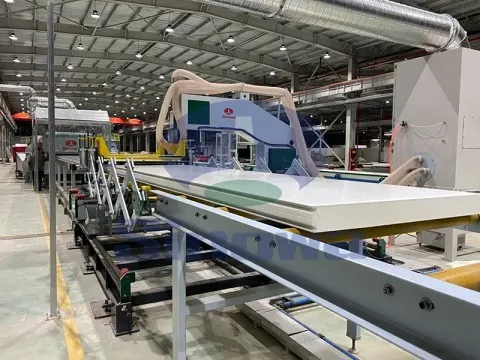
One of the key advantages of the PU sandwich panel machine with high pressure foaming system is its high level of automation, which significantly reduces the need for manual intervention and improves production efficiency. The entire production process—from raw material feeding and metering to foaming, curing, and cutting—is controlled by a programmable logic controller (PLC) system, which allows operators to set and adjust production parameters such as foam density, panel thickness, production speed, and cutting length with precision. The PLC system also integrates various sensors that monitor the production process in real time, detecting any deviations in temperature, pressure, or material ratio and making automatic adjustments to ensure consistent product quality. This automation not only reduces the risk of human error but also increases production speed, with modern machines capable of producing panels at a rate of 3 to 10 meters per minute, and an annual output of over one million square meters. For manufacturers, this means higher productivity, lower labor costs, and the ability to meet large-scale orders in a timely manner.
Another significant benefit of this machine is its flexibility and adaptability to different production needs. It can produce PU sandwich panels of various sizes, thicknesses, and configurations, depending on the specific requirements of the application. The panel thickness can be adjusted from 30mm to 200mm or more, while the length can be customized from 2 meters to 18 meters, with cutting accuracy up to ±5mm. This flexibility allows manufacturers to produce panels for a wide range of applications, from wall and roof panels for industrial warehouses and commercial buildings to cold storage panels, prefabricated modular houses, and sound insulation panels for highways and railways. Additionally, the machine can be adapted to work with different types of facing materials and foam formulations, enabling the production of panels with specific properties such as fire resistance, corrosion resistance, or enhanced thermal insulation. For example, by adjusting the foam formulation, manufacturers can produce panels with a fire rating that meets strict industry standards, making them suitable for use in high-risk environments.
The quality and performance of the PU sandwich panels produced by this machine are superior to those made by traditional methods, thanks to the high pressure foaming system and precise control of the production process. The uniform, dense foam core provides excellent thermal insulation properties, with a thermal conductivity as low as 0.022 W/m·K, which is significantly lower than other insulation materials such as mineral wool or polystyrene. This makes the panels ideal for use in energy-efficient buildings, where they can help reduce heating and cooling costs by minimizing heat transfer. The closed-cell structure of the foam also gives the panels excellent water and vapor resistance, preventing moisture from seeping into the core and causing damage over time. Additionally, the strong bond between the foam core and the facing materials ensures that the panels have high structural strength and rigidity, capable of withstanding heavy loads and harsh environmental conditions. This durability means that the panels have a long service life, typically 20 to 50 years or more, reducing the need for frequent replacement and maintenance.
In addition to its performance advantages, the PU sandwich panel machine with high pressure foaming system also offers environmental benefits. The PU foam used in the production process is a lightweight material that reduces the overall weight of the panels, which in turn reduces the energy consumption during transportation and installation. Furthermore, the high pressure foaming process minimizes material waste, as the precise metering of raw materials ensures that only the required amount of foam is used. Many modern machines also incorporate energy-saving features, such as efficient heating systems and variable frequency drives, which reduce power consumption and lower the carbon footprint of the production process. As the global focus on sustainability and carbon reduction intensifies, these environmental benefits have become increasingly important for manufacturers looking to meet green production standards and consumer demand for eco-friendly products.
The application range of PU sandwich panels produced by this machine is extremely wide, covering various industries and fields. In the construction industry, they are widely used as wall and roof panels for industrial warehouses, logistics centers, commercial buildings, and prefabricated houses. Their excellent thermal insulation and sound insulation properties make them ideal for use in cold storage facilities, where maintaining a stable temperature is crucial. In the transportation industry, they are used in the production of refrigerated trucks and containers, providing effective insulation to keep goods fresh during transportation. They are also used in the manufacturing of cleanrooms, where a controlled environment with minimal dust and temperature fluctuations is required, such as in the pharmaceutical and electronics industries. Additionally, they find applications in the renovation of old buildings, where their lightweight and easy installation make them a convenient and cost-effective solution for improving insulation and structural performance.
As technology continues to advance, the PU sandwich panel machine with high pressure foaming system is also evolving to meet the changing needs of the industry. Manufacturers are constantly improving the machine’s design and functionality, incorporating new technologies such as artificial intelligence (AI) and Internet of Things (IoT) to enhance automation and monitoring capabilities. AI-powered systems can analyze production data in real time, predict potential equipment failures, and optimize production parameters to improve efficiency and product quality. IoT connectivity allows operators to monitor and control the machine remotely, providing greater flexibility and convenience. Additionally, there is a growing focus on developing machines that can use more environmentally friendly raw materials, such as bio-based polyurethanes, which further reduce the environmental impact of the production process.
Proper maintenance and operation of the PU sandwich panel machine with high pressure foaming system are essential to ensure its long-term reliability and performance. Regular maintenance includes cleaning the mixing head and pipelines to prevent the buildup of cured foam, checking and replacing worn parts such as seals and gaskets, and calibrating the metering pumps to ensure precise material ratio. Operators should also be trained to understand the machine’s operation and safety procedures, as high pressure systems can pose risks if not handled properly. Safety features such as emergency stop buttons, pressure relief valves, and protective covers are incorporated into the machine to ensure the safety of operators and prevent accidents. By following proper maintenance and operation procedures, manufacturers can extend the service life of the machine and ensure consistent production of high-quality PU sandwich panels.
In conclusion, the PU sandwich panel machine with high pressure foaming system is a advanced production equipment that has transformed the manufacturing of PU sandwich panels. Its high pressure foaming technology ensures a uniform, dense foam core with superior performance, while its automation and flexibility make it suitable for a wide range of applications. The machine offers numerous benefits, including high production efficiency, consistent product quality, environmental friendliness, and adaptability to different production needs. As industries continue to demand high-quality, energy-efficient materials, this machine will play an increasingly important role in the global manufacturing landscape. With ongoing technological advancements, it is expected to become even more efficient, reliable, and environmentally friendly, further driving the development of the PU sandwich panel industry and contributing to the construction of a more sustainable future.
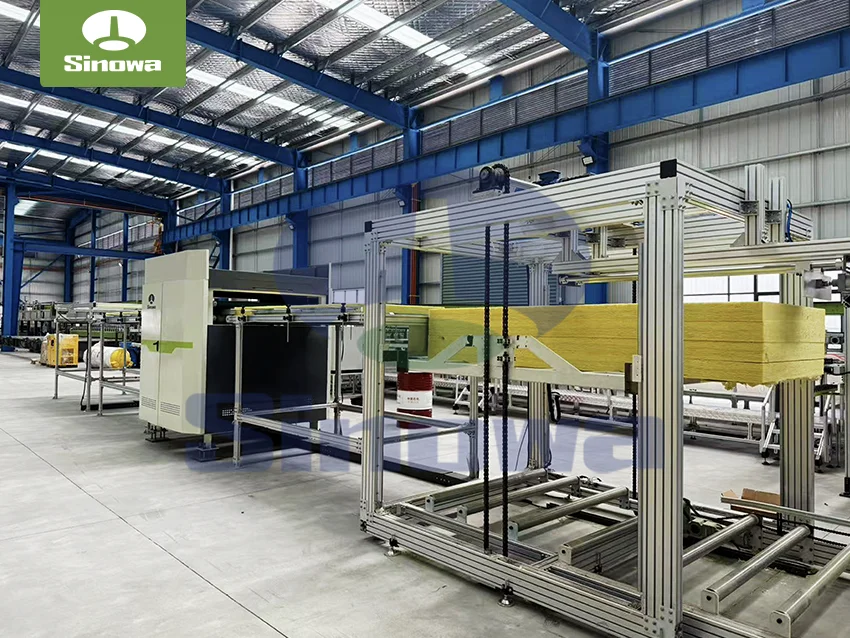
Sinowa is a professional manufacturer of sandwich panel machine in china, we provide diversified and high-performance sandwich panel production lines, including fully automatic continuous PU sandwich panel line and customized special lines to meet mass production and personalized order demands. These sandwich panel lines support processing multiple foam core materials, such as PU, PIR, mineral wool, rock wool and glass wool, covering different insulation and fireproof standards.
Featuring stable operation, high efficiency, energy saving and easy maintenance, our PU sandwich panel line deliver sandwich panels with excellent thermal insulation, fire resistance, sound insulation and lightweight durability. The finished panels are widely applied in industrial workshops, warehouse roofing and wall cladding, cold storage insulation, serving global construction and industrial insulation markets.
https://www.cnsinowa.com/sandwich-panel-machines/pu-sandwich-panel-machine-with-high-pressure-foaming-system.html