sandwich panel machine
The PU sandwich panel machine with double belt press is a complex integrated system that combines mechanical engineering, chemical reaction technology, electrical control, and hydraulic systems to achieve continuous and automated production. Unlike traditional production methods that rely on manual operation or single-belt pressing, this machine utilizes two parallel conveyor belts (upper and lower) to apply uniform pressure and controlled heat to the sandwich panel assembly during the production process. This design not only ensures the consistent thickness and flatness of the panels but also promotes the full curing of the PU foam core, enhancing the adhesion between the core and the surface layers. The entire production line is designed to be continuous, reducing production interruptions and improving overall efficiency, which is particularly important for large-scale manufacturing operations where output and consistency are critical.
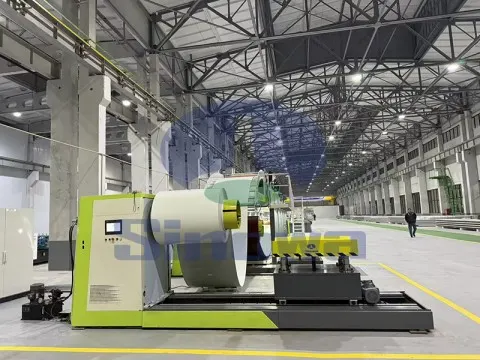
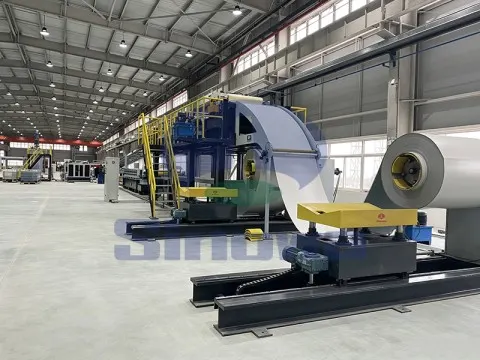
To understand the functionality of the PU sandwich panel machine with double belt press, it is essential to examine its core components and their respective roles in the production process. The machine typically consists of several key units, including the uncoiling system, roll forming system, pre-heating unit, foaming injection system, double belt press unit, cutting system, cooling conveyor, and stacking system. Each unit works in coordination to ensure the smooth and efficient production of high-quality PU sandwich panels. The uncoiling system is responsible for feeding the surface materials, which are usually metal sheets such as color steel sheets, galvanized sheets, or aluminum sheets, into the production line. These surface materials are unwound from coils and fed into the roll forming system, where they are shaped into the desired profiles according to specific design requirements. The roll forming process ensures that the surface layers have uniform dimensions and a smooth finish, which is crucial for the final appearance and structural integrity of the sandwich panels.
After the surface materials are formed, they are sent to the pre-heating unit, where they are heated to an optimal temperature. This pre-heating step is essential because it prepares the surface layers for better adhesion with the PU foam core. The temperature is carefully controlled to avoid overheating, which could damage the surface materials, or underheating, which would result in poor adhesion. The pre-heating unit typically uses heated air circulation or infrared heating technology to ensure uniform temperature distribution across the entire surface of the materials. Once the surface layers are pre-heated, they are conveyed to the foaming injection zone, where the PU foam mixture is injected between the upper and lower surface layers.
The foaming injection system is a critical component of the machine, as it determines the quality of the PU foam core. The system accurately mixes the polyurethane raw materials, including isocyanate and polyol, along with foaming agents, catalysts, and other additives, to form a homogeneous mixture. The foaming agent, which can be hydrocarbons such as pentane, ensures that the foam expands to the desired density and structure. The high-pressure injection system delivers the foam mixture between the surface layers with precise control over the flow rate and distribution, ensuring that the foam fills the entire space evenly without gaps or bubbles. This precision is essential for achieving the desired thermal insulation and structural properties of the sandwich panels.
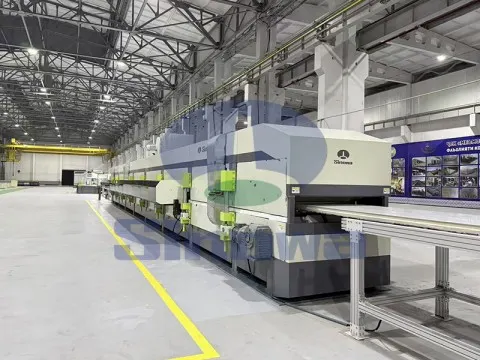
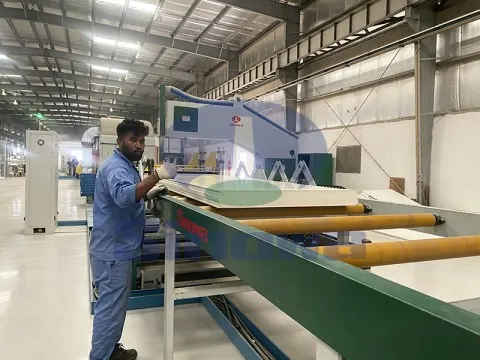
Once the foam mixture is injected, the sandwich panel assembly is fed into the double belt press unit, which is the heart of the machine. The double belt press consists of two parallel conveyor belts that are independently heated and insulated. The belts are made of high-strength materials that can withstand high temperatures and pressures, ensuring durability and long service life. The upper and lower belts apply uniform pressure to the sandwich panel assembly, while the integrated heating system maintains a consistent temperature to facilitate the curing of the PU foam. The pressure and temperature are carefully controlled according to the specific requirements of the foam formulation and the desired properties of the panels. The double belt press ensures that the foam core cures evenly and completely, resulting in strong adhesion between the core and the surface layers, as well as a flat and smooth surface finish.
One of the key advantages of the double belt press design is its ability to control the thickness of the sandwich panels with high precision. The distance between the two belts can be adjusted to produce panels of different thicknesses, ranging from a few centimeters to over 20 centimeters, depending on the application requirements. This flexibility makes the machine suitable for producing a wide range of PU sandwich panels, from thin panels used for interior partitioning to thick panels used for exterior walls and roof insulation. Additionally, the uniform pressure applied by the double belts ensures that the panels have consistent density throughout, which is crucial for their structural stability and thermal insulation performance.
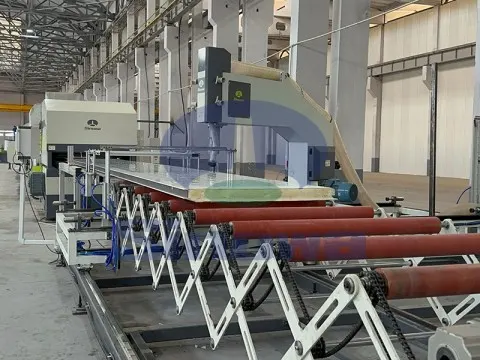
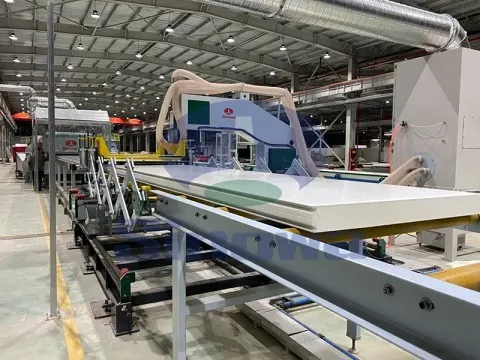
After passing through the double belt press, the fully cured sandwich panels are conveyed to the cutting system. The cutting system is synchronized with the production line to perform "flying cuts," which means that the panels are cut to the desired length without stopping the production process. This continuous cutting method minimizes waste and maximizes production efficiency. The cutting system typically uses band saws or disk blades, which are capable of making precise and clean cuts, ensuring that the panel edges are smooth and free from burrs. The length of the panels can be adjusted according to customer requirements, making the machine highly versatile.
Following the cutting process, the panels are transferred to the cooling conveyor, where they are allowed to cool and solidify further. The cooling conveyor uses forced air or water cooling to reduce the temperature of the panels, ensuring that they maintain their dimensional stability and structural integrity. This cooling step is particularly important for preventing warping or deformation of the panels, which could occur if they are stacked or transported before they have fully cooled. Once the panels are cooled, they are conveyed to the stacking system, where they are automatically stacked in neat piles for storage or transportation. The stacking system is designed to handle the panels gently to avoid damage, ensuring that the finished products are in perfect condition when they reach the customer.
The PU sandwich panel machine with double belt press offers numerous advantages over traditional production methods, making it a preferred choice for manufacturers around the world. One of the most significant advantages is its high level of automation, which reduces the need for manual labor and minimizes the risk of human error. The entire production line can be controlled by a centralized PLC (Programmable Logic Controller) system, which allows operators to set and adjust production parameters, monitor the production process, and troubleshoot any issues that may arise. This automation not only improves production efficiency but also ensures consistent product quality, as the machine operates with a high degree of precision and repeatability.
Another key advantage of this machine is its energy efficiency. The double belt press uses advanced heating technology that minimizes energy consumption by recycling heat and maintaining precise temperature control. Additionally, the continuous production process reduces energy waste associated with start-up and shutdown cycles, making the machine more environmentally friendly. The use of eco-friendly foaming agents, such as pentane, further enhances the environmental performance of the machine, as these agents have a low global warming potential and do not deplete the ozone layer. This aligns with the growing global emphasis on sustainable manufacturing and green building practices.
The versatility of the PU sandwich panel machine with double belt press is also worth noting. The machine can be adapted to produce a wide range of PU sandwich panels with different surface materials, core densities, and thicknesses. This flexibility allows manufacturers to meet the diverse needs of various industries, including construction, cold storage, food processing, and logistics. For example, panels used in cold storage facilities require high thermal insulation performance, which can be achieved by adjusting the foam density and panel thickness. Panels used in industrial warehouses may require higher structural strength, which can be achieved by using thicker surface materials or reinforcing the foam core. The machine’s ability to adapt to different production requirements makes it a valuable asset for manufacturers looking to expand their product offerings.
In terms of maintenance, the PU sandwich panel machine with double belt press is designed to be easy to maintain, with accessible components and simple maintenance procedures. Regular maintenance is essential to ensure the machine operates at peak performance and has a long service life. Key maintenance tasks include cleaning the machine regularly to remove dust, debris, and foam residue, lubricating moving parts to prevent wear and tear, inspecting the belts for signs of damage or wear, and calibrating the temperature and pressure sensors to ensure accurate readings. Additionally, it is important to replace worn or damaged parts promptly to avoid production delays and ensure product quality. Many manufacturers provide detailed maintenance guidelines to help operators keep the machine in optimal condition.
The application of PU sandwich panels produced by this machine is widespread, covering a variety of sectors. In the construction industry, these panels are used for exterior walls, roofs, and interior partitioning, thanks to their excellent thermal insulation and sound insulation properties. They help reduce energy consumption in buildings by minimizing heat transfer, which in turn lowers heating and cooling costs. In cold storage facilities, PU sandwich panels are used to maintain low temperatures, as their high thermal insulation performance prevents heat from entering the facility. This is particularly important for the food and pharmaceutical industries, where temperature control is critical for product quality and safety.
Industrial warehouses and factories also benefit from the use of PU sandwich panels, as they provide a durable and cost-effective building solution. The panels are resistant to moisture, corrosion, and fire, making them suitable for harsh industrial environments. Additionally, their lightweight nature makes them easy to install, reducing construction time and labor costs. In the transportation sector, PU sandwich panels are used in the construction of truck bodies and shipping containers, as they are lightweight yet strong, helping to reduce fuel consumption while providing protection for the cargo.
As the demand for energy-efficient and sustainable building materials continues to grow, the PU sandwich panel machine with double belt press is expected to play an even more important role in the manufacturing industry. Advances in technology are likely to further improve the efficiency and performance of these machines, with innovations such as improved automation, better energy conservation, and enhanced foam formulations. Manufacturers are also focusing on developing machines that are more compact and easier to install, making them suitable for smaller production facilities.
In conclusion, the PU sandwich panel machine with double belt press is a highly efficient and versatile piece of equipment that has revolutionized the production of PU sandwich panels. Its integrated design, high level of automation, and precise control over the production process ensure that the panels produced are of consistent high quality, with excellent thermal insulation, sound insulation, and structural properties. The machine’s energy efficiency and environmental friendliness make it a sustainable choice for manufacturers, aligning with global efforts to reduce carbon emissions and promote green building practices. With its wide range of applications and ongoing technological advancements, the PU sandwich panel machine with double belt press is set to remain a key component in the modern construction and manufacturing industry for years to come. Whether used in large-scale industrial production or small to medium-sized manufacturing facilities, this machine offers a reliable and cost-effective solution for producing high-quality PU sandwich panels that meet the evolving needs of the market.
Sinowa is a professional manufacturer of sandwich panel machine in china, we provide diversified and high-performance sandwich panel production lines, including fully automatic continuous PU sandwich panel line and customized special lines to meet mass production and personalized order demands. These sandwich panel lines support processing multiple foam core materials, such as PU, PIR, mineral wool, rock wool and glass wool, covering different insulation and fireproof standards.
Featuring stable operation, high efficiency, energy saving and easy maintenance, our PU sandwich panel line deliver sandwich panels with excellent thermal insulation, fire resistance, sound insulation and lightweight durability. The finished panels are widely applied in industrial workshops, warehouse roofing and wall cladding, cold storage insulation, serving global construction and industrial insulation markets.
https://www.cnsinowa.com/sandwich-panel-machines/pu-sandwich-panel-machine-with-double-belt-press.html