 sandwich panel line
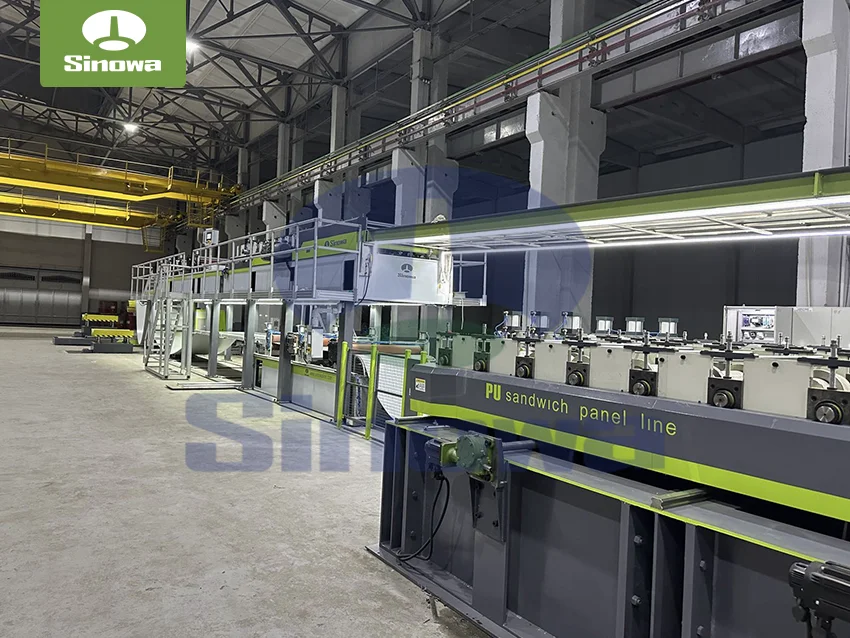
The high-speed PU sandwich panel making line is a complex integrated equipment system that combines mechanical engineering, electrical control, chemical reaction technology, and intelligent monitoring. Its core working principle is to accurately compound two layers of facing materials with a rigid polyurethane (PU) foam core through a series of continuous and automated processes, forming a three-layer composite structure with excellent comprehensive performance. Unlike traditional manual or semi-automatic production methods, the high-speed production line achieves full-process automation from raw material feeding, pretreatment, foaming, lamination, curing, cutting to finished product stacking, which greatly reduces manual intervention, avoids human errors, and ensures that each batch of PU sandwich panels meets the uniform quality standards required by large-scale projects. The high production speed of the line is its most prominent feature, which can reach several meters per minute, and the annual output can reach millions of square meters, effectively solving the problem of insufficient supply of PU sandwich panels in large-scale projects that require a large number of materials in a short period.
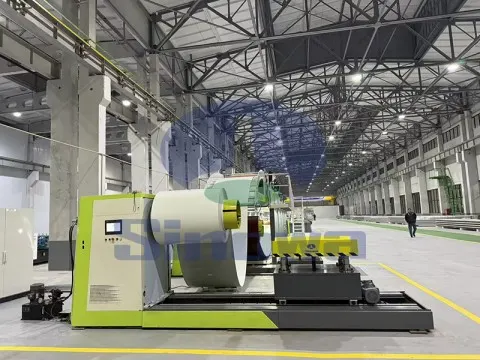
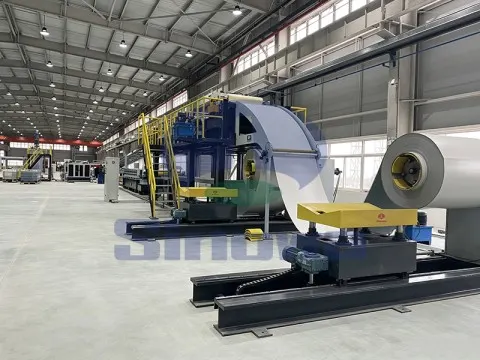
The structure of the high-speed PU sandwich panel making line is reasonably designed, and each functional module is closely connected to form a complete production chain. The main components of the line include the feeding system, facing material pretreatment system, PU foaming system, lamination and curing system, cutting system, stacking system, and intelligent control system. Each module undertakes a specific production task, and the coordinated operation of all modules ensures the smooth progress of the entire production process. The feeding system is responsible for stably supplying facing materials and PU raw materials. The facing materials usually include galvanized steel sheets, galvalume sheets, aluminum sheets, or other metal materials with good durability and corrosion resistance, which can provide strong structural support and weather resistance for the final PU sandwich panels. The feeding system adopts tension control devices to ensure that the coiled facing materials are uncoiled smoothly and stably without deviation, laying a good foundation for subsequent processing. For the PU raw materials, including polyol, isocyanate, foaming agent, catalyst, and other additives, the feeding system uses special storage tanks and precise metering pumps to ensure that each component is transported in a fixed proportion, which is crucial for the formation and performance of the PU foam core.
The facing material pretreatment system is an important link to ensure the bonding strength between the facing material and the PU foam core. After being uncoiled, the facing materials first enter the leveling device, where wrinkles and deformations caused during storage and transportation are eliminated through leveling rollers, ensuring a flat and smooth surface. In some cases, the facing materials will also undergo preheating treatment. The preheating temperature is accurately controlled according to the type of facing material and the characteristics of the PU raw materials, which can not only improve the adhesion between the facing material and the PU foam but also accelerate the curing speed of the PU foam, further improving production efficiency. In addition, the pretreatment system can also carry out surface treatment on the facing materials according to production needs, such as coating a special adhesive layer, to enhance the bonding firmness between the layers and prevent delamination during use, which is particularly important for PU sandwich panels used in large-scale projects that need to bear long-term structural loads and harsh environmental impacts.
The PU foaming system is the core part of the entire production line, as it directly determines the performance of the PU foam core, which in turn affects the thermal insulation, sound insulation, and structural strength of the final PU sandwich panels. The foaming system adopts high-precision metering and mixing technology, which can accurately control the proportion of each component of the PU raw materials. The raw materials are transported to the mixing head through metering pumps, where they are fully mixed and then evenly sprayed onto the pretreated bottom facing material. The foaming process of PU is a rapid chemical reaction process, which requires strict control of temperature, pressure, and time. The high-speed production line is equipped with an advanced temperature control system to maintain the production environment and the temperature of the reaction system within the optimal range, ensuring that the PU foam can fully foam and cure. The foam core formed by this process has a uniform closed-cell structure, which has excellent thermal insulation performance with low thermal conductivity, and good compressive strength and toughness, enabling the PU sandwich panels to effectively block heat transfer, reduce energy consumption of buildings, and withstand certain structural loads.
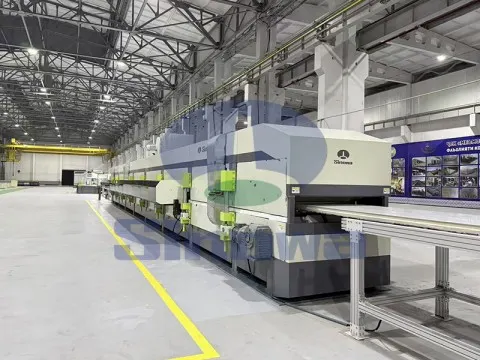
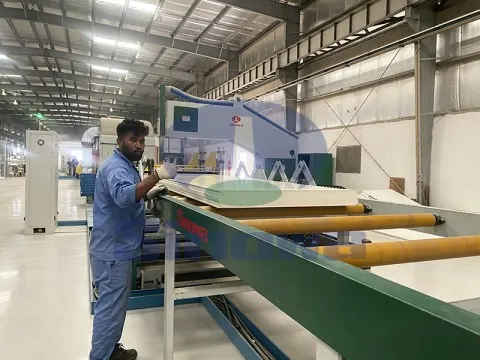
After the PU foam is sprayed onto the bottom facing material, the lamination and curing system starts to work. The top facing material, which has also undergone pretreatment, is accurately laid on the foaming PU core through the guiding device, and then the three-layer structure is sent to the double-track laminating machine. The laminating machine applies uniform pressure to the composite structure through the upper and lower tracks, ensuring that the facing materials and the PU foam core are closely bonded without gaps. At the same time, the curing system in the laminating machine provides a stable temperature environment to accelerate the curing of the PU foam. The length of the curing channel is designed according to the production speed and the curing time of the PU foam, ensuring that the PU foam is fully cured before leaving the laminating machine, so that the composite panel has sufficient structural strength and can enter the subsequent cutting process smoothly. The lamination and curing system of the high-speed production line adopts modular design, which can be flexibly adjusted according to the thickness and specifications of the PU sandwich panels, meeting the diverse needs of large-scale projects for panels of different sizes.
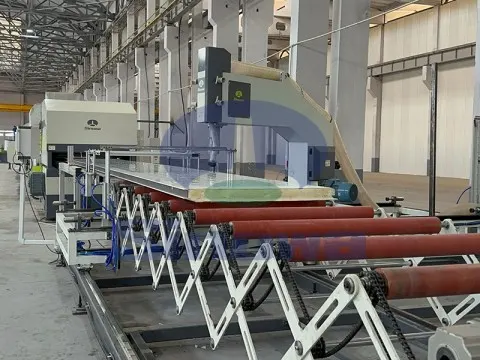
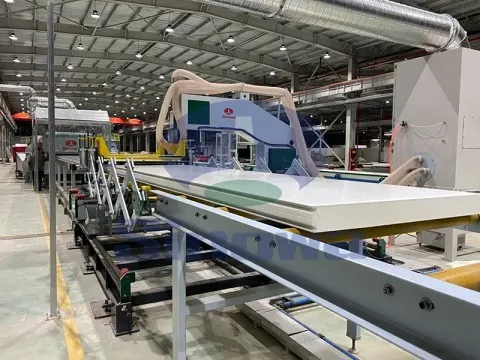
The cutting system is another key module of the high-speed PU sandwich panel making line, which is responsible for cutting the continuously produced long composite panels into finished products of the required length. The cutting system adopts high-precision cutting tools and intelligent positioning technology, which can accurately cut according to the preset length parameters, and the cutting error is controlled within a very small range, ensuring the dimensional accuracy of the finished products. The cutting process is carried out continuously and synchronously with the production speed, without affecting the normal operation of the entire production line. In addition, the cutting system is also equipped with a dust removal device to collect the dust and debris generated during the cutting process, ensuring the cleanliness of the production environment and the surface quality of the finished products. For large-scale projects that often require a large number of panels of the same specification, the cutting system can realize continuous and automatic cutting, greatly improving production efficiency and reducing manual labor intensity.
The stacking system of the high-speed PU sandwich panel making line realizes the automatic stacking and sorting of the cut finished products. After cutting, the finished panels are transported to the stacking area through the conveyor belt, and the stacking robot or automatic stacking device stacks the panels neatly according to the preset rules. The stacking system can adjust the stacking height and quantity according to the size and weight of the panels, ensuring the stability of the stacked panels and facilitating subsequent storage and transportation. The automatic stacking function not only reduces the labor cost but also avoids the damage to the panels caused by manual stacking, ensuring the integrity of the finished products. For large-scale projects, the stacked panels can be directly loaded and transported to the construction site, realizing the seamless connection between production and construction, improving the construction efficiency.
The intelligent control system is the "brain" of the high-speed PU sandwich panel making line, which integrates advanced control technologies such as PLC, touch screen, and sensor. The control system can realize real-time monitoring and adjustment of the entire production process, including production speed, temperature, pressure, material proportion, cutting length, and other key parameters. Operators can set and adjust production parameters through the touch screen, and the system will automatically adjust each functional module according to the set parameters to ensure the stability of the production process. At the same time, the control system is equipped with an alarm function. When an abnormality occurs in any link of the production line, such as material shortage, temperature deviation, or equipment failure, the system will issue an alarm prompt in time, and operators can quickly handle the problem, avoiding production interruption and reducing production losses. Some advanced high-speed production lines also have remote monitoring and fault diagnosis functions, which can realize remote operation and maintenance, further improving the reliability and stability of the equipment.
The high-speed PU sandwich panel making line has significant advantages in adapting to large-scale projects, which is mainly reflected in its high production efficiency, stable product quality, strong adaptability, and environmental protection. In terms of production efficiency, the high-speed production line can achieve continuous and automated production, with a production speed several times higher than that of traditional production methods, which can meet the large demand for PU sandwich panels in large-scale projects in a short period. For example, in the construction of large logistics centers or industrial parks, which often require millions of square meters of PU sandwich panels, the high-speed production line can complete the production task efficiently, ensuring that the construction progress is not delayed. In terms of product quality, the full-process automated operation of the production line avoids human errors, and the precise control of each production link ensures that the thickness, density, thermal conductivity, and other performance indicators of the PU sandwich panels are uniform and stable, meeting the strict quality requirements of large-scale projects for building materials. The panels produced by the high-speed line have good structural stability and durability, which can withstand the test of long-term use and harsh environmental conditions, reducing the maintenance cost of the building in the later period.
In terms of adaptability, the high-speed PU sandwich panel making line can be flexibly adjusted according to the needs of large-scale projects, producing PU sandwich panels of different thicknesses, widths, and specifications. At the same time, the line can also adapt to different types of facing materials and PU raw materials, producing panels with different performance characteristics to meet the diverse needs of different large-scale projects. For example, for cold storage projects that require high thermal insulation performance, the production line can adjust the formula of the PU foam core to reduce its thermal conductivity, ensuring that the cold storage can maintain a stable low temperature environment; for industrial factory buildings that require high structural strength, the line can choose thicker facing materials and optimize the lamination process to enhance the load-bearing capacity of the panels. In addition, the modular design of the production line makes it easy to upgrade and expand, and new functional modules can be added according to the development of production technology and the needs of projects, extending the service life of the equipment.
Environmental protection is another important advantage of the high-speed PU sandwich panel making line. With the increasing emphasis on global environmental protection and the promotion of "double carbon" goals, the building materials industry is moving towards green and low-carbon development. The high-speed production line adopts environmentally friendly production processes and raw materials, reducing environmental pollution. For example, the foaming system uses non-fluorinated foaming agents, which do not damage the ozone layer and meet environmental protection standards; the dust removal and waste gas treatment devices equipped in the production line can effectively collect and treat the dust and waste gas generated during production, reducing air pollution. In addition, the production process of the high-speed line has high resource utilization rate, and the waste materials generated during production can be recycled and reused, reducing resource waste. The PU sandwich panels produced by the line are also environmentally friendly and recyclable, which can be recycled and reused after the service life of the building, reducing the generation of construction waste, in line with the concept of green construction of large-scale projects.
The application of high-speed PU sandwich panel making lines in large-scale projects has become more and more extensive, and it has played an important role in promoting the development of the construction industry. In the field of logistics and warehousing, large-scale logistics centers and distribution bases usually require a large number of building envelopes with good thermal insulation and moisture-proof performance. The PU sandwich panels produced by the high-speed production line can meet these requirements, effectively maintaining the stability of the internal environment of the warehouse, protecting the safety of goods, and reducing energy consumption for temperature regulation. In the field of cold storage construction, PU sandwich panels are the core insulation materials. The high-speed production line can mass-produce high-performance cold storage panels with low thermal conductivity and good sealing performance, ensuring that the cold storage can maintain a stable low temperature for a long time, extending the shelf life of frozen foods, fresh agricultural products, and medical supplies. In the field of industrial construction, large-scale industrial factories, workshops, and power plants require building materials with high structural strength, corrosion resistance, and sound insulation performance. The PU sandwich panels produced by the high-speed line can meet these needs, providing a comfortable and safe working environment for workers, and reducing the impact of industrial noise on the surrounding environment.
In the field of public infrastructure construction, such as stadiums, exhibition centers, and transportation hubs, which have large spans and large areas, the lightweight and high-strength characteristics of PU sandwich panels make them an ideal building material. The high-speed production line can produce large-size PU sandwich panels, reducing the number of joints during construction, improving construction efficiency, and enhancing the aesthetic appearance of the building. In addition, with the acceleration of urbanization and the promotion of prefabricated building policies, the demand for prefabricated building components such as PU sandwich panels in large-scale urban construction projects is increasing. The high-speed PU sandwich panel making line can realize the mass production of prefabricated panels, which is in line with the development trend of prefabricated construction, improving the construction efficiency, reducing the construction period, and reducing the impact of construction on the urban environment.
With the continuous development of science and technology and the increasing demand for high-quality building materials in large-scale projects, the high-speed PU sandwich panel making line is also constantly developing towards intelligence, high efficiency, and greenization. In the future, the intelligent level of the production line will be further improved, and technologies such as artificial intelligence and the Internet of Things will be widely applied in the production process. The production line can realize self-adaptive adjustment and intelligent fault diagnosis, further reducing manual intervention and improving production efficiency and stability. At the same time, the production speed and product quality of the line will be further improved, and new foaming technologies and materials will be continuously developed and applied, making the PU sandwich panels have better thermal insulation, fire resistance, and environmental protection performance, meeting the higher requirements of large-scale projects for building materials. In addition, the energy consumption of the production line will be further reduced, and more environmentally friendly production processes will be adopted to realize the green and low-carbon development of the production process, contributing to the global environmental protection cause.
In conclusion, the high-speed PU sandwich panel making line is an important equipment that adapts to the development needs of large-scale construction projects. It realizes the mass production of high-performance PU sandwich panels through automated, continuous, and intelligent production methods, which not only solves the problem of insufficient supply of building materials in large-scale projects but also improves the quality and efficiency of construction. With its significant advantages in production efficiency, product quality, adaptability, and environmental protection, the high-speed production line has become an indispensable part of the modern building materials production industry. As large-scale projects continue to increase and the requirements for building materials become higher and higher, the high-speed PU sandwich panel making line will play a more important role in the future, promoting the continuous development and upgrading of the construction industry towards green, efficient, and intelligent directions. The continuous innovation and optimization of this production line will not only bring more convenience and benefits to large-scale construction projects but also make positive contributions to the sustainable development of the global construction industry.
Sinowa is a professional manufacturer of sandwich panel machine in china, we provide diversified and high-performance sandwich panel production lines, including fully automatic continuous PU sandwich panel line and customized special lines to meet mass production and personalized order demands. These sandwich panel lines support processing multiple foam core materials, such as PU, PIR, mineral wool, rock wool and glass wool, covering different insulation and fireproof standards.
Featuring stable operation, high efficiency, energy saving and easy maintenance, our PU sandwich panel line deliver sandwich panels with excellent thermal insulation, fire resistance, sound insulation and lightweight durability. The finished panels are widely applied in industrial workshops, warehouse roofing and wall cladding, cold storage insulation, serving global construction and industrial insulation markets.
https://www.cnsinowa.com/sandwich-panel-machines/high-speed-pu-sandwich-panel-making-line-for-large-scale-projects.html