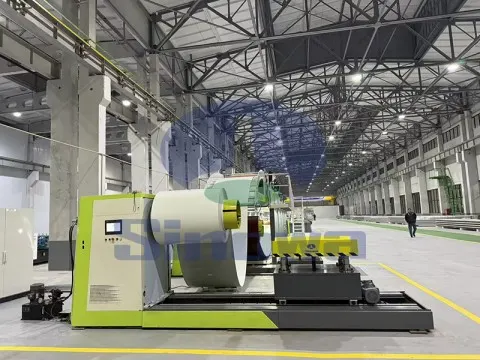
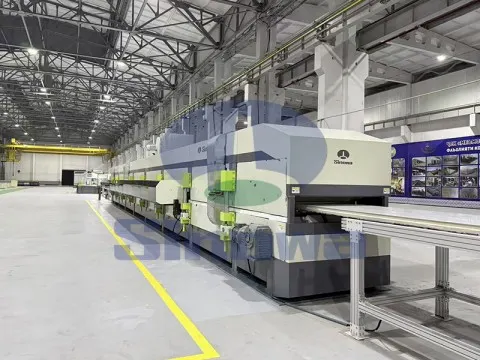
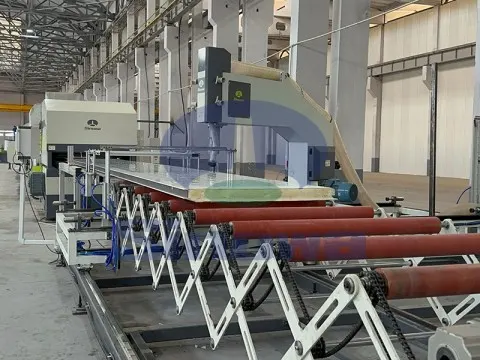
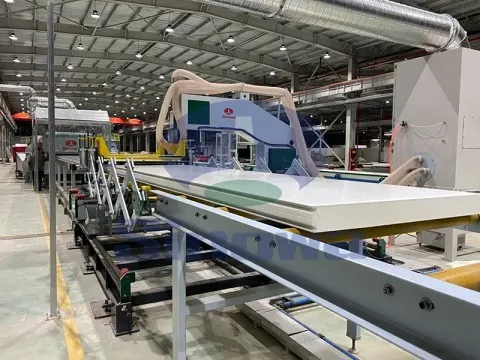
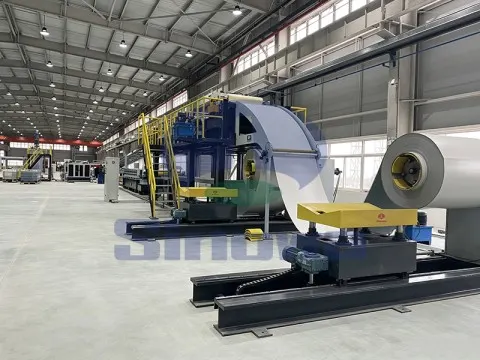
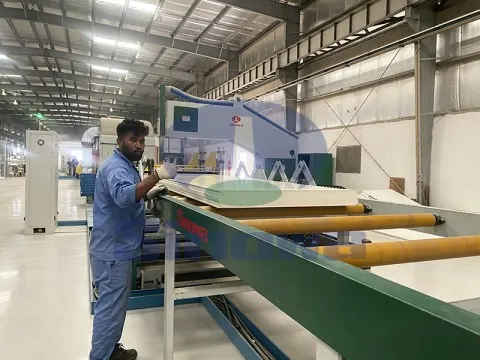
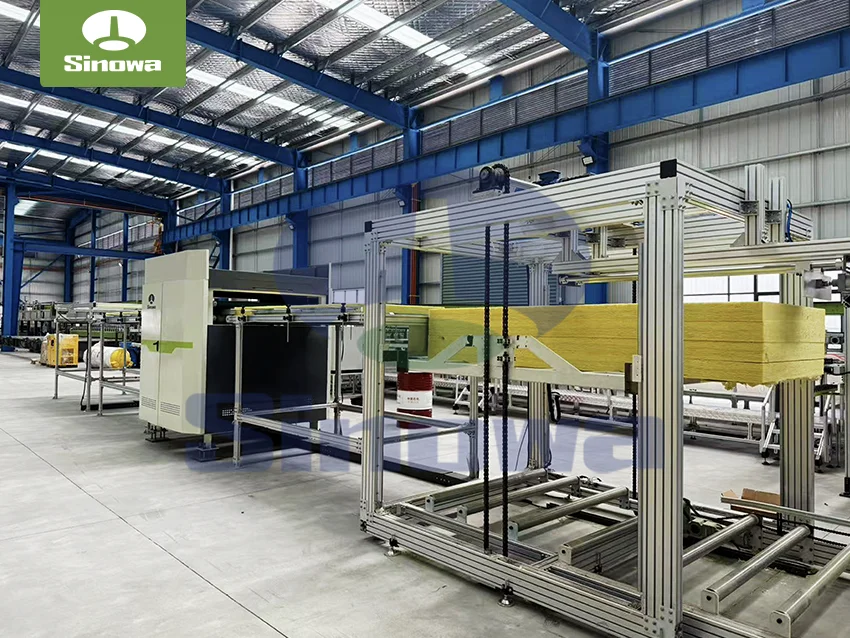
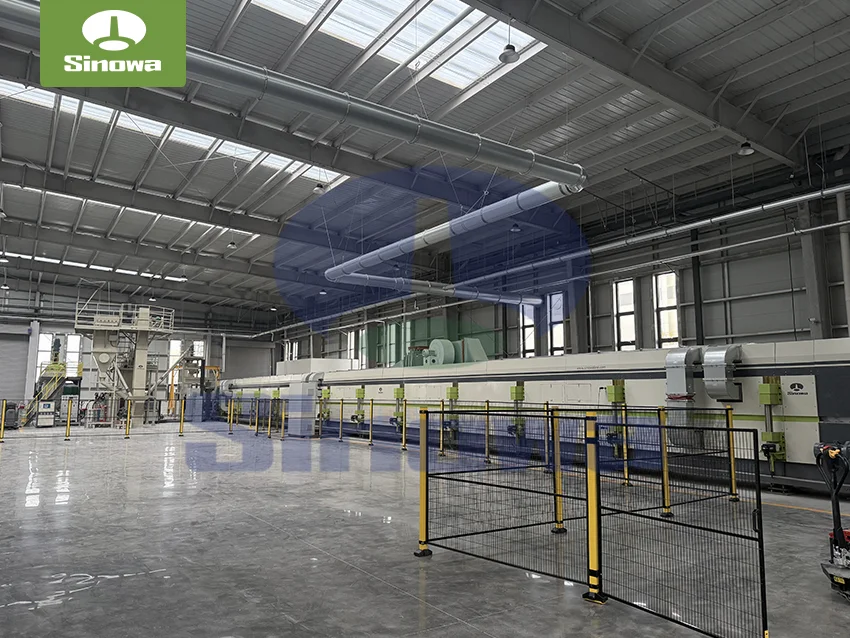
sandwich panel line
The core operational logic of all industrial PU foam production lines originates from the inherent chemical reaction characteristics of polyurethane synthesis, where two core liquid raw materials, polyol composite materials and isocyanate components, undergo efficient mixing and instantaneous exothermic chemical reaction under specific temperature, pressure, and proportional conditions, accompanied by the expansion and foaming effect generated by the action of blowing agents, catalysts, and foam stabilizers added in the formula system. The entire production process from raw material input to finished product output is a continuous and interconnected industrial flow, and every link in the production line must maintain precise parameter control and synchronous operational coordination to avoid any subtle deviations in raw material ratio, mixing uniformity, reaction temperature, or foaming time that may lead to unqualified foam cell structure, unstable product density, reduced mechanical strength, or poor dimensional stability. Industrial PU foam production lines abandon the inefficient manual operation and simple mechanical mixing mode of traditional small foaming equipment, and adopt a fully integrated automated control and mechanical transmission structure, realizing standardized and streamlined management of raw material storage, constant temperature conditioning, precise metering, high-efficiency mixing, continuous foaming, natural curing, fixed-size cutting, and finished product conveying and stacking, fundamentally solving the problems of uneven product quality, low production output, high labor dependence, and poor production safety in traditional foaming production modes.
The overall structural composition of a complete industrial PU foam production line covers multiple core functional units and supporting auxiliary systems, each of which undertakes an irreplaceable key function in the whole foaming production process and forms a mutually restricted and coordinated organic whole. The raw material processing and conditioning system is the primary foundational unit of the entire production line, mainly responsible for the sealed storage, constant temperature maintenance, and uniform stirring and mixing of all liquid chemical raw materials required for foaming production. All raw material storage containers are designed with thermal insulation and temperature regulation structures, which can stably maintain the raw materials within the optimal reaction temperature range required for long-term production operation. This constant temperature processing function is particularly critical for industrial continuous production, as the viscosity and reaction activity of polyol and isocyanate raw materials are extremely sensitive to temperature changes; too high or too low temperature will directly affect the subsequent mixing effect and foaming reaction speed, resulting in inconsistent expansion ratio and cell structure of the produced foam. In addition to temperature regulation, this system is also equipped with circulating stirring and filtering devices to prevent raw material precipitation, component stratification, and impurity mixing during long-term storage, ensuring that the chemical composition and physical state of each batch of raw materials involved in the foaming reaction remain highly consistent, laying a solid foundation for the stability of subsequent production links and finished product quality.
Following the raw material conditioning system, the precision metering and automatic conveying unit constitutes the core guarantee for realizing accurate ratio control of PU foam foaming production. The performance difference of polyurethane foam products for different industrial uses mainly depends on the scientific proportion of core raw materials and auxiliary additives, and even tiny proportional errors will cause obvious changes in foam hardness, density, thermal conductivity, and compression resistance. Industrial PU foam production lines adopt professional volumetric or gravimetric metering structures, which can accurately control the conveying flow and delivery volume of each single raw material according to the preset production formula parameters. All metering and conveying actions are automatically regulated by the central control system without manual intervention in the whole process, which can effectively avoid proportional deviations caused by human operation errors in traditional manual batching links. The conveying pipeline of the metering unit is designed with pressure monitoring and flow feedback linkage functions. Once abnormal flow fluctuation or pipeline pressure change is detected during the conveying process, the system will automatically fine-tune the operating parameters of the conveying equipment in real time to ensure that the raw material ratio always meets the production formula standards. This high-precision metering and conveying mode enables the production line to quickly switch production formulas according to different industrial product production needs, flexibly adapt to the production requirements of flexible foam, rigid foam, and semi-rigid foam, and maintain high-precision ratio control accuracy in each production switching process.
The high-pressure or low-pressure mixing system is the key functional area where the core chemical reaction of PU foam production officially starts, and it is also the most critical core component affecting the uniformity of foam cell structure and the overall performance of finished products. After being accurately metered and conveyed, all raw materials are transported to the professional mixing head inside the mixing system, and complete instantaneous high-efficiency mixing in the closed mixing cavity according to the set process parameters. Different mixing modes are adopted according to different industrial production needs and foam product types: high-pressure mixing relies on the high-speed impact and turbulent mixing effect of raw materials injected into the mixing cavity at high pressure, realizing rapid and uniform fusion of all components in a very short time; low-pressure mixing adopts mechanical stirring and circulating mixing mode to achieve gentle and uniform mixing of raw materials, which is more suitable for the production of special foam products with low reaction activity and high formula viscosity. The mixing system is designed with real-time temperature and pressure monitoring components to track the mixing state of raw materials in the mixing cavity in real time. The exothermic reaction of polyurethane foaming starts immediately after the raw materials are fully mixed, and the mixing system needs to ensure that all reaction components are evenly fused before the reaction proceeds, avoiding local excessive reaction or insufficient reaction caused by uneven mixing, which would lead to defects such as local hardening, hollow cells, or uneven density of the foam. After the mixing is completed, the homogeneous reaction material is evenly and continuously poured onto the foaming conveying equipment through the discharge port of the mixing system, entering the subsequent continuous foaming and forming stage.
The continuous foaming and conveying forming unit is the main production link where the polyurethane reaction material completes expansion, foaming, and preliminary shaping. The mixed reaction material is evenly distributed on the surface of the circulating conveyor belt with stable operating speed, and along with the slow forward movement of the conveyor belt, the exothermic chemical reaction continues to proceed, the internal blowing agent continuously generates gas to expand the volume, and the polyurethane molecular chain continuously cross-links and solidifies, gradually forming a continuous and complete foam embryo body with a regular shape and stable structure. The operating speed of the conveyor belt, the laying thickness of the reaction material, and the environmental temperature of the foaming area are all precisely matched with the foaming reaction speed to ensure that the foam can fully expand and complete preliminary shaping during the conveying process without excessive expansion collapse or insufficient expansion and compact structure. For the production of large-size slab foam widely used in industrial thermal insulation and packaging fields, the foaming conveying unit can produce long-strip continuous foam buns with super length, and the foam embryo body formed by continuous foaming has uniform overall density, regular external shape, and consistent internal cell structure, avoiding the size and performance differences of intermittent single-block foaming products. For molded special-shaped foam products used in industrial parts and equipment supporting fields, the foaming unit can be matched with customized mold circulating conveying equipment to pour the reaction material into precision molds of different shapes, so that the foam completes foaming and shaping according to the mold cavity structure, meeting the production needs of special-shaped foam parts with complex structural requirements.
The natural curing and constant temperature maturing system is an indispensable post-foaming processing link to ensure the stable performance and structural strength of industrial PU foam finished products. Although the foam completes preliminary shaping and surface solidification in the foaming and conveying stage, the internal polyurethane molecular cross-linking reaction is not completely finished, and the foam still has slight performance fluctuation and structural instability in a certain period of time. The curing and maturing system provides a closed constant temperature and dry environment for the initially shaped foam embryo body, allowing the foam to be placed statically or slowly conveyed for a certain period of time to complete the subsequent molecular cross-linking reaction and internal stress release. Through scientific curing and maturing treatment, the internal cell structure of the foam tends to be more stable, the mechanical properties such as compression resistance, tensile strength, and tear resistance are fully stabilized, and the problems of later shrinkage, deformation, and performance attenuation of the foam in the process of use are effectively avoided. The curing time and ambient temperature can be automatically adjusted according to the type of foam product and production rhythm, realizing seamless connection with the front-end foaming production and back-end cutting and processing links, ensuring the continuity and efficiency of the entire production line operation, and avoiding production stagnation caused by insufficient curing of foam products.
The fixed-size cutting and finishing processing unit is responsible for cutting and shaping the cured continuous foam embryo body into finished foam products that meet industrial application size and shape requirements. This unit is equipped with multi-axis automatic cutting equipment and trimming and finishing devices, which can carry out longitudinal slitting, transverse cutting, surface trimming, and edge waste removal according to the preset size parameters. All cutting actions are automatically controlled by the central system, with high cutting precision and smooth cutting section, avoiding foam edge damage, cell collapse, and size deviation caused by manual cutting. For industrial foam products requiring special surface treatment or subsequent processing, the cutting unit can also be matched with auxiliary finishing structures to complete simple surface leveling and edge polishing, ensuring that the appearance quality and dimensional accuracy of finished foam products meet the supporting standards of downstream industrial production. The waste materials generated in the cutting and finishing process are centrally collected and uniformly processed through the supporting waste recycling auxiliary system, which reduces material waste, improves the overall material utilization rate of production operation, and realizes more economical and environmentally friendly industrial production operation mode.
The intelligent central automatic control system runs through all functional units of the entire industrial PU foam production line, serving as the brain core to coordinate the synchronous operation of all links and realize full-process automatic regulation and intelligent management. The control system integrates real-time data collection, parameter automatic adjustment, operation state monitoring, fault early warning and protection functions, and can centrally manage and control all links from raw material metering, mixing and foaming to curing, cutting and finished product output. Production personnel only need to set the production formula, product size, and operational rhythm parameters through the simple operation interface, and the system can automatically complete the whole production process without frequent manual adjustment and on-site operation. In the daily production operation process, the control system will real-time collect the operating data of temperature, pressure, flow, speed, and reaction state of each production link, compare and analyze it with the preset standard parameters, and automatically fine-tune the operating state of each equipment once parameter deviation is found, ensuring that the production process is always in a stable and optimal operating state. When abnormal equipment operation or potential production failure occurs, the system will automatically send early warning signals and take protective shutdown measures according to the fault level, avoiding equipment damage, production safety accidents, and large-scale unqualified product output caused by equipment failure.
Industrial PU foam production lines have obvious application advantages and industrial adaptability in actual industrial production operation, which are mainly reflected in stable product quality, high production efficiency, strong operational flexibility, and good long-term operational economy. In terms of product quality stability, the full-process automatic control and precise parameter regulation mode completely eliminate the quality fluctuation caused by human factors, ensuring that every batch of foam products produced has consistent density, cell structure, mechanical properties, and dimensional accuracy, meeting the strict quality matching requirements of downstream industrial supporting production. In terms of production efficiency, the continuous streamlined production mode realizes uninterrupted long-term production operation, with far higher single-line output than traditional intermittent foaming equipment, which can meet the large-scale and mass production needs of the industrial polyurethane foam market. In terms of operational flexibility, the production line can quickly switch production formulas and process parameters to produce different types of PU foam products, meeting the diversified production needs of different industrial fields without complicated equipment modification and debugging work. In terms of long-term operational economy, the automated production mode reduces labor input demand, the precise metering control reduces raw material waste, and the stable equipment operation reduces maintenance and failure loss, effectively reducing the comprehensive production operation cost for industrial production enterprises.
With the continuous upgrading and iterative development of modern industrial manufacturing industry, the market demand for high-performance, energy-saving, and environmentally friendly PU foam products in various industrial fields is constantly increasing, which also promotes the continuous technological optimization and functional upgrading of industrial PU foam production lines. Modern new-generation production lines pay more attention to energy-saving operation optimization, low-carbon environmental protection production, and intelligent digital management, further improving the energy utilization efficiency of the foaming reaction process, reducing the generation of harmful substances in the production process, and realizing more green and sustainable industrial production. At the same time, with the diversification of industrial foam application scenarios, production lines are also developing towards multi-functional integration and personalized customization, which can meet the special performance and structural production needs of high-end industrial supporting foam products. As an important basic production equipment in the polyurethane material industry, industrial PU foam production lines will always rely on continuous technological innovation and process optimization, support the stable development of the downstream industrial chain with efficient, stable, and high-quality production capacity, and provide reliable basic material guarantee for the upgrading and development of various modern industrial fields.
Sinowa is a professional manufacturer of sandwich panel machine in china, we provide diversified and high-performance sandwich panel production lines, including fully automatic continuous PU sandwich panel line and customized special lines to meet mass production and personalized order demands. These sandwich panel lines support processing multiple foam core materials, such as PU, PIR, mineral wool, rock wool and glass wool, covering different insulation and fireproof standards.
Featuring stable operation, high efficiency, energy saving and easy maintenance, our PU sandwich panel line deliver sandwich panels with excellent thermal insulation, fire resistance, sound insulation and lightweight durability. The finished panels are widely applied in industrial workshops, warehouse roofing and wall cladding, cold storage insulation, serving global construction and industrial insulation markets.
https://www.cnsinowa.com/sandwich-panel-machines/pu-foam-production-line-for-industrial-use.html