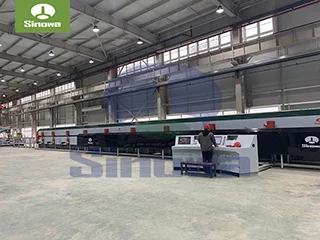
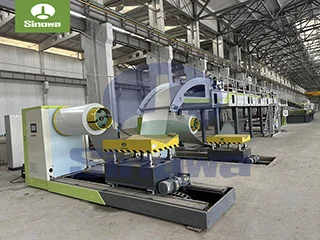
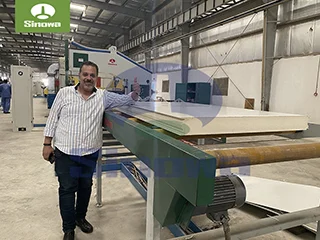
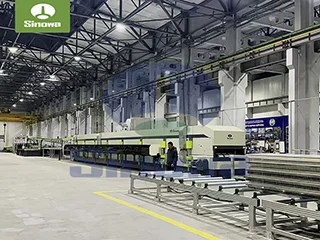
 sandwich panel line
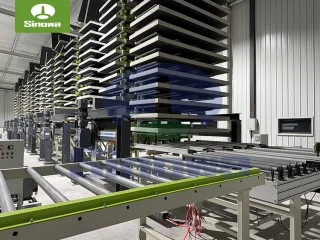
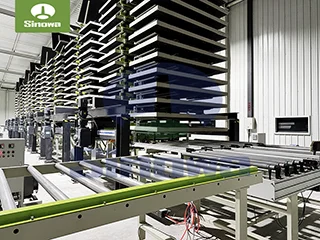
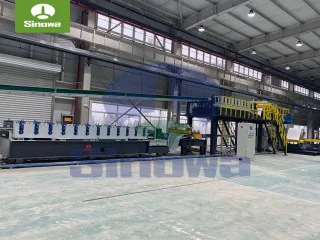
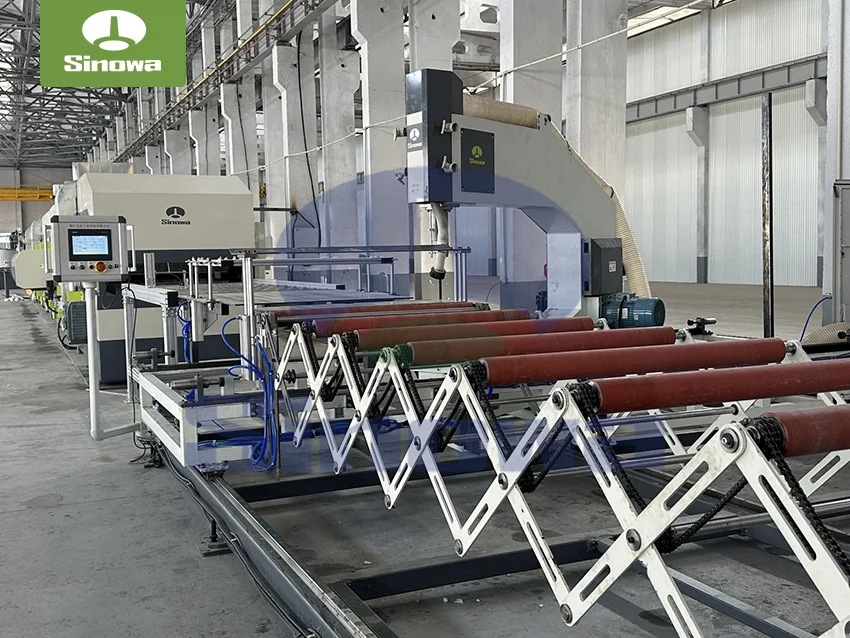
A standard sandwich panel production line is an integrated automated production system composed of multiple interconnected mechanical units, with each functional module cooperating closely to complete the whole manufacturing process from raw material feeding to finished product output. The overall structural design of the production line follows streamlined production logic, covering raw material conveying systems, surface pretreatment mechanisms, glue coating assemblies, composite pressing structures, heating and curing devices, cutting and trimming components, as well as finished product conveying and stacking auxiliary equipment. Every structural part is designed with production continuity and operational stability as the core criteria, which effectively reduces manual intervention links and realizes continuous assembly line production of sandwich panels. The spatial layout of the production line is reasonably optimized to save factory floor space while ensuring unobstructed material transmission between each process, avoiding production stagnation caused by unreasonable structural arrangement.
The raw material feeding part is the initial module of the continuous sandwich panel line, mainly responsible for the orderly delivery of metal surface plates and internal core materials. Metal raw materials are usually stored in coil forms, and the feeding mechanism is equipped with stable unwinding devices to ensure the slow and uniform release of metal coils without deformation or wrinkling during the feeding process. Meanwhile, the core material feeding structure can adapt to different types of thermal insulation and filling materials, including foam materials, rock wool, and other common core substrates. This module is fitted with precise conveying adjustment components, which can flexibly control the feeding speed according to the preset production parameters, ensuring the synchronization of surface plates and core materials in the feeding process and laying a foundation for the subsequent composite molding of panels. In addition, the feeding system is designed with anti-offset structures to prevent raw material deviation during transmission, which effectively avoids defective products caused by position dislocation.
After completing raw material feeding, the surface pretreatment process carries out fine processing on the metal plates. During the production and storage of metal coils, impurities such as dust, oil stains, and tiny attachments inevitably remain on the surface, which will affect the bonding tightness between the metal plate and the core material if not removed. The pretreatment unit adopts physical cleaning and smoothing processes to eliminate surface attachments and polish the plate surface moderately, making the metal plate flat and smooth. This treatment not only improves the adhesion effect of the adhesive but also enhances the surface flatness and appearance quality of the finished sandwich panels. Some optimized pretreatment structures are also equipped with drying auxiliary components to remove trace moisture on the plate surface, preventing moisture from affecting the stability of the adhesive and avoiding degumming or bulging problems of panels in later use.
Glue coating is a key procedure to determine the bonding performance of sandwich panels, and the glue coating module of the automatic sandwich panel production line is designed with uniform and controllable coating functions. The system adopts adjustable glue spreading structures to evenly apply environmentally friendly adhesives on the bonding surfaces of metal plates and core materials. Operators can flexibly adjust the glue application amount and coating range according to the thickness and material characteristics of different raw materials, ensuring that the adhesive covers the bonding area without excessive glue overflow or local glue shortage. The internal glue conveying pipeline is optimized to avoid adhesive solidification and blockage during long-term operation, and the detachable roller structure is convenient for daily cleaning and residual glue removal. A reasonable glue coating process can significantly enhance the integration between the surface plate and the core material, improving the overall structural strength and durability of the finished panels.
The composite pressing and heating curing module is the core functional section of the sandwich panel manufacturing line, which directly determines the molding quality and structural stability of sandwich panels. After the completion of glue coating, the surface plates and core materials are accurately combined and sent to the pressing equipment. The pressing structure adopts multi-group pressure balance design to apply uniform and stable pressure on the composite materials, ensuring that each bonding position is closely fitted without gaps. Meanwhile, the intelligent temperature control system precisely adjusts the internal heating temperature of the equipment to maintain a constant temperature environment suitable for adhesive curing. Under the dual effect of constant pressure and stable temperature, the adhesive undergoes sufficient chemical reaction to form a firm bonding structure between layers. The temperature and pressure parameters can be dynamically adjusted according to different adhesive types and core material attributes, which enables the production line to adapt to the processing requirements of diversified sandwich panels.
Following the curing and molding process, the cutting and trimming module conducts precise sizing and edge finishing on the continuously produced integrated plates. This part is equipped with high-speed cutting assemblies that can complete fixed-length cutting according to customized size requirements. The cutting mechanism features smooth operation and neat incision without burrs or plate deformation, which effectively guarantees the dimensional accuracy of finished products. In addition, the edge trimming device can trim the redundant edges of the plates to make the panel edges flat and regular, meeting the installation and assembly standards of construction engineering. The cutting system supports flexible switching of size parameters, realizing seamless production of panels with different specifications without repeated debugging, which greatly improves production flexibility.
The final stage of the production flow includes finished product conveying, stacking and auxiliary sorting. The molded and cut sandwich panels are stably transported to the designated storage area through the conveying platform. The automatic stacking device arranges the finished panels in an orderly manner, which saves manual sorting labor and reduces the damage rate of panels caused by manual handling. Meanwhile, the auxiliary detection components installed at the end of the production line conduct simple inspection on the surface flatness, bonding integrity and appearance of finished products, so as to screen out unqualified products in time and ensure that the products entering the storage area meet the basic production standards. The whole production process is carried out in a closed and orderly assembly line, realizing uninterrupted cyclic production from raw material input to finished product output.
Modern sandwich panel production lines adopt intelligent control systems to realize automated operation and precise parameter regulation. The core control unit integrates digital sensing components, which can monitor real-time data such as feeding speed, pressing pressure, heating temperature, and cutting length during the production process. All operating parameters can be intuitively displayed on the human-computer interaction interface, allowing operators to view the production status in real time and adjust parameters according to actual production demands. The system has an automatic early warning function; when abnormal conditions such as equipment jamming, parameter deviation or material shortage occur, the system will send prompt signals and implement automatic power-off protection to avoid equipment damage and production safety hazards. The simplified operation logic reduces the difficulty of equipment operation, and workers can master basic operating procedures after simple training, lowering the enterprise's labor training cost.
In terms of mechanical performance, the main body of the sandwich panel line is made of high-strength metal materials, with excellent compression resistance, wear resistance and corrosion resistance. The key transmission parts are processed with sophisticated craftsmanship to ensure low friction and stable operation during long-term continuous work. The internal mechanical structure is optimized for shock absorption and noise reduction, which effectively reduces vibration amplitude and operating noise during equipment operation, creating a better working production environment. The reasonable structural wear resistance design prolongs the service life of vulnerable parts, reduces the frequency of parts replacement, and effectively cuts down the long-term operation and maintenance cost of the production line. In addition, the production line has good compatibility and expansibility; users can add auxiliary processing components according to production demands to expand production functions and meet diversified processing requirements.
Sandwich panels produced by this type of production line have outstanding comprehensive performance, enabling them to be widely used in multiple industrial and construction fields. In the construction industry, these panels are commonly used for the construction of factory workshops, cold storage buildings, temporary engineering buildings, and purification workshops, providing excellent thermal insulation, heat preservation, and sound insulation effects for buildings. In the transportation manufacturing industry, sandwich panels can be applied to the compartment boards of special transport vehicles to reduce vehicle weight while ensuring structural strength. In addition, the panels are also suitable for interior partition decoration and outdoor enclosure engineering of public buildings, with strong environmental adaptability. Different from single building boards, finished sandwich panels have the advantages of light weight, high strength, convenient installation, and stable thermal insulation performance, which can effectively shorten the construction cycle and reduce the overall construction investment cost.
For investors and manufacturers, purchasing a high-quality sandwich panel production line brings multiple practical advantages in production and operation. Firstly, the high degree of automation of the equipment greatly improves production efficiency, realizing large-scale batch production and meeting the market's large-volume demand for sandwich panels. Secondly, the precise parameter control system ensures consistent product quality, reduces the proportion of defective products, and improves the qualified rate of finished products. Thirdly, the compact and reasonable equipment structure saves factory space, and the low energy consumption design effectively reduces daily power consumption and production energy cost. Moreover, the production line has low requirements for the production site and basic supporting conditions, which is suitable for small and medium-sized processing factories as well as large-scale standardized production workshops, with extremely high market applicability.
Daily maintenance and reasonable use are key factors to maintain the stable operation of the sandwich panel line and extend its service life. In daily production, operators need to regularly clean the dust, residual glue and debris on the surface of each functional module, especially the glue coating roller and cutting blade, to avoid material accumulation affecting processing accuracy. It is necessary to regularly check the tightness of transmission parts and connecting bolts, and add professional lubricating oil to the rotating and transmission components to reduce mechanical friction loss. After long-term operation, the heating and pressure components should be inspected regularly to calibrate temperature and pressure parameters to ensure production accuracy. In addition, the power circuit and control system need regular safety detection to eliminate potential circuit faults. Scientific daily maintenance can not only keep the equipment in an efficient operating state but also reduce the failure rate and maintenance cost in the later stage.
From the perspective of market development trends, with the continuous progress of construction industrialization and green building concepts, the market demand for energy-saving, environmentally friendly and high-efficiency building materials will continue to rise, which further broadens the application market of sandwich panels and brings broad development space for supporting production equipment. The continuously upgraded sandwich panel production lines are developing towards higher automation, lower energy consumption, stronger compatibility and simpler maintenance, which can better adapt to the changing market demands. For buyers who are ready to purchase such production lines, it is essential to comprehensively consider equipment structure, production performance, operational stability and after-sales maintenance convenience, and select production equipment that matches their own production scale and product positioning.
In conclusion, a complete sandwich panel production line is a highly integrated and efficient automated production system with reasonable structural design, stable operating performance, wide application range and convenient maintenance characteristics. It can efficiently produce high-quality sandwich panels that meet the standards of modern construction and industrial manufacturing, bringing stable economic benefits for production and processing enterprises. With the continuous expansion of the global building material market and the upgrading of construction requirements, high-performance sandwich panel production lines will always maintain high market value and application potential. For investors looking for reliable building material processing equipment, this type of production line is a practical and cost-effective production facility, which can help enterprises quickly occupy market share in the building material industry and realize long-term stable development.
https://www.cnsinowa.com/sandwich-panel-machines/sandwich-panel-line-for-sale.html