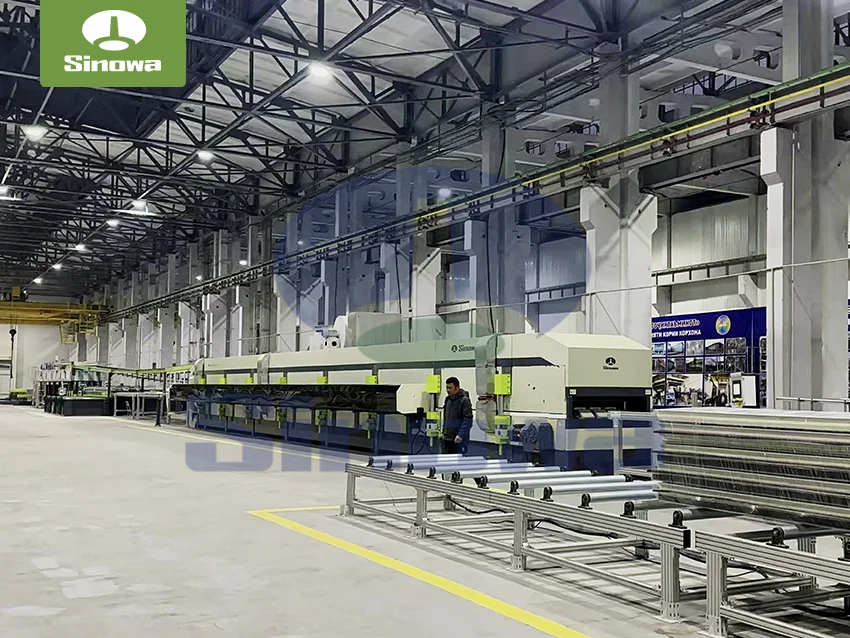
 sandwich panel machine
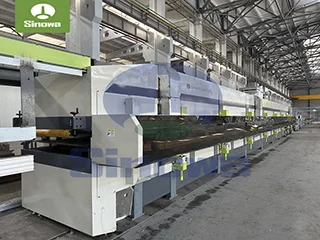
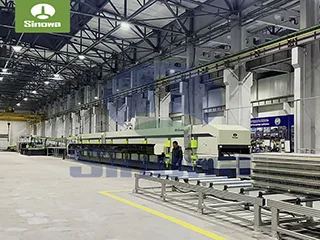
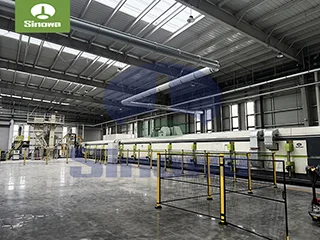
The overall structural design of the PU sandwich panel machine follows the logic of continuous streamlined production, with each functional module closely connected and collaboratively operated to form an uninterrupted production cycle. The entire system consists of multiple core functional units, including raw material unwinding and leveling unit, surface layer forming and processing unit, high-precision foam mixing and injection unit, constant-temperature laminating and curing unit, fixed-length cutting and shaping unit, and finished product conveying and sorting unit. Each unit is independently adjustable in parameters while maintaining synchronous operation through an integrated control system, effectively avoiding production discontinuity and product quality fluctuations caused by manual intervention. The mechanical frame of the whole equipment adopts high-rigidity structural design, which can withstand long-term continuous operation load and maintain stable operating accuracy under different environmental conditions, laying a solid foundation for long-term high-volume production.
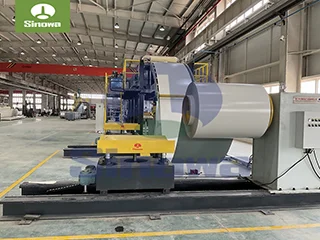
The front-end raw material processing module serves as the starting point of the entire production process, undertaking the pretreatment of upper and lower surface facing materials. In this module, coiled metal materials are placed on automatic unwinding devices, which achieve steady and uniform material output through hydraulic and mechanical damping control structures. Different from traditional intermittent feeding equipment, the unwinding structure of this sandwich panel machinery supports non-stop coil switching, realizing seamless connection between new and residual material coils without halting the overall production line, which greatly reduces production downtime and improves continuous production capacity. After unwinding, the metal sheets pass through multi-group leveling and surface cleaning structures, which eliminate surface wrinkles, uneven deformation, and residual dust or oil stains generated during coil storage and unwinding. This precise pretreatment process ensures the flatness and surface cleanliness of the facing materials, which is a key prerequisite for ensuring tight adhesion between the metal surface layer and the foam core layer in subsequent processes.
Subsequent to pretreatment, the surface layer forming unit conducts precise profile processing on the flat metal sheets. Equipped with multiple groups of high-precision alloy rolling stands, the unit gradually bends and presses the metal sheets into preset structural profiles through step-by-step rolling molding. The rolling structure adopts adjustable gap and pressure design, which can adapt to different thicknesses of metal sheets and diverse panel profile requirements. All rolling shafts maintain high coaxiality and rotational stability during operation, ensuring consistent molding dimensions of each section of the metal sheet and avoiding dimensional deviation or structural distortion of the surface layer. Meanwhile, the system is equipped with fine guiding and deviation correction devices, which can real-time monitor the material conveying trajectory and automatically correct minor offset errors, ensuring the precise alignment of upper and lower metal sheets in the subsequent lamination process and guaranteeing the overall dimensional consistency of finished panels.
The foam mixing and injection system is the core functional component that determines the thermal insulation performance, structural density, and bonding quality of sandwich panels, serving as the heart of the entire sandwich panel manufacturing machine. Polyurethane foam is formed by the chemical reaction of two or more liquid chemical raw materials, and this system realizes precise proportioning, high-speed mixing, and uniform injection of chemical materials. The raw material storage part adopts constant-temperature sealed storage tanks, which stabilize the activity and viscosity of chemical raw materials by controlling the internal temperature, avoiding performance changes of raw materials caused by ambient temperature fluctuations that affect foaming quality. The high-pressure mixing device fully stirs and blends different liquid raw materials in a closed mixing chamber to trigger uniform chemical reactions, generating fine and stable foam raw materials without uneven mixing or local reaction insufficiency.
The injection device adopts reciprocating uniform spraying and injection technology, which evenly distributes the reacted foam material on the surface of the lower metal sheet according to the set thickness and density parameters. The injection range, feeding speed, and foam output can be dynamically adjusted according to different panel thickness specifications, realizing full coverage of the panel molding area without material accumulation or missing injection. After injection, the foam material begins to expand slowly and fill the cavity between the upper and lower metal sheets, and the precise control of foaming pressure and expansion speed ensures that the internal foam structure is uniform and dense, without hollow holes, cracks, or uneven density. This precise foaming control directly determines the thermal insulation, sound insulation, and compression resistance of the finished panel, making the core layer maintain stable physical performance in long-term use.
The laminating and constant-temperature curing unit undertakes the composite molding and solidification shaping of the surface layer and core layer, which is a key link for forming the overall structural strength of sandwich panels. After the foam material is injected and laid flat, the upper and lower profiled metal sheets are closed and laminated through a double-belt clamping structure. The double-belt conveying system maintains constant clamping pressure and stable conveying speed, ensuring that the foam core layer is closely bonded to the metal surface layers without relative displacement or delamination. The internal closed curing channel is equipped with a multi-group constant-temperature heating system, which forms a stable and uniform thermal environment inside the channel. By accurately controlling the curing temperature and holding time, the polyurethane foam completes sufficient cross-linking reaction and solidification molding, forming an integrated composite structure with the metal surface layers.
The integrated molding structure formed by curing has extremely high bonding strength and overall stability, and the interface between the foam core and the metal layer does not easily peel off or separate under external force and temperature changes. The temperature control system adopts segmented precision regulation, which can adjust the curing parameters in real time according to different production speeds and panel thicknesses, ensuring that thin panels complete rapid curing and thick panels achieve sufficient internal reaction, avoiding quality problems such as incomplete internal curing or excessive surface aging. At the same time, the circulating heat conduction design inside the curing channel reduces local temperature differences, making the curing degree of the entire panel consistent and further improving the overall quality uniformity of products.
The fixed-length cutting and post-processing unit realizes precise sizing and finishing of continuously molded long panels. After the cured integrated panels are conveyed out of the curing channel, the high-precision tracking and cutting system automatically identifies the set panel length and performs stable and neat cutting. The cutting structure adopts high-speed and smooth cutting technology, which can complete cutting operations without generating burrs, edge warping, or sheet deformation, ensuring flat and smooth panel end faces. The system supports flexible switching of different fixed-length specifications, which can meet the production requirements of panels of various sizes and improve the versatility of the equipment. After cutting, the finished panels are transported to the sorting and stacking area through the automatic conveying platform, and the automatic stacking device neatly arranges the finished products, realizing orderly collection of finished products and facilitating subsequent transportation and storage.
In terms of control system design, the PU sandwich panel production line adopts an integrated intelligent control mode, which centralizes the parameter setting, operation monitoring, and fault diagnosis of all functional units. Operators can complete the adjustment of production speed, panel thickness, foam density, curing temperature, and other core parameters through a centralized operation interface. The system has a real-time data monitoring function, which can track the operating status of each module in real time, record production data, and automatically store parameter settings, facilitating continuous production and parameter optimization. In addition, the intelligent control system is equipped with abnormal state early warning and protection functions, which can automatically alarm and stop operation in case of abnormal material supply, parameter deviation, or mechanical failure, effectively avoiding equipment damage and defective product generation, and improving the safety and stability of production operations.
Compared with traditional intermittent production equipment, the automated continuous production mode of the PU sandwich panel line has significant advantages in production efficiency and product quality stability. The integrated streamlined operation eliminates repeated positioning and debugging links in intermittent production, greatly improves production continuity, and realizes large-scale and batch production. The unified parameter control and standardized production process eliminate quality differences caused by manual operation experience, making the thickness, density, bonding strength, and appearance quality of each batch of panels highly consistent. At the same time, the precise material ratio and injection control reduce the waste of chemical raw materials, improve the utilization rate of raw materials, and reduce the comprehensive production cost while ensuring product quality.
In terms of product performance adaptation, the equipment can produce sandwich panels with diversified performance characteristics by adjusting process parameters. By optimizing the foam formula proportion and foaming process, the produced panels can achieve excellent low-temperature thermal insulation performance, suitable for cold storage and cold chain transportation facilities that require strict temperature control. The high-density foaming process can enhance the structural compression resistance and impact resistance of the panels, meeting the load-bearing and anti-deformation requirements of factory building roofs, wall panels, and temporary building structures. In addition, the integrated composite structure formed by mechanical lamination and curing makes the panels have good weather resistance, which can maintain stable structural performance and thermal insulation effect in long-term outdoor high and low temperature alternating environments, and is not easy to age, deform or lose thermal insulation function.
The structural optimization design of the equipment also takes into account the convenience of daily maintenance and long-term stable operation. All transmission parts and key operating components adopt wear-resistant and durable structural configurations, which reduce the frequency of component replacement and maintenance. The modular design of each functional unit facilitates daily inspection, cleaning, and fault maintenance, and maintenance personnel can quickly locate and solve equipment problems without disassembling the overall structure, effectively improving equipment operation rate. The equipment is also equipped with a dust removal and waste material collection structure, which can clean up tiny debris generated during production in real time, maintain the cleanliness of the production environment, and realize standardized and environmentally friendly production operations.
With the continuous upgrading of energy-saving and environmental protection requirements in the construction industry, the advantages of foam core sandwich panel line in energy-saving production and green manufacturing are becoming increasingly prominent. The constant-temperature circulating heating system reduces ineffective heat loss during production, lowers production energy consumption, and realizes energy-saving operation of equipment. The closed chemical material conveying and foaming system avoids volatile leakage of raw materials, reduces environmental pollution during production, and meets the development requirements of green industrial production. The high-quality sandwich panels produced by the equipment can effectively reduce the energy consumption of building temperature regulation, provide reliable thermal insulation and energy-saving solutions for modern buildings, and play an important role in promoting the upgrading of the construction industry’s energy-saving system.
In practical industrial application scenarios, this type of sandwich panel production machine has strong production flexibility and market adaptability. It can not only produce standard specification sandwich panels for large-scale building projects, but also adjust process parameters to produce special-shaped and customized panels according to the personalized needs of customers, meeting the diversified application demands of different scenarios such as industrial plants, commercial buildings, cold storage warehouses, mobile board houses, and municipal engineering facilities. The stable mechanical performance and efficient production capacity of the equipment make it the preferred core equipment for medium and large-sized sandwich panel production enterprises, helping enterprises improve production scale, stabilize product quality, and enhance market competitiveness.
In conclusion, the PU foam sandwich panel manufacturing machine is a highly integrated, intelligent, and efficient professional production equipment that integrates multiple advanced technologies. Through scientific structural layout, precise process control, and automated operation mode, it realizes standardized, large-scale, and high-quality production of PU foam sandwich panels. Its excellent production stability, flexible parameter adjustability, and energy-saving and environmentally friendly production characteristics make it closely fit the development trend of modern construction material manufacturing. With the continuous development of the construction industry towards energy saving, environmental protection, and high efficiency, this professional manufacturing equipment will continue to play an important role in the field of composite building material production, providing solid equipment support for the popularization and application of high-performance thermal insulation sandwich panels.
https://www.cnsinowa.com/sandwich-panel-machines/pu-foam-sandwich-panel-manufacturing-machine.html