sandwich panel machine
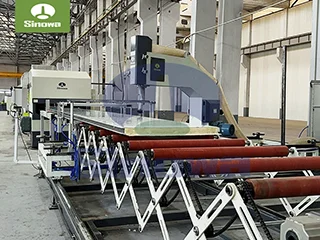
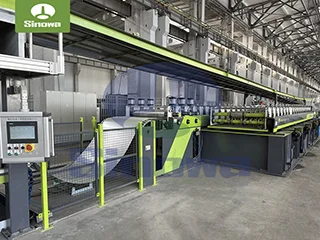
The structure of a PU sandwich panel making machine is a sophisticated assembly of interconnected components, each contributing to the seamless execution of the production process from raw material handling to the final cutting of finished panels. At the core of the machine lies the uncoiling and feeding system, which is responsible for unwinding large coils of metal facer sheets and feeding them into the production line with precision. This system typically includes de-coilers equipped with tension control mechanisms to prevent wrinkling or deformation of the metal sheets, ensuring a smooth and consistent feed. The tension control feature is crucial as it maintains the flatness of the facer sheets, which directly impacts the bonding quality between the sheets and the PU foam core. Following the uncoiling stage, the metal sheets pass through a roll forming section, composed of a series of tandem rolling stands with carefully designed rollers and gears. These stands progressively bend and shape the metal sheets into the desired profiles, which can vary based on the intended application—such as corrugated for roofing or flat for wall panels. The roll forming process is highly precise, allowing for customization of profile dimensions to meet the specific requirements of commercial building projects, whether for large-span warehouses or high-rise office complexes.
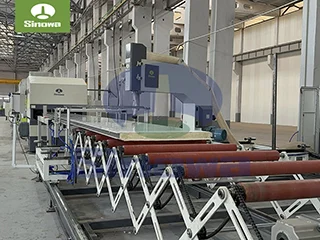
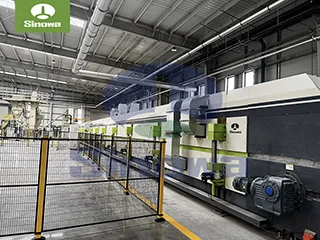
After forming, the metal sheets move to the PU foam injection unit, a critical component that determines the insulation and structural properties of the final panel. This unit consists of a metering system, mixing chamber, and injection nozzle. The metering system accurately measures the liquid PU chemicals—polyol and isocyanate—ensuring the correct ratio for optimal foam formation. These chemicals are then transported to the mixing chamber, where they undergo rapid and thorough blending to initiate the foaming reaction. The mixed chemicals are subsequently injected between the two formed metal sheets as they move along the production line. To ensure uniform distribution of the foam core, the injection nozzle is designed to dispense the mixture evenly across the width of the sheets. Following injection, the panels enter a cooling and curing zone, often equipped with a double belt laminating system. This system uses two continuous belts to apply consistent pressure to the panels as the PU foam expands and cures into a solid form. The pressure ensures proper bonding between the foam core and the metal facers, while the cooling mechanism accelerates the curing process, reducing production time without compromising quality. The final component of the machine is the cutting system, which uses high-precision blades or saws to cut the continuous panel into individual pieces of the required length. Advanced cutting systems are equipped with computerized controls to ensure accuracy, even when handling panels of varying thicknesses and lengths.
In addition to these core components, modern PU sandwich panel making machines often include auxiliary systems to enhance production efficiency and versatility. These may include preheating units that warm the metal sheets before foam injection, improving the adhesion between the facers and the foam core. Some machines also feature embossing units, which add decorative patterns or textures to the metal sheets, enhancing the aesthetic appeal of the panels for commercial buildings where visual design is a priority. Stacking and packaging systems are another common auxiliary feature, automating the process of collecting, stacking, and wrapping the finished panels to facilitate storage and transportation. These auxiliary components integrate seamlessly with the main production line, creating a fully automated workflow that minimizes manual intervention and reduces the risk of human error.
The performance characteristics of PU sandwich panel making machines are defined by their efficiency, precision, durability, and flexibility—all of which are essential for meeting the demands of commercial building projects. Efficiency is a key performance metric, with modern machines capable of continuous production at speeds ranging from 3 to 8 meters per minute, depending on the panel thickness and configuration. This high production rate allows manufacturers to meet large-volume orders, which is critical for commercial projects with tight construction schedules. Precision is another vital performance attribute, as it directly influences the quality of the finished panels. Advanced machines offer precise control over foam density, typically ranging from 40 to 60 kg/m³, ensuring consistent insulation performance across all panels. The roll forming section maintains tight tolerances for profile dimensions, while the cutting system achieves length accuracy within a few millimeters. This level of precision ensures that the panels fit together seamlessly during installation, reducing construction time and material waste.
Durability is also a key performance factor, as these machines operate under harsh industrial conditions for extended periods. The components are constructed from high-quality materials, such as hardened steel for the roll forming rollers and corrosion-resistant alloys for the chemical handling parts, ensuring long-term reliability. The automated systems are designed to withstand continuous operation, with minimal wear and tear on moving parts. Energy efficiency is another important performance characteristic, with modern machines incorporating energy-saving features such as variable frequency drives (VFDs) that adjust power consumption based on production demand. This not only reduces operational costs but also aligns with the sustainability goals of modern commercial construction. Flexibility is yet another critical performance trait, allowing the machines to produce panels of varying specifications. This includes adjustable panel thicknesses from 30 mm to 250 mm, widths up to 1200 mm, and lengths up to 12 meters or more. The ability to switch between different panel types—such as roofing panels, wall panels, or partition panels—without extensive reconfiguration makes these machines highly versatile, capable of adapting to the diverse needs of commercial building projects.
PU sandwich panel making machines are available in several types, categorized based on their production capabilities, configuration, and intended use. The most common type is the continuous production line, which is designed for high-volume, non-stop manufacturing of PU sandwich panels. These lines are fully automated, integrating all production stages—from uncoiling to cutting—in a single continuous workflow. Continuous production lines are ideal for large-scale commercial projects, such as shopping malls, logistics centers, and office complexes, where large quantities of panels are required. They offer high production efficiency, consistent quality, and the ability to produce panels of uniform dimensions over extended production runs.
Another type is the modular production line, which features a flexible design that allows for customization and expansion based on production needs. Modular lines consist of separate components that can be combined or reconfigured to produce different panel types or adapt to changing production volumes. This flexibility makes them suitable for manufacturers who handle a variety of commercial projects, from small retail stores to large industrial facilities. Modular lines can also be upgraded with additional components, such as embossing units or alternative foam injection systems, to enhance their capabilities without replacing the entire line.
Specialized roll forming machines are a third type, focusing on the production of panels with specific profiles or designs. These machines are equipped with custom roll forming stands to create unique shapes, such as curved panels for architectural features or interlocking profiles for enhanced structural integrity. Specialized roll forming machines are often used in high-end commercial projects, such as luxury hotels, corporate headquarters, or cultural institutions, where custom design elements are a priority. They offer high precision in profile formation, ensuring that the panels meet the exact architectural specifications of the project.
Dual-purpose machines, which can switch between producing PU sandwich panels and other types of sandwich panels (such as those with mineral wool or expanded polystyrene cores), are also gaining popularity. These machines feature a switchable foam injection system that allows manufacturers to alternate between different core materials without investing in separate production lines. This versatility is particularly beneficial for manufacturers who serve a diverse range of commercial clients with varying material requirements, reducing equipment costs and maximizing production flexibility.
The applications of PU sandwich panel making machines in commercial building are extensive, driven by the superior properties of the panels they produce. One of the primary applications is in the construction of exterior walls for commercial buildings. PU sandwich panels offer excellent thermal insulation, reducing heat transfer between the interior and exterior of the building. This translates to lower energy consumption for heating and cooling, a key consideration for commercial buildings that operate year-round and have high energy demands. The lightweight nature of the panels also reduces the overall structural load of the building, allowing for more cost-effective foundation designs and faster construction. Additionally, the panels can be finished with a variety of colors and textures, enhancing the aesthetic appeal of the building’s facade and aligning with the architectural vision of the project.
Roofing is another major application area for PU sandwich panels produced by these machines. Commercial building roofs require materials that are durable, weather-resistant, and energy-efficient—properties that PU sandwich panels excel at. The panels’ rigid structure provides excellent load-bearing capacity, making them suitable for flat or low-slope roofs common in commercial buildings such as warehouses, supermarkets, and office parks. The thermal insulation properties of the PU core help to reduce heat gain through the roof, lowering cooling costs during warm weather. Furthermore, the panels are resistant to water, UV radiation, and extreme temperatures, ensuring long-term performance and reducing maintenance requirements.
Interior partitioning is another important application in commercial buildings. PU sandwich panels are used to create interior walls and partitions, offering fast installation and excellent soundproofing. In office buildings, this allows for the creation of separate workspaces with minimal disruption to ongoing operations. In retail environments, partitions can be used to define product areas or storage spaces, while in hotels, they contribute to guest comfort by reducing noise transmission between rooms. The panels are also easy to cut and modify on-site, allowing for flexible design adjustments to accommodate changing layout needs.
Cold storage facilities, such as those used in supermarkets, food processing plants, and logistics centers, are another key application for PU sandwich panels. The superior thermal insulation properties of the PU core ensure that the internal temperature of the facility is maintained consistently, reducing energy consumption and preserving the quality of perishable goods. The panels’ airtight construction also prevents moisture infiltration, which can lead to mold growth and structural damage. Additionally, the panels are resistant to bacteria and easy to clean, making them suitable for use in food-safe environments.
Prefabricated commercial buildings, including modular offices, temporary retail spaces, and construction site facilities, also rely heavily on PU sandwich panels produced by these machines. Prefabrication offers numerous advantages for commercial projects, including faster construction times, reduced on-site waste, and consistent quality. PU sandwich panels are ideal for prefabrication due to their lightweight, durability, and ease of assembly. The panels can be pre-cut to exact dimensions in the factory, allowing for rapid on-site installation and minimizing the need for skilled labor. This makes prefabricated buildings a cost-effective solution for commercial clients looking to expand or establish new facilities quickly.
In addition to these primary applications, PU sandwich panels produced by these machines are used in a variety of specialized commercial settings. Cleanrooms in pharmaceutical facilities, laboratories, and electronics manufacturing plants utilize the panels for their airtightness and easy-to-sterilize surfaces. The panels’ ability to maintain a controlled environment makes them essential for these applications, where contamination control is critical. Sports facilities, such as gymnasiums and indoor stadiums, use the panels for their soundproofing properties, reducing noise levels and improving the spectator experience. The panels are also used in the construction of facade cladding systems, adding an extra layer of insulation and protection to commercial buildings while enhancing their visual appeal.
The role of PU sandwich panel making machines in commercial building extends beyond the production of panels; they also contribute to the sustainability and cost-effectiveness of construction projects. By producing panels with superior insulation properties, these machines help commercial buildings achieve higher energy efficiency ratings, reducing their carbon footprint and operating costs over time. The automated production process minimizes material waste, as precise control over panel dimensions ensures that each piece is used effectively. Additionally, the lightweight nature of the panels reduces transportation costs, as more panels can be transported in a single load compared to heavier traditional materials such as concrete or brick. The durability of the panels also reduces the need for frequent replacements, lowering the long-term maintenance costs of commercial buildings.
As the commercial construction industry continues to evolve, with a growing focus on sustainability, energy efficiency, and rapid construction, the demand for PU sandwich panel making machines is expected to rise. Manufacturers are constantly innovating to enhance the performance and versatility of these machines, incorporating advanced technologies such as artificial intelligence (AI) and internet of things (IoT) connectivity to optimize production processes. AI-powered systems can monitor and adjust production parameters in real-time, ensuring consistent quality and maximizing efficiency. IoT connectivity allows for remote monitoring and maintenance, reducing downtime and improving overall machine reliability. These advancements are making PU sandwich panel making machines an even more integral part of modern commercial construction, enabling the creation of buildings that are not only durable and efficient but also aligned with the latest environmental and architectural trends.
In conclusion, PU sandwich panel making machines are essential equipment in the commercial building sector, offering a perfect blend of efficiency, precision, and versatility. Their sophisticated structure, comprising core components such as uncoiling systems, roll forming stands, foam injection units, and cutting systems, ensures the consistent production of high-quality panels. The performance characteristics of these machines, including high production rates, precision control, durability, and flexibility, make them well-suited to meet the demands of diverse commercial projects. Available in various types, from continuous production lines to specialized roll forming machines, they can adapt to different production needs and panel specifications. The wide range of applications, from exterior walls and roofing to interior partitioning and cold storage, highlights their versatility and importance in commercial construction. As the industry continues to prioritize sustainability and efficiency, PU sandwich panel making machines will remain a cornerstone of modern commercial building, driving innovation and enabling the construction of smarter, more durable, and energy-efficient spaces.
https://www.cnsinowa.com/sandwich-panel-machines/pu-sandwich-panel-making-machine-for-commercial-building.html