sandwich panel line
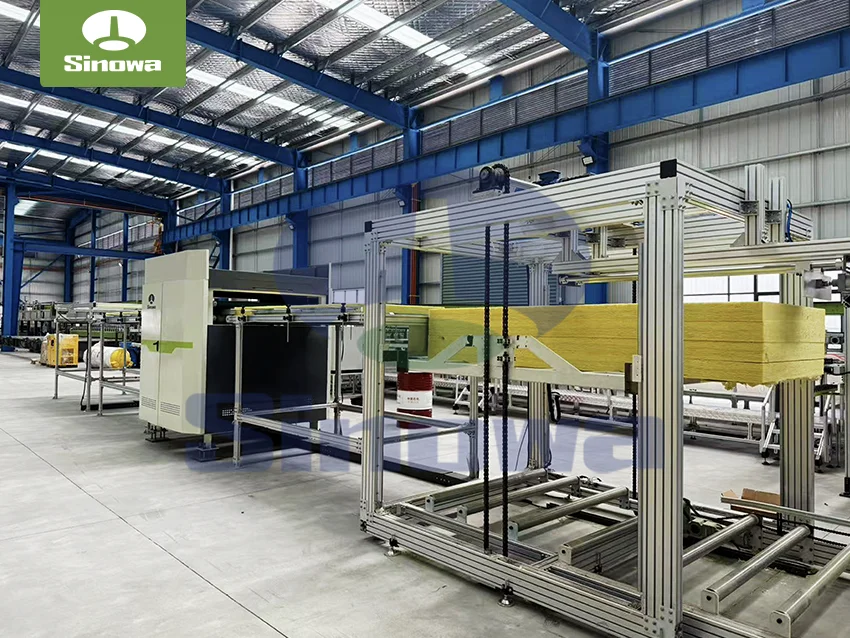
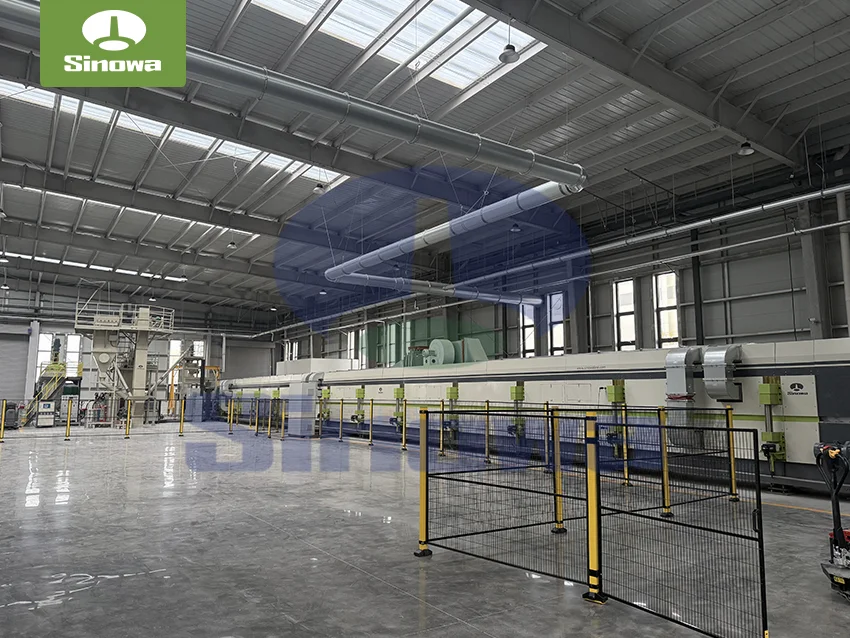
The overall structural composition of the PU continuous sandwich panel production line follows the scientific logic of mechanical transmission coordination, chemical foaming reaction control and thermal forming curing integration, and each functional structural unit is closely matched in operation rhythm and process parameters to ensure the stability and continuity of the entire production process. The front-end structural part of the production line is mainly composed of multi-station surface material unwinding and automatic deviation correction mechanisms, which are responsible for stably conveying different types of metal or non-metal surface base materials required for sandwich panel production. These mechanisms are designed with precise tension control structures to avoid surface material deformation, wrinkling or position deviation during the high-speed conveying process, laying a good foundation for the subsequent accurate compounding of surface materials and PU foam core materials. After the surface material is unwound, it enters the surface pretreatment and rolling forming structure, which can carry out fine leveling, surface texture fine treatment and edge shaping processing on the surface material according to the preset panel structural design requirements, ensuring that the outer surface of the finished sandwich panel is flat and smooth, the edge structure is neat and standardized, and the assembly and connection accuracy between subsequent panels is guaranteed. The middle core part of the production line is the PU raw material continuous feeding and high-pressure foaming mixing structure, which is the core functional structure determining the internal structural density, bonding performance and thermal insulation effect of the sandwich panel. This structure can accurately proportion different polyurethane polyether and isocyanate raw materials according to different performance design requirements, realize uniform high-pressure mixing and continuous linear pouring, and make the PU raw materials undergo uniform foaming and rapid curing reaction between the upper and lower surface materials. The foaming reaction speed and curing time are precisely regulated by the linkage control system of the production line, so that the PU foam core can form a continuous and dense microcellular structure without hollowing, cracking or uneven density inside, and form a firm and integrated bonding state with the upper and lower surface materials, avoiding the problem of delamination and separation between core material and surface material in the later use process.
The middle and rear section of the production line is equipped with a continuous laminating pressing and constant temperature curing structural system, which undertakes the key process tasks of composite bonding and integral shaping of sandwich panels. After the PU foam raw material is poured, the upper and lower surface materials and the initially foamed core material enter the laminating pressing structure synchronously, and the structural pressure and pressing gap are precisely adjusted according to the designed thickness specifications of the sandwich panel, so that the overall thickness of the panel is uniform and consistent, and the internal foam structure is compact and uniform without local bulging or deformation. The constant temperature curing structure is equipped with a multi-stage temperature regulation and heat preservation space, which can provide a stable thermal reaction environment for the continuous curing and shaping of PU foam core materials. Through gradual temperature rise and constant temperature maintenance, the polyurethane foaming reaction is fully completed, the internal molecular structure of the foam is stabilized, and the comprehensive mechanical strength and structural stability of the sandwich panel are fundamentally improved. The tail end of the production line is equipped with fixed-length automatic cutting, edge trimming and finished product conveying and stacking structures. According to the actual engineering use requirements, the system can set arbitrary cutting length parameters, realize fast and accurate fixed-length cutting of continuous formed sandwich panels, and trim the uneven edges of the panels to ensure that the overall dimensions of each finished panel meet unified production standards. The final automatic stacking structure can neatly stack the finished sandwich panels according to the set quantity, facilitating subsequent packaging, transportation and on-site construction and installation, and greatly improving the overall production and delivery efficiency.
In terms of structural performance classification, the PU continuous sandwich panel production line can produce sandwich products with diversified performance levels by adjusting internal structural operation parameters, raw material proportioning schemes and production process technologies, and these performance classifications are mainly reflected in mechanical structural bearing performance, thermal insulation and energy-saving performance, weather resistance and anti-aging performance, as well as special functional protective performance, covering all differentiated use needs of different application scenarios. In terms of mechanical structural performance classification, the production line can be adjusted to produce three main types of sandwich panels: light-load conventional structural type, medium-load reinforced structural type and heavy-load high-strength structural type. The light-load conventional structural PU sandwich panels are produced by adopting standard foaming density and common surface material thickness configuration, with moderate overall structural weight and basic bending and compression resistance. This type of panel has low self-weight and convenient handling and installation, and is mainly suitable for building enclosure structures with low bearing load requirements and no need to bear large external wind pressure and impact force. The medium-load reinforced structural sandwich panels are produced by appropriately increasing the foaming density of the PU core material and optimizing the internal microcellular structure of the foam, matching the surface materials with enhanced thickness and structural rigidity. The overall bending resistance, compression resistance and shear resistance of the panels are significantly improved, and they can withstand certain external wind load and structural extrusion force, meeting the long-term stable use requirements of most conventional industrial and commercial building enclosure structures. The heavy-load high-strength structural sandwich panels adopt a composite structural optimization production process, and the production line adds internal reinforcement auxiliary structural distribution links in the production process. The PU core material adopts high-density high-strength foaming formula, and the surface materials are matched with high-rigidity and high-toughness base materials. The produced panels have excellent mechanical bearing capacity and structural impact resistance, can adapt to harsh external environmental load conditions, and maintain structural stability and deformation resistance for a long time under the conditions of strong wind, heavy snow and external mechanical extrusion.
In terms of thermal insulation and energy-saving performance classification, the products produced by the PU continuous sandwich panel production line can be divided into conventional thermal insulation type, high-efficiency low-temperature thermal insulation type and ultra-low temperature deep cold resistance thermal insulation type according to the foaming thermal conductivity and core material structural compactness. The conventional thermal insulation type PU sandwich panels have standard thermal insulation performance, with uniform internal foam structure and stable heat transfer resistance, which can meet the basic building thermal insulation and temperature regulation needs of conventional industrial workshops, commercial venues and ordinary prefabricated buildings, effectively reducing the heat exchange speed between indoor and outdoor environments and reducing the energy consumption of indoor temperature regulation equipment. The high-efficiency low-temperature thermal insulation sandwich panels are produced by optimizing the PU foaming formula and refining the continuous pouring and curing process of the production line, making the foam cell structure finer and more closed, greatly reducing the air heat conduction and convection efficiency inside the core material, and having outstanding thermal insulation and heat preservation effects. This type of panel is suitable for building facilities that need to maintain long-term low-temperature indoor environment and have high requirements for thermal insulation performance, effectively avoiding cold and heat loss and ensuring the stability of indoor low-temperature environment. The ultra-low temperature deep cold resistance thermal insulation sandwich panels adopt special low-temperature resistant polyurethane raw material formulas and special low-temperature foaming and curing processes. The production line precisely controls the foaming reaction temperature and curing time to ensure that the PU core material will not become brittle, cracked or deformed in an ultra-low temperature environment, and can maintain stable thermal insulation performance and structural integrity for a long time. It is specially used for special deep cold storage and refrigerated transportation facilities with extremely low temperature operation requirements.
In terms of weather resistance and anti-aging performance classification, the production line can produce standard weather-resistant type, enhanced anti-corrosion weather-resistant type and outdoor long-term anti-aging type PU sandwich panels by adjusting the surface material pretreatment process and surface protective layer bonding process. The standard weather-resistant type panels are suitable for indoor and sheltered outdoor building environments, with good basic anti-rust and anti-oxidation effects, and can maintain stable use performance in conventional natural environments. The enhanced anti-corrosion weather-resistant type panels are produced by adding special anti-corrosion pretreatment procedures in the surface material processing link of the production line, and the surface is compounded with anti-corrosion and anti-oxidation protective layers. The panels have strong resistance to chemical corrosion, moisture erosion and atmospheric oxidation, and are suitable for humid, corrosive and high-humidity natural environment areas. The outdoor long-term anti-aging type panels adopt optimized surface material anti-aging treatment and core material anti-ultraviolet structural protection design in the production process. The produced panels have excellent anti-ultraviolet radiation, anti-oxidation and anti-natural weathering aging capabilities, and can resist long-term exposure to sunlight, rain erosion and temperature alternating changes, maintaining stable structural performance and surface appearance for a long time in outdoor open-air environments without fading, aging, peeling and structural damage.
In addition to conventional structural and performance classification, the PU continuous sandwich panel production line can also produce special functional sandwich panels with sound insulation and noise reduction, fire retardant optimization and dust-free hygiene purification functions through process parameter adjustment and raw material formula optimization, meeting the special use needs of different professional fields. The sound insulation and noise reduction functional sandwich panels are produced by adjusting the internal foam structure density and adding sound absorption and noise reduction structural design in the production process. The panels can effectively isolate the transmission of external noise and reduce indoor and outdoor sound wave resonance, creating a quiet indoor environment. The fire retardant optimized sandwich panels adopt fire-retardant polyurethane raw materials and special foaming processes, which can effectively delay the spread of flames, avoid rapid combustion and structural damage of panels in case of fire, and improve the overall fire safety of buildings. The dust-free hygiene purification sandwich panels have smooth and seamless surface structure formed by special rolling and shaping process of the production line, which is not easy to accumulate dust and breed bacteria, and is convenient for daily cleaning and disinfection maintenance, meeting the strict hygiene and purification use standards of special places.
PU sandwich panels produced by continuous production lines have extremely wide practical application coverage, covering industrial construction, commercial building engineering, cold chain logistics and refrigeration engineering, prefabricated modular construction, special environmental protection and purification engineering and many other fields, and their lightweight, high-strength, thermal insulation and easy-to-install structural characteristics make them the preferred enclosure and thermal insulation building material for various modern engineering projects. In the field of industrial construction, such panels are widely used in the wall and roof enclosure structure of industrial production workshops, large logistics warehouses, material storage bases and industrial supporting facilities. Industrial buildings often need building materials with light self-weight, fast construction speed, good thermal insulation effect and strong structural durability. PU sandwich panels produced by continuous production lines have uniform structural specifications and stable performance, and can be quickly assembled and constructed on site, greatly shortening the construction cycle of industrial projects. At the same time, their excellent thermal insulation performance can effectively regulate the indoor working temperature of workshops and warehouses, reduce the energy consumption of ventilation and temperature regulation equipment, and create a suitable working and material storage environment. For large-span industrial plants, the lightweight structural advantage of the panels can effectively reduce the overall bearing pressure of the building main steel structure, reduce the engineering construction cost of the main structure, and improve the overall structural safety and service life of industrial buildings.
In the field of commercial building engineering, PU continuous sandwich panels are applied to the exterior wall and roof decoration and thermal insulation enclosure of shopping malls, exhibition centers, large stadiums, transportation hub stations and commercial office buildings. Commercial buildings have high requirements for building appearance effect, indoor comfort, energy-saving operation and construction efficiency. The panels produced by continuous production lines have flat and beautiful surface, diverse and optional appearance effects, and good coordination with various commercial building architectural styles. Their excellent thermal insulation and heat preservation performance can effectively reduce the energy consumption of central air conditioning and indoor temperature regulation in commercial places, improve the indoor comfort of large public commercial spaces, and meet the green energy-saving operation requirements of modern commercial buildings. In addition, the fast assembly and installation characteristics of the panels can shorten the construction and renovation cycle of commercial buildings, reduce the impact of construction on commercial operation, and improve the economic benefits of commercial project operation.
The cold chain logistics and refrigeration engineering field is one of the most important application scenarios for high-performance PU continuous sandwich panels, including various large and medium-sized cold storage, refrigerated sorting centers, food freezing and fresh-keeping warehouses, and supporting refrigerated transportation vehicle compartment structures. Cold chain refrigeration facilities have extremely strict requirements for the thermal insulation and sealing performance of enclosure structures, and small heat loss will lead to increased operation energy consumption of refrigeration equipment and affect the fresh-keeping and storage effect of stored goods. The PU sandwich panels produced by continuous production lines have ultra-low thermal conductivity and excellent closed-cell thermal insulation structure, with good thermal insulation, cold resistance and airtight performance, which can effectively lock the indoor low-temperature environment of cold storage, reduce the operating load of refrigeration equipment, and ensure the long-term stable and low-energy operation of cold chain facilities. At the same time, the panels have good low-temperature structural stability, will not deform or crack in long-term low-temperature operation environment, and can maintain the structural integrity and thermal insulation sealing effect of cold storage enclosure structures for a long time, ensuring the food fresh-keeping and storage safety of cold chain logistics.
In the field of prefabricated modular construction, PU continuous sandwich panels are widely used in prefabricated temporary houses, mobile modular cabins, residential prefabricated buildings, scenic spot temporary supporting buildings and emergency rescue shelter facilities. Prefabricated modular buildings require building materials with light weight, convenient transportation, fast assembly and good comprehensive use performance. The panels produced by continuous production lines have standardized and unified structural specifications, simple and convenient connection and assembly methods, and can be quickly assembled into various modular building structures on site. The lightweight feature of the panels is convenient for long-distance transportation and hoisting and installation, and the good thermal insulation and weather resistance can ensure the comfortable use effect of modular buildings in different seasonal and climatic environments. Whether it is temporary construction accommodation on construction sites, temporary office cabins, or scenic spot tourism accommodation and emergency disaster relief shelters, PU sandwich panels can meet the rapid construction and long-term safe use needs of modular buildings.
In the field of special environmental protection and purification engineering, PU continuous sandwich panels are used in pharmaceutical production workshops, electronic product processing workshops, medical and health care institutions, laboratory research rooms and dust-free purification workshops with strict environmental hygiene requirements. These special places have extremely high requirements for the internal environment cleanliness, dust prevention, bacteria prevention and environmental stability of buildings. The dust-free and hygienic PU sandwich panels produced by optimized continuous production lines have smooth and seamless surface, no dust accumulation, easy cleaning and disinfection, and no bacterial growth, which can meet the strict purification and hygiene standards of professional production and research places. At the same time, the panels have good sound insulation, thermal insulation and structural stability, creating a closed, clean, constant temperature and quiet working and production environment for special purification engineering, and ensuring the normal operation of professional production and scientific research experiments.
With the continuous progress of construction industrialization and green building technology, the PU continuous sandwich panel production line will continue to develop in the direction of higher automation, more precise performance regulation and more diversified product customization. The continuous optimization and upgrading of the production line structure and production technology will further improve the structural compactness, performance stability and production efficiency of PU sandwich panels, and expand the application scope of such panels in more emerging engineering fields. As a key equipment for the production of modern green building thermal insulation enclosure materials, the PU continuous sandwich panel production line not only undertakes the important task of standardized and large-scale production of sandwich panels, but also provides strong technical and product support for the energy-saving transformation and low-carbon upgrading of the global construction industry, promoting the sustainable development of the construction field towards environmental protection, energy saving and high efficiency.
https://www.cnsinowa.com/sandwich-panel-machines/pu-continuous-sandwich-panel-production-line.html