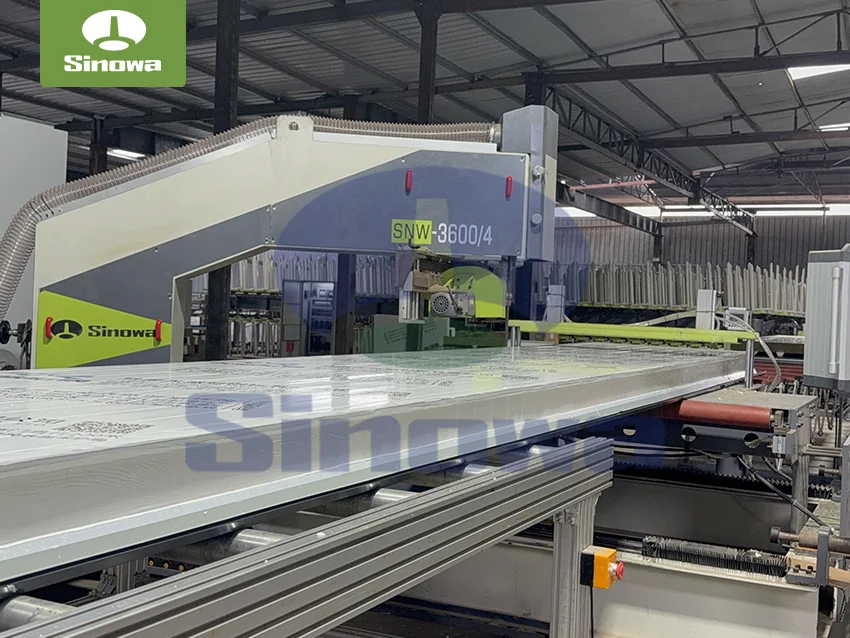
 sandwich panel line
The operational logic of the metal insulated sandwich panel production line is based on the composite structure characteristics of sandwich panels, which consist of double-layer metal facing sheets and a middle thermal insulation core layer. The whole manufacturing workflow focuses on three core objectives: maintaining the flatness and structural strength of metal surface layers, ensuring uniform density and stable thermal insulation performance of the core material, and achieving high-strength and delamination-resistant bonding between metal sheets and core materials. All mechanical units and control modules in the production line are precisely matched in operating speed, processing accuracy, and temperature parameters to avoid structural defects such as uneven core filling, insufficient bonding strength, and surface deformation that may affect the service life and application performance of finished panels.
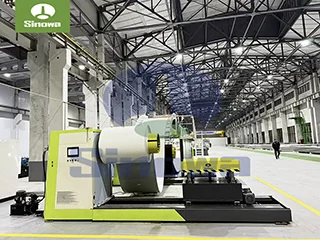
The entire production procedure starts with the unwinding and pretreatment of metal raw materials. Metal coil materials, the outer protective and structural layers of sandwich panels, are fixed on automatic unwinding devices of the sandwich panel line. The unwinding system adopts a synchronous speed regulation design to ensure stable and tension-free material output, effectively preventing metal sheet wrinkling, stretching, and edge deviation during the feeding process. After unwinding, the metal sheets first enter the leveling and trimming unit, where multiple groups of precision roller sets eliminate the internal stress of the metal coils generated during rolling and storage, correcting subtle bending and unevenness on the sheet surface. Meanwhile, the automatic trimming mechanism cuts off irregular edges on both sides of the metal sheets to ensure consistent width of the upper and lower facing sheets, laying a foundation for subsequent precise composite molding. This pretreatment link is essential for guaranteeing the flat appearance and uniform structural size of finished sandwich panels.
Following metal pretreatment is the roll forming process, a key step to shape the structural characteristics of metal surface layers. The metal sandwich panel production line is equipped with multi-pass roll forming units composed of dozens of groups of profiling rollers with different shapes. As metal sheets pass through the roller sets at a constant speed, they are gradually pressed into flat, corrugated, trapezoidal or tongue-and-groove profiles according to preset production parameters. The gradual pressing design avoids instantaneous stress concentration on metal sheets, preventing surface cracking and structural damage. Different profile shapes endow sandwich panels with different mechanical properties and assembly adaptability: flat panels are suitable for interior partition structures with high flatness requirements, while corrugated and trapezoidal panels have stronger bending resistance and load-bearing capacity, meeting the structural demands of exterior wall and roof enclosure systems. All profiling parameters are adjustable through the central control system, enabling flexible switching of panel specifications and shapes without replacing a large number of mechanical parts.
While the metal surface layers are processed and conveyed forward, the sandwich panel machine synchronously completes the pretreatment and laying of the thermal insulation core material. Common core materials adapted by the production line include rigid foam materials and mineral wool materials, with different processing technologies corresponding to different core material characteristics. For foam core materials, the system adopts precise proportional mixing and high-pressure injection foaming technology. Liquid chemical raw materials are fully blended through a closed quantitative feeding system, then evenly injected between the upper and lower metal facing sheets. The mixed liquid materials expand rapidly under set temperature conditions, automatically filling the gap between the double-layer metal sheets to form a continuous and dense foam core layer. The automated dosing system strictly controls the mixing ratio and injection volume of raw materials to ensure consistent core density and uniform thermal insulation performance of each section of the panel.
For mineral wool core materials, the sandwich panel manufacturing line is equipped with automatic core material cutting, arranging and laying mechanisms. Bulk or coiled mineral wool raw materials are cut into uniform specification sizes according to panel thickness requirements, with automatic arrangement equipment eliminating gaps and overlapping between core material blocks. Before laying the core material, the surface of metal sheets will go through automatic glue spraying treatment, where a uniform adhesive layer is coated on the inner surface of the upper and lower metal sheets. The precise glue spraying control system adjusts the glue amount and spraying range in real time according to production speed and panel specifications, ensuring sufficient adhesive coverage without excess glue accumulation, which optimizes the bonding effect while avoiding material waste. The synchronous operation of metal sheet conveying and core material laying ensures the overall continuity of the production process and avoids discontinuous composite structures.
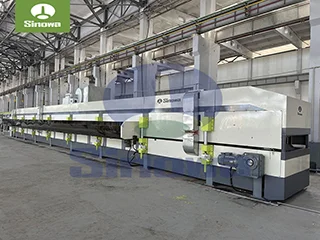
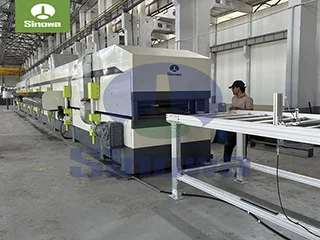
The composite pressing and constant temperature curing stage is the most critical link that determines the overall structural stability of sandwich panels. The semi-finished panels assembled by metal sheets and core materials enter the double-belt composite pressing system, the core functional unit of the sandwich panel making machine. The upper and lower circulating belts made of high wear-resistant and heat-conductive materials apply continuous and uniform static pressure to the composite panel structure. The gap between the double belts can be accurately adjusted according to the designed thickness of the sandwich panel, covering the production demand of panels with different thickness specifications. While maintaining stable pressure, the integrated heating and curing system provides precise and graded temperature control, creating a constant temperature curing environment inside the pressing area.
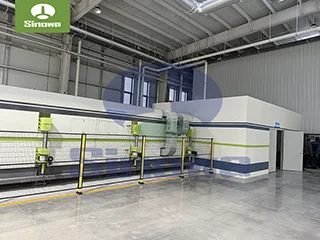
The synergistic effect of constant pressure and constant temperature enables the adhesive to fully react and solidify, and the foam core material to complete stable expansion and molding, forming an integrated composite structure with tight combination between metal layers and core material. This processing method effectively solves common quality problems in traditional production, such as local hollowing, insufficient bonding, and easy delamination of panels. The circulating operation of the double-belt system ensures that each section of the panel can obtain the same pressing time and curing temperature, realizing unified structural performance of the whole panel and greatly improving the overall qualification rate of products. The length of the curing area and operating speed can be intelligently matched according to different core material characteristics, adapting to the curing cycle requirements of various thermal insulation materials.
After completing curing and composite molding, the continuous long-strip sandwich panel enters the precise sizing and cutting process. The sandwich panel production machine is equipped with a high-speed automatic cutting system with real-time length measurement and calibration functions. The laser or mechanical measuring device tracks the conveying speed and extension length of the panel in real time, and sends cutting instructions to the cutting mechanism when the panel reaches the preset specification length. The high-precision cutting tool completes instantaneous fixed-length cutting, with extremely high dimensional accuracy of the cut panel end face, ensuring consistent length of each finished panel. The cutting system operates synchronously with the front-end production speed, realizing non-stop continuous cutting and avoiding production interruption caused by sizing operation, which maximizes continuous production efficiency.
Subsequent finishing and post-processing procedures further optimize the appearance quality and structural performance of finished panels. The edge trimming and deburring mechanism polishes the cut end faces and side edges of the panels to remove burrs and irregular residual materials, making the panel edges smooth and neat, which facilitates subsequent on-site assembly and sealing construction. Some production lines are also equipped with automatic sealing and edge wrapping modules, which coat waterproof and weather-resistant sealants on the panel end faces to enhance the overall air tightness and water tightness of the panel, improving the environmental adaptability of the product in outdoor and humid environments. After all post-processing steps are completed, the finished panels are automatically conveyed to the stacking platform, where the intelligent stacking system neatly arranges and stacks the panels according to fixed specifications, realizing automatic collection of finished products and reducing manual handling workload.
The intelligent control system runs through the entire operation process of the metal insulated sandwich panel production machinery, serving as the core brain to coordinate the operation of all mechanical units. The centralized control platform integrates parameter setting, real-time monitoring, fault diagnosis and data statistics functions. Operators can complete the setting of panel thickness, length, profile shape, production speed and other parameters through the human-computer interaction interface, and the system will automatically match the operating parameters of each processing unit to realize one-key switching of product specifications. In the production process, the system monitors key data such as equipment operating speed, curing temperature, pressing pressure and material feeding status in real time. Once abnormal parameters or equipment faults are detected, the system will automatically trigger early warning prompts and partial shutdown protection to avoid defective products and equipment damage.
In terms of production performance advantages, the metal insulated sandwich panel manufacturing machine achieves high-efficiency and low-consumption manufacturing through integrated automated design. The continuous production mode eliminates the waiting and handling links between intermittent processes, greatly improving unit time output. The precise quantitative feeding and intelligent parameter adjustment technology effectively reduces raw material loss, improving the utilization rate of metal plates and core materials. Meanwhile, the standardized and automated processing mode avoids quality fluctuations caused by manual operation, making the mechanical properties, thermal insulation performance and appearance quality of finished panels more stable and reliable. In addition, the modular equipment structure design facilitates daily maintenance and later function upgrading of the production line, reducing equipment operation and maintenance costs in the long term.
The products manufactured by the metal insulated sandwich panel line have outstanding comprehensive performance, driving their wide application in multiple industrial fields. The composite structure of metal and thermal insulation core material endows the panels with excellent heat preservation and heat insulation performance, effectively reducing building energy consumption and meeting the energy-saving design requirements of modern buildings. The metal surface layer has good weather resistance, corrosion resistance and mechanical strength, enabling the panels to adapt to complex outdoor environments and long-term service conditions. At the same time, the lightweight characteristics of sandwich panels reduce the self-weight of building enclosure structures, lowering the load-bearing pressure of building main structures and saving overall construction costs. The standardized finished panel products are convenient for rapid assembly and construction, greatly shortening the construction cycle of projects.
With the continuous upgrading of the construction industry towards energy saving, environmental protection and industrialization, the metal insulated sandwich panel machinery is also evolving in the direction of higher intelligence, stronger flexibility and better environmental performance. Modern production lines gradually adopt more precise sensing and automatic adjustment technologies to realize real-time optimization of production parameters and further improve product precision and production efficiency. The equipment is also optimized for environmental protection in the production process, adopting closed material circulation and waste collection structures to reduce dust and volatile substance emissions in the production process, realizing green and low-carbon manufacturing. In addition, the multi-functional integrated design enables a single production line to meet the production needs of multiple types and multi-specification panels, improving the comprehensive utilization rate of equipment and adapting to the increasingly diversified market demand for building energy-saving materials.
In summary, the metal insulated sandwich panel production line is a highly integrated and intelligent modern manufacturing system that organically combines mechanical processing, material composite technology and automatic control technology. It realizes efficient, standardized and stable production of metal insulated sandwich panels through precise process layout and coordinated operation of multiple functional units. As an important supporting equipment for the production of new energy-saving building materials, this insulation sandwich panel machine not only improves the industrial production level of sandwich panels, but also provides high-quality, reliable and cost-effective basic materials for the development of modern green buildings, cold chain storage facilities and industrial construction projects, with broad market application value and continuous development potential in the construction industrialization field.
https://www.cnsinowa.com/sandwich-panel-machines/metal-insulated-sandwich-panel-production-line.html