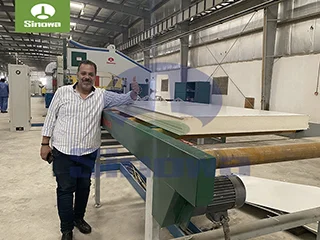
sandwich panel machine
A complete PU sandwich panel making machine production line is a highly integrated electromechanical hydraulic integration system, composed of multiple interconnected functional units that cooperate with each other to realize the automated production of sandwich panels. Each functional module has an independent mechanical structure and control logic, and the coordinated operation between modules ensures the continuity and stability of the entire production process. The basic constituent parts of the equipment include substrate unwinding devices, surface layer pretreatment mechanisms, high-precision foaming systems, continuous laminating and pressing units, constant-temperature curing channels, traction and shaping mechanisms, fixed-length cutting devices, finished product conveying systems, and central intelligent control components. Every structural part is designed based on the physical characteristics of polyurethane raw materials and the mechanical processing requirements of sandwich panels, with the core design concepts focusing on material utilization optimization, product uniformity control, and long-term operational stability of the equipment.
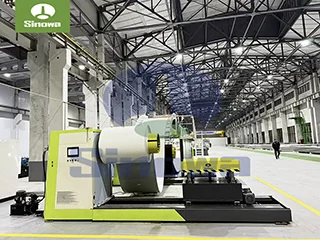
The substrate unwinding device serves as the starting station of the entire production line, undertaking the task of continuously and stably releasing coiled raw materials for the outer layers of sandwich panels. Common applicable substrates include metal color steel sheets, aluminum alloy sheets, and non-metal composite flat plates, all of which are supplied in coiled forms to adapt to continuous rolling production modes. This device is equipped with an independent tension adjustment structure and an automatic deviation correction mechanism. In the actual production process, the tension system dynamically controls the discharging speed of the coiled materials to avoid substrate deformation, wrinkling, or stretching displacement caused by uneven pulling force during transmission. The deviation correction component can monitor the offset state of the substrate in real time and fine-tune the horizontal position of the coiled materials, ensuring that the substrate always maintains a straight conveying track. The structural rigidity of the unwinding support frame is strictly optimized to bear the weight of large-diameter material coils, and the rotating shaft adopts wear-resistant structural design to reduce friction loss during long-term continuous operation, effectively extending the service life of mechanical components.
Following the unwinding process, the surface layer pretreatment mechanism conducts standardized treatment on the surface of the conveyed substrates to create optimal bonding conditions for subsequent polyurethane foaming and compounding. The pretreatment process mainly includes surface dust removal, oil stain cleaning, and surface texture roughening treatment. The built-in dust removal components use high-pressure airflow and soft brushing structures to thoroughly remove floating dust, metal scraps, and particulate impurities attached to the substrate surface, preventing foreign particles from affecting the bonding tightness between the foam core layer and the outer substrate. For substrates with surface oil contamination, the automatic cleaning structure applies environmentally friendly cleaning agents for uniform wiping, followed by natural air drying to ensure no residual liquid remains on the substrate surface. The roughening treatment adopts micro-grinding rollers to form tiny and uniform textures on the smooth substrate surface, which significantly enhances the mechanical adhesion between the polyurethane foam material and the outer plate, effectively avoiding the delamination and peeling problems of sandwich panels during long-term use. All pretreatment procedures are completed in a closed independent space to prevent the diffusion of dust and cleaning waste, realizing clean and environmentally friendly processing.
The foaming system is the core functional unit of the PU sandwich panel machine, which directly determines the foaming density, pore structure, thermal insulation performance, and dimensional stability of the polyurethane foam core layer. This system is mainly composed of raw material storage tanks, metering and conveying pumps, mixing components, and uniform material distribution mechanisms. Two independent sealed storage tanks are used to store polyurethane resin and curing agent raw materials respectively, with constant temperature adjustment structures installed inside the tanks to maintain the raw materials at a constant physical state. The viscosity and fluidity of polyurethane raw materials are highly sensitive to temperature changes; stable temperature control can avoid raw material deterioration caused by excessive temperature and poor mixing uniformity caused by low viscosity at excessively low temperature. The metering pumps are driven by variable frequency independent motors, which can accurately adjust the conveying flow of different raw materials according to production formula parameters, ensuring that the two raw materials are mixed in an optimal chemical ratio. After precise metering, the raw materials are transported to the high-speed mixing chamber, where strong mechanical stirring is used to achieve uniform fusion of the components and generate continuous foaming raw material liquid. The mixed foaming liquid is evenly sprayed between the upper and lower substrates through the mobile material distribution mechanism, and the moving speed and spraying range of the distribution mechanism are synchronously matched with the substrate conveying speed to ensure consistent foam thickness in the transverse direction of the panels.
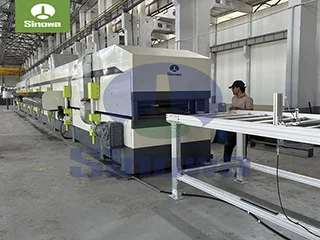
The continuous laminating and pressing unit undertakes the compounding and preliminary shaping work of the upper and lower substrates and the foaming intermediate material. After the foaming liquid is sprayed in place, the upper and lower substrates carrying the foam raw materials enter the pressing area synchronously. The pressing structure adopts a multi-group roller combination design, and the gap between the rollers can be precisely adjusted according to the preset thickness parameters of the sandwich panels. In the pressing process, uniform and stable mechanical pressure is applied to the composite plates to discharge the tiny air bubbles mixed in the foaming layer, making the internal pore structure of the foam more compact and uniform. Meanwhile, the pressure effect promotes the foaming liquid to fully infiltrate the rough texture on the substrate surface, strengthening the bonding performance between layers. The surface of the pressing rollers is treated with anti-sticking and anti-corrosion coatings to prevent the adhesion of uncured polyurethane materials and avoid chemical corrosion of the metal rollers by raw materials. All pressing rollers are installed with parallel calibration structures to ensure that the horizontal gap between each group of rollers remains consistent, effectively preventing the problem of uneven plate thickness caused by roller inclination. The pressure value of the pressing system can be intelligently adjusted according to the foam formula and plate thickness specifications, realizing flexible production adaptation to different product requirements.
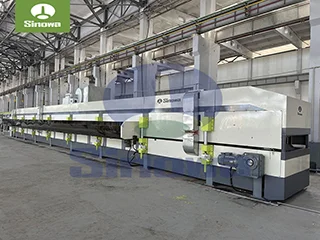
The constant-temperature curing channel is a key facility to complete the chemical curing and forming of polyurethane foam. After preliminary pressing and shaping, the semi-finished composite plates are continuously transported into the closed curing channel. The interior of the channel is divided into multiple independent temperature control sections, and each section is equipped with a temperature sensing element and a heating and heat preservation structure. According to the chemical curing characteristics of polyurethane materials, the system sets a gradient temperature rise and constant temperature maintenance curve. In the early stage of entering the channel, low-temperature slow heating is adopted to avoid rapid expansion of internal bubbles caused by excessive instantaneous temperature, which would lead to uneven pore size. In the middle curing stage, the temperature is stabilized within the optimal reaction temperature range to promote the full cross-linking chemical reaction of polyurethane raw materials, so that the foam forms a stable three-dimensional porous structure. In the later stage, slow cooling treatment is carried out to reduce the internal thermal stress of the plates and prevent warping and deformation of the finished plates after discharging. The interior of the curing channel is equipped with a circulating hot air system to make the temperature distribution in the channel uniform without dead angles, ensuring that each position of the plates receives consistent temperature treatment. The heat insulation layer is laid on the outer wall of the channel to reduce internal heat loss, which not only improves curing efficiency but also reduces the energy consumption of equipment operation.
The traction and shaping mechanism is responsible for maintaining the dimensional stability and linear conveying state of the plates during the high-temperature curing process. This mechanism adopts a double-sided synchronous traction structure, and the traction rollers are in close contact with the upper and lower surfaces of the cured plates. With the help of variable frequency speed regulation technology, the traction speed is precisely matched with the discharging speed of the previous pressing unit, avoiding tensile deformation or stacking wrinkles of the plates due to inconsistent conveying speeds. The built-in shaping limit baffles can restrict the horizontal displacement of the plates, ensuring that the plates always maintain a regular rectangular outline during continuous conveying. For plates with special edge forming requirements, the edge trimming and shaping modules are integrated on both sides of the traction mechanism to complete the preliminary trimming of the plate edges, removing excess foam and substrate burrs generated in the compounding process. The traction force of the equipment is dynamically adjusted according to the hardness and toughness of the semi-cured plates to prevent surface indentation and internal structural damage caused by excessive extrusion of the traction rollers on the plates.
The fixed-length cutting device is arranged at the later stage of the production line to realize precise cutting of continuous long plates according to customized length parameters. This cutting unit takes high-precision servo motor as the power source, and the cutting tool adopts high-hardness alloy blade with smooth cutting edge and strong wear resistance. Before cutting, the intelligent positioning system scans and identifies the conveying position of the plates in real time. When the plates reach the preset cutting length, the conveying mechanism instantaneously completes speed matching, and the cutting tool moves vertically and horizontally at a constant speed to complete the cutting action. The cutting process is stable and rapid without violent vibration, which effectively avoids plate cracking, edge warping and foam shedding at the cutting section. After cutting, the edge smoothing mechanism polishes the cutting section to make the end face of the plates flat and neat, meeting the installation and assembly requirements of finished products. The cutting system supports flexible switching of multiple length parameters, which can meet the diversified production needs of plates with different specifications in the same production line.
The finished product conveying system is the terminal link of the production line, which is used for the stable output, temporary storage and stacking of cut finished sandwich plates. This system is composed of buffer conveying rollers, horizontal transfer platforms and automatic stacking components. The cut finished plates are transported to the buffer area through the conveying rollers to complete natural heat dissipation and surface cooling, eliminating the residual temperature stress inside the plates. After cooling to room temperature, the plates are transferred to the stacking platform by the horizontal moving mechanism. The stacking structure adopts a flexible clamping and lifting design to avoid surface scratches and indentations on the plates during the stacking process. The stacking height and arrangement interval can be automatically adjusted according to the plate thickness and production batch, which is convenient for subsequent packaging, transportation and warehousing management. The entire conveying and stacking process realizes unmanned automatic operation, reducing manual handling errors and labor intensity, and improving the overall sorting efficiency of finished products.
The central intelligent control component is the brain of the entire PU sandwich panel making machine production line, realizing the integrated management of parameter setting, operation monitoring, fault diagnosis and data statistics of all functional units. The control system adopts a human-machine interactive operation interface, and operators can input production parameters such as plate thickness, cutting length, raw material ratio and conveying speed through the touch control panel. The internal programmable logic controller can synchronously control the operating frequency and running state of each mechanical module to ensure the coordinated operation of all links in the production line. A variety of high-precision sensors are distributed in key positions of the equipment, including temperature sensors, pressure sensors, speed sensors and displacement sensors, which collect real-time operating data of the equipment and feed it back to the control terminal. Once abnormal parameters such as excessive temperature, insufficient pressure and abnormal conveying speed are detected, the system will automatically trigger early warning prompts and implement linkage protection actions such as deceleration and shutdown to avoid equipment failure and product quality defects. In addition, the control system has an operation data storage function, which can record the daily production output, raw material consumption and equipment operating status, providing data support for production management and equipment maintenance.
PU sandwich panel making machines have prominent core technical advantages in structural design and production performance, which make them widely recognized in the composite material manufacturing industry. Firstly, the equipment has excellent raw material utilization efficiency. The high-precision metering and mixing system can accurately control the feeding amount of polyurethane raw materials, reducing the waste of chemical raw materials caused by excessive mixing ratio. The uniform distribution structure ensures that the foaming materials are evenly distributed in the plate body, avoiding local material accumulation and saving production costs on the premise of ensuring product performance. Secondly, the equipment achieves high consistency of product quality. The fully automated closed-loop production process reduces the interference of human factors, and the precise control of temperature, pressure and speed parameters makes the foaming density, plate thickness and bonding strength of each batch of finished plates maintain a stable level, with extremely low product defect rate.
In terms of operational energy consumption, modern PU sandwich panel making machines adopt optimized energy-saving structural design. The heat insulation structure of the curing channel reduces heat loss, and the variable frequency motor components adjust the power output according to the production load, avoiding ineffective energy consumption during equipment idling. The circulating raw material conveying pipeline reduces the residue of raw materials in the pipeline, realizing the recycling of residual materials and further improving the economic benefits of production. In addition, the equipment has strong production flexibility. By adjusting the operating parameters of each module, it can produce sandwich plates with different thicknesses, different surface layer materials and different foam densities, covering the production needs of multiple industries. The mechanical structure has good compatibility and can be matched with auxiliary equipment such as embossing devices and film covering mechanisms to realize the secondary processing of plates and enrich the functional types of finished products.
To ensure the long-term stable operation of PU sandwich panel making machines and maintain continuous production efficiency, standardized daily operation and scientific maintenance management are indispensable. In the daily operation stage, operators need to complete pre-production inspection work, including checking the tightness of mechanical connecting parts, the smoothness of raw material conveying pipelines, the sensitivity of sensing elements and the stability of the control system. Before formal production, idle operation debugging should be carried out to eliminate abnormal noise and jamming failure of mechanical structures. During the production process, it is necessary to monitor the operating temperature, conveying speed and raw material consumption of the equipment in real time, and adjust the operating parameters in time according to the subtle changes of raw material characteristics and ambient temperature to ensure continuous production stability.
Regular maintenance work is divided into daily maintenance, weekly maintenance and annual overhaul. Daily maintenance focuses on surface cleaning and simple lubrication, cleaning the residual foam raw materials and dust on the surface of rollers, cutting tools and conveying components, and applying high-temperature resistant lubricating oil to rotating and friction parts to reduce mechanical wear. Weekly maintenance needs to check the sealing performance of raw material storage tanks and mixing chambers, replace aging sealing gaskets, and sort out the circuit and gas circuit pipelines to eliminate potential hazards such as line aging and air leakage. The annual overhaul is a comprehensive systematic inspection, including detecting the wear degree of precision parts such as metering pumps and cutting blades, calibrating the detection accuracy of sensors, testing the pressure bearing capacity of hydraulic components, and replacing severely worn vulnerable parts. It is necessary to establish a complete maintenance record file to track the operating state of the equipment, formulate targeted maintenance plans according to the service life of components, and extend the overall service life of the production line.
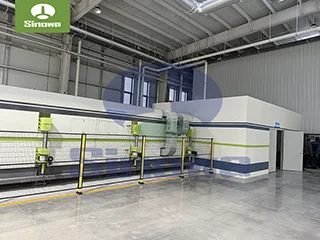
In terms of safety management, the equipment is equipped with multiple mechanical protection and electrical protection devices. The rotating parts are covered with protective baffles to prevent personnel from touching the operating mechanical structures by mistake. The emergency stop buttons are arranged at multiple positions of the production line, which can cut off the power supply of the whole equipment in an emergency state. The electrical control cabinet adopts an explosion-proof and dust-proof closed design to avoid circuit failure caused by dust and humid environment. Operators need to receive professional pre-job training, master standardized operation procedures and emergency disposal methods, and wear protective equipment during operation to ensure personal safety. The production workshop maintains good ventilation conditions to discharge the trace volatile gas generated by polyurethane raw materials during the production process, creating a safe and environmentally friendly production working environment.
PU sandwich panels produced by professional making machines have excellent physical and chemical properties, thus covering a wide range of application scenarios in multiple industries. In the construction industry, such panels are widely used in the construction of cold storage, constant temperature workshops, clean rooms and temporary buildings. The closed-cell porous structure of polyurethane foam gives the panels ultra-low thermal conductivity, which can effectively isolate internal and external temperature heat transfer and reduce the energy consumption of building temperature regulation. The good waterproof and moisture-proof performance avoids the internal mildew and corrosion of the plates in humid environments, adapting to the long-term use requirements of cold storage and humid workshops.
In the industrial manufacturing field, the sandwich plates are used for factory enclosure partition walls, equipment protection shells and industrial storage racks. The composite structure of metal outer layer and foam inner layer makes the plates have high structural strength and impact resistance, which can resist external mechanical collision and extrusion damage. At the same time, the lightweight characteristics of the plates reduce the overall load-bearing pressure of the building structure, simplifying the construction and installation process. In the transportation industry, the panels are applied to the carriage manufacturing of refrigerated trucks and insulation transport vehicles. The stable thermal insulation performance ensures the constant temperature transportation of fresh food, medical supplies and special chemical materials, while the wear-resistant outer layer adapts to the vibration and friction environment during vehicle driving.
In addition, with the continuous improvement of environmental protection requirements, modified PU sandwich panels are gradually applied in new energy buildings and outdoor facility construction. Through adjusting the foam formula and surface coating, the plates achieve excellent flame retardant and weather resistance, and can maintain stable structural performance in extreme environments such as high temperature, low temperature and strong ultraviolet radiation. The recyclable characteristics of polyurethane materials also reduce the environmental pollution pressure of waste plates, conforming to the development trend of green and low-carbon manufacturing.
Driven by technological innovation and industrial demand upgrading, PU sandwich panel making machines are evolving towards intelligence, high efficiency, energy saving and environmental protection. In terms of intelligent upgrading, the equipment will be combined with internet of things technology to realize remote data transmission and cloud monitoring. Managers can view the real-time operating status and production data of the equipment through mobile terminals and computer platforms, and realize remote parameter adjustment and fault early warning. The introduction of machine vision detection technology will complete automatic identification and elimination of defective plates in the production line, further improving the yield rate of finished products and reducing manual detection costs.
In terms of production efficiency optimization, the structural design of the production line will be more compact and reasonable. The integrated processing of multiple processes will reduce the transmission interval between modules, shorten the production cycle of a single plate, and realize higher-speed continuous production. The raw material mixing and foaming technology will be further optimized to develop low-viscosity and low-volatility environmental protection formulas, reduce the emission of harmful gases in the production process, and improve the safety and environmental protection level of the production line. In terms of energy saving transformation, the waste heat recovery system will be added to the curing channel to recycle the residual heat generated in the heating process for preheating raw materials, realizing cyclic utilization of heat energy and reducing comprehensive energy consumption.
In terms of product diversification adaptation, the future equipment will have stronger multi-material compatibility. It can match new environmental protection substrates such as fiber-reinforced plates and inorganic composite plates, and develop composite production processes for multi-layer heterogeneous plates. The personalized customization function of the equipment will be further improved, which can quickly switch production parameters according to the customized needs of customers, and produce special plates with fire resistance, sound insulation, shock resistance and antibacterial functions. In addition, the equipment will develop towards modular assembly. Each functional module adopts an independent detachable structure, which is convenient for later maintenance, component replacement and production line expansion, reducing the comprehensive operation cost of the equipment in the whole life cycle.
In conclusion, PU sandwich panel making machines, as important supporting equipment in the composite material manufacturing industry, have complete and scientific structural composition, mature and stable production principles, and excellent comprehensive production performance. From raw material unwinding to finished product stacking, each production link is precisely controlled by mechanical and electrical integration systems, realizing efficient, continuous and standardized production of polyurethane sandwich panels. With the advantages of stable product quality, low production cost and wide application range, the equipment provides high-quality raw material support for construction, industry, transportation and other fields. In the context of the continuous development of the global green manufacturing industry and the continuous improvement of building energy-saving standards, PU sandwich panel making machines will continuously complete technological iteration and performance upgrading. Through intelligent transformation, energy-saving optimization and functional expansion, the equipment will further release industrial application potential, promote the high-quality development of the composite panel manufacturing industry, and make important contributions to the upgrading of modern industrial building materials and the realization of low-carbon environmental protection production goals.
https://www.cnsinowa.com/sandwich-panel-machines/pu-sandwich-panel-making-machine.html