 sandwich panel line
One of the primary determinants of the cost of an automatic polyurethane sandwich panel production line is its production capacity and throughput. Lines designed for high-volume continuous production typically involve more robust components, larger processing units, and advanced control systems to handle the sustained workflow. These high-capacity lines are engineered to produce thousands of square meters of sandwich panels per day, requiring heavy-duty uncoilers, precision roll forming units, high-pressure foam injection systems, and efficient curing tunnels. The structural integrity of such lines must withstand prolonged operation without compromising performance, necessitating the use of high-grade materials for conveyor systems, frame structures, and processing modules. In contrast, smaller-scale automatic lines, suitable for medium to low-volume production, feature compact designs with optimized components that balance efficiency and space requirements, resulting in a different cost profile. The production capacity also dictates the size of auxiliary equipment such as automatic cutters, stacking systems, and waste management units, all of which contribute to the total investment.
Technological complexity and automation level are key factors that significantly influence the cost of these production lines. Modern automatic lines leverage advanced control systems that integrate human-machine interface (HMI) technology, parameter linkage, and fault self-diagnosis capabilities to ensure seamless operation. These control systems centralize all operational points into a single console, allowing operators to monitor and adjust production parameters such as foam density, panel thickness, forming speed, and cutting precision in real time. The integration of bus control technology and remote communication capabilities further enhances operational efficiency by enabling remote monitoring, troubleshooting, and software updates, eliminating the need for on-site technical support in many cases. Lines equipped with such advanced automation features require sophisticated software development, sensor technology, and electronic components, which add to their overall cost. Additionally, the level of customization in the control system, tailored to specific production needs such as multi-material compatibility or variable panel dimensions, can further impact the cost.
The modular design and component quality of the production line also play a vital role in determining its cost. Modular construction allows for flexible configuration and future expansion, enabling manufacturers to adapt the line to changing production requirements by adding or replacing modules such as foam mixing units, laminating systems, or surface treatment modules. High-quality modules with precision engineering ensure stable operation, reduce maintenance costs, and extend the service life of the line. Critical components such as high-pressure foam injection pumps, metering systems, and roll forming rollers are manufactured to tight tolerances to ensure consistent foam mixing, uniform panel thickness, and smooth surface finish. The use of durable materials resistant to wear, corrosion, and chemical exposure (from polyurethane raw materials) increases the reliability of the line but also contributes to higher upfront costs. In contrast, lines using standard or lower-grade components may have a lower initial cost but often incur higher maintenance expenses and shorter service life, leading to higher total cost of ownership over time.
Material compatibility and production flexibility are additional factors that affect the cost of automatic polyurethane sandwich panel production lines. Lines capable of processing a wide range of core materials (including polyurethane, polyisocyanurate, and mineral wool) and surface materials (such as steel, aluminum, and composite sheets) require more versatile components and adjustable processing parameters. For example, foam injection systems must be able to handle different chemical formulations and viscosity levels, while roll forming units need to accommodate varying sheet thicknesses and profiles. This flexibility allows manufacturers to produce a diverse range of sandwich panels for different applications, such as cold storage, industrial warehouses, modular buildings, and refrigerated transport vehicles. However, the engineering required to achieve such versatility, including adjustable conveyor heights, interchangeable forming tools, and multi-mode control programs, adds to the complexity and cost of the line. Lines designed for specialized production, focusing on a single type of panel or material, are typically more cost-effective due to their simplified design and dedicated components.
Energy efficiency and environmental performance are increasingly important considerations that influence the cost of modern production lines. With growing regulatory pressure to reduce energy consumption and carbon emissions, manufacturers are prioritizing lines equipped with energy-saving technologies such as variable frequency drives, heat recovery systems, and low-energy curing processes. These technologies reduce operational costs over the long term by minimizing electricity and fuel consumption, but they often require additional investment in advanced components and system integration. For example, heat recovery systems capture and reuse waste heat from the curing process to preheat raw materials or maintain optimal operating temperatures, reducing overall energy demand. Additionally, lines designed to minimize material waste through precise cutting and foam injection control contribute to environmental sustainability and cost savings in raw material usage. Compliance with environmental standards related to emissions of volatile organic compounds (VOCs) from polyurethane foam production may also require the integration of air purification systems, further impacting the line's cost.
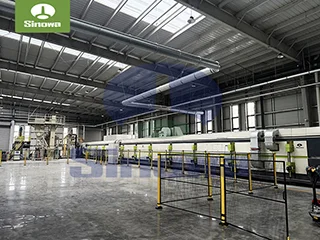
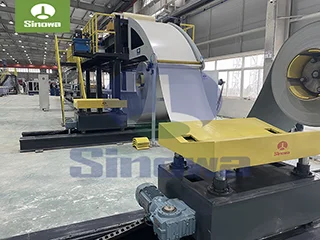
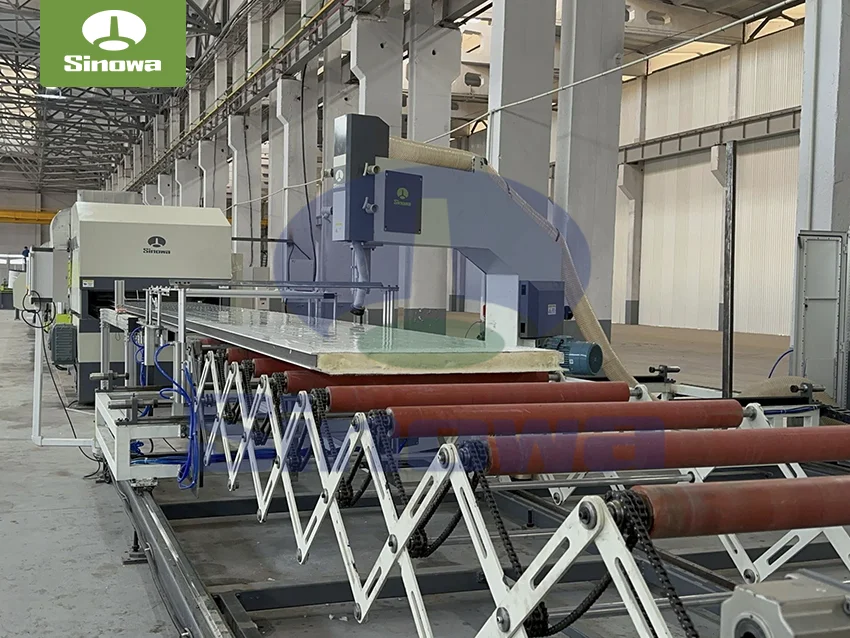
The production process configuration, including the integration of auxiliary systems, also affects the total cost of the line. A complete automatic production line typically includes uncoiling and feeding units, roll forming sections, foam mixing and injection systems, curing tunnels, cooling zones, automatic cutting machines, stacking and handling systems, and quality inspection modules. Each of these components must be carefully integrated to ensure smooth workflow and minimal production downtime. Advanced quality inspection systems, such as those capable of detecting surface defects, thickness variations, and foam density inconsistencies in real time, help maintain product quality and reduce waste but add to the line's cost. Similarly, automated stacking and handling systems, including vacuum suction cup spreaders, improve operational efficiency by reducing manual labor and preventing panel damage, but require additional investment in material handling technology. The inclusion of customized features, such as embedded part installation platforms with high precision positioning (to ensure accuracy within narrow tolerances) or multi-layer vacuum presses for high-performance panel production, further tailors the line to specific application needs but increases costs.
Market demand and industry trends also indirectly influence the cost of automatic polyurethane sandwich panel production lines. The global growth in the cold storage industry, driven by the expansion of the pharmaceutical cold chain and food logistics sectors, has increased demand for high-performance polyurethane sandwich panels with superior thermal insulation properties. This demand has prompted manufacturers to invest in production lines capable of producing panels with low thermal conductivity and enhanced durability, driving innovation in foam injection technology and curing processes. Similarly, the rise in modular and prefabricated construction has fueled the need for lines that can produce lightweight, easy-to-install panels with consistent quality, leading to advancements in roll forming and laminating technologies. As these trends drive technological innovation, the cost of integrating new technologies into production lines may initially increase, but economies of scale and widespread adoption often lead to cost stabilization over time. Additionally, regional differences in labor costs, raw material availability, and infrastructure development can impact the cost of manufacturing and delivering production lines, leading to variations in pricing across different markets.
Maintenance requirements and after-sales support also contribute to the total cost of ownership of automatic production lines, influencing the initial investment decision. Lines with modular designs and easily accessible components reduce maintenance time and costs, as individual modules can be removed and replaced without disrupting the entire production process. Manufacturers often offer maintenance packages and technical support services, including training for operators and on-site troubleshooting, which add to the overall cost but ensure optimal line performance and longevity. The availability of spare parts is another critical factor; lines using standardized components with global availability tend to have lower maintenance costs compared to those with specialized or custom parts that are difficult to source. Additionally, lines designed with predictive maintenance capabilities, which use sensor data to identify potential component failures before they occur, help minimize unplanned downtime and reduce maintenance expenses, but require investment in advanced monitoring systems.
The lifecycle cost of an automatic polyurethane sandwich panel production line, rather than just the upfront purchase price, is a key consideration for businesses. A line with a higher initial cost but lower operational and maintenance expenses over its service life may offer better long-term value compared to a cheaper line with higher ongoing costs. Factors such as energy efficiency, component durability, production yield, and waste reduction all contribute to the lifecycle cost. For example, a line that produces panels with higher consistency and lower waste rates reduces raw material costs and improves profitability over time. Similarly, energy-efficient lines lower utility bills, while durable components reduce the frequency of replacements and repairs. Businesses must also consider the potential for future upgrades and expansion when evaluating costs, as lines with modular designs allow for incremental improvements without the need for complete replacement, extending their useful life and maximizing return on investment.
The application scope of the sandwich panels produced also influences the cost of the production line. Panels used in specialized applications such as ultra-low temperature cold storage, pharmaceutical facilities, or high-rise buildings require stricter quality control and performance standards, necessitating production lines with advanced testing and processing capabilities. For example, panels used in cold storage facilities must maintain stable thermal performance in extreme conditions, requiring lines with precise foam density control and curing processes. Similarly, panels used in acoustic-sensitive environments or fire-resistant applications may require additional processing steps, such as the integration of soundproofing materials or fire-retardant foam formulations, which add to the line's complexity and cost. Production lines tailored to general-purpose applications, such as standard industrial warehouses or residential buildings, are typically less complex and more cost-effective, as they do not require specialized components or processes.
Supply chain dynamics, including the cost of raw materials for manufacturing the production line components, also play a role in determining the final cost. The price of steel, aluminum, electronic components, and specialized machinery parts can fluctuate based on global market conditions, affecting the cost of producing the production lines. Additionally, transportation costs for delivering large and heavy components, such as conveyor systems and roll forming units, can vary significantly based on the distance and shipping method, adding to the total cost for international buyers. The availability of skilled labor for assembling and installing the production line also impacts costs, as regions with higher labor costs may result in higher installation fees and overall project costs.
In conclusion, the cost of an automatic polyurethane sandwich panel production line is influenced by a complex interplay of factors, including production capacity, technological sophistication, component quality, material compatibility, energy efficiency, process configuration, market trends, maintenance requirements, and supply chain dynamics. Businesses seeking to invest in such lines must carefully evaluate their specific production needs, long-term operational goals, and market demands to balance upfront costs with lifecycle value. While higher-cost lines often offer advanced features, greater efficiency, and longer service life, more economical options may be suitable for small to medium-scale operations with limited production requirements. As the industry continues to evolve with advancements in automation, energy efficiency, and material science, the cost structure of these production lines is likely to adapt, reflecting the growing emphasis on sustainability, productivity, and customization. Ultimately, the right investment decision depends on a comprehensive analysis of how each cost factor aligns with the business's strategic objectives and market positioning.
https://www.cnsinowa.com/sandwich-panel-machines/price-of-automatic-polyurethane-sandwich-panel-production-line.html