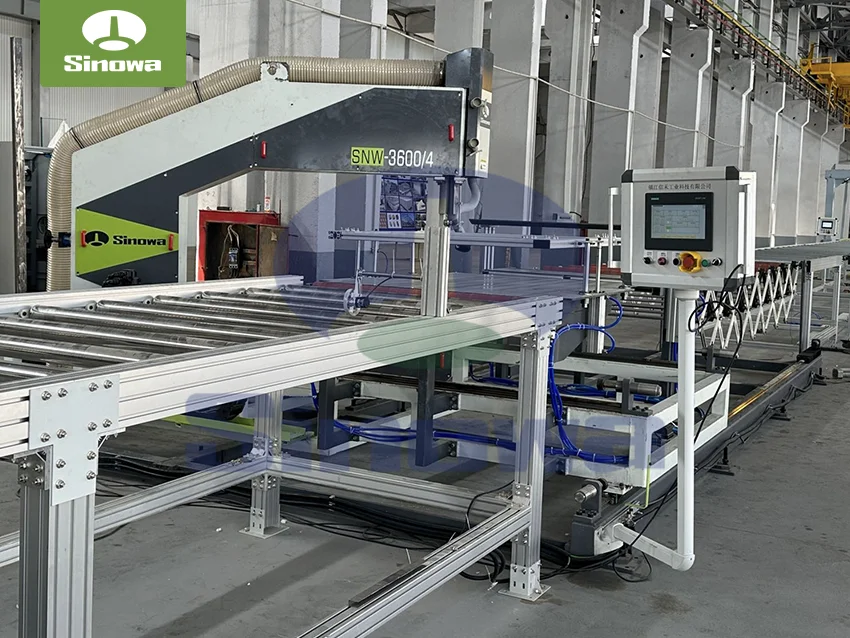
 sandwich panel line
The core principle behind polyurethane sandwich panel manufacturing lies in the bonding of two facing materials with a rigid polyurethane foam core, creating a composite structure that leverages the strengths of each component. The facing materials, typically metal sheets like galvanized or aluminum-zinc coated plates, provide structural rigidity, weather resistance, and aesthetic appeal, while the polyurethane foam core delivers superior thermal insulation, sound absorption, and moisture resistance. The manufacturing line is engineered to facilitate the precise combination of these materials through a series of continuous or semi-continuous processes, ensuring that the foam core adheres firmly to the facings and maintains uniform density and thickness throughout the panel.
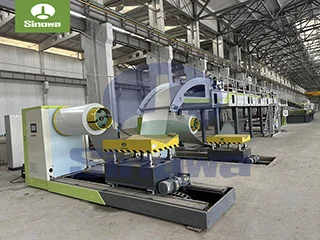
The production process begins with the preparation of facing materials, a critical stage that lays the foundation for the final product’s quality. Large coils of facing material are loaded onto uncoiling systems, which feed the sheets into the line at a steady pace. These uncoiling systems are equipped with correction mechanisms to ensure that the sheets remain aligned throughout the process, preventing misalignment that could compromise the panel’s structural integrity. After uncoiling, the sheets pass through leveling rollers to eliminate any wrinkles or deformities, ensuring a smooth, flat surface for subsequent processing. Depending on the specific requirements of the commercial project, the facing materials may also undergo pre-heating in controlled ovens. Pre-heating optimizes the adhesion between the facings and the polyurethane foam, as it ensures the foam reacts uniformly upon contact and forms a strong bond that resists delamination over time. The temperature of the pre-heating process is carefully regulated to match the properties of both the facing materials and the polyurethane components, avoiding damage to the sheets while promoting optimal foam curing.
Following the preparation of the facing materials, the line moves to the foam injection and lamination stage, which is the heart of the manufacturing process. Polyurethane foam is produced by mixing two liquid components—polyol and isocyanate—along with additives such as blowing agents, catalysts, and flame retardants. These components are delivered to a high-pressure mixing head via precision metering pumps, which ensure the ratio of ingredients is exact. The accuracy of this mixing ratio is crucial, as it directly affects the foam’s density, thermal conductivity, and mechanical properties. A slight deviation in the ratio can result in foam that is too brittle, too soft, or unable to provide the required insulation performance.
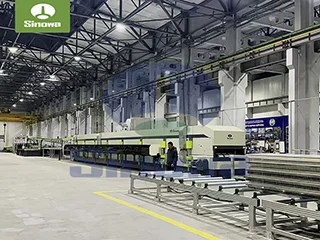
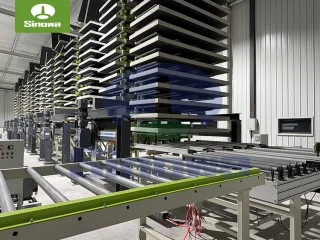
Once mixed, the polyurethane foam is uniformly distributed onto the lower facing material as it moves along the production line. The upper facing material is then fed onto the foam layer, and the combined structure enters a double crawler track laminating conveyor. This conveyor consists of two parallel tracks that apply consistent pressure to the panel as it moves forward, ensuring the foam is evenly spread between the facings and eliminating air pockets that could reduce insulation efficiency and structural strength. The conveyor is also equipped with heating systems that maintain a controlled temperature environment, facilitating the curing of the polyurethane foam. Curing is a critical phase where the foam undergoes a polymerization reaction, expanding to fill the space between the facings and hardening into a rigid, closed-cell structure. The closed-cell nature of the foam is essential for its performance, as it minimizes moisture absorption and prevents convective heat transfer, delivering thermal conductivity values that are among the lowest of commercial insulation materials. The length of the laminating conveyor is designed to provide sufficient time for the foam to cure fully before the panel proceeds to the next stage, with typical conveyor lengths ensuring that the foam reaches a stable state within the production cycle.
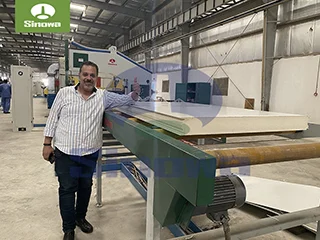
As the fully cured panel exits the laminating conveyor, it moves to the cutting system, where it is trimmed to the required dimensions. Commercial buildings often have varying size requirements for wall and roof panels, so the cutting system must be flexible and precise. Automatic tracking cross-cut saws are commonly used, as they can adjust to different lengths while maintaining accuracy, even as the panel moves continuously along the line. The saws are equipped with sharp blades that make clean cuts, minimizing dust and debris and ensuring the panel edges are smooth and uniform. In addition to cross-cutting, some production lines include edge trimming systems that remove excess material from the sides of the panel, ensuring the width is consistent and the edges are properly sealed. Sealing the edges is important for preventing moisture infiltration and maintaining the panel’s thermal performance, as unsealed edges can create thermal bridges that reduce insulation efficiency.
After cutting and trimming, the panels undergo a series of quality control checks to ensure they meet the required standards for commercial construction. Quality control begins with visual inspections, where operators check for surface defects such as scratches, dents, or uneven foam distribution. Dimensional accuracy is verified using precision measuring tools, ensuring the panels match the specified length, width, and thickness. Samples of panels are also tested for key performance indicators, including thermal conductivity, compressive strength, and bond strength between the facings and the foam core. These tests are conducted at regular intervals throughout the production process to identify any deviations in quality and allow for adjustments to the production parameters. For example, if a sample shows higher than expected thermal conductivity, the mixing ratio of the polyurethane components or the curing temperature may be adjusted to correct the issue. Quality control also includes checks for moisture resistance, as commercial buildings require panels that can withstand exposure to the elements without degrading.
The flexibility of modern polyurethane sandwich panel manufacturing lines is a key advantage for commercial construction projects, which often demand customized solutions. Production lines can be adjusted to produce panels of varying thicknesses, typically ranging from 20mm to 120mm, to meet different insulation and structural requirements. The width of the panels can also be modified, with most lines capable of producing panels up to 1200mm in width or more, depending on the configuration. Additionally, the facing materials can be customized to suit aesthetic and functional needs, with options including different colors, textures, and surface treatments. For example, panels used in high-end commercial buildings may feature woodgrain or stone-like finishes, while those used in industrial-style commercial spaces may retain a simple metal surface. The foam core density can also be adjusted between 40kg/m³ and 60kg/m³, balancing structural strength and insulation performance for specific applications—higher density cores for load-bearing walls, and lower density cores for non-load-bearing partitions or roof panels.
Sustainability has become a central concern in commercial construction, and polyurethane sandwich panel manufacturing lines have evolved to incorporate eco-friendly practices. The blowing agents used in foam production are now often free of hydrofluorocarbons, reducing the environmental impact of the panels. Additionally, the closed-cell structure of the polyurethane foam contributes to energy efficiency in commercial buildings, reducing heating and cooling costs and lowering carbon emissions over the building’s lifespan. Compared to traditional building materials like concrete or brick, polyurethane sandwich panels have a significantly lower carbon footprint, with studies showing that the carbon emissions associated with their production and use are a fraction of those of conventional materials. Many manufacturing lines also implement waste reduction measures, such as recycling excess foam and trimming scraps back into the production process, minimizing material waste. The lightweight nature of the panels also reduces transportation costs and energy consumption during delivery, further enhancing their sustainability profile.
The performance benefits of polyurethane sandwich panels, enabled by advanced manufacturing lines, make them ideal for a wide range of commercial building applications. In office buildings, their excellent thermal insulation properties help maintain comfortable indoor temperatures, reducing energy bills and improving occupant comfort. The sound absorption capabilities of the foam core also minimize noise transfer between rooms and from external sources, creating a quieter working environment. For logistics centers and warehouses, the panels’ structural strength and lightweight properties allow for quick installation, reducing construction time and labor costs. Their resistance to moisture and corrosion makes them suitable for use in areas with high humidity or temperature fluctuations, ensuring long-term durability even in harsh conditions. Shopping malls and retail outlets benefit from the panels’ aesthetic flexibility, as they can be customized to match the brand identity of the space while providing efficient insulation to maintain comfortable temperatures for customers.
Another key advantage of polyurethane sandwich panels in commercial construction is their speed of installation, which is directly influenced by the consistency and precision of the manufacturing line. Panels produced with tight dimensional tolerances fit together seamlessly, reducing the time required for on-site assembly. The lightweight nature of the panels also eliminates the need for heavy lifting equipment, further streamlining the installation process. Compared to traditional masonry construction, which can take weeks to complete for wall systems, polyurethane sandwich panel installation can cover hundreds of square meters per day, accelerating the overall construction timeline and allowing commercial buildings to open sooner. This speed of installation translates to cost savings for developers, as it reduces labor costs and shortens the period of capital investment.
The durability of polyurethane sandwich panels is a result of both the materials used and the rigorous manufacturing processes employed. The closed-cell foam core resists moisture absorption, preventing mold growth and structural degradation over time. The metal facings provide protection against physical damage, UV radiation, and corrosion, ensuring the panels maintain their performance and appearance for decades. The strong bond between the facings and the foam core, achieved through precise pre-heating and lamination, resists delamination even under extreme temperature changes or mechanical stress. This durability means that commercial buildings constructed with polyurethane sandwich panels require minimal maintenance over their lifespan, reducing long-term operational costs for building owners.
In addition to standard panels, manufacturing lines can produce specialized polyurethane sandwich panels for specific commercial applications. For example, panels designed for cold storage facilities within commercial buildings offer enhanced insulation performance, maintaining stable temperatures as low as -30°C with minimal temperature fluctuation. These panels are produced with higher density foam cores and specialized facing materials that resist condensation and thermal bridging. Panels for high-wind areas, such as coastal commercial buildings, feature reinforced facings and interlocking joints that provide superior wind uplift resistance, ensuring the structure remains secure during severe weather conditions. The ability to produce these specialized panels demonstrates the versatility of modern manufacturing lines, which can be adapted to meet the unique challenges of different commercial environments.
The operation of a polyurethane sandwich panel manufacturing line requires skilled personnel who can monitor and adjust the production parameters to maintain quality and efficiency. Operators are trained to oversee the entire process, from raw material inspection to final product testing, and to troubleshoot any issues that arise. Modern lines are equipped with advanced control systems that provide real-time data on production speed, temperature, pressure, and material ratios, allowing operators to make immediate adjustments if deviations are detected. These control systems also facilitate predictive maintenance, alerting operators to potential equipment issues before they result in production delays or quality problems. Regular maintenance of the production line is essential to ensure consistent performance, with components such as mixing heads, conveyor tracks, and cutting blades requiring periodic inspection and replacement.
As the demand for sustainable, efficient, and cost-effective building materials grows in the commercial construction sector, polyurethane sandwich panel manufacturing lines continue to evolve. Innovations in foam technology are leading to even lower thermal conductivity values and improved fire performance, while advancements in automation are increasing production efficiency and reducing labor costs. The integration of digital technologies, such as artificial intelligence and machine learning, is enabling more precise control of the manufacturing process, resulting in panels with consistent performance and minimal waste. These advancements are making polyurethane sandwich panels an even more attractive choice for commercial building projects, as they offer a combination of performance, sustainability, and cost-effectiveness that is difficult to match with traditional materials.
In conclusion, the polyurethane sandwich panel manufacturing line is a complex and sophisticated system that plays a vital role in modern commercial construction. From the preparation of facing materials to the final quality control checks, each stage of the production process is designed to deliver panels that meet the high standards of commercial building projects. The combination of advanced mechanical systems, precise chemical mixing, and rigorous quality control ensures that the panels provide superior thermal insulation, structural strength, durability, and sustainability. As commercial construction continues to prioritize efficiency and sustainability, the manufacturing lines for these panels will continue to innovate, further enhancing their performance and expanding their applications in the built environment. Whether used for walls, roofs, or specialized applications, polyurethane sandwich panels produced by these lines offer a reliable and cost-effective solution for commercial buildings, contributing to the creation of spaces that are comfortable, efficient, and built to last.
https://www.cnsinowa.com/sandwich-panel-machines/polyurethane-sandwich-panel-manufacturing-line-for-commercial-building.html