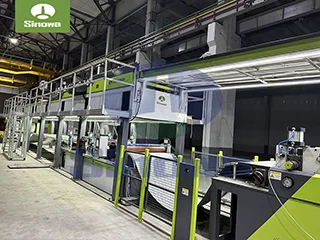
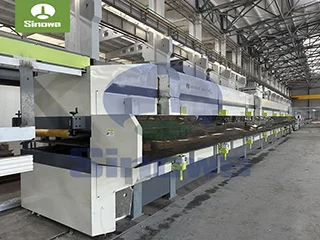
sandwich panel line
The core functionality of a PU foam production line revolves around the precise mixing of raw materials and controlled chemical reactions that transform liquid components into foam products with desired characteristics. The production process begins with the preparation and storage of key raw materials, including polyisocyanates, polyols, foaming agents, catalysts, and additives. Each component plays a critical role in determining the final properties of the foam, such as density, flexibility, durability, and thermal conductivity. Polyisocyanates and polyols serve as the primary building blocks, undergoing an addition polymerization reaction that forms the polyurethane polymer matrix. Foaming agents trigger the release of gases—typically carbon dioxide—that create the porous structure of the foam, while catalysts regulate the reaction rate to ensure uniform foam and proper curing. Additives may be incorporated to enhance specific properties, such as flame resistance, UV stability, or abrasion resistance, expanding the applicability of the final products.
A high-performance PU foam production line features specialized components that work in harmony to ensure precision, consistency, and efficiency throughout the production cycle. The metering system is one of the most critical elements, responsible for delivering accurate quantities of each raw material to the mixing unit. Advanced metering pumps—including gear pumps for low-pressure applications and multi-plunger pumps for high-pressure systems—enable independent control of each component’s flow rate, with adjustments possible to fine-tune foam formulations. These pumps are designed to maintain stability even during long production runs, minimizing variations in material ratios that could compromise product quality. For high-pressure systems, axial plunger pumps are often preferred for their ability to handle working pressures between 1.0 and 15.0 MPa, delivering a steady flow with minimal pulsations thanks to their multi-cylinder design. This level of precision ensures that every batch of foam meets the same performance standards, reducing waste and rework.
The mixing unit is another essential component, where raw materials are combined in a controlled environment to initiate the polymerization and foaming reactions. The design of the mixing chamber varies depending on the type of foam being produced and the desired output volume, with options for both continuous and batch processing. Continuous mixing systems are ideal for large-scale production, allowing for uninterrupted material flow and consistent foam quality over extended periods. Batch mixing systems, on the other hand, offer greater flexibility for small-batch or custom formulations, enabling quick changes between different product types with minimal downtime. Advanced mixing technologies ensure thorough homogenization of materials, preventing localized variations in density or texture. Some systems incorporate dynamic mixing elements that adjust speed and shear force based on the viscosity of the material mixture, optimizing reaction conditions for different foam formulations.
Temperature and pressure control systems are integral to the success of PU foam production, as these parameters directly influence the rate of chemical reactions, gas release, and foam curing. The polymerization reaction between polyisocyanates and polyols is exothermic, meaning it generates heat that must be carefully managed to avoid overheating or uneven curing. Production lines are equipped with heating and cooling jackets for raw material storage tanks and mixing chambers, allowing for precise temperature regulation within a narrow range. Maintaining a constant temperature throughout the process ensures consistent reaction kinetics, resulting in foam with uniform cell structure and mechanical properties. Pressure control systems work in tandem with temperature controls to stabilize the foaming process, preventing pressure fluctuations that could cause cell collapse or irregular pore distribution. By maintaining a controlled pressure environment during foam and curing, manufacturers can produce foam products with predictable density and structural integrity.
Modularity is a key design feature of modern PU foam production lines, offering businesses the flexibility to customize and expand their operations as needs evolve. Modular components include metering units, mixing systems, foaming stations, curing ovens, cutting equipment, and packaging modules, each of which can be added or modified without disrupting the entire production line. This scalability is particularly valuable for growing businesses, as it allows for incremental investments in new capabilities rather than full-line replacements. For example, a manufacturer starting with basic flexible foam production can later add modules for high-resilience foam or memory foam by upgrading metering systems and adjusting mixing parameters. Modular design also simplifies maintenance and troubleshooting, as individual components can be inspected or repaired without halting the entire production process, minimizing downtime and maximizing productivity.
Automation and control systems are transforming PU foam production, enabling greater precision, efficiency, and operational visibility. Modern production lines are equipped with programmable logic controllers (PLCs) and intuitive touchscreen interfaces that centralize control of all process parameters, including material flow rates, temperature, pressure, and curing time. Operators can easily input and store multiple formulations, allowing for quick recipe switching between different foam types with minimal manual intervention. Real-time monitoring capabilities provide instant feedback on process performance, alerting operators to deviations from set parameters before they affect product quality. Some advanced systems integrate data collection and analysis tools, enabling manufacturers to track production metrics, identify inefficiencies, and optimize processes over time. Automation not only reduces the risk of human error but also lowers labor costs by minimizing the need for manual material handling and process oversight.
The versatility of PU foam production lines is reflected in their ability to produce a wide range of foam products for diverse industry applications. In the construction sector, PU foam is widely used for thermal insulation in walls, roofs, and floors, as well as for soundproofing materials and decorative elements. Production lines can be configured to produce rigid foam boards, spray foam insulation, or foam sealants, each tailored to meet the specific performance requirements of building projects. The automotive industry relies on PU foam for lightweight components such as seat cushions, armrests, steering wheels, and engine covers, where the material’s combination of flexibility, durability, and impact resistance is highly valued. Production lines designed for automotive applications can produce foam with precise density and hardness specifications, as well as specialized formulations with flame retardant or chemical resistance properties.
The furniture and bedding industry is another major consumer of PU foam, using the material for mattresses, sofas, chairs, and other upholstered products. Production lines can be optimized to produce flexible foam, high-resilience foam, or memory foam, each offering different levels of comfort and support. Memory foam production requires precise control of temperature and pressure during curing to achieve the material’s characteristic viscoelastic properties, a capability enabled by advanced metering and mixing systems. In the packaging industry, PU foam is used for protective packaging of fragile items, such as electronics, glassware, and industrial components. Production lines can produce custom-cut foam inserts and packaging materials with tailored density and cushioning properties, providing superior protection during shipping and handling. Other emerging applications include electronic device components, medical equipment padding, and renewable energy systems, where PU foam’s versatility and performance continue to open new markets.
Environmental considerations are increasingly shaping the design and operation of PU foam production lines, with a growing focus on reducing waste, energy consumption, and environmental impact. Modern lines are engineered to minimize raw material waste through precise metering and efficient mixing, ensuring that nearly all materials are converted into finished products. Energy-efficient components, such as variable-frequency drives for pumps and insulated heating systems, reduce power consumption during production. Some systems incorporate heat recovery technologies, capturing waste heat from the curing process and reusing it to heat raw materials or power other parts of the production line. As environmental regulations become stricter, production lines are also adapting to use low-VOC (volatile organic compound) raw materials and foaming agents, reducing emissions and improving workplace safety. These eco-friendly features not only help businesses comply with regulations but also enhance their sustainability credentials in an increasingly environmentally conscious market.
Reliability and durability are essential considerations for any production equipment, and PU foam production lines are built to withstand the demands of continuous industrial operation. Components are constructed from high-quality materials that resist corrosion, wear, and chemical exposure, ensuring long service life even when processing aggressive raw materials. Regular maintenance is simplified through accessible components and modular design, allowing operators to perform routine checks and replacements efficiently. Many production lines are designed with safety features such as emergency stop buttons, pressure relief valves, and temperature monitors to protect operators and prevent equipment damage. By investing in a reliable production line, businesses can minimize unplanned downtime, reduce maintenance costs, and ensure consistent production output to meet customer demand.
When selecting a PU foam production line, businesses should consider their specific production goals, product range, and long-term growth plans. Factors such as production capacity, foam type versatility, automation level, and energy efficiency should be evaluated to ensure the line aligns with operational needs. For small-scale operations or custom foam production, a compact batch system with basic automation may be sufficient, while large-scale manufacturers may require a continuous production line with advanced PLC control and high-capacity metering systems. It is also important to consider the availability of technical support and spare parts, as timely maintenance and troubleshooting are critical to minimizing downtime. Many production line suppliers offer training programs for operators, ensuring that staff can fully utilize the equipment’s capabilities and maintain optimal performance.
The global market for PU foam products is expected to continue growing in the coming years, driven by increasing demand from construction, automotive, and furniture industries, as well as emerging applications in renewable energy and healthcare. This growth presents significant opportunities for manufacturers to expand their product offerings and capture new market share. Investing in a high-quality PU foam production line is a strategic decision that can enhance competitiveness by improving product quality, increasing production efficiency, and enabling customization to meet evolving customer needs. With advanced technology, modular design, and automation capabilities, modern PU foam production lines offer the flexibility and reliability needed to thrive in a dynamic and competitive market.
In conclusion, a PU foam production line is a versatile and essential investment for businesses looking to produce high-quality foam products across a range of industries. From precise metering and mixing systems to advanced automation and modular design, these lines are engineered to deliver consistent performance, operational efficiency, and scalability. By leveraging the latest technology and design innovations, manufacturers can optimize their production processes, reduce waste, and meet the diverse needs of today’s market. Whether for rigid insulation foam, flexible cushioning foam, or specialized technical foams, a well-designed production line provides the foundation for sustainable growth and success in the global PU foam industry. As demand continues to rise and technology evolves, PU foam production lines will remain a cornerstone of modern manufacturing, enabling businesses to innovate and adapt to changing market conditions.
https://www.cnsinowa.com/sandwich-panel-machines/pu-foam-production-line-for-sale.html