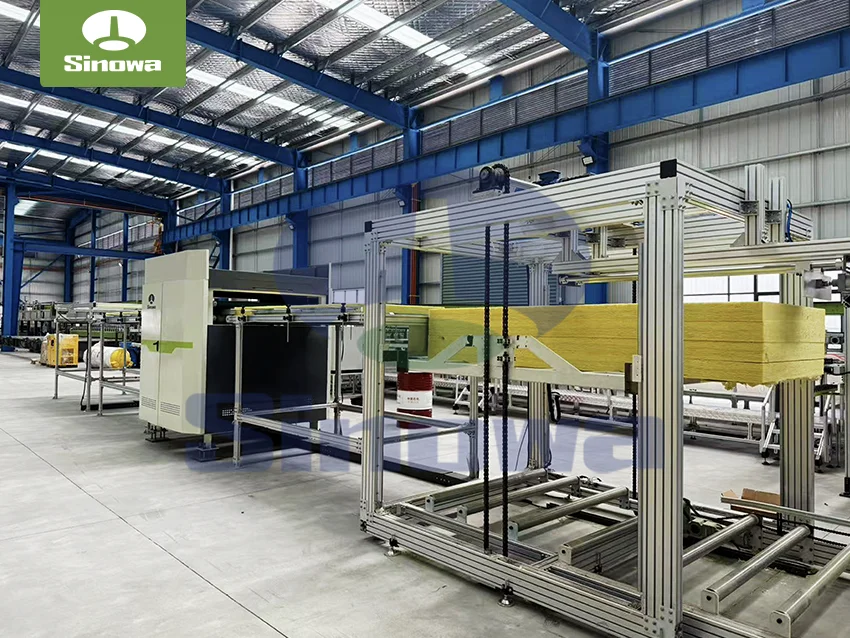
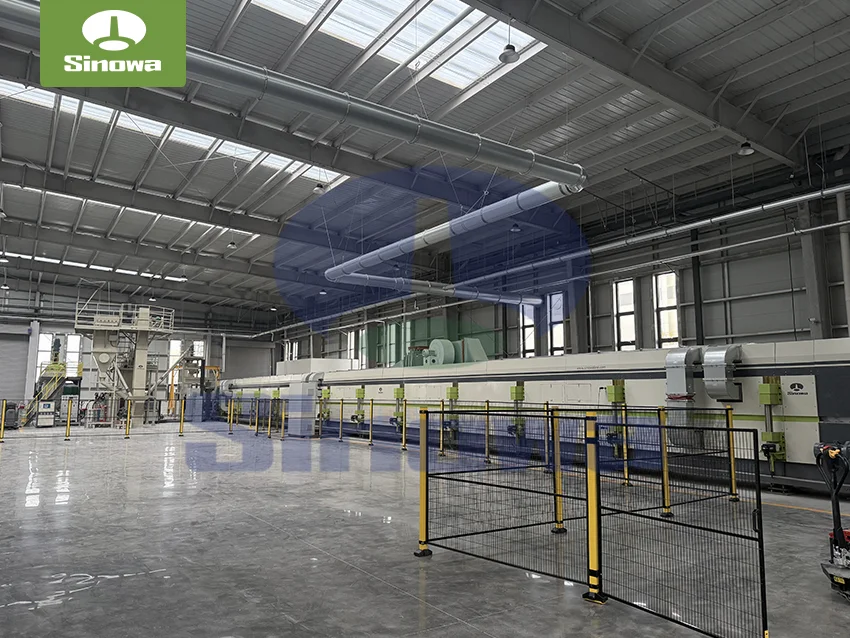
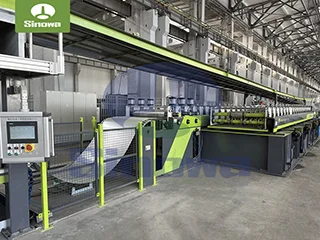
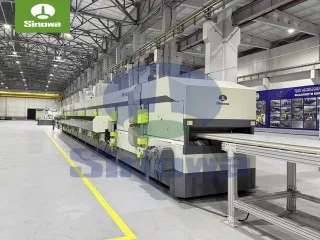
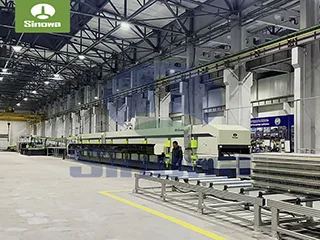
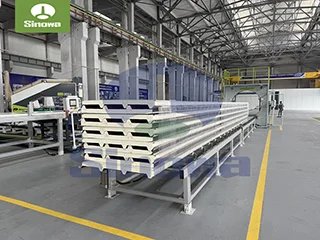
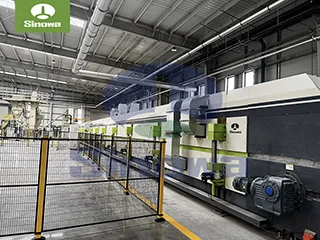
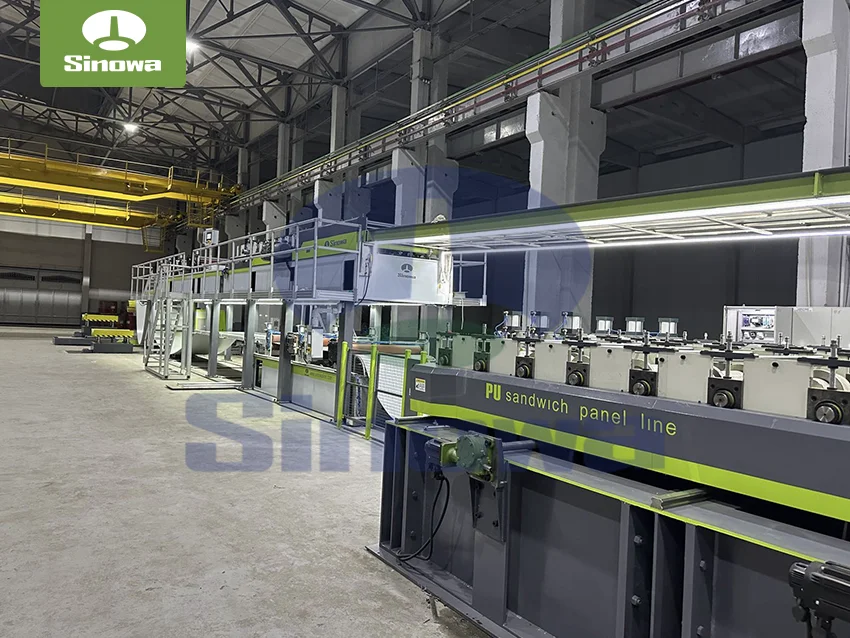
 sandwich panel line
To understand the significance of polyurethane sandwich panel lines, it is first essential to recognize the unique properties that make polyurethane sandwich panels ideal for prefabricated homes. These panels consist of a core of polyurethane foam sandwiched between two outer layers, typically made of metal sheets such as steel or aluminum. The combination of these materials results in a composite product that boasts exceptional thermal insulation, structural rigidity, lightweight characteristics, and resistance to harsh environmental conditions. Polyurethane foam, in particular, exhibits extremely low thermal conductivity, ranging from 0.019 to 0.022 W/m·K, which significantly reduces heat transfer through building envelopes. This thermal efficiency translates to lower energy consumption for heating and cooling, making prefabricated homes more sustainable and cost-effective to operate. Additionally, the closed-cell structure of polyurethane foam, with a density of approximately 200,000 cells per cubic centimeter and a closed-cell rate exceeding 97%, minimizes water absorption, ensuring the panels remain durable and effective even in humid or rainy environments.
The polyurethane sandwich panel line is engineered to transform raw materials into these high-performance panels through a series of coordinated, automated processes. A typical production line comprises several key components, each designed to perform a specific function in the manufacturing sequence. The process begins with the decoiler, a machine that unwinds large coils of metal sheets— the primary material for the panel's outer layers. The decoiler ensures a smooth and continuous supply of metal, maintaining flatness to prevent defects in the final product. This is crucial because any irregularities in the metal sheets can compromise the structural integrity and aesthetic appearance of the panels. From the decoiler, the metal sheets are fed into the roll forming machine, which shapes the sheets into the desired profile through a series of step-by-step cold forming operations. Roll forming machines can be adjusted to produce various profiles, accommodating different design requirements for prefabricated house walls, roofs, and partitions. Some advanced roll forming systems offer double-layer or width-adjustable capabilities, further enhancing the versatility of the production line.
Following the roll forming process, the next critical stage is the application of polyurethane foam, which forms the core of the sandwich panel. This is accomplished by the polyurethane foaming machine, a key component of the production line. The foaming process typically involves the high-pressure impingement mixing of two main components—polyol and isocyanate—along with other additives such as blowing agents, catalysts, and flame retardants. The mixing must occur at a constant temperature and pressure to ensure a homogeneous mixture with consistent physical properties. Modern foaming machines employ fluorine-free, high-pressure foaming technology that emits zero ozone-depleting substances (ODP = 0), aligning with international environmental conventions and eco-standards. This not only reduces the environmental impact of production but also enhances the sustainability credentials of the resulting panels.
Once the polyurethane mixture is prepared, it is injected or sprayed between the two pre-formed metal sheets as they move through the production line. The metal sheets, now with the foam core between them, then pass through a laminating system or double belt conveyor. This system applies uniform pressure to the composite structure, ensuring proper bonding between the foam core and the metal layers. The pressure also helps to achieve the desired thickness of the panel and removes any air bubbles that might be trapped in the foam, which could otherwise reduce the panel's thermal insulation and structural performance. The laminating process is closely controlled to maintain the integrity of the foam core, as excessive pressure can compress the foam and diminish its insulating properties.
After the laminating stage, the continuous panel is fed into a cutting system, typically a tracking flying saw or a precision cutter. This machine cuts the panel to the exact length required for specific prefabricated house designs, with a cutting length tolerance of approximately ±2 mm. The precision of this cutting process is essential, as it ensures that the panels fit together seamlessly during on-site assembly, reducing installation time and minimizing waste. The cutting system is synchronized with the rest of the production line, allowing for continuous operation without compromising accuracy. Once cut, the finished panels are inspected for quality, checked for defects such as uneven foam distribution, poor bonding, or surface irregularities, and then stacked for storage or transportation.
A key feature of modern polyurethane sandwich panel lines is their advanced control systems, which typically utilize programmable logic controllers (PLC) to monitor and adjust every stage of the production process. These control systems regulate parameters such as forming speed, temperature, pressure, and cutting length, ensuring consistent quality across all panels produced. The forming speed of a typical line ranges from 0 to 20 meters per minute, allowing manufacturers to adjust production rates based on demand. The PLC system also provides real-time data on production metrics, enabling operators to identify and address any issues promptly, minimizing downtime and improving overall efficiency. Some advanced control systems even incorporate remote monitoring capabilities, allowing for off-site supervision and maintenance scheduling.
The versatility of polyurethane sandwich panel lines is another factor contributing to their widespread adoption in prefabricated house construction. These lines can produce panels of varying thicknesses, from 10 mm to 200 mm or more, depending on the required thermal insulation and structural strength. The width of the panels can also be adjusted, with common widths ranging from 383 mm to 600 mm, although custom widths are possible to meet specific project needs. Additionally, the metal sheets can be embossed with various patterns—such as brick, marble, or wood textures—during the roll forming process, enhancing the aesthetic appeal of the panels and eliminating the need for additional cladding. This versatility allows prefabricated house designers to create a wide range of architectural styles, from modern minimalist to traditional, using the same production line.
In addition to versatility and efficiency, polyurethane sandwich panel lines are designed to prioritize safety and sustainability. The inclusion of flame retardants in the polyurethane foam formulation enhances the fire resistance of the panels. Unlike other insulation materials such as EPS or XPS, which melt and drip when exposed to fire, polyurethane foam forms a charring protective layer that inhibits combustion and slows the spread of fire. When combined with metal facings, this fire resistance is further improved, making the panels suitable for use in fire-rated compartments and high-safety applications. Furthermore, the production process minimizes waste by utilizing precise material measurements and automated cutting, reducing the amount of scrap metal and foam generated. The metal components of the panels are fully recyclable through melting, while the polyurethane foam can be recycled using mechanical, chemical, or energy recovery processes, further reducing the environmental footprint of prefabricated construction.
The impact of polyurethane sandwich panel lines extends beyond the manufacturing floor, significantly influencing the efficiency and sustainability of prefabricated house construction projects. Prefabricated houses built with polyurethane sandwich panels benefit from faster installation times due to the lightweight and pre-engineered nature of the panels. Unlike traditional construction methods, which require on-site mixing of materials and time-consuming masonry work, prefabricated panels can be assembled quickly and easily, even in adverse weather conditions. This not only accelerates project completion but also reduces labor costs and on-site disruptions. The consistent quality of factory-produced panels also minimizes the risk of errors and rework, ensuring that prefabricated homes meet the highest standards of structural safety and performance.
Another significant advantage of polyurethane sandwich panel lines is their contribution to energy-efficient and sustainable building practices. As mentioned earlier, the exceptional thermal insulation properties of polyurethane sandwich panels reduce energy consumption for heating and cooling, lowering greenhouse gas emissions and utility costs for homeowners. This aligns with the global push toward net-zero energy buildings and sustainable construction practices. Additionally, the prefabricated nature of the panels reduces on-site waste, as most of the manufacturing process occurs in a controlled factory environment where material usage is optimized. The lightweight nature of the panels also reduces transportation costs and fuel consumption, as more panels can be transported in a single load compared to heavier traditional building materials.
The application of polyurethane sandwich panel lines in prefabricated house construction is not limited to residential buildings. These panels are also widely used in commercial and industrial prefabricated structures such as offices, schools, hospitals, warehouses, and cold storage facilities. In cold storage applications, the superior thermal insulation and moisture resistance of polyurethane sandwich panels are particularly valuable, maintaining consistent internal temperatures while preventing condensation. The structural strength of the panels also makes them suitable for use in roofing systems, where they can withstand heavy loads such as snow and wind. This versatility further underscores the importance of polyurethane sandwich panel lines in modern construction.
Looking toward the future, the polyurethane sandwich panel line is expected to evolve further, incorporating more advanced technologies to enhance efficiency, sustainability, and product performance. One area of development is the integration of artificial intelligence (AI) and machine learning into control systems, allowing for predictive maintenance and real-time optimization of production parameters. AI-powered systems can analyze data from sensors throughout the production line to identify potential issues before they cause downtime, improving overall productivity. Another trend is the development of more eco-friendly foam formulations, such as bio-based polyurethanes derived from renewable resources, which further reduce the environmental impact of panel production. Additionally, advancements in roll forming technology may enable the production of more complex panel profiles, expanding the design possibilities for prefabricated buildings.
In conclusion, the polyurethane sandwich panel line is a cornerstone of modern prefabricated house construction, enabling the efficient, consistent production of high-performance panels that offer exceptional thermal insulation, structural strength, and sustainability. Through a series of automated processes—from decoiling and roll forming to foam injection, laminating, and precision cutting—these production lines transform raw materials into versatile building components that meet the diverse needs of the construction industry. The advanced control systems, versatility, and commitment to sustainability of polyurethane sandwich panel lines make them an essential tool in the ongoing transformation of the construction sector toward faster, more efficient, and more sustainable practices. As prefabricated construction continues to grow in popularity, the role of polyurethane sandwich panel lines will only become more critical, driving innovation and shaping the future of building design and construction.
https://www.cnsinowa.com/sandwich-panel-machines/polyurethane-sandwich-panel-line-for-prefabricated-house-panels.html