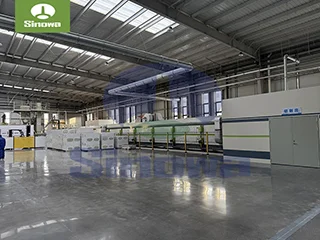
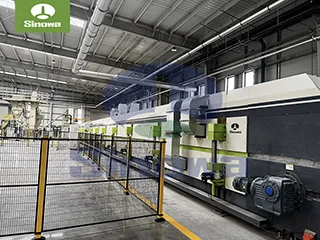
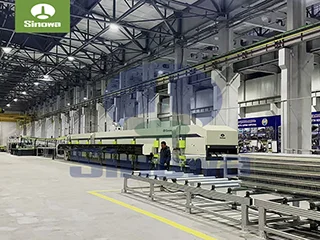
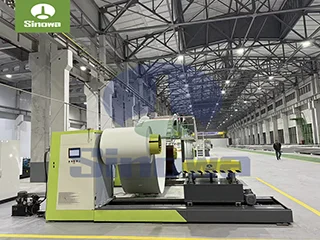
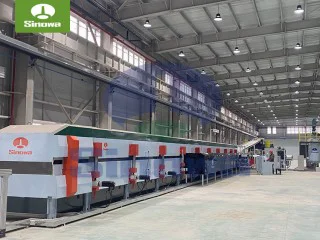
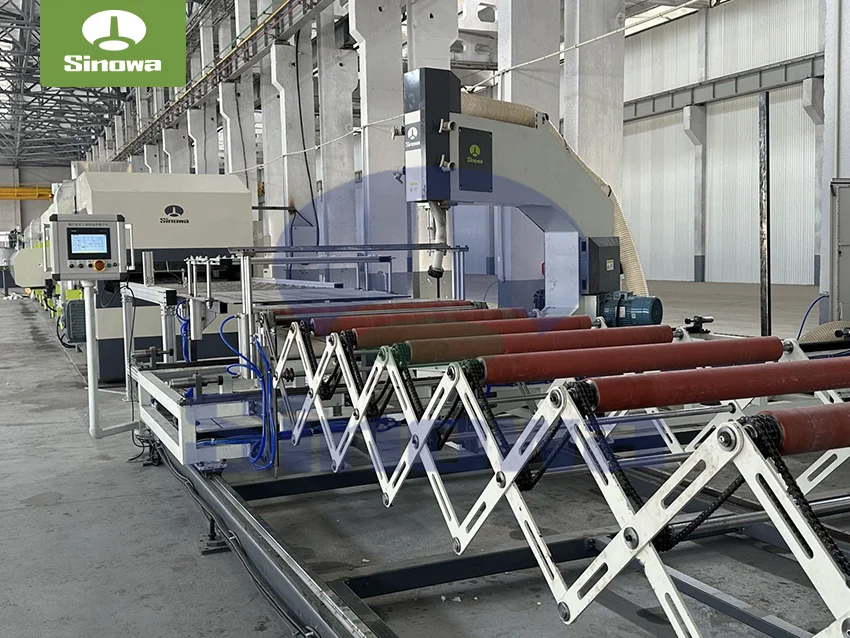
 sandwich panel machine
A complete PUF panel machine is a highly integrated electromechanical hydraulic integration system, which consists of multiple interlocking functional units, and each independent unit undertakes exclusive production tasks while maintaining synchronous operation logic to ensure the continuity and stability of the overall production line. The basic mechanical composition includes raw material unwinding devices, surface layer pretreatment mechanisms, high-precision foaming and metering systems, continuous laminating and pressing structures, constant-temperature curing tunnels, fixed-length cutting assemblies, post-processing trimming devices and intelligent control systems. Every structural component undergoes rigorous mechanical design and structural optimization to adapt to the high-intensity long-term production environment, and the matching degree between different components directly determines the molding quality, production efficiency and operational stability of finished PUF panels. In terms of material selection for mechanical components, most of the load-bearing structures and transmission frameworks adopt high-strength alloy steel materials, which have excellent compression resistance, deformation resistance and corrosion resistance, effectively avoiding mechanical fatigue and structural deformation caused by long-term continuous operation. The surface of key mechanical parts is treated with anti-rust and wear-resistant coatings to reduce friction loss in the operation process and extend the overall service life of the equipment.
The raw material unwinding device is the starting unit of the continuous sandwich panel line, mainly responsible for the orderly release of upper and lower surface base materials of PUF panels. Common surface base materials include color-coated metal sheets, galvanized steel sheets and other rigid sheet materials, as well as flexible coil materials such as aluminum foils. This device is equipped with an active unwinding structure and a tension feedback adjustment module. In the actual production process, the tension sensor can monitor the stretching state of the base material in real time, and the servo drive system automatically adjusts the unwinding speed and damping force to maintain constant tension of the base material. This intelligent tension control mode can effectively prevent the surface wrinkles, stretching deformation and position deviation of the base material during the conveying process, laying a good foundation for subsequent composite molding. In addition, the unwinding device is designed with a rapid material changing structure, which can realize quick replacement of different types of coil materials, reduce the downtime caused by material replacement, and improve the overall continuous production capacity of the production line. The guiding deviation correction mechanism installed at the outlet of the unwinding device can automatically correct the lateral offset of the base material, ensuring that the base material is accurately conveyed to the next processing station in a parallel and flat state.
Following the unwinding process, the surface pretreatment mechanism carries out refined processing on the surface of the base material to eliminate factors that affect the composite bonding effect. During the storage and transportation of coil materials, the surface is prone to adhere to dust, oil stains and fine impurities, and these contaminants will reduce the bonding tightness between the base material and the polyurethane foam layer, resulting in delamination and degumming of finished panels in the later stage. The pretreatment mechanism is equipped with high-pressure air blowing components and flexible brushing structures. The high-pressure air blowing system uses dry compressed air to blow away floating dust and particulate impurities on the surface of the base material, while the brushing structure gently removes stubborn oil stains and adhesive attachments without damaging the surface coating of the base material. Some optimized pretreatment modules are also equipped with surface heating components, which can appropriately increase the surface temperature of the base material, remove residual moisture on the material surface, and enhance the surface activity of the base material, so that the polyurethane foam raw materials can form a tighter molecular bond with the base material during the foaming process.
The foaming and metering system is the core functional component of the PUF sandwich panel making machine, which undertakes the mixing, metering and spraying of polyurethane chemical raw materials. Polyurethane foam is formed by the chemical reaction between isocyanate and polyether polyol, and the mixing ratio, flow rate and mixing uniformity of the two raw materials are the key factors determining the foam density, thermal insulation performance and structural stability of the finished panel. This system is equipped with two independent raw material storage tanks, which are used to store two different chemical raw materials respectively. Each storage tank is matched with a constant-temperature heat preservation structure to keep the raw materials within the optimal reaction temperature range and avoid the change of raw material viscosity caused by ambient temperature fluctuation. The metering unit adopts variable frequency drive metering pumps, and each pump body is driven by an independent servo motor. The control system can accurately adjust the rotating speed of the metering pump according to the production process parameters, so as to precisely control the output flow of different raw materials. The built-in flow monitoring sensor can feed back the raw material flow data in real time, and automatically correct the flow deviation to ensure that the proportion of the two raw materials always meets the chemical reaction standard. After accurate metering, the raw materials are transported to the high-pressure mixing chamber, where the turbulent mixing structure is used to realize instantaneous and uniform mixing of the raw materials, and the mixed chemical solution is evenly sprayed between the upper and lower base materials through the mobile distribution nozzle. The mobile spraying mechanism can perform reciprocating uniform spraying in the horizontal direction to avoid local accumulation or shortage of raw materials, ensuring the consistency of foam thickness and density in the panel intermediate layer.
The continuous laminating and pressing structure is responsible for realizing the composite bonding of the base material and the foaming raw materials, and shaping the preliminary outline of the PUF panel. This structure is composed of upper and lower parallel pressing roller sets and a hydraulic pressure adjustment system. The pressing rollers are made of high-precision smooth alloy rollers, and the internal circulating oil temperature control system is configured to maintain a constant surface temperature of the rollers. In the laminating process, the upper and lower base materials wrapped with mixed foaming raw materials pass through the gap between the pressing roller sets at a constant speed. The hydraulic system provides stable and uniform composite pressure, and the pressure value can be adjusted according to the thickness specification of the produced panel. For panels with thicker foam interlayers, appropriately increased pressure is adopted to eliminate internal bubbles; for thin-specification lightweight panels, low-pressure composite mode is used to prevent excessive pressure from crushing the foam microporous structure. The parallelism between the pressing rollers is strictly calibrated during the equipment manufacturing process, which can ensure that the thickness of the pressed composite plate is uniform without thickness deviation on both sides. At the same time, the rotating speed of the pressing rollers is synchronized with the conveying speed of the front-end mechanism to avoid material stretching or accumulation caused by speed mismatch.
The constant-temperature curing tunnel is a key device to complete the chemical foaming and solidification reaction of polyurethane raw materials. After being compounded by the pressing mechanism, the preliminary molded panel enters the closed curing tunnel at a constant speed. The interior of the tunnel is divided into multiple independent temperature control areas, and each area is equipped with an intelligent heating system and an air circulation device. According to the chemical reaction characteristics of polyurethane raw materials, the temperature gradient in the tunnel is reasonably set. The temperature of the initial curing area is slightly higher to accelerate the foaming reaction rate of the raw materials and form a complete microporous foam structure; the temperature of the middle stable area is kept constant to promote the complete cross-linking reaction of chemical molecules and enhance the structural toughness of the foam layer; the temperature of the final shaping area is appropriately reduced to slowly stabilize the internal molecular structure of the foam and reduce the internal stress of the panel. The internal air circulation system of the tunnel can make the temperature distribution in the cavity uniform, avoid local overheating or low temperature, and prevent the finished panel from producing quality defects such as uneven foaming and internal cracks. The sealing structure at the inlet and outlet of the curing tunnel can reduce the loss of internal heat, improve energy utilization efficiency, and maintain the stability of the internal curing environment.
After the curing and shaping process, the fixed-length cutting assembly accurately cuts the continuous long strip composite plate according to the preset size parameters. This assembly adopts high-speed hydraulic cutting tools and intelligent positioning detection components. Before cutting, the laser ranging sensor detects the conveying length of the panel in real time. When the panel reaches the preset cutting size, the control system automatically triggers the cutting instruction. The cutting tool moves vertically and smoothly under the drive of the hydraulic cylinder, and the high-hardness cutting blade can complete the cutting operation in an instant, ensuring that the cutting section is flat and smooth without burrs, collapses and cracks. In order to adapt to different production requirements, the cutting length and spacing can be freely set through the control panel, and the equipment supports continuous cycle cutting without manual intervention. The buffer support table is installed at the bottom of the cutting position to bear the weight of the panel, avoid the panel from bending and deforming during the cutting process, and further ensure the flatness of the cutting section. In addition, the cutting system is equipped with an emergency induction device, which can automatically suspend the cutting action when foreign matter enters the cutting area, so as to ensure the operational safety of the equipment.
The post-processing trimming device is used to finish the edge of the cut panel to remove redundant edge materials and optimize the overall appearance of the finished product. In the continuous composite molding process, in order to ensure the full filling of the foam layer, the two sides of the panel will retain a certain width of redundant composite edges, which need to be trimmed to meet the standardized size requirements. The trimming device is equipped with symmetrically arranged rotating cutting wheels, and the spacing between the cutting wheels can be adjusted according to the actual width specification of the panel. During the conveying process of the panel, the cutting wheels evenly polish and cut the edges to remove the irregular edge parts, making the two sides of the panel neat and smooth. The recycled waste materials generated during the trimming process will be automatically collected by the centralized recovery mechanism, which is convenient for subsequent centralized treatment and realizes the effective utilization of resources. Some upgraded trimming modules also have surface polishing functions, which can polish the tiny scratches and burrs on the surface of the panel edge to further improve the surface finish of the finished panel.
The intelligent control system is the brain of the entire PUF sandwich panel making machine, which realizes the integrated management of parameter setting, operation monitoring, fault diagnosis and data recording of each functional unit. The system adopts a human-computer interaction touch screen, and operators can complete the setting of production parameters such as panel thickness, cutting length, conveying speed and curing temperature through simple touch operations. The internal programmable logic controller can synchronously control the operating frequency of each mechanical unit to ensure the coordination and consistency of the production rhythm. A variety of high-precision sensors are distributed in all key positions of the production line, including temperature sensors, pressure sensors, tension sensors and flow sensors. These sensors collect real-time operating data of the equipment and feed them back to the control system. The system compares the collected data with the preset standard parameters. Once abnormal data deviation is found, it will automatically trigger the adjustment instruction to correct the operating state of the equipment. When serious faults such as material jamming and raw material shortage occur, the control system will immediately execute the emergency shutdown procedure, and pop up the fault code and cause analysis on the touch screen to facilitate the maintenance personnel to quickly locate and eliminate the fault. In addition, the control system has a data storage function, which can record the daily production output, parameter changes and fault records, providing data support for production management and equipment maintenance.
PUF sandwich panel machine has prominent technical advantages in structural design and production performance, which make them widely recognized in the industrial production field. Firstly, the equipment has excellent production continuity. The whole production process from raw material feeding to finished product output is completed on one continuous production line, without intermediate manual handling and transfer links, which greatly shortens the production cycle and improves the production efficiency. Secondly, the equipment has high production precision. The servo metering system and hydraulic pressure control system can accurately control the raw material mixing ratio and composite pressure, ensuring that the density error of the foam layer is controlled within a tiny range, and the thickness uniformity of the panel is maintained at a high level. Thirdly, the equipment has strong production adaptability. By adjusting the operating parameters and replacing simple auxiliary parts, it can produce PUF panels with different thicknesses, surface materials and structural strengths, meeting the diversified production needs of different industries. Fourthly, the equipment has good energy-saving performance. The closed heat preservation structure of the curing tunnel and the circulating heating system reduce heat energy loss, and the frequency conversion driving technology effectively reduces the no-load energy consumption of the motor, realizing low-energy consumption production. Finally, the equipment has a high degree of automation. The whole production process basically does not require manual intervention, which reduces the dependence on labor, lowers the labor production cost, and avoids product quality fluctuations caused by human operation errors.
In the daily operation process of PUF sandwich panel production machine, standardized maintenance and maintenance work is an important prerequisite to ensure long-term stable operation of the equipment and extend its service life. Daily maintenance work includes surface cleaning, component inspection and lubrication maintenance. After the daily production work is completed, the residual raw materials, dust and waste materials on the surface of the equipment should be cleaned in time to prevent the residual chemical raw materials from corroding the mechanical structure and blocking the material conveying pipeline. The operator needs to visually inspect the key components such as transmission chains, pressing rollers and cutting blades every day to check whether there is structural damage, loose fasteners and abnormal wear. For the rotating transmission parts, high-temperature resistant lubricating oil should be regularly filled to reduce mechanical friction and avoid abnormal noise and heating during operation. Weekly maintenance focuses on the detection of the precision control system and the hydraulic system. It is necessary to calibrate the metering accuracy of the foaming system, check the sealing performance of the hydraulic pipeline, and eliminate the hidden danger of oil leakage. At the same time, the sensitivity of various sensors and emergency protection devices should be tested to ensure that the intelligent control system can respond accurately. Monthly maintenance needs to carry out deep maintenance on the equipment, including cleaning the internal filter screen of the raw material storage tank, removing the carbon deposition on the heating components of the curing tunnel, and correcting the parallelism of the pressing roller set. For the aging vulnerable parts such as sealing rings and conveyor belts, regular replacement is carried out according to the service cycle to avoid equipment failure caused by part aging. In addition, the equipment should be placed in a dry and ventilated production workshop, and the ambient humidity and temperature should be controlled to prevent the electrical control components from being affected with damp and short-circuited.
Reasonable operation specifications are crucial to maintain the production stability of PUF sandwich panel manufacturing machine and ensure product quality. Before starting the equipment every time, the operator must conduct a comprehensive pre-operation inspection, confirm that all parts are in normal condition, and set reasonable production parameters according to the production requirements of the day. After the equipment is started, it needs to run at a low speed for a period of preheating operation to make the temperature of each component reach the working standard and avoid mechanical failure caused by cold start. In the formal production process, the operator should observe the operating state of the equipment in real time, pay attention to whether there is abnormal vibration, noise and material leakage, and check the molding quality of the finished panel at regular intervals. Once quality problems such as uneven foam and surface wrinkles are found, the production parameters should be adjusted in time. It is strictly prohibited to disassemble and modify the internal structure of the equipment during the operation process. If it is necessary to adjust the production specifications, the equipment should be suspended first and then operated after the mechanical movement is completely static. After the production is completed, the raw material delivery pipeline needs to be cleaned with special cleaning agents to prevent the residual chemical raw materials from solidifying and blocking the pipeline. The power supply and air supply system should be cut off in sequence, and the equipment should be sorted out and recorded.
PUF panels produced by high-performance PUF sandwich panel production line have excellent physical and chemical properties, including low thermal conductivity, good compression resistance, light weight and corrosion resistance, so they are widely used in multiple industrial fields. In the construction industry, such panels are used as thermal insulation and wall decoration materials for industrial plants, public buildings and residential buildings. They can effectively reduce the indoor and outdoor heat exchange, reduce the energy consumption of building heating and cooling, and have good fire resistance and weather resistance to adapt to different climatic environments. In the cold chain logistics industry, PUF panels are made into insulated carriages and cold storage wallboards. The closed microporous foam structure can effectively block heat conduction, maintain the low-temperature storage environment inside the cold chain equipment, and reduce the operating energy consumption of refrigeration equipment. In the industrial purification field, the smooth surface and antibacterial properties of the panels make them suitable for the partition walls and ceiling materials of purification workshops in pharmaceutical, food and electronic manufacturing industries, creating a dust-free and clean production space. In addition, the panels are also applied in the fields of outdoor enclosure engineering, temporary construction buildings and petrochemical anti-corrosion equipment, providing reliable material support for different industrial scenarios.
With the continuous progress of industrial manufacturing technology and the improvement of environmental protection production standards, PUF panel making machines are showing a clear development trend of intelligence, environmental protection, high efficiency and diversification. In terms of intelligent upgrading, the equipment will be combined with industrial Internet and big data technology to realize remote monitoring, intelligent early warning and automatic parameter optimization of production status. The artificial intelligence algorithm will independently adjust the production parameters according to the raw material characteristics and environmental changes, further improve the production precision and product qualification rate. In terms of environmental protection optimization, the equipment will adopt low-carbon and pollution-free foaming auxiliary materials and closed waste gas recovery devices to reduce the emission of harmful gases in the production process. The optimized raw material metering system can improve the utilization rate of chemical raw materials, reduce material waste, and realize green and low-carbon production. In terms of high-efficiency production, the transmission structure and foaming reaction system will be further optimized to shorten the curing and molding cycle of panels, increase the continuous production speed of the production line, and meet the growing market demand. In terms of diversified expansion, the equipment will develop towards multi-functional composite molding, which can produce integrated panels with heat preservation, fire prevention, sound insulation and decoration functions, and expand the application boundary of finished panels. At the same time, the miniaturized and mobile small-scale PUF panel making machines will be gradually promoted to meet the production needs of small and medium-sized processing enterprises and on-site construction processing.
In the current industrial development context, PUF panel making machines, as core supporting equipment for energy-saving building materials, play an irreplaceable important role in promoting the upgrading of the insulation material industry. The perfect mechanical structure, mature production process and intelligent control system enable the equipment to maintain stable production capacity in long-term industrial application, and the produced PUF panels effectively solve the heat preservation and energy-saving problems in construction, cold chain, purification and other industries. Although the current equipment manufacturing technology has been relatively mature, there is still room for optimization in terms of energy consumption control, raw material utilization rate and intelligent automation level. In the future, with the joint promotion of material science, mechanical manufacturing and intelligent control technology, PUF panel making machines will break through the existing technical bottlenecks, develop towards higher precision, lower energy consumption and stronger adaptability, and continuously output high-quality composite insulation panels for all walks of life. It is foreseeable that in the wave of global energy conservation and emission reduction and construction industrialization, PUF panel making machines will have broader market application prospects and continuously create higher economic and social value for the modern manufacturing industry.
https://www.cnsinowa.com/sandwich-panel-machines/puf-panel-making-machine.html