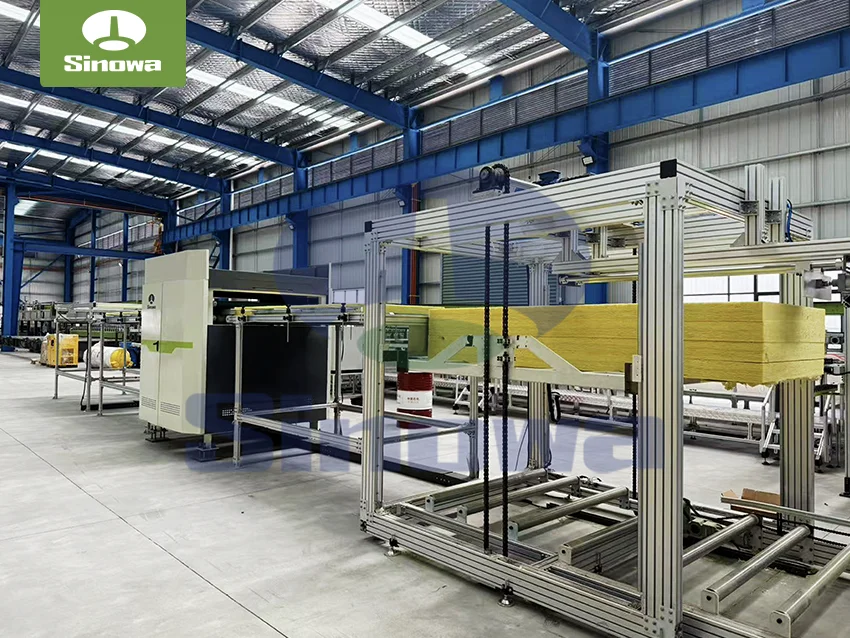
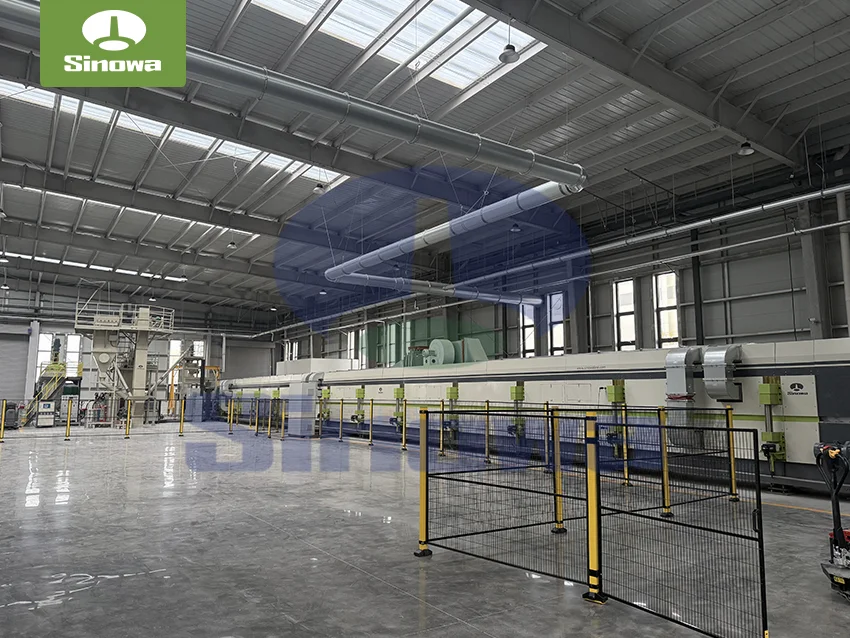
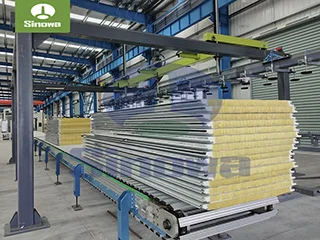
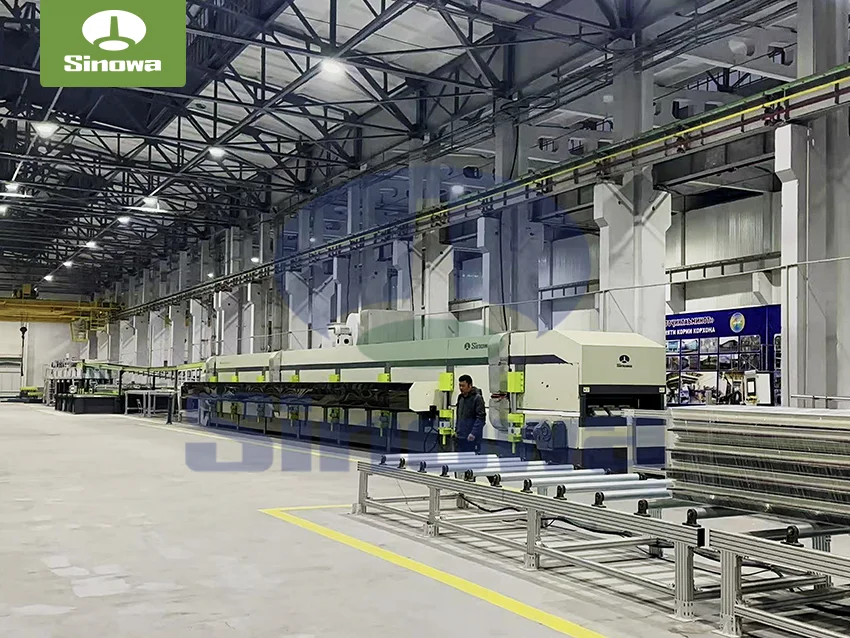
 sandwich panel line
PIR sandwich panels are composite materials consisting of a rigid PIR foam core sandwiched between two outer layers, typically made of galvanized steel, aluminum, or colored steel sheets. The unique chemical structure of PIR foam, formed through the reaction of polyols and isocyanates, endows the panels with low thermal conductivity (usually ≤ 0.023 W/(m·K)), high fire resistance due to their thermosetting nature, and excellent mechanical strength capable of withstanding wind loads and mechanical pressures. These properties make PIR sandwich panels ideal for use in cold storage facilities, industrial warehouses, commercial buildings, modular housing, and agricultural installations, where thermal efficiency and structural integrity are paramount. The quality of PIR sandwich panels is heavily dependent on the uniformity of the foam core thickness and the bonding strength between the core and the outer layers, making precise thickness control a critical factor in the production process.
Traditional PIR sandwich panel production lines often relied on manual or semi-automatic thickness adjustment methods, which were prone to human error, inconsistent results, and low production efficiency. Manual adjustments required frequent operator intervention to monitor and correct thickness deviations, leading to increased labor costs and a higher risk of product defects. In contrast, modern production lines equipped with automatic thickness adjustment systems leverage advanced sensor technology, computerized control systems, and precision mechanical components to achieve real-time, accurate thickness control throughout the production process. This automation not only improves product quality and consistency but also enhances production speed, reduces material waste, and lowers overall operational costs.
The core components of a PIR sandwich panel production line with automatic thickness adjustment include the decoiler, roll forming machine, foam mixing and pouring system, lamination unit, automatic thickness control system, curing tunnel, and cutting unit. Each component works in seamless coordination to transform raw materials into finished PIR sandwich panels with precise thickness specifications. The decoiler is responsible for unwinding the outer layer materials (such as galvanized steel coils) and feeding them into the roll forming machine, which shapes the sheets into the desired profile. The foam mixing and pouring system accurately mixes the PIR raw materials (polyols, isocyanates, and additives) and pours the mixture onto the lower outer layer sheet. The lamination unit then brings the upper and lower outer layers together, sandwiching the foam mixture between them, and applies uniform pressure to ensure proper bonding and thickness consistency.
The automatic thickness adjustment system is the heart of the modern PIR sandwich panel production line, integrating advanced measurement sensors, a central control unit, and precision adjustment mechanisms. The measurement sensors, which can be contactless laser sensors or tactile roller probes, continuously monitor the thickness of the sandwich panel as it moves through the production line. Laser sensors are particularly effective for non-contact measurement, offering high precision (with repeat accuracy up to ± 0.015 mm) and compatibility with a wide range of surface materials. Tactile roller probes, on the other hand, are ideal for measuring panels with uneven surfaces or high-density materials, providing reliable thickness data through direct contact with the panel surface.
The data collected by the sensors is transmitted in real-time to the central control unit, which processes the information and compares it to the pre-set thickness parameters. If a thickness deviation is detected, the control unit immediately sends signals to the precision adjustment mechanisms, which adjust the lamination pressure, foam pouring rate, or roller gap to correct the deviation. This closed-loop control system ensures that any thickness variations are detected and corrected within milliseconds, maintaining consistent panel thickness throughout the production process. The automatic thickness adjustment system can also store multiple thickness profiles, allowing for quick and easy switching between different product specifications without the need for manual reconfiguration, greatly enhancing the production line's versatility.
Another key advantage of the automatic thickness adjustment system is its ability to optimize material usage and reduce waste. By maintaining precise thickness control, the production line minimizes the overuse of PIR foam and outer layer materials, which are significant cost components in PIR sandwich panel production. In traditional production lines, excessive material was often used to compensate for thickness inconsistencies, leading to unnecessary waste and higher production costs. With automatic thickness adjustment, the amount of foam poured and the pressure applied during lamination are precisely calibrated to meet the required thickness, reducing material waste by up to 15% in some cases. This not only lowers production costs but also contributes to environmental sustainability by reducing resource consumption.
The integration of automatic thickness adjustment also enhances the safety and reliability of the production process. By reducing the need for manual operator intervention, the risk of accidents associated with working near moving parts and high-pressure systems is significantly reduced. The central control unit also includes fault self-diagnosis capabilities, which can detect abnormalities in the thickness control system, such as sensor malfunctions or adjustment mechanism failures, and alert operators immediately. This proactive maintenance capability minimizes production downtime and ensures the long-term reliability of the production line.
The production process of PIR sandwich panels with automatic thickness adjustment begins with the preparation of raw materials. The outer layer coils are inspected for quality and loaded onto the decoiler, which unwinds the coils at a constant speed. The roll forming machine then shapes the outer layers into the desired profile, such as corrugated or flat sheets, depending on the application requirements. Meanwhile, the foam mixing system prepares the PIR foam by mixing polyols, isocyanates, and additives in precise proportions. The mixing process is critical to the quality of the foam core, as improper mixing can lead to uneven foaming, reduced thermal insulation properties, and poor bonding with the outer layers.
Once the outer layers are formed and the foam mixture is prepared, the foam is poured onto the lower outer layer sheet by the foam pouring system. The pouring rate is controlled by the central control unit, which adjusts it based on the production speed and the desired foam thickness. The upper outer layer sheet is then fed into the lamination unit, where it is brought into contact with the foam mixture. The lamination unit applies uniform pressure to the sandwich structure, ensuring that the foam is evenly distributed and that the outer layers are firmly bonded to the foam core. During this process, the automatic thickness control sensors continuously monitor the thickness of the panel, and any deviations are corrected by adjusting the lamination pressure or the foam pouring rate.
After lamination, the sandwich panel enters the curing tunnel, where it is subjected to controlled temperature and humidity conditions to facilitate the foaming and curing of the PIR foam. The curing process is essential to the development of the foam's mechanical and thermal properties, and the temperature in the curing tunnel is carefully regulated to ensure complete curing within the required time. The length of the curing tunnel and the speed of the production line are optimized to provide sufficient curing time while maintaining high production efficiency.
Once the panel is fully cured, it is fed into the cutting unit, which cuts the panel into the desired length using a high-precision saw or knife. The cutting unit is synchronized with the production line speed, ensuring clean, accurate cuts without damaging the panel edges. After cutting, the finished panels are inspected for quality, including thickness consistency, bonding strength, and surface quality, before being stacked and prepared for shipment. The entire production process, from raw material feeding to finished product inspection, is monitored and controlled by the central control system, ensuring consistent quality and high production efficiency.
The applications of PIR sandwich panels produced by lines with automatic thickness adjustment are diverse and continue to expand as the technology advances. In the construction industry, these panels are widely used for exterior walls, roofs, and partitions in industrial warehouses, factories, and commercial buildings. Their excellent thermal insulation properties help reduce energy consumption for heating and cooling, making buildings more energy-efficient and environmentally friendly. In cold storage facilities, such as refrigerated warehouses and food processing plants, PIR sandwich panels are essential for maintaining low temperatures, thanks to their low thermal conductivity and high fire resistance.
Modular and prefabricated construction is another growing application area for PIR sandwich panels. The lightweight nature of the panels makes them easy to transport and install, reducing construction time and labor costs. The precise thickness control provided by the automatic production lines ensures that the panels fit together seamlessly, improving the structural integrity and airtightness of modular buildings. PIR sandwich panels are also used in agricultural applications, such as greenhouses and livestock barns, where they provide thermal insulation and protection from the elements.
In addition to their traditional applications, PIR sandwich panels are increasingly being used in specialized fields, such as transportation (e.g., refrigerated trucks and shipping containers) and marine construction. The high strength-to-weight ratio of the panels makes them ideal for these applications, where weight reduction and structural durability are critical. The automatic thickness adjustment technology allows for the production of panels with custom thicknesses to meet the specific requirements of these specialized applications, further expanding the versatility of PIR sandwich panels.
The future of PIR sandwich panel production lines with automatic thickness adjustment looks promising, with ongoing advancements in sensor technology, control systems, and material science driving further improvements in efficiency, precision, and sustainability. The integration of artificial intelligence (AI) and machine learning into the control systems is expected to enhance the predictive maintenance capabilities of the production lines, allowing for the early detection of potential issues before they lead to production downtime. AI algorithms can also optimize production parameters in real-time based on raw material properties and environmental conditions, further improving product quality and reducing waste.
Advancements in sensor technology, such as the development of more precise and durable laser sensors, will further improve the accuracy of thickness measurement, allowing for even tighter thickness tolerances. The use of environmentally friendly raw materials in PIR foam production, such as bio-based polyols, is also expected to grow, making PIR sandwich panels more sustainable and reducing their environmental impact. Additionally, the trend towards modular and integrated production lines will continue, allowing for greater flexibility and customization to meet the diverse needs of customers.
In conclusion, the integration of automatic thickness adjustment systems into PIR sandwich panel production lines has transformed the manufacturing process, offering significant advantages in terms of product quality, production efficiency, material utilization, and operational safety. These systems have enabled the production of high-quality PIR sandwich panels with consistent thickness and superior performance, making them a preferred choice for a wide range of applications in construction, cold storage, modular housing, and other industries. As technology continues to advance, PIR sandwich panel production lines with automatic thickness adjustment will continue to evolve, driving innovation in the insulation material industry and contributing to a more sustainable and efficient built environment.
https://www.cnsinowa.com/sandwich-panel-machines/pir-sandwich-panel-production-line-with-automatic-thickness-adjustment.html