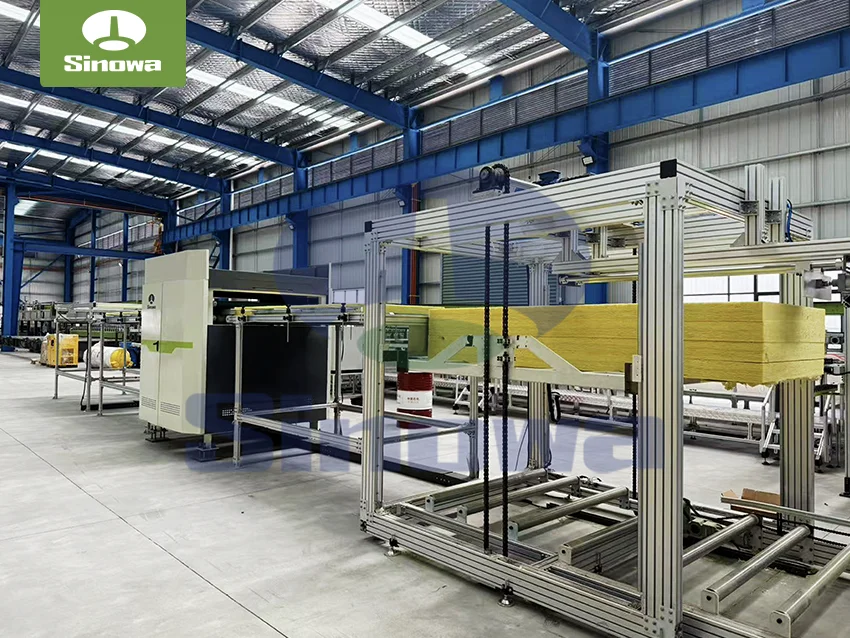
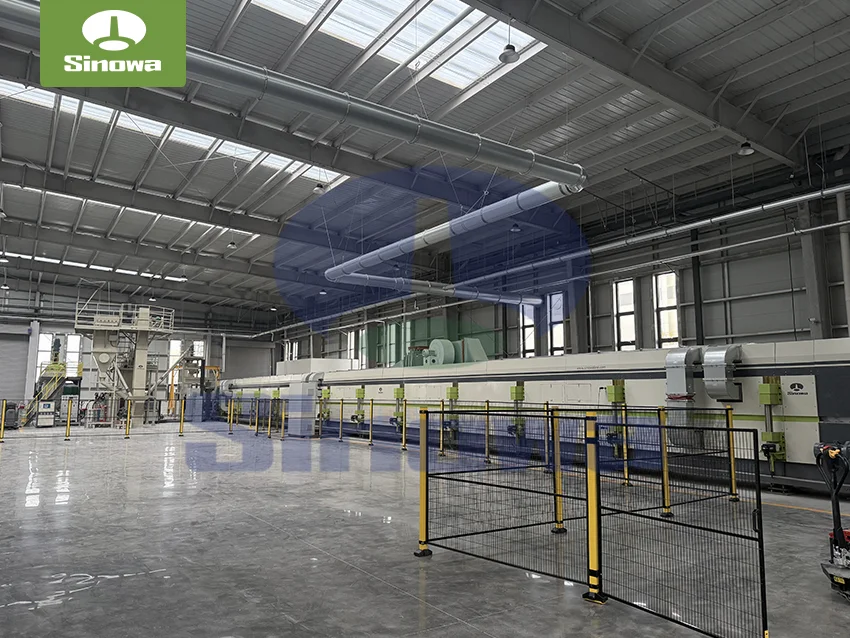
sandwich panel machine
The fundamental structure of PU sandwich panels—characterized by a polyurethane (PU) foam core sandwiched between two facing materials—lays the foundation for their widespread use in decoration. The PU foam core, produced through the reaction of isocyanates and polyols, forms a closed-cell structure that contributes to the panel's exceptional thermal insulation performance. With a thermal conductivity as low as 0.022 W/(m·K), these panels can effectively maintain indoor temperature stability, reducing energy consumption for heating and cooling in decorated spaces. The facing materials, which typically include pre-painted galvanized iron, aluminum sheets, or fiberglass reinforced sheets, are selected not only for their structural strength but also for their decorative versatility. These facings can be processed into various surface finishes, such as wood grain, stone texture, matte, or glossy, and are available in a wide range of colors to match different decorative styles, from modern minimalist to classic luxury. This structural design ensures that PU sandwich panels are not merely functional building materials but also integral elements of the overall aesthetic scheme in decoration projects.
The production process of PU sandwich panels in plants serving the decoration industry is a sophisticated and integrated workflow that encompasses several key stages, each requiring precise control to ensure product quality and consistency. The process begins with the preparation of raw materials, a critical step that directly impacts the final performance of the panels. For the facing materials, coils of metal sheets or other substrates undergo rigorous inspection to ensure they meet the required thickness, flatness, and surface quality standards. Any defects such as scratches, dents, or uneven coatings are identified and addressed at this stage to avoid compromising the decorative appearance of the finished panels. The raw materials for the PU foam core, including isocyanates, polyols, and blowing agents, are stored in specialized tanks under controlled temperature conditions to maintain their chemical stability. Before use, these chemicals are carefully measured and mixed in precise proportions, as even minor deviations can affect the foam's density, insulation properties, and bonding strength with the facings.
Following raw material preparation, the production process moves to the facing material forming stage. In this phase, the metal coils are uncoiled and fed into roll forming machines, which progressively bend and shape the sheets into the desired profiles through a series of tandem rolling stands. The roll forming process is highly automated, allowing for consistent profile dimensions and surface smoothness. For decorative purposes, some facing materials undergo additional embossing processes to create simulated textures such as wood grain or stone patterns. This embossing is achieved using specialized rollers that imprint the desired texture onto the surface of the metal sheets, enhancing their aesthetic appeal and making them suitable for direct use in visible decoration areas. After forming and embossing, the facing sheets pass through a corona treatment system, which uses high-frequency energy to clean the surface and increase its adhesion properties. This step is essential to ensure a strong bond between the facing materials and the PU foam core, preventing delamination during installation or long-term use.
The core forming and lamination stage is the heart of PU sandwich panel production, where the three-layer structure of the panel is assembled. After the surface treatment, the two facing sheets—one upper and one lower—are guided into a lamination line, where they are positioned parallel to each other with a precise gap between them. Meanwhile, the pre-mixed PU foam components are injected into this gap through a specialized foaming head. The foam expands rapidly to fill the entire space between the two facings, adhering tightly to both surfaces as it cures. The lamination line is equipped with adjustable rollers that apply uniform pressure to the panel during the foaming and curing process, ensuring consistent thickness and density of the PU core. The curing process is carefully controlled by maintaining a stable temperature and humidity environment along the production line, allowing the PU foam to fully cure and develop its optimal mechanical and thermal properties. This stage requires strict process control, as factors such as foam injection rate, curing temperature, and pressure can significantly affect the panel's structural integrity and performance. Once the foam is fully cured, the continuous panel is fed into a flying saw or cutter, which trims it into the required lengths according to customer specifications. The cut panels are then inspected for dimensional accuracy, with any off-spec products being rejected or reworked.
Quality control is an integral part of every stage of production in PU sandwich panel plants for the decoration industry. From the initial inspection of raw materials to the final testing of finished products, a comprehensive quality management system ensures that the panels meet the highest standards of performance and aesthetics. During the production process, automated sensors and monitoring equipment continuously track key parameters such as foam density, panel thickness, and bonding strength. Regular sampling and laboratory testing are conducted to verify thermal conductivity, sound absorption coefficient, fire resistance, and surface durability. For decorative performance, special attention is paid to surface finish consistency, color accuracy, and texture replication. Panels are inspected for surface defects such as scratches, color variations, or uneven embossing, ensuring that only products with flawless decorative appearances are delivered to customers. This rigorous quality control process not only guarantees the reliability of the panels but also enhances their competitiveness in the decoration market, where aesthetic perfection is often as important as functional performance.
The versatility of PU sandwich panels in decoration applications is largely enabled by the flexible production capabilities of modern manufacturing plants. These plants are designed to accommodate a wide range of customization requirements, allowing for the production of panels with varying thicknesses, dimensions, surface finishes, and core densities. For example, in residential decoration projects, thinner panels with wood grain or stone texture finishes are often used for wall cladding, ceiling decoration, or partition walls, creating a warm and natural ambiance. In commercial spaces such as shopping malls, hotels, or office buildings, thicker panels with high-gloss or matte finishes may be preferred for their durability and easy maintenance, while also contributing to the overall modern and sophisticated design. Production plants can adjust their foaming formulas and roll forming parameters to produce panels with different core densities, ranging from 40 to 60 kg/m³, to meet specific structural or insulation requirements of different decoration projects. Additionally, the ability to produce panels in custom lengths and widths ensures that they can be seamlessly integrated into various space layouts, reducing material waste and installation time.
The application of PU sandwich panels in the decoration industry extends beyond traditional wall and ceiling cladding. Their lightweight and easy-to-install properties make them ideal for use in movable partition walls, which allow for flexible space division in commercial venues such as conference centers or exhibition halls. The soundproofing capabilities of these panels—attributed to the closed-cell structure of the PU foam core—make them suitable for decoration in noise-sensitive areas such as bedrooms, home theaters, or office meeting rooms, where maintaining a quiet environment is essential. In exterior decoration, PU sandwich panels with weather-resistant facing materials can be used for balcony cladding, exterior wall decoration, or awning structures, as they are capable of withstanding UV radiation, rain, and temperature fluctuations without fading or degrading. Furthermore, the environmental friendliness of PU sandwich panels—many are produced with recyclable materials and low-VOC (volatile organic compound) components—aligns with the growing trend of sustainable decoration, making them a responsible choice for eco-conscious projects.
The production plants of PU sandwich panels for the decoration industry are also adapting to the evolving trends in the sector, particularly the increasing demand for customization, sustainability, and digital integration. To meet the growing need for personalized decoration, many plants have invested in advanced digital printing technologies that allow for high-resolution custom patterns and designs on the panel facings. This enables designers to create unique and artistic decoration effects that were previously difficult to achieve with traditional materials. In terms of sustainability, production processes are being optimized to reduce energy consumption and waste generation. For example, some plants have adopted closed-loop systems to recycle excess PU foam and metal scraps, minimizing environmental impact. The use of hydrofluorocarbon-free blowing agents in foam production also reflects the industry's commitment to reducing greenhouse gas emissions. Additionally, digital technologies are being integrated into production management, allowing for real-time monitoring of production processes, efficient scheduling of orders, and accurate tracking of raw materials and finished products. This digital transformation enhances the efficiency and flexibility of production plants, enabling them to respond more quickly to the changing needs of the decoration market.
The role of PU sandwich panel production plants in the decoration industry is not limited to manufacturing; they also play an important role in supporting the entire supply chain through technical support and after-sales service. Many plants have dedicated technical teams that provide professional advice to customers on material selection, panel installation, and maintenance. This support is particularly valuable for decoration projects with complex design requirements, as it ensures that the PU sandwich panels are used in the most effective and efficient manner. Additionally, after-sales service teams are available to address any issues that may arise during or after installation, providing peace of mind to customers. By offering comprehensive technical and after-sales support, production plants strengthen their relationships with customers and enhance the overall value of their products in the decoration market.
Looking ahead, the development of PU sandwich panel production plants for the decoration industry will be driven by continuous technological innovation and evolving market demands. Advances in material science are expected to further improve the performance of PU sandwich panels, such as enhancing their fire resistance, increasing their recyclability, and developing new surface finishes that mimic more natural materials. Production technologies will become more automated and intelligent, with the integration of artificial intelligence and machine learning to optimize production processes, reduce defects, and improve efficiency. The growing focus on green building and sustainable decoration will also push production plants to adopt more environmentally friendly practices, from raw material sourcing to waste disposal. Furthermore, as the decoration industry becomes more globalized, production plants will need to adapt to international standards and preferences, expanding their product ranges to cater to diverse cultural and design requirements.
In conclusion, PU sandwich panel production plants are indispensable to the modern decoration industry, providing a material that combines aesthetic versatility, functional performance, and environmental sustainability. Through advanced production technologies, strict quality control, and flexible customization capabilities, these plants produce PU sandwich panels that meet the diverse needs of residential and commercial decoration projects. As the decoration industry continues to evolve, these production plants will play an increasingly important role in driving innovation, promoting sustainability, and supporting the creation of more beautiful, efficient, and eco-friendly spaces. The ongoing investment in technology, sustainability, and customer support will ensure that PU sandwich panels remain a leading choice in the decoration industry, and that production plants continue to thrive in a competitive and dynamic market environment.
https://www.cnsinowa.com/sandwich-panel-machines/pu-sandwich-panel-production-plant-for-decoration-industry.html