sandwich panel machine
PU sandwich panel manufacturing machines are complex systems composed of interconnected components, each playing a critical role in the production workflow. The core function of these machines is to bond two outer facer sheets with a low density PU foam core, creating a composite structure that leverages the strengths of each material. The outer facers, typically made of metal sheets, provide rigidity, impact resistance, and weather protection, while the PU foam core delivers thermal insulation, sound dampening, and lightweight properties. The manufacturing machine orchestrates the entire process from raw material feeding to final cutting and stacking, ensuring that each panel meets the required specifications for density, thickness, and bonding strength. Unlike manual production methods, these automated systems eliminate human error, improve production efficiency, and maintain uniformity across large batches of panels.
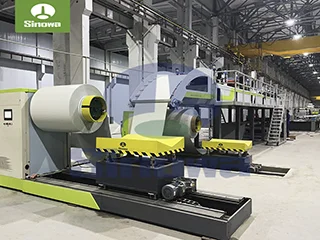
The production process initiated by PU sandwich panel manufacturing machines begins with raw material preparation and feeding. The outer facer sheets, usually supplied in coil form, are fed into the machine through a decoiler and sheet guiding mechanism. This component ensures smooth, controlled uncoiling of the metal coils, preventing skewing or warping that could affect the final panel quality. The guiding mechanism straightens any irregularities in the sheets, ensuring they enter the subsequent processing stages with precise alignment. For low density composite panels, the thickness of the outer facers is carefully selected to balance structural performance with overall weight, and the machine is capable of accommodating a range of sheet thicknesses to meet different application needs. After uncoiling and straightening, the facer sheets pass through a roll forming system, which shapes them into the desired profile—such as trapezoidal or corrugated—through a series of progressive rolling stands. Each stand bends the sheet incrementally by a small degree, ensuring that the final profile is consistent and free of cracks or deformations.
Following the roll forming process, the outer facer sheets are preheated in an oven to optimize the bonding with the PU foam core. Preheating is a critical step for low density panels, as it ensures that the foam adheres firmly to the facers, preventing delamination over time. The oven uses hot air circulation to maintain a uniform temperature, which is carefully controlled to avoid damaging the facer sheets while promoting optimal foam curing. The temperature and heating duration are adjusted based on the type of facer material and the specific PU foam formulation used for the low density core. Once preheated, the facer sheets are conveyed to the foaming station, where the low density PU foam is injected between them. The foaming system consists of a high-pressure mixer that blends polyol, isocyanate, foaming agent, and other additives in precise proportions to create the low density foam. The use of environmentally friendly foaming agents ensures that the production process meets sustainability standards without compromising the foam’s insulation properties.
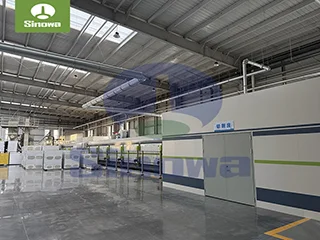
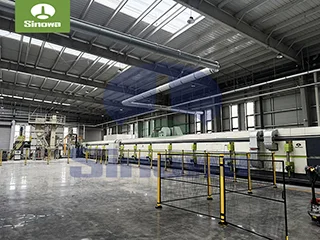
The injection of the PU foam mixture between the two preformed facer sheets is a highly precise operation controlled by the manufacturing machine’s central control system. The foam expands rapidly to fill the entire space between the facers, forming a uniform core with the desired low density. The machine’s double belt conveyor system plays a crucial role in this stage, applying consistent pressure to the panel as the foam expands and cures. This conveyor system consists of two parallel belts that hold the panel flat, ensuring that the foam core maintains a uniform thickness and that the facers remain properly aligned. The belts also transport the panel through a curing oven, where the foam undergoes a controlled curing process to achieve its final structural properties. The curing temperature and time are tailored to the low density foam formulation, ensuring that the core develops sufficient strength while retaining its lightweight characteristics. Proper curing is essential to prevent the foam from shrinking or deforming, which would compromise the panel’s performance.
After curing, the composite panel moves to the cutting station, where it is trimmed to the required length using a high-precision cutting machine. The cutting system is integrated with the machine’s control system, allowing for accurate length adjustments to meet custom order requirements. For low density composite panels, the cutting process must be precise to avoid damaging the foam core or causing fraying of the outer facers. Some advanced machines are equipped with multiple cutting tools that can simultaneously trim the panel’s length and edges, ensuring clean, uniform cuts. Once cut, the finished panels are conveyed to a stacking and packaging station, where they are neatly arranged and wrapped to protect them during storage and transportation. The stacking system is designed to handle the lightweight nature of the panels, preventing damage from excessive pressure while maximizing storage efficiency.
One of the key advantages of modern PU sandwich panel manufacturing machines is their ability to adapt to different production requirements, including the production of low density composite panels with varying specifications. These machines offer flexibility in terms of panel thickness, width, length, and facer profile, allowing manufacturers to cater to a wide range of applications. For example, panels used in cold storage require a thicker low density foam core for enhanced insulation, while panels used in interior partitioning may have a thinner core to prioritize weight reduction. The machine’s control system allows operators to adjust parameters such as foam density, production speed, and curing temperature with ease, ensuring that each batch of panels meets the specific needs of the application. Additionally, some machines are designed to switch between different core materials, such as PU foam and rock wool, by reconfiguring certain components, providing manufacturers with greater versatility and cost-effectiveness.
The performance of low density composite panels produced by these machines is closely linked to the precision and reliability of the manufacturing equipment. The machine’s ability to maintain consistent foam density is critical for ensuring uniform insulation and structural performance across all panels. Low density PU foam cores typically have a density range that balances lightweight properties with sufficient strength, and the machine’s foaming system must deliver precise mixing ratios to achieve this consistency. Any variation in foam density can lead to uneven insulation, reduced structural integrity, or increased weight, all of which compromise the panel’s suitability for its intended application. Additionally, the machine’s bonding control ensures that the facers are firmly attached to the core, preventing delamination even under extreme temperature fluctuations or mechanical stress. This level of quality control is difficult to achieve with manual production methods, making automated manufacturing machines essential for producing high-performance low density composite panels.
In the construction industry, low density PU sandwich panels produced by these machines are widely used for wall cladding, roofing, and partitioning. Their lightweight nature reduces the overall structural load of buildings, allowing for simpler and more cost-effective construction methods. The thermal insulation properties of the PU foam core help reduce energy consumption for heating and cooling, making buildings more energy-efficient. Additionally, the sound absorption capabilities of the low density core make these panels ideal for use in commercial and residential buildings where noise reduction is a priority. In cold storage facilities, the panels’ excellent insulation performance helps maintain stable internal temperatures, reducing energy costs and preserving the quality of stored goods. The machine’s ability to produce panels with consistent insulation properties ensures that cold storage facilities meet strict temperature control requirements.
The transportation industry also benefits significantly from low density PU sandwich panels manufactured by these machines. Panels used in the construction of trailers, truck bodies, and railway carriages must be lightweight to improve fuel efficiency while providing sufficient structural strength and insulation. The low density composite panels meet these requirements, reducing the overall weight of the vehicle without compromising durability. Additionally, the panels’ resistance to moisture and corrosion makes them suitable for use in harsh transportation environments, where exposure to weather conditions and road debris is common. In the marine industry, low density PU sandwich panels are used for interior partitioning, decking, and superstructures, as they offer excellent water resistance and structural stability in saltwater environments. The manufacturing machines can be adjusted to produce panels with enhanced water resistance by modifying the foam formulation and facer material, ensuring suitability for marine applications.
Industrial applications of low density PU sandwich panels produced by these machines include factory walls, ceilings, and equipment enclosures. The panels’ lightweight properties make them easy to install, even in large industrial facilities, while their insulation and sound absorption capabilities help create a more comfortable working environment. Additionally, the panels’ resistance to chemicals and mechanical impact makes them suitable for use in industrial settings where exposure to harsh substances or heavy machinery is common. Some industrial applications require panels with fire retardant properties, and the manufacturing machines can accommodate this by integrating fire retardant additives into the PU foam formulation. This flexibility allows manufacturers to produce panels that meet the specific safety requirements of different industrial sectors.
Advancements in technology have led to continuous improvements in PU sandwich panel manufacturing machines, enhancing their efficiency, precision, and sustainability. Modern machines are equipped with advanced control systems that use programmable logic controllers (PLCs) to automate the production process, reducing the need for manual intervention and improving production consistency. These control systems also provide real-time monitoring of key parameters, such as foam density, curing temperature, and production speed, allowing operators to identify and resolve issues quickly. Additionally, the integration of energy-efficient components, such as high-efficiency motors and insulation materials, reduces the machine’s energy consumption, making the production process more sustainable.
Sustainability is an increasingly important consideration in the production of low density composite panels, and modern manufacturing machines are designed to minimize environmental impact. The use of environmentally friendly foaming agents, such as pentane, eliminates the use of ozone-depleting substances, reducing the carbon footprint of the production process. Additionally, the machines are designed to minimize material waste by optimizing cutting precision and reducing foam overspill. Some machines also incorporate recycling systems that collect and reuse excess foam and facer material, further reducing waste. These sustainable features not only benefit the environment but also help manufacturers reduce costs by minimizing material losses.
The maintenance and operation of PU sandwich panel manufacturing machines are critical for ensuring long-term performance and consistent production quality. Regular maintenance includes inspecting and cleaning the decoiler, roll forming stands, foaming system, and cutting tools to prevent wear and tear. The control system should be calibrated regularly to ensure accurate parameter settings, and the curing oven should be checked for temperature uniformity. Proper operator training is also essential, as skilled operators can identify potential issues before they affect production and adjust parameters to optimize performance. Many manufacturers provide training programs to ensure that operators understand the machine’s functionality and can perform routine maintenance tasks effectively.
Looking ahead, the demand for low density composite panels is expected to grow, driven by the increasing focus on energy efficiency, sustainability, and lightweight construction in various industries. This growth will fuel the development of more advanced PU sandwich panel manufacturing machines, with improved precision, flexibility, and sustainability features. Future machines may incorporate artificial intelligence (AI) and machine learning technologies to further automate the production process, optimize parameters in real time, and predict maintenance needs. Additionally, the integration of digital twin technology could allow manufacturers to simulate production processes and optimize machine performance before actual production begins. These advancements will not only improve the efficiency and quality of low density composite panel production but also expand the range of applications for these versatile materials.
In conclusion, PU sandwich panel manufacturing machines are essential for the production of high-quality low density composite panels that meet the diverse needs of industries such as construction, transportation, and manufacturing. These machines integrate multiple components and technologies to deliver consistent, efficient, and precise production processes, ensuring that each panel balances lightweight properties with structural integrity, insulation, and durability. Advances in machine technology have enhanced their flexibility, sustainability, and performance, making them a cornerstone of modern composite panel production. As industries continue to prioritize energy efficiency and sustainability, the role of these machines will become even more critical, driving innovation and expanding the applications of low density PU sandwich panels worldwide. Whether used in cold storage facilities, commercial buildings, or transportation vehicles, low density composite panels produced by these advanced machines offer a reliable, efficient, and sustainable solution for modern construction and manufacturing needs.
https://www.cnsinowa.com/sandwich-panel-machines/pu-sandwich-panel-manufacturing-machine-for-low-density-composite-panels.html