sandwich panel machine
The fundamental functionality of a PU sandwich panel making machine lies in its ability to coordinate multiple production stages into a seamless workflow, ensuring consistency and precision in every panel produced. Unlike traditional manufacturing methods that rely on discrete steps and manual intervention, these machines automate the entire process from raw material feeding to final cutting, minimizing human error and maximizing production efficiency. The core principle revolves around shaping the facing materials, injecting and curing the PU foam core, and bonding all components into a unified structure with high density and structural integrity. This integrated approach not only enhances productivity but also ensures that each panel meets the strict requirements for high density applications, where uniformity and reliability are paramount.
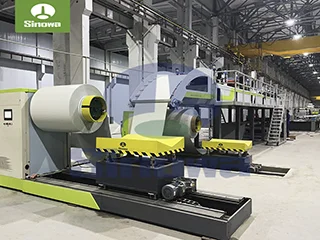
At the heart of the PU sandwich panel making machine is a series of interconnected components, each designed to perform a specific function in the production line. The uncoiler and sheet guiding mechanism initiate the process by smoothly unwinding metal coils and feeding them into the system with precise alignment. This component is critical for preventing skewing or misalignment of the facing sheets, which could compromise the structural integrity of the final panel. The uncoiler is equipped with tension control systems that maintain consistent pressure on the metal coils, ensuring a steady feed rate and minimizing wrinkles or deformities in the facing materials. The sheet guiding mechanism further refines this process by using rollers and sensors to keep the sheets on track as they move through subsequent stages of production.
Following the uncoiling and guiding stage, the metal sheets pass through roll forming stands, which progressively shape the material into the desired profile. These stands consist of a series of rollers that apply controlled pressure to the metal sheets, bending them incrementally into specific cross-sectional shapes. The design of the roll forming stands can be adjusted to accommodate different panel dimensions and profiles, allowing manufacturers to produce a wide range of high density composite panels for various applications. The precision of this stage is crucial for ensuring that the facing sheets provide adequate support for the PU foam core and contribute to the overall structural rigidity of the composite panel. Properly formed facing sheets also create a uniform cavity for the foam injection, ensuring consistent core density across the entire panel.
Once the facing sheets are formed and positioned, the PU foam injection system takes over to create the core of the composite panel. This system consists of a foam mixing unit and injection nozzles that deliver a precise mixture of polyurethane chemicals into the cavity between the two facing sheets. The chemicals react rapidly to expand and form a dense foam core, which adheres tightly to the inner surfaces of the facing materials. The key to producing high density composite panels lies in controlling the foam expansion process, as this directly impacts the core density and mechanical properties of the final product. The injection system is equipped with flow meters and pressure sensors that regulate the volume and distribution of the foam mixture, ensuring that the core fills the cavity completely without voids or uneven density.
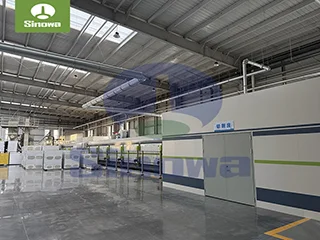
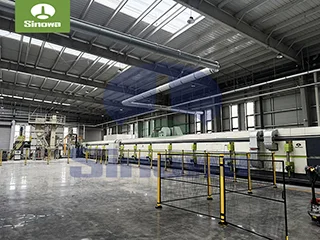
The curing oven is another essential component of the PU sandwich panel making machine, providing the controlled heating environment necessary for the PU foam to fully cure and bond with the facing sheets. The oven maintains a consistent temperature range that accelerates the chemical reaction of the foam, allowing it to harden into a rigid, high density core. The curing process must be carefully monitored to ensure that the foam reaches its optimal density and bonding strength; insufficient curing can result in a weak core, while over-curing may cause brittleness or structural damage. The oven is designed with conveyor systems that move the panels through the heating zone at a steady speed, ensuring uniform curing across the entire length and width of each panel. Some advanced systems also incorporate temperature sensors and feedback loops to adjust heating parameters in real-time, optimizing the curing process for different panel thicknesses and foam formulations.
After the foam core has fully cured, the composite panels move to the cutting system, which trims them to the desired length with high precision. The cutting machine uses sharp blades or saws that are synchronized with the conveyor speed to ensure clean, straight cuts without damaging the panel structure. This stage is critical for meeting the exact dimensional requirements of different applications, as high density composite panels are often used in construction and industrial settings where precise fitting is essential. The cutting system is also equipped with safety features to prevent accidents and minimize material waste, ensuring efficient production without compromising worker safety.
Supporting rollers and a centralized control system complete the core components of the PU sandwich panel making machine. The supporting rollers guide the movement of the panels through each stage of production, reducing friction and preventing damage to the facing sheets or foam core. These rollers are positioned strategically along the production line to maintain panel flatness and alignment, ensuring consistent quality from start to finish. The control system serves as the "brain" of the machine, automating production parameters such as feed rate, roll forming pressure, foam injection volume, curing temperature, and cutting length. Operators can monitor and adjust these parameters through a user-friendly interface, allowing for quick changes to production settings when switching between different panel specifications. The control system also includes diagnostic features that detect issues such as material jams, temperature fluctuations, or pressure deviations, triggering alerts to minimize downtime and production losses.
The production speed of PU sandwich panel making machines varies depending on the model and customization requirements, typically ranging from 20 to 40 meters per minute. This high throughput makes them ideal for mass production of high density composite panels, meeting the demands of large-scale construction projects and industrial applications. The ability to produce panels continuously also reduces production costs compared to batch processing methods, as it minimizes setup time and material waste. Additionally, the automated nature of these machines reduces the need for manual labor, lowering labor costs and improving workplace safety by reducing worker exposure to potentially hazardous materials and processes.
High density composite panels produced by these machines offer a unique combination of properties that make them superior to traditional building materials. The PU foam core provides excellent thermal insulation, reducing heat transfer and improving energy efficiency in buildings and industrial facilities. This insulation property is particularly valuable in applications such as cold storage warehouses, where maintaining consistent temperatures is critical. The metal facing sheets contribute to the panel's structural strength and rigidity, allowing it to withstand heavy loads and resist impact damage. The composite structure also offers good sound insulation, reducing noise transmission in commercial and residential buildings.
One of the key advantages of high density composite panels is their lightweight nature despite their high strength, making them easier to transport and install compared to traditional materials such as concrete or solid wood. This lightweight property reduces transportation costs and simplifies on-site handling, accelerating construction timelines. Additionally, the panels are resistant to moisture, corrosion, and mold growth, ensuring long-term durability in harsh environments. This resistance makes them suitable for outdoor applications such as exterior wall cladding, roofing, and fencing, as well as indoor applications like partition walls, ceilings, and flooring.
In the construction industry, high density composite panels are widely used for building envelopes, including walls, roofs, and floors. Their thermal insulation properties help reduce energy consumption for heating and cooling, contributing to more sustainable building designs. The panels are also used in modular construction, where prefabricated components are assembled on-site to speed up project completion. In industrial settings, these panels are utilized for creating storage facilities, clean rooms, and machine enclosures, as they provide a durable, easy-to-maintain surface that can withstand heavy use. The panels' resistance to chemicals and moisture also makes them suitable for use in laboratories, food processing plants, and wastewater treatment facilities.
Transportation is another major application area for high density composite panels produced by PU sandwich panel making machines. The panels are used in the manufacturing of recreational vehicles (RVs), trailers, and shipping containers, where lightweight construction and durability are essential. The thermal insulation properties help maintain comfortable temperatures inside RVs and trailers, while the structural strength ensures the panels can withstand the rigors of transportation. In the automotive industry, composite panels are used for interior components and body parts, reducing vehicle weight and improving fuel efficiency. The marine industry also utilizes these panels for ship interiors, bulkheads, and decking, as they resist moisture and corrosion in harsh marine environments.
The versatility of high density composite panels extends to interior design and furniture manufacturing. The panels can be finished with decorative laminates, paints, or veneers to match various design aesthetics, making them suitable for use in residential and commercial interiors. They are used to create custom furniture pieces, wall panels, and ceiling tiles, offering a cost-effective alternative to solid wood while maintaining a high-end appearance. The panels' smooth surface also makes them easy to clean and maintain, making them ideal for high-traffic areas such as hotels, restaurants, and office buildings.
The production of high density composite panels using PU sandwich panel making machines also offers environmental benefits. The PU foam core can be formulated using renewable materials, reducing reliance on fossil fuels. Additionally, the efficient production process minimizes material waste, as the automated cutting system ensures precise panel dimensions and reduces scrap. The durability of the panels also extends their service life, reducing the need for frequent replacements and lowering the environmental impact associated with material production and disposal. Some manufacturers also offer recycling programs for end-of-life panels, further enhancing the sustainability of these materials.
To ensure the quality of high density composite panels, the production process must be subject to strict quality control measures. This includes testing raw materials for purity and consistency, as impurities in the metal sheets or PU chemicals can compromise the panel's performance. In-line monitoring systems check for defects such as voids in the foam core, uneven bonding, or surface damage, allowing for immediate adjustments to the production process. Finished panels are also tested for mechanical properties such as compressive strength, flexural modulus, and thermal conductivity to ensure they meet application requirements. These quality control measures ensure that the panels are reliable and consistent, providing peace of mind to manufacturers and end-users alike.
Advancements in technology have led to continuous improvements in PU sandwich panel making machines, enhancing their performance, efficiency, and versatility. Modern machines incorporate advanced control systems with artificial intelligence and machine learning capabilities, allowing for predictive maintenance and optimized production parameters. These systems can analyze production data in real-time to identify potential issues before they occur, reducing downtime and improving overall productivity. Additionally, new foam formulations have been developed to enhance the environmental performance and mechanical properties of the composite panels, making them suitable for an even wider range of applications.
Another area of innovation is the integration of 3D forming capabilities into PU sandwich panel making machines, allowing for the production of curved or custom-shaped panels. This expands the application possibilities of high density composite panels, enabling their use in architectural designs with complex geometries and transportation components with curved surfaces. The ability to produce custom shapes without compromising structural integrity or performance makes these panels even more versatile, opening up new markets and design opportunities.
In conclusion, PU sandwich panel making machines play a vital role in the production of high density composite panels, offering an efficient, automated solution for manufacturing materials that balance strength, durability, and performance. The integrated production process ensures consistent quality and high throughput, making these machines essential for meeting the demands of modern construction, industrial, and transportation industries. The high density composite panels produced by these machines offer a wide range of benefits, including thermal insulation, sound reduction, moisture resistance, and lightweight construction, making them a superior alternative to traditional materials. As technology continues to advance, PU sandwich panel making machines will likely become even more efficient and versatile, further expanding the applications and environmental benefits of high density composite panels.
https://www.cnsinowa.com/sandwich-panel-machines/pu-sandwich-panel-making-machine-for-high-density-composite-panels.html