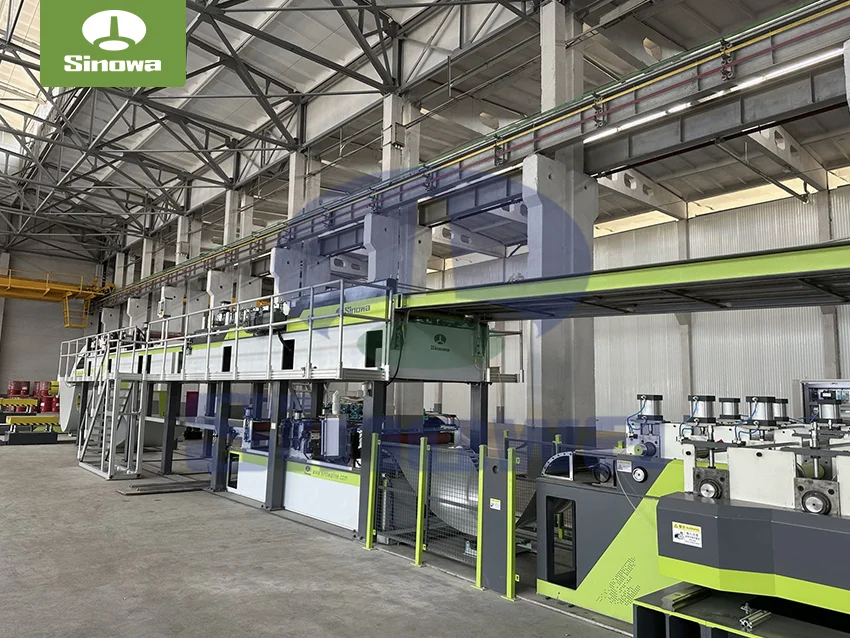
 sandwich panel line
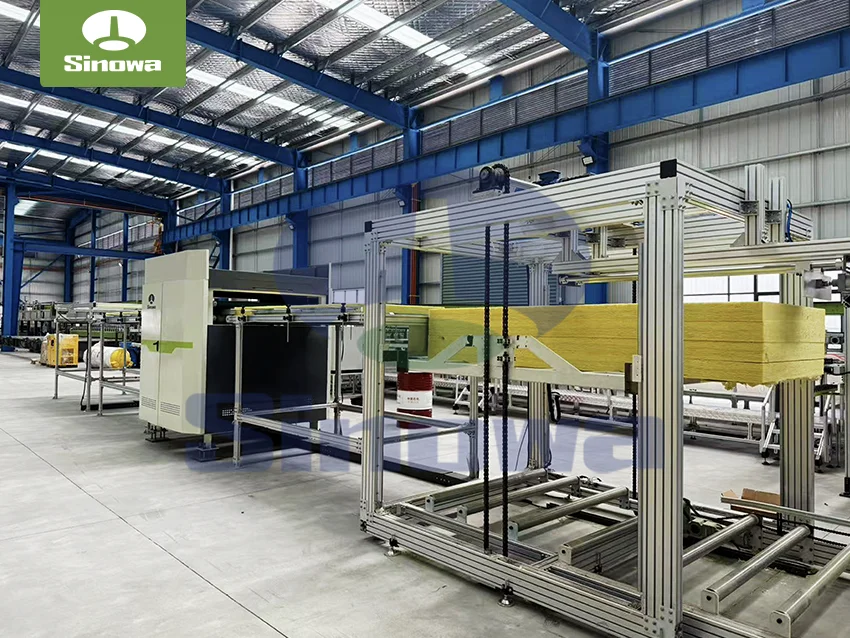
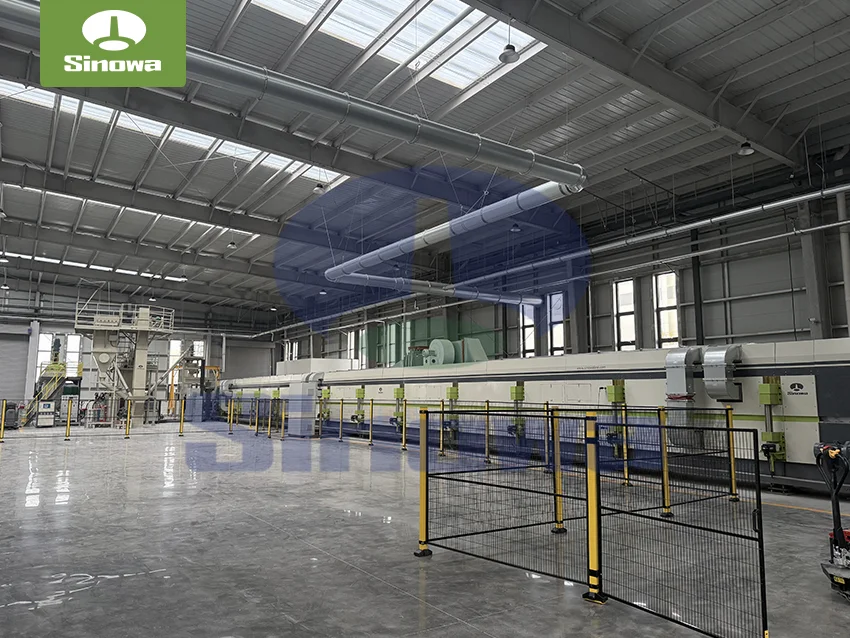
The overall structural composition of a roof foam insulation board production line follows a sequential production logic, covering raw material pretreatment, metering and feeding, mixing and foaming, extrusion and molding, curing and shaping, cutting and trimming, as well as auxiliary conveying and dust removal systems. Every functional module is closely connected to form an uninterrupted production flow, which minimizes manual intervention and maintains stable production efficiency. The basic configuration of the production line adapts to the physical characteristics of foam raw materials, focusing on precise control of material mixing ratio, foaming temperature, and molding pressure to ensure the internal closed-cell structure of finished boards is uniform and dense. Such structural characteristics endow the insulation boards with stable thermal conductivity and mechanical strength, enabling them to adapt to various complex roof laying environments.
Raw material preparation serves as the initial and fundamental link in the entire production process. The main raw materials for manufacturing roof foam insulation boards include polymer base materials, foaming agents, and inorganic auxiliary additives. Base materials provide the basic framework for finished products, while foaming agents generate stable gas bubbles through physical or chemical reactions to form a porous internal structure. Auxiliary additives are used to adjust the viscosity, toughness, and weather resistance of raw materials, optimizing the overall performance of insulation boards. Before formal production, all raw materials need to undergo strict pretreatment procedures. Solid raw materials are crushed and screened to remove agglomerated particles and impurities, ensuring consistent particle fineness; liquid raw materials are stored in sealed temperature-controlled tanks to maintain stable fluidity and chemical activity. Raw material conveying adopts fully enclosed pipeline and spiral feeding structures, which not only avoids external dust pollution but also reduces raw material waste during transportation.
The metering and feeding system is the key to ensuring consistent product quality across production batches. This system adopts automated sensing and quantitative control technology to accurately distribute various raw materials according to preset production proportions. Different raw materials are transported to independent metering equipment, where weight and flow parameters are monitored in real time. The system automatically adjusts the feeding speed to avoid proportion deviation caused by raw material density changes. In actual operation, the feeding sequence is strictly regulated: dry powder raw materials are fed first for preliminary dry mixing, followed by liquid additives and foaming agents. Reasonable feeding sequencing prevents premature chemical reactions between raw materials, avoiding uneven foaming or local material agglomeration. The highly precise metering control mode eliminates quality fluctuations caused by manual batching, laying a foundation for the stability of subsequent production processes.
Mixing and foaming are the core technological stages that determine the internal structure of foam insulation boards. The mixing equipment is equipped with high-speed stirring components and temperature regulation devices, which can fully blend different types of raw materials into homogeneous slurry. During the stirring process, the internal temperature of the mixing cabin is kept within a fixed range to activate the activity of foaming agents. For physically foamed production processes, external air is evenly injected into the slurry through airflow control structures, and tiny closed bubbles are formed under mechanical stirring force; for chemically foamed processes, foaming agents undergo mild chemical reactions in the constant-temperature environment to release inert gas, gradually forming dense and uniform bubble structures inside the slurry. The stirring speed and stirring duration are intelligently adjusted according to raw material characteristics, ensuring no bubble merging or rupture during the foaming reaction. After mixing is completed, the slurry presents a stable creamy state with moderate viscosity and uniform internal bubble distribution, meeting the requirements for subsequent molding processing.
Extrusion and molding procedures shape the mixed foam slurry into preliminary board structures. The well-stirred slurry is continuously transported to the extrusion molding equipment through a pressure pipeline. Under the combined action of mechanical thrust and constant temperature, the slurry flows evenly along the mold cavity, filling every corner of the mold to achieve flat and complete preliminary molding. The internal pressure of the molding equipment is stably controlled to prevent excessive pressure from squeezing out internal bubbles or insufficient pressure leading to loose board structures. The mold adopts a smooth and corrosion-resistant metal structure, which ensures the flatness of the board surface while avoiding adhesion between the slurry and the mold. During the molding process, the linear conveying speed matches the extrusion speed to maintain consistent board thickness. After preliminary molding, the semi-finished boards have complete external shapes and initially stabilized internal pore structures, transitioning from fluid slurry to solid preliminary products.
Curing and shaping processes further optimize the structural stability and mechanical properties of semi-finished insulation boards. Newly molded semi-finished products have low surface hardness and fragile internal bubble structures, requiring a specific constant-temperature and constant-humidity curing environment for natural aging and hardening. The curing area of the production line is equipped with intelligent temperature and humidity adjustment equipment to maintain a mild and stable curing atmosphere. In the early curing stage, internal moisture slowly evaporates, and the molecular structure of base materials gradually solidifies; in the later curing stage, the internal stress of the boards is completely released, eliminating subtle deformation and cracks generated during molding. The curing time is adjusted according to board thickness and raw material formulas. Thicker boards require longer curing cycles to ensure consistent hardening from the surface to the inner layer. After curing, the insulation boards possess stable compression resistance, bending resistance, and structural toughness, adapting to external pressure changes in roof laying scenarios.
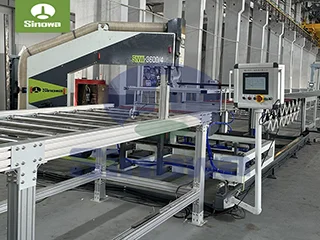
Cutting and trimming procedures standardize the size and appearance of finished products. Cured semi-finished boards are transported to the cutting area through automated conveying rollers. The cutting system adopts precision mechanical cutting tools, which can accurately cut continuous long boards into customized sizes according to production requirements. Before cutting, an intelligent sensing device detects the thickness and flatness of the board surface to automatically correct the cutting angle and position, avoiding dimensional errors caused by minor conveying deviations. Edge trimming equipment removes rough burrs and irregular edges on the board periphery to make the edges smooth and neat. During the cutting process, an independent dust removal device collects fine foam debris generated by cutting, which not only keeps the production environment clean but also realizes the recovery and reuse of fine raw material particles. After cutting and trimming, all finished boards have unified dimensional specifications and smooth surface textures, meeting the construction laying standards of different building roofs.
The intelligent control system runs through the entire operation process of the roof foam insulation board production line, serving as the central control hub for coordinated operation of all functional modules. The system integrates temperature sensors, pressure detectors, flow meters, and other monitoring components to collect real-time operating data of each production link. Operators can view the operating status of the production line through a centralized control interface and adjust production parameters such as feeding proportion, stirring speed, and curing temperature in real time. When abnormal data such as excessive temperature or pipeline blockage occurs during production, the system automatically triggers an early warning mechanism and performs emergency shutdown operations to avoid equipment failure and product quality defects. The intelligent linkage mode between different equipment modules realizes synchronous start-stop and speed matching, effectively improving the overall operation efficiency of the production line and reducing manual operation errors.
Daily maintenance and scientific optimization of the production line are crucial to extending equipment service life and maintaining stable production capacity. Regular maintenance work includes cleaning residual raw materials inside mixing and molding equipment, lubricating rotating transmission components, and checking the tightness of connecting pipelines. Foam raw materials are prone to residual adhesion on equipment inner walls; regular cleaning prevents residual materials from deteriorating and contaminating subsequent production batches. Transmission bearings and conveyor rollers need regular lubrication to reduce mechanical friction loss and avoid abnormal noise and vibration during operation. In addition, staff regularly calibrate metering devices and cutting components to ensure feeding accuracy and cutting dimensional consistency. In terms of production optimization, production parameters are dynamically adjusted according to seasonal temperature changes: heating equipment is appropriately activated in low-temperature environments to maintain foaming efficiency, and ventilation devices are enhanced in high-temperature seasons to avoid excessive bubble expansion.
The production characteristics of roof foam insulation board production lines endow the manufactured products with unique application advantages in the construction industry. The closed-cell porous structure formed by precise foaming technology gives the boards low thermal conductivity, which can effectively block heat transfer between the roof and the external environment, reducing building air conditioning and heating energy consumption. The compact internal structure enables the products to have excellent waterproof and moisture-proof performance, preventing rainwater from penetrating into the building interior along roof gaps. Meanwhile, the lightweight material characteristics reduce the overall load of building roofs, adapting to various low-rise and high-rise building structures. In addition, the raw material combination of the production line can be adjusted flexibly to optimize the fire resistance, weather resistance, and sound insulation performance of finished boards, meeting the differentiated construction needs of different regional climates and building types.
In the context of the booming green building industry, roof foam insulation board production lines are constantly evolving towards energy conservation, environmental protection, and high intelligence. The optimized structural design of modern production lines reduces heat loss and electric energy consumption during equipment operation, and the closed production mode effectively avoids raw material leakage and dust emission. Some improved production processes can mix recycled foam particles into raw materials, realizing the recycling of waste foam materials and reducing resource waste. With the continuous progress of material science and mechanical manufacturing technology, the automation level of the production line will be further improved, and the production cycle of single-batch products will be continuously shortened. The continuous upgrading of production lines will also drive the performance optimization of roof foam insulation boards, providing more reliable and energy-saving material solutions for modern building roof insulation projects.
In conclusion, the roof foam insulation board production line is a systematic and integrated manufacturing system combining material chemistry, mechanical transmission, and intelligent control technology. Each production link from raw material pretreatment to finished product trimming is interlocked and mutually restricted, jointly determining the comprehensive quality of insulation boards. Reasonable equipment configuration, precise parameter control, and standardized maintenance management are the key to maintaining the efficient and stable operation of the production line. With the increasing emphasis on building energy conservation worldwide, this type of production line will occupy an increasingly important position in the building material manufacturing industry. By continuously optimizing production processes and improving intelligent manufacturing levels, the production line will provide high-quality foam insulation boards for the construction market, promoting the sustainable development of the green building industry and creating a more energy-saving and comfortable living space for human beings.
https://www.cnsinowa.com/sandwich-panel-machines/roof-foam-insulation-board-production-line.html