sandwich panel line
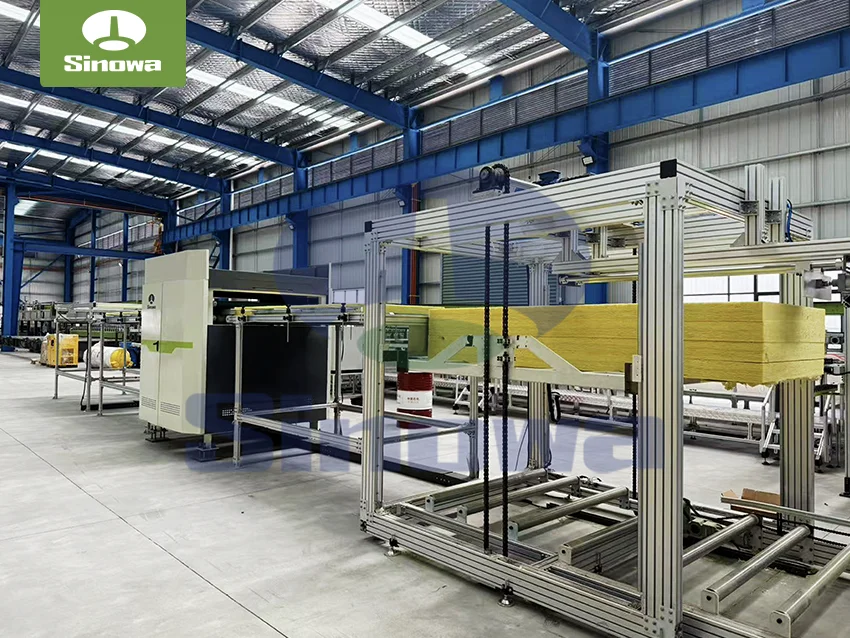
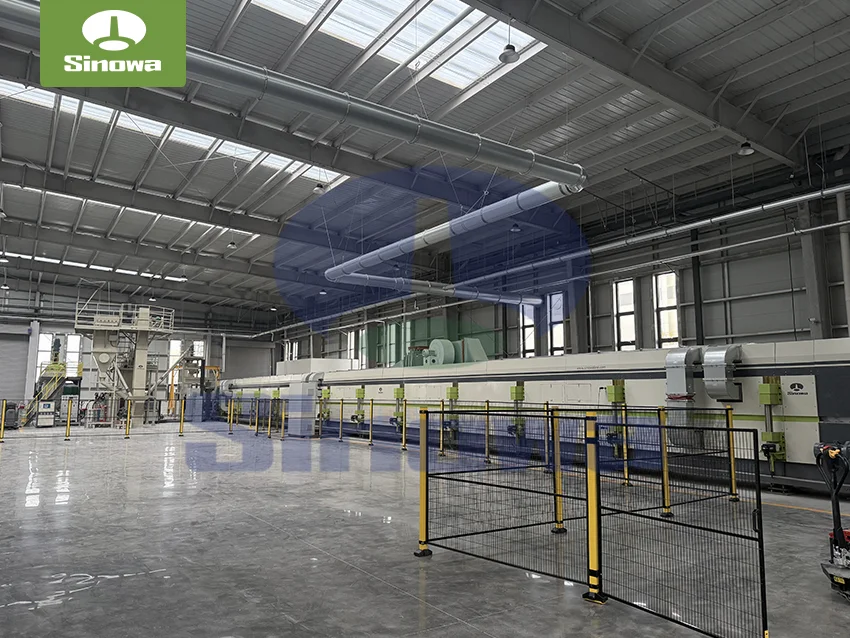
A complete sandwich panel production line is a highly integrated mechanical system composed of multiple functional modules, and each module has an independent operational logic while maintaining a highly coordinated collaborative relationship in the overall production process. The basic structural composition of the production line covers raw material conveying equipment, surface pretreatment devices, core material processing components, gluing and composite molding mechanisms, heating and curing systems, fixed-length cutting equipment, finished product conveying and stacking devices, as well as an intelligent control system that runs through the entire production process. Every structural part is designed based on the physical characteristics of sandwich panel raw materials and the mechanical requirements of molding processing, ensuring that each production link can operate stably under continuous working conditions. The overall layout of the production line follows the principles of streamlined production and space optimization, with equipment arranged in a linear sequential structure to reduce the transmission distance of materials between processes, effectively lowering the energy consumption and time cost of material handling. The main body of the production line is made of high-strength metal materials, which can resist mechanical vibration and external environmental interference during long-term continuous operation, extending the overall service life of the equipment and reducing the frequency of daily maintenance.
Raw material preparation and feeding constitute the initial stage of the entire production workflow, and the scientificity of this link directly determines the stability of subsequent processing and the quality uniformity of finished products. The raw materials required for sandwich panel production mainly include metal surface plates, inorganic or organic thermal insulation core materials, and high-performance adhesive materials. The metal surface plates are usually in the form of coiled materials, which are stored on the automatic unwinding device at the front end of the production line. The unwinding device is equipped with a tension adjustment mechanism, which can precisely control the release speed and tension of the coiled plates to avoid deformation, wrinkling, or uneven stretching of the metal plates during the feeding process. Before formal molding, the metal plates will pass through the surface pretreatment module, where dust, oil stains, and oxide layers attached to the surface are completely removed through mechanical brushing and high-pressure air cleaning. This pretreatment process can significantly enhance the bonding tightness between the metal plate and the adhesive, preventing the problem of delamination between the plate and the core material in subsequent use. The core materials commonly used in production include rock wool, polyurethane foam, polystyrene, and other lightweight thermal insulation materials. These core materials are transported to the production line through automatic conveying equipment after being cut into fixed specifications in advance, and the feeding speed is synchronized with the running speed of the surface plates to ensure the one-to-one correspondence of materials in the composite process.
The gluing and composite molding stage is the core processing link of the sandwich panel line, which determines the structural firmness and comprehensive performance of the finished panels. After completing surface pretreatment, the metal plates enter the automatic gluing module, where the intelligent gluing system evenly coats the high-performance adhesive on the inner surface of the plates. The gluing mechanism adopts a precision spray coating structure, which can adjust the gluing amount and coating range according to the thickness and usage requirements of different panels. Compared with the traditional manual gluing process, the automatic gluing method realizes quantitative and uniform gluing, effectively avoiding quality defects such as excessive glue overflow and local glue shortage, and improving the bonding uniformity between materials. After the gluing operation is completed, the upper and lower metal plates and the intermediate core material are accurately aligned and sent to the composite pressing device. The pressing device is equipped with multi-group pressure rollers arranged at equal intervals, and the pressure value can be adjusted in real time according to the material hardness and panel thickness. Under continuous mechanical pressure, the three layers of materials are closely bonded to form an integrated preliminary composite structure. The internal gap of the composite blank is completely eliminated through extrusion treatment, which enhances the overall compactness of the panel and avoids hollowing defects inside the finished product.
Heating and curing treatment is an indispensable process to stabilize the bonding performance of composite panels, and the integrated production line is equipped with a closed constant-temperature heating system to complete this processing step. The composite semi-finished panels are sent to the internal space of the heating furnace through conveying rollers, and the heating furnace adopts a multi-stage temperature control mode to set different temperature gradients for different curing stages. In the initial heating stage, the temperature is appropriately increased to accelerate the penetration of the adhesive into the micropores of the core material and the metal surface; in the constant-temperature curing stage, the temperature is kept within a stable range to promote the chemical cross-linking reaction of the adhesive; in the final slow cooling stage, the internal temperature is gradually reduced to eliminate the internal stress generated by thermal expansion and contraction of the materials. The closed furnace body structure can effectively reduce heat loss, improve thermal energy utilization efficiency, and maintain the stability of the internal heating environment. After heating and curing, the molecular structure of the adhesive is completely stabilized, forming a high-strength bonding layer between the metal plate and the core material, which significantly improves the peeling resistance and compression resistance of the sandwich panel. Meanwhile, the high-temperature treatment process can also remove residual moisture inside the core material, optimizing the thermal insulation and moisture resistance of the finished panel.
The fixed-length cutting and edge trimming process realizes the standardized sizing of sandwich panels, meeting the diverse dimensional requirements of different application scenarios. After curing and molding, the continuous long-strip composite panels are transported to the intelligent cutting module, and the system automatically records the conveying length of the panels through high-precision sensing components. When the panels reach the preset cutting size, the cutting device automatically starts to complete the fixed-length shearing operation. The cutting tool is made of wear-resistant alloy materials, with sharp cutting edges and stable cutting performance, which can ensure smooth and burr-free cutting sections of the panels without damaging the surface metal coating. In addition to fixed-length cutting, the production line is also equipped with an edge trimming mechanism to perform finishing treatment on the four sides of the panels. The edge trimming process can remove excess residual materials and adhesive overflow at the edges, making the edge structure of the panels neat and flat. For panels that need special edge sealing treatment, the integrated production line can complete automatic edge folding and sealing operations through additional mechanical structures, further enhancing the structural tightness of the panel edges and preventing moisture and dust from penetrating into the interior of the core material during long-term use.
The post-processing and finished product stacking module is the final link of the integrated production line, undertaking the functions of panel inspection, surface finishing, and automatic stacking. After cutting and trimming, the finished panels will pass through the quality detection area of the production line. The detection system uses visual scanning and pressure sensing technology to conduct non-destructive testing on the panels, focusing on detecting internal delamination, surface scratches, uneven thickness, and other potential quality problems. Panels that meet the production standards are transported to the stacking area through the conveying mechanism, while unqualified products are automatically screened out and sent to the recovery area for reprocessing. The automatic stacking device adopts a mechanical arm structure with flexible movement and stable bearing capacity, which can neatly stack the finished panels according to the preset stacking height and arrangement mode. During the stacking process, the buffer protection structure at the bottom of the mechanical arm can avoid extrusion damage to the surface coating of the panels. After stacking is completed, the production line can be connected with the packaging device to complete automatic winding and sealing of the panel bundles, which is convenient for subsequent transportation, storage, and sales.
The intelligent control system is the brain core of the entire sandwich panel integrated production line, realizing centralized management and automatic regulation of all production links. The control system adopts a modular programming design, with an intuitive human-computer interaction interface. Production personnel can complete parameter setting of production speed, processing temperature, pressing pressure, cutting size, and other indicators through simple operation instructions. The system is equipped with a real-time data monitoring function, which can collect operating data of each equipment module in real time, including motor operating power, equipment operating temperature, material feeding volume, and finished product output. The collected data is displayed on the interactive interface in the form of digital charts, facilitating staff to grasp the overall production status. In order to ensure the safety and stability of production, the control system has built-in multiple fault diagnosis and protection mechanisms. When abnormal conditions such as equipment jamming, material shortage, and temperature overload occur during operation, the system will automatically trigger an alarm signal and perform emergency shutdown operations to avoid equipment damage and production safety accidents. In addition, the system supports parameter storage and one-click calling, which can quickly switch production parameters according to different panel specifications, realizing flexible production of diversified products.
Compared with the traditional discrete panel manufacturing equipment, the sandwich panel integrated production line has obvious comprehensive advantages in production efficiency, product quality, resource utilization, and labor cost control. In terms of production efficiency, the integrated design eliminates the material transfer links between independent equipment, realizing uninterrupted continuous production from raw material feeding to finished product output. The linear production process greatly shortens the production cycle of a single panel, and the continuous operating mode can maintain a high production capacity for a long time. In terms of product quality, the fully automated processing mode reduces human intervention in the production process, avoiding quality fluctuations caused by manual operation errors. The unified parameter standard and precise mechanical processing ensure that the thickness, density, bonding strength, and appearance of each batch of finished panels maintain high consistency. In terms of resource utilization, the integrated production line is equipped with a precise metering system for adhesives and raw materials, which can accurately control the consumption of various production raw materials and reduce material waste. The closed production structure also reduces the volatilization of adhesives and dust diffusion, optimizing the on-site production environment. In terms of labor cost control, the highly automated operation mode reduces the number of on-site operators. A single production line only needs a small number of employees to complete parameter monitoring and equipment maintenance work, effectively lowering the long-term labor input cost of the enterprise.
The sandwich panels produced by the integrated production line have excellent comprehensive physical and chemical properties, adapting to complex and diverse application environments. In terms of thermal insulation performance, the porous internal structure of the core material can effectively block the transmission of heat flow, significantly reducing the heat transfer coefficient of the panels. This performance makes the panels widely used in the construction of cold storage, constant-temperature workshops, and thermal insulation buildings, which can effectively reduce the energy consumption of building temperature regulation. In terms of mechanical performance, the composite structure of double-layer metal plates and intermediate core material gives the panels high compressive strength and bending resistance. The panels are not easy to deform under external pressure and can withstand the impact of external wind pressure and heavy loads in building applications. In terms of weather resistance, the surface metal coating has good anti-corrosion, anti-oxidation, and ultraviolet resistance, which can resist the erosion of rainwater, snow, and high-temperature sunlight in the outdoor environment. The service life of the panels can be effectively prolonged even in harsh climatic conditions. In addition, the panels also have excellent sound insulation and fire resistance. The internal porous core material can absorb sound waves and reduce noise transmission, while the inorganic core material can prevent the spread of flames, meeting the safety requirements of industrial and civil buildings for fire protection.
The application scope of products produced by the sandwich panel integrated production line covers multiple industrial and civil fields, showing strong market adaptability. In the field of industrial buildings, the panels are commonly used for the construction of factory workshops, logistics warehouses, and industrial enclosures. The lightweight characteristics of the panels can reduce the bearing load of the building foundation, while the rapid installation performance shortens the construction cycle of industrial buildings. In the field of cold chain storage, thermal insulation sandwich panels are used to build the internal enclosure structure of cold storage, maintaining a stable low-temperature storage environment and reducing the energy consumption of refrigeration equipment. In the field of temporary buildings, the panels can be assembled into movable houses, construction temporary dormitories, and emergency rescue shelters. The convenient assembly and disassembly features make these temporary buildings highly flexible and reusable. In addition, the panels are also applied in special scenarios such as clean workshops, medical isolation spaces, and agricultural greenhouses. Different types of customized panels can be produced by adjusting the production parameters of the integrated production line to meet the environmental requirements of dust prevention, sterilization, and constant temperature in special industries.
Daily maintenance and scientific operation management are crucial to maintaining the long-term stable operation of the sandwich panel integrated production line. In terms of daily maintenance, the transmission parts such as conveying rollers and pressure rollers need to be regularly cleaned of surface dust and residual adhesive to prevent material adhesion from affecting the processing accuracy. The rotating bearings and transmission gears of the equipment should be regularly filled with lubricating oil to reduce mechanical friction loss and avoid abnormal noise and vibration during equipment operation. The sealing performance of the heating furnace body should be inspected regularly, and the aging and damaged sealing strips should be replaced in a timely manner to prevent heat loss. For the intelligent control system, it is necessary to regularly clean the dust on the surface of the sensing components and circuit boards to ensure the accuracy of data collection and signal transmission. In terms of operation management, production personnel need to receive professional equipment operation training, be familiar with the parameter adjustment logic and emergency disposal methods of each module. Before the equipment is started, a pre-operation inspection should be carried out to check the tightness of the equipment connection parts and the remaining amount of raw materials; after the production is completed, the equipment should be shut down in accordance with the standardized process, and the residual materials inside the production line should be cleaned to prepare for the next production task.
With the continuous development of industrial intelligence and green manufacturing concepts, the sandwich panel integrated production line is evolving towards higher intelligence, energy saving, and environmental protection. In terms of technological upgrading, the production line will introduce more advanced sensing technology and artificial intelligence algorithms to realize automatic identification of raw material quality and intelligent optimization of production parameters. The self-learning function of the system can continuously optimize the production process according to the production data of different batches of products, further improving product qualification rate and production efficiency. In terms of energy saving optimization, the heating system will adopt more efficient heating materials and heat recovery structures to recycle the waste heat generated during production, reducing energy consumption per unit product. The power drive system will be upgraded to a frequency conversion energy-saving structure, which can automatically adjust the operating power according to the production load, avoiding energy waste caused by no-load operation. In terms of environmental protection improvement, the production line will be equipped with a closed waste gas collection and purification device to treat the volatile gas generated by the adhesive during the heating process, reducing air pollution. At the same time, the production line will strengthen the recycling of leftover materials generated by cutting, realizing the secondary utilization of waste raw materials and improving the resource recycling rate.
In the context of the booming global construction industry and the continuous expansion of the new material market, the market demand for sandwich panels will continue to grow steadily, which also brings broader development space for the integrated production line manufacturing industry. The continuous innovation of production line technology will further break through the technical bottlenecks in the production of high-performance composite panels, and realize the customized production of multi-material composite and multi-functional integrated panels. In the future, the integrated production line will develop in the direction of modular combination and intelligent interconnection. Multiple production lines can realize collaborative operation through network connection, forming a large-scale intelligent production workshop. The modular equipment structure can also realize rapid disassembly and function expansion of the production line, meeting the personalized production needs of different manufacturers. Driven by technological progress and market demand, the sandwich panel integrated production line will continue to optimize the production process, reduce production costs, and provide more high-quality and efficient composite material production solutions for the construction, cold chain, environmental protection, and other industries, making important contributions to the high-quality development of the modern building material manufacturing industry.
https://www.cnsinowa.com/sandwich-panel-machines/sandwich-panel-integrated-production-line.html