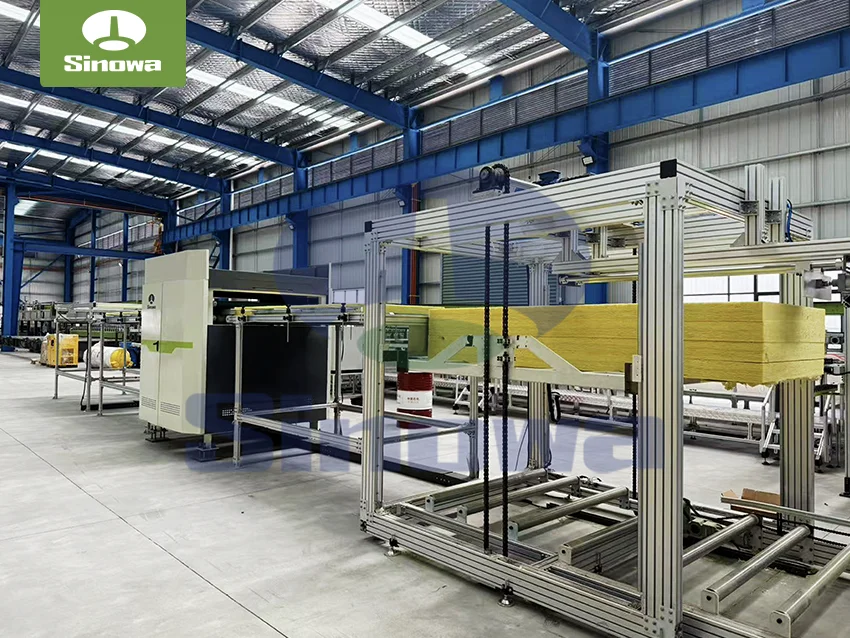
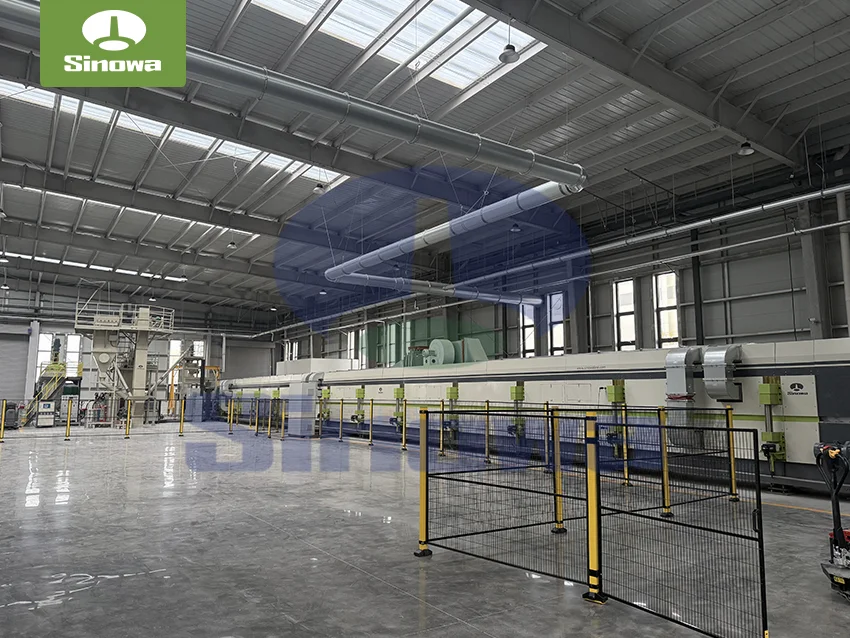
sandwich panel line
The operational logic of the PU insulation board production line is rooted in the chemical polymerization reaction of polyurethane raw materials. The core raw materials required for production mainly include polyol blends and isocyanate, supplemented by auxiliary components such as catalysts, foam stabilizers and foaming agents. These raw materials have strict storage and pretreatment requirements before entering the formal production process. Polyol mixtures need to maintain a constant temperature storage environment to avoid component stratification and performance attenuation, while isocyanate is sensitive to moisture in the air, and long-term exposure to humid air will cause invalid chemical reactions and affect subsequent foaming effects. In the raw material pretreatment area of the production line, special sealed storage tanks are configured for different raw materials. These tanks are equipped with stirring and temperature adjustment structures to keep the raw material components evenly mixed and the temperature within the optimal reaction range. The internal circulation pipeline of the tank body adopts anti-corrosion and anti-leakage design, which not only ensures the purity of raw materials but also avoids raw material waste and environmental pollution caused by leakage. In addition, the production line is equipped with independent raw material filtering devices to remove tiny impurities mixed in the raw materials during transportation and storage, preventing impurities from affecting the compactness and surface flatness of the finished boards.
Raw material metering and conveying is a key preliminary process that determines the reaction quality of polyurethane materials. The production line is equipped with high-precision metering pump groups, which can independently control the conveying flow of different raw materials. All metering parameters are dynamically adjusted through an integrated control system to ensure that the proportion of polyol, isocyanate and auxiliary materials meets the optimal reaction standard. The matching accuracy of raw material proportion directly affects the foaming density, pore structure and mechanical strength of polyurethane foam. Slight proportion deviation will lead to uneven internal pores of the board, increased thermal conductivity, or insufficient structural hardness. The conveying pipeline adopts a closed pressurized transmission mode, which can maintain stable raw material transmission speed and avoid flow fluctuation caused by external pressure changes. During the conveying process, the raw material pipeline is wrapped with a constant temperature insulation layer to keep the raw material temperature consistent throughout the transmission link, eliminating the performance difference of mixed materials caused by temperature fluctuation. The metering system has a real-time data feedback function. When the flow deviation exceeds the preset range, the system will automatically fine-tune the operating parameters of the metering pump to maintain the stability of raw material proportioning.
Raw material mixing and foaming is the core reaction stage of the entire production line, and also the key link to determine the internal microstructure of PU insulation boards. The accurately proportioned raw materials are transported to the high-speed mixing head through the closed pipeline, and intense mechanical stirring is completed in a tiny closed space. The high-speed rotation of the mixing blades makes different raw materials fuse instantaneously, and the molecular cross-linking reaction occurs rapidly between the components. With the progress of the chemical reaction, a large amount of reaction heat is generated inside the mixture, which activates the foaming agent to vaporize and form dense tiny air bubbles. The foam stabilizer in the raw materials can regulate the bubble size and distribution, prevent bubble merging and rupture, and form a uniform and closed-cell structure inside the material. The mixing head of the production line adopts an integrated wear-resistant structure, which can withstand the long-term impact and friction of high-flow raw materials and maintain stable mixing efficiency. The internal pressure of the mixing chamber is kept within a fixed range through pressure regulating components, which ensures the sufficiency of raw material mixing and the stability of the initial foaming state. After mixing, the fluid foaming material is evenly poured onto the continuous conveying base material, and the initial molding of the insulation board is completed with the gradual expansion and preliminary curing of the foam.
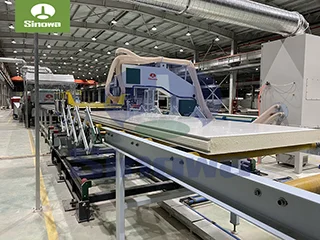
Continuous molding and pressing treatment is an indispensable process to shape the appearance and optimize the structure of PU insulation boards. After the foaming material is laid on the base material, it enters the double-layer pressing unit along with the conveying system. The pressing unit is composed of upper and lower parallel pressing plates, which can provide uniform and stable pressing force. The pressing speed and pressure are adjusted according to the preset board thickness and density parameters. In the pressing process, the redundant gaps inside the foam are eliminated, the bonding tightness between the foam layer and the base material is enhanced, and the flatness of the upper and lower surfaces of the board is ensured. The internal temperature of the pressing unit is maintained at a constant curing temperature through a circulating heating system, which accelerates the cross-linking and curing reaction of polyurethane molecules and shortens the molding cycle of the board. The conveying track of the pressing unit adopts a synchronous transmission structure, which makes the conveying speed of the upper and lower pressing plates consistent with the feeding speed, avoiding the deformation and internal structural damage of the semi-finished board caused by speed difference. For composite insulation boards with surface protective layers, the pressing unit can complete the composite bonding of surface materials and foam layers in one step, realizing the integrated molding of multi-layer structures. The whole pressing process is carried out in a relatively closed space, which reduces the heat loss in the curing stage and improves the energy utilization efficiency of the production line.
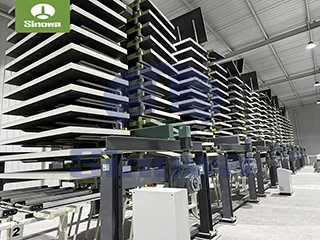
Curing and constant temperature aging treatment is an important link to stabilize the physical properties of PU insulation boards. The semi-finished boards after pressing and preliminary molding still have incomplete molecular cross-linking reactions, and the internal structural stability needs to be further improved through constant temperature aging. The production line is equipped with an independent aging curing channel, which is divided into multiple temperature control areas according to the reaction progress. The temperature in the channel decreases gradually in an orderly manner, which avoids the quality defects such as internal stress concentration and surface cracking of the board caused by rapid temperature change. In the curing channel, the semi-finished boards are placed on the flexible conveying bracket, and the circulating hot air flows evenly in the channel to ensure that all parts of the board receive consistent temperature treatment. With the extension of curing time, the polyurethane molecular chain is further cross-linked and solidified, the internal pore structure tends to be stable, and the indexes such as compressive strength, bending resistance and thermal insulation performance of the board reach the optimal state. The aging time is dynamically adjusted according to the board thickness and formula ratio. Thick boards require longer aging cycles to ensure the thorough completion of internal curing reactions. This link effectively reduces the performance attenuation of finished products in the later use process and prolongs the service life of insulation boards.
Precision cutting and trimming processing realizes the specification customization and appearance optimization of finished boards. After the curing process is completed, the continuous long-strip boards are transported to the cutting unit. The cutting system is equipped with high-speed rotating alloy blades, and the cutting position and blanking size are accurately controlled by a digital positioning system. The production line can complete fixed-length cutting according to different usage requirements, and the cutting error is controlled within a tiny range to ensure the consistency of product specifications. The edge trimming mechanism is arranged on both sides of the cutting unit, which can trim the irregular edges generated in the molding process to make the board edges smooth and neat. For boards with special shape requirements, the cutting unit can adjust the blade angle and cutting track to complete simple special-shaped processing. The cutting process is equipped with a dust collection and purification device, which can collect the tiny foam debris generated during cutting in real time, keeping the production environment clean and avoiding debris accumulation affecting the normal operation of mechanical equipment. After cutting and trimming, the qualified single boards are initially sorted by the conveying system to lay the foundation for subsequent packaging and storage.
Surface treatment and finished product sorting are the final processing links of the production line, which further improve the usability and appearance quality of PU insulation boards. Some insulation boards used in special environments need surface anti-corrosion and waterproof treatment. The production line is equipped with an automatic surface coating mechanism. The coating liquid is evenly sprayed on the board surface through a fine atomization nozzle, and a compact protective film is formed after rapid drying. This protective film can effectively isolate moisture, corrosive gas and ultraviolet rays in the external environment and enhance the environmental adaptability of the boards. The finished product sorting area is equipped with an intelligent detection and sorting device, which can preliminarily screen the boards by detecting the thickness flatness, surface integrity and internal compactness. The boards with qualified performance are transported to the packaging area, while the defective products are separately collected and sent to the reprocessing link. The automatic sorting mode replaces manual screening, which improves the detection efficiency and reduces the omission rate of defective products. The sorted qualified boards are stacked neatly by the automatic stacking machine, which saves storage space and facilitates subsequent transportation and handling.
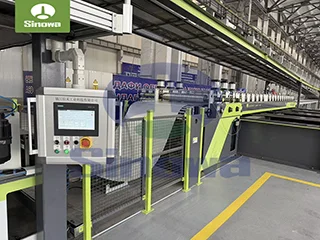
The intelligent control system runs through the entire production line and is the core brain to realize automatic and stable production. The system integrates parameter setting, real-time monitoring, data analysis and fault early warning functions. Before production, operators can input parameters such as raw material ratio, production speed, board thickness and curing temperature into the control terminal, and the system will automatically synchronize the parameters to each mechanical unit. In the production process, sensors arranged in each link collect data such as raw material flow, mixing temperature, pressing pressure and curing humidity in real time, and transmit the data to the central control platform for dynamic analysis. When abnormal data such as raw material blockage and temperature deviation occur in a certain link, the system will automatically send an early warning signal and adjust the operating state of the equipment or suspend the production process to avoid batch quality problems. The control system has a data storage function, which can record the production parameters of each batch of products, providing data support for subsequent production optimization and quality traceability. The human-computer interaction interface is simple and intuitive, which reduces the operation difficulty of staff and improves the overall production efficiency.
Energy consumption control and environmental protection design are important design concepts of modern PU insulation board production lines. In terms of energy utilization, all heating and power consumption units of the production line adopt energy-saving optimized structures. The waste heat generated by the curing reaction is recycled to the raw material constant temperature storage link and the preheating link of the pressing unit, which reduces the additional energy consumption of heating equipment. The motor components of the conveying and stirring equipment adopt variable frequency drive technology, which can automatically adjust the operating power according to the production load and avoid energy waste caused by no-load operation. In terms of environmental protection, the production line adopts a fully closed production structure in the raw material mixing and foaming links to prevent volatile trace substances from diffusing into the air. The waste gas generated in the production process is collected and purified by the adsorption and filtration device, and is discharged after reaching the emission standard. The foam debris and defective products generated in the cutting process are recycled and reprocessed after crushing, which realizes the cyclic utilization of raw materials and reduces the generation of production waste water and solid waste. The overall environmental protection design makes the production process conform to the requirements of clean production and reduces the impact on the surrounding ecological environment.
Maintenance and daily debugging are the key to ensure the long-term stable operation of the PU insulation board production line. The mechanical components of the production line have a standardized lubrication and maintenance cycle. The rotating parts such as mixing blades and conveying rollers are regularly filled with high-temperature resistant lubricating oil to reduce mechanical wear and prolong the service life of equipment. The raw material conveying pipeline needs to be cleaned regularly to prevent raw material residue from solidifying and blocking the pipeline. The sealing parts of the mixing head and pressing unit are inspected regularly, and the aging and damaged sealing strips are replaced in time to avoid raw material leakage and pressure loss. Before daily production, operators need to debug the metering system, temperature control system and cutting positioning system to calibrate parameter errors and ensure the accuracy of production data. After the production is completed, the equipment is shut down in accordance with the standardized process, and the residual raw materials and debris inside the equipment are cleaned to keep the equipment in a good standby state. Scientific maintenance and debugging can effectively reduce the failure rate of the production line, shorten the downtime caused by equipment failure, and maintain the continuity of production work.
With the continuous expansion of the application market of thermal insulation materials, the technical upgrading of PU insulation board production lines is also advancing steadily. The modern production line is developing in the direction of high automation, intelligent precision and low energy consumption. The optimized raw material mixing structure further improves the uniformity of material reaction, reduces the generation of internal defective pores, and improves the thermal insulation performance and structural stability of finished products. The upgraded intelligent control system can realize remote parameter adjustment and equipment monitoring, which is convenient for staff to grasp the production status in real time. In terms of raw material adaptation, the improved production line can be compatible with more environmentally friendly foaming agents and modified polyurethane formulas, reducing the use of chemical components that are harmful to the environment. In addition, the production line has realized the flexible switching of multiple specifications of products, which can quickly adjust the production parameters according to market demand and complete the production of insulation boards with different thicknesses and densities. This flexible production mode enhances the market adaptability of the production line and meets the differentiated demand of different industries for thermal insulation boards.
In practical industrial application, the stable operation of the PU insulation panel production line guarantees the sufficient supply of high-quality thermal insulation materials. The insulation boards produced by this production line have excellent closed-cell structure, low water absorption and stable thermal insulation performance, which can adapt to complex environmental conditions such as high humidity and large temperature difference. In the construction industry, such boards are used for external wall thermal insulation and roof heat preservation to reduce building energy consumption; in the industrial field, they are applied to the outer wall insulation of storage tanks and the wrapping of industrial pipelines to avoid heat loss and medium temperature change; in the cold chain logistics industry, they serve as the core thermal insulation material for cold storage and refrigerated transportation equipment to maintain a stable low-temperature environment. Driven by the continuous technological improvement of the production line, the comprehensive performance of PU insulation boards will be further optimized, and the application scope will continue to expand, providing reliable material support for energy conservation and consumption reduction in various industries.
In conclusion, the PU insulation board production line is a comprehensive mechanical integration system combining chemical reaction technology, mechanical transmission technology and intelligent control technology. Each link from raw material pretreatment to finished product delivery is closely connected and mutually restricted, forming a complete and standardized production system. The reasonable structural design and precise parameter control ensure the stable quality of finished insulation boards, and the environmental protection and energy-saving design conforms to the development trend of modern industrial production. With the continuous progress of material science and mechanical manufacturing technology, the production line will realize further breakthroughs in production efficiency, product performance and environmental protection level. It will always occupy an important position in the thermal insulation material manufacturing industry and continuously provide high-quality polyurethane insulation products for all walks of life, making an indelible contribution to the development of energy-saving and environmental protection industries.
https://www.cnsinowa.com/sandwich-panel-machines/pu-insulation-board-production-line.html