 sandwich panel machine
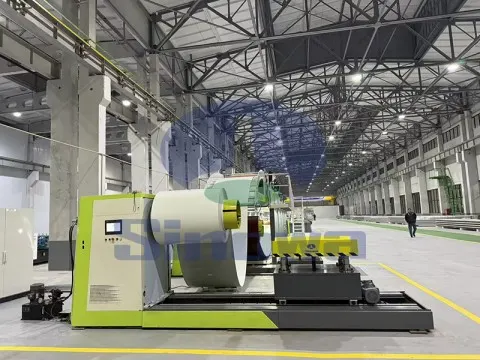
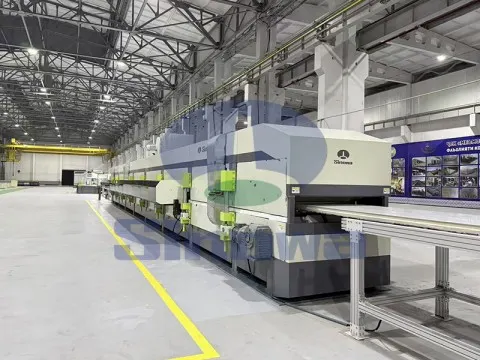
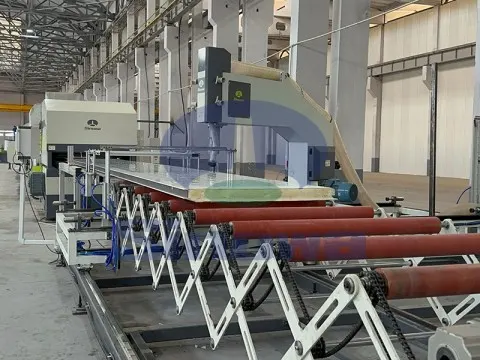
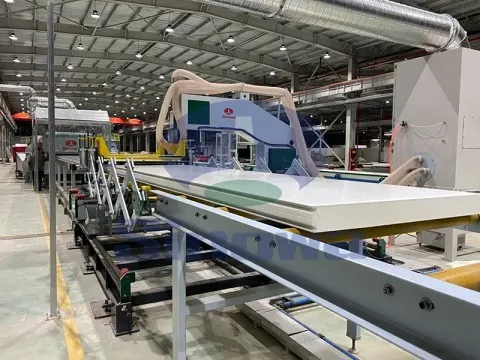
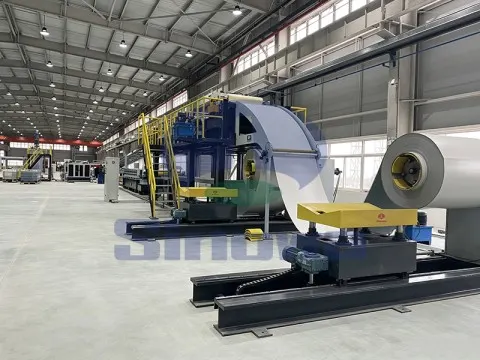
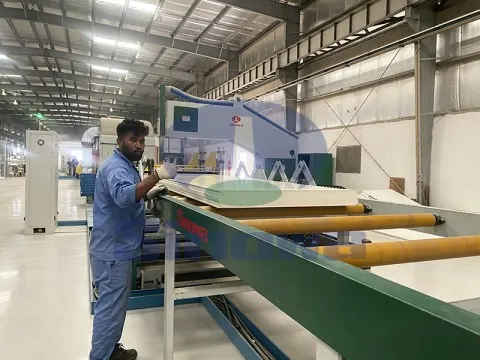
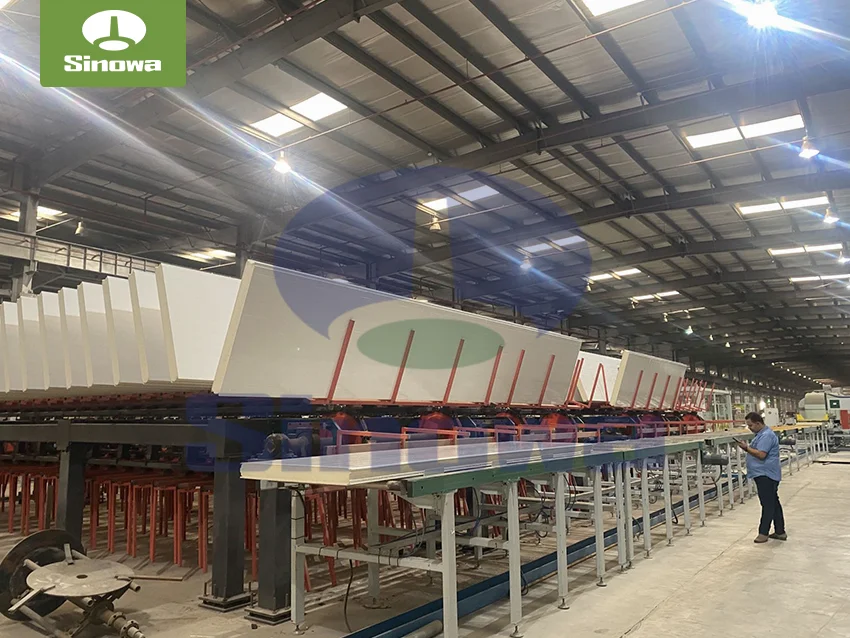
Sandwich wall panel equipment refers to a complete set of automated composite production machinery specially used for processing sandwich composite wall materials. Its basic manufacturing logic relies on the composite molding principle of double-sided surface layers and intermediate thermal insulation core materials. Through mechanical physical pressing and chemical curing reactions, different types of raw materials are tightly bonded to form integrated composite plates with stable structural performance. The equipment is applicable to diverse raw material combinations, including inorganic cementitious substrates, lightweight aggregate fillers, fiber reinforcing materials and foam thermal insulation interlayers. Different raw material formulas can be matched according to the usage scenarios of finished plates to produce wall panels with different densities, compressive strengths, thermal conductivity and sound insulation coefficients. From the perspective of mechanical structure design, sandwich wall panel equipment abandons the scattered processing mode of traditional building material machinery. It adopts an integrated assembly structure, and all functional units are connected through conveying tracks and intelligent control systems to form an uninterrupted production assembly line. This structural design minimizes manual intervention links in the production process, reduces the instability of product quality caused by human operation errors, and lays a solid foundation for standardized batch production.
A complete set of sandwich wall panel equipment consists of multiple interrelated and coordinated functional systems, and each independent system undertakes unique production tasks to jointly complete the whole manufacturing process of wall panels. The raw material conveying and pretreatment system is the starting link of the entire production line, which is mainly responsible for the storage, quantitative transportation and preliminary impurity removal of various bulk raw materials. In this system, mechanical conveying devices such as sealed belt conveyors and spiral feeding equipment are used to transport powdered, granular and block raw materials to designated processing stations. Equipped with screening and filtering auxiliary structures, the system can remove large particle impurities and unqualified raw materials mixed in raw materials, ensuring the uniformity of raw material particle size and purity. For lightweight aggregate raw materials that are easy to absorb moisture and agglomerate, the pretreatment system is also equipped with drying and stirring auxiliary components to adjust the moisture content of raw materials within the optimal processing range. Accurate raw material metering is a core function of this system. The embedded gravity sensing metering structure can complete automatic proportioning according to preset material formulas, realizing precise control of the dosage of cementitious materials, aggregates, fibers and additives. Accurate proportioning not only optimizes the physical and chemical properties of finished wall panels, but also avoids raw material waste caused by excessive feeding, improving the overall resource utilization rate of the production line.
Following the raw material pretreatment link, the mixing and stirring system undertakes the key task of homogenizing various raw materials. This system is equipped with high-power driving motors and multi-group composite stirring blades. The blade structure adopts a curved asymmetric design, which can generate three-dimensional circulating turbulence inside the stirring bin during high-speed rotation. This turbulence effect enables powdered cementitious materials, granular lightweight aggregates and fibrous reinforcing materials to be fully fused in a short time, eliminating local material accumulation and uneven mixing. In the stirring process, the equipment can add quantitative liquid additives according to production process requirements. The built-in atomization spraying structure disperses liquid materials into tiny water mist and mixes them evenly with solid raw materials, avoiding the agglomeration of fine powder raw materials caused by one-time liquid injection. The inner wall of the stirring bin is polished with smooth anti-adhesive treatment, and the detachable scraper structure is installed to prevent viscous cementitious materials from adhering to the inner wall and causing material waste. Meanwhile, the stirring speed and stirring duration can be adjusted in real time according to different raw material formulas. For high-viscosity mixed slurry, low-speed and long-time stirring mode is adopted to ensure uniform mixing; for low-density lightweight mixed materials, high-speed rapid stirring is used to improve production efficiency. The temperature sensing component installed inside the stirring bin can monitor the material temperature in real time, effectively avoiding the material performance degradation caused by excessive heat generated by friction during high-intensity stirring.
The molding system is the core functional module of sandwich wall panel equipment, which determines the external shape, dimensional accuracy and internal structural stability of finished wall panels. This system mainly includes mold fixing frames, hydraulic pressing devices, vibration compaction components and sealing molding bins. After the uniformly mixed composite slurry is transported to the molding station through the sealed conveying pipeline, it is quantitatively injected into the customized integrated mold. The molds are made of high-strength alloy materials with high flatness and wear resistance, and the internal cavity size can be adjusted according to the production specifications of wall panels to meet the customized production demands of different thicknesses and widths. After the slurry injection is completed, the hydraulic pressing device applies stable and uniform vertical pressure to the mold. The adjustable pressure range can compress the internal gaps of the mixed materials, discharge the residual air inside the slurry, and enhance the compactness of the composite material. The vibration compaction component cooperates with the pressing process to generate low-frequency and high-amplitude micro-vibration, which makes the slurry flow evenly in the mold cavity and fill every corner of the mold, preventing hollow defects on the surface and inside of the wall panel. In order to ensure the integrity of the sandwich structure, the molding system is equipped with an automatic interlayer laying mechanism, which can stably place thermal insulation and shock absorption core materials such as foam materials and rock wool between two layers of inorganic substrates. The intelligent positioning structure ensures that the interlayer materials are centered and laid without offset, so that the stress of the finished wall panel is evenly distributed and the overall structural stability is improved. All molding links are carried out in a closed bin body, which effectively reduces the dust diffusion and material splashing during the molding process and optimizes the on-site production environment.
The curing system is an indispensable post-processing unit for sandwich wall panel equipment, which aims to accelerate the chemical curing reaction of composite materials and improve the structural strength and dimensional stability of semi-finished wall panels. After the integrated molding is completed, the wall panel blanks are transported to the constant temperature curing bin through the automatic conveying track. The curing bin adopts a fully enclosed thermal insulation structure, and the internal temperature and humidity can be accurately adjusted through the circulating temperature control system. According to the curing characteristics of different composite materials, the equipment can set low-temperature natural curing and medium-temperature steam curing modes. In the medium-temperature steam curing mode, the internal temperature of the curing bin is stably controlled within a reasonable temperature range. The high-humidity steam environment accelerates the hydration reaction speed of cementitious materials, so that the wall panel blanks can quickly reach the demolding strength in a short time. The internal circulating air duct of the curing bin realizes uniform heat distribution, avoiding the inconsistent curing degree of local wall panels caused by uneven temperature. During the curing process, the equipment is equipped with an automatic flipping and positioning mechanism, which can regularly adjust the placement angle of the wall panels to prevent the deformation and warping of the plates caused by long-term unilateral stress. The intelligent monitoring module in the curing bin can record the real-time changes of temperature, humidity and curing time, and automatically adjust the operating parameters according to the curing progress to ensure that each batch of wall panels maintains consistent curing effect. Compared with the natural stacking curing method adopted in traditional production processes, the intelligent curing system shortens the curing cycle, reduces the occupied area of the production site, and eliminates the quality difference of finished products caused by seasonal temperature changes.
The cutting and finishing system is responsible for the final shaping and surface optimization of cured wall panels, realizing the standardized size classification of finished products. After the wall panels are demolded and transported to the cutting station, the high-precision positioning sensor of the equipment automatically identifies the contour size of the plates and generates a cutting path according to the preset dimensional parameters. The cutting component adopts high-speed rotating alloy cutting blades, which have strong cutting adaptability to inorganic composite materials and sandwich interlayer materials. The blade rotation speed and cutting feeding speed can be linked and adjusted to avoid edge collapse, cracking and burr defects during the cutting of composite plates. The fully enclosed dust removal structure is arranged around the cutting station, which collects the cutting dust and residual debris generated during processing through negative pressure adsorption, realizing clean cutting operation. After the cutting is completed, the edge trimming mechanism carries out chamfering and smoothing treatment on the cutting section of the wall panel to eliminate sharp edges and corners, which is convenient for subsequent stacking, transportation and on-site assembly and installation. For wall panels with surface decoration requirements, the finishing system is also equipped with surface rolling and film covering auxiliary components. The smooth rolling roller can flatten the tiny uneven parts on the plate surface, and the transparent protective film can be covered on the surface to prevent scratches and pollution during transportation and storage. All cutting and finishing processes are automatically completed by mechanical transmission, without manual marking and cutting, which significantly improves the dimensional accuracy and surface flatness of finished wall panels.
The intelligent control system runs through all functional units of sandwich wall panel equipment and is the core brain to realize automated and intelligent production. This system adopts a centralized integrated control mode, and all production parameters including raw material proportioning, stirring time, molding pressure, curing temperature and cutting size are displayed and adjusted on the human-computer interaction terminal. The built-in programmable logic controller can store multiple production formulas, and operators can switch the processing parameters of different types of wall panels with one click to meet the flexible production demands of diversified products. The sensor components distributed in each production link can collect real-time data such as material flow, equipment operating temperature, operating pressure and running speed, and transmit the data to the central control module for analysis and processing. When abnormal conditions such as material blockage, pressure overload and temperature deviation occur during the operation of the equipment, the intelligent system will automatically trigger the early warning prompt and execute the emergency protection action of shutdown and pressure relief to avoid mechanical failure and production safety accidents. In terms of power control, the system adopts frequency conversion energy-saving technology. It automatically adjusts the operating power of the motor according to the production load, reducing the invalid energy consumption during no-load operation of the equipment. In addition, the control system has a data recording function, which can store the production data of each batch of products, providing data support for production quality tracing and later process optimization.
Compared with traditional manual and semi-mechanical building material production equipment, modern sandwich wall panel equipment has prominent technical advantages in structural design, production performance and application adaptability. In terms of production efficiency, the integrated assembly line design realizes the seamless connection of each processing link, eliminating the material handling waiting time between scattered processes. The continuous circulating production mode enables the equipment to maintain stable output for a long time, and the single-shift production capacity is far higher than that of traditional processing machinery. In terms of product quality control, the whole-process mechanical operation replaces manual intervention, and the precise sensing and metering components eliminate the errors caused by human operation. The compactness, flatness and dimensional tolerance of finished wall panels are controlled within a tiny fluctuation range, and the product consistency is significantly improved. In terms of energy consumption control, the equipment optimizes the mechanical transmission structure, reduces the friction loss between components, and matches with frequency conversion energy-saving motors and circulating heat preservation structures. It effectively reduces the comprehensive energy consumption required for processing a single finished plate. In terms of operation safety, the fully closed processing bin body and multi-link emergency protection structure reduce the risk of mechanical injury and dust pollution in the production process, and improve the safety level of the production workshop.
In terms of production applicability, sandwich wall panel equipment has strong raw material compatibility and product customization capabilities. It can utilize various industrial solid wastes such as fly ash, mineral slag and lightweight construction waste as auxiliary raw materials, realizing the secondary recycling of resources and reducing the comprehensive consumption of natural raw materials. By adjusting the raw material proportioning formula and molding process parameters, the equipment can produce functional wall panels suitable for different usage environments. High-density reinforced wall panels are used for load-bearing partitions of buildings, low-density lightweight panels are used for non-load-bearing inner wall separation, and special interlayer composite panels can adapt to high-temperature insulation and sound insulation occasions. The modular structural design of the equipment facilitates daily maintenance and later upgrading. Each functional module is independently installed and connected by detachable fasteners. When local components are worn and aged, targeted replacement and maintenance can be completed without disassembling the whole equipment, reducing the maintenance difficulty and downtime loss. The equipment also has a small floor space requirement. The compact spatial layout design enables it to complete complete production procedures in a limited workshop area, which is suitable for small and medium-sized building material production enterprises with limited plant space.
In the actual production and application process, standardized operation and daily maintenance are key factors to ensure the long-term stable operation of sandwich wall panel equipment. Before the equipment is started, operators need to conduct a comprehensive inspection of the transmission components, sealing structures and sensing parts. Check whether the connecting fasteners of each module are loose, whether the conveying pipeline is blocked, and whether the sensor data is displayed normally. After confirming that there is no abnormal fault, perform idle running preheating to ensure that the mechanical transmission system reaches the optimal operating state. During the formal production process, it is necessary to strictly follow the preset raw material proportioning standards and feeding sequence, and avoid random adjustment of operating parameters to prevent unstable material reaction and unqualified product performance. Pay attention to the operating sound and temperature change of the equipment in real time. Once abnormal vibration and high temperature heating occur, stop the machine for inspection in time to eliminate potential faults. After the daily production work is completed, thoroughly clean the residual materials inside the stirring bin, mold and conveying pipeline to prevent the cementitious materials from solidifying and adhering to the equipment components and affecting the later use effect. Regularly lubricate the rotating bearings and transmission gears, check the wear degree of cutting blades and stirring blades, and replace severely worn accessories in a timely manner. For the curing system and intelligent control system, regularly calibrate the temperature and humidity sensors and pressure detection components to ensure the accuracy of monitoring data and avoid quality problems caused by parameter deviation.
From the perspective of industrial development trends, with the continuous improvement of global environmental protection policies and building energy-saving standards, the upgrading iteration speed of sandwich wall panel equipment is gradually accelerating. The future development direction of the equipment is mainly reflected in three dimensions: intelligent upgrading, green production and functional diversification. In terms of intelligent upgrading, the equipment will be combined with internet technology and remote monitoring technology to realize remote data transmission, fault diagnosis and parameter adjustment. The automatic loading and unloading robot will replace the manual handling link to further reduce labor costs and improve the degree of unmanned production. In terms of green production optimization, the equipment will add waste gas and waste residue recycling devices. The residual materials generated in the cutting and molding process are crushed and re-mixed into the production link to realize zero waste discharge in the production process. The optimized heat preservation and circulation structure reduces heat loss in the curing link and further lowers energy consumption. In terms of functional diversification, the equipment will expand the processing range of raw materials, develop composite molding technologies for new environmental protection raw materials, and realize the integrated production of wall panels with waterproof, fireproof, anti-corrosion and decorative functions.
At present, the market demand for prefabricated sandwich wall panels is continuously rising with the booming development of the construction industry. As the core production carrier, sandwich wall panel equipment undertakes the important task of promoting the industrial upgrading of building materials. It not only solves the problems of low production efficiency, unstable quality and high resource consumption in the traditional wall panel processing mode, but also provides reliable material guarantee for the popularization of prefabricated buildings. In different regional application scenarios, the equipment can be adaptively adjusted according to local climate characteristics and building construction standards. In high-temperature and humid areas, optimize the waterproof and anti-corrosion structure of the equipment to adapt to the humid production environment; in low-temperature and cold areas, strengthen the heat preservation performance of the curing system to ensure the normal curing reaction of materials in a low-temperature environment. This strong regional adaptability makes the equipment widely promoted and applied in different construction markets.
In conclusion, sandwich wall panel equipment is a comprehensive and systematic mechanical integration device combining material science, mechanical engineering and intelligent control technology. It relies on scientific structural layout and efficient processing procedures to complete the standardized manufacturing of composite wall panels. From raw material pretreatment to finished product output, each functional system cooperates closely to ensure the stability of production process and the superiority of product performance. With the continuous progress of construction industrialization and the deepening concept of green buildings, the market application prospect of sandwich wall panel equipment will be broader. The continuous technological innovation and structural optimization of the equipment will further improve the level of resource utilization, reduce production energy consumption, and provide more efficient and environmentally friendly production solutions for the building materials manufacturing industry. In the future development process, this type of equipment will gradually develop towards higher intelligence, lower energy consumption and stronger adaptability, continuously empower the high-quality development of the global construction industry, and make important contributions to the realization of energy-saving and low-carbon sustainable development goals in the construction field.
Sinowa is a professional manufacturer of sandwich panel machine in china, we provide diversified and high-performance sandwich panel production lines, including fully automatic continuous PU sandwich panel line and customized special lines to meet mass production and personalized order demands. These sandwich panel lines support processing multiple foam core materials, such as PU, PIR, mineral wool, rock wool and glass wool, covering different insulation and fireproof standards.
Featuring stable operation, high efficiency, energy saving and easy maintenance, our PU sandwich panel line deliver sandwich panels with excellent thermal insulation, fire resistance, sound insulation and lightweight durability. The finished panels are widely applied in industrial workshops, warehouse roofing and wall cladding, cold storage insulation, serving global construction and industrial insulation markets.
https://www.cnsinowa.com/sandwich-panel-machines/sandwich-wall-panel-equipment.html