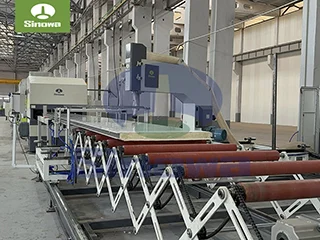
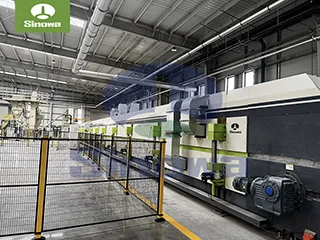
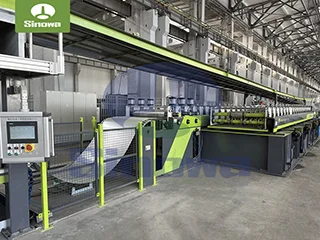
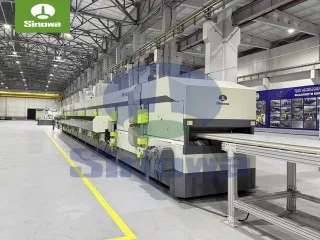
sandwich panel line
At the core of a high-quality PU foam production line lies a suite of precision components working in harmony to facilitate the complex chemical reactions and mechanical processes that transform raw materials into finished foam products. The fundamental principle of PU foam production involves the reaction between polyol and isocyanate, two key ingredients whose precise mixing triggers a series of chemical processes—including gelation and foaming—that determine the final foam’s density, cell structure, and mechanical properties. Chinese suppliers excel in integrating these chemical processes with advanced mechanical systems, ensuring that each component of the production line is engineered to maintain strict control over critical parameters such as mixing ratios, temperature, pressure, and reaction time. This integration is achieved through the adoption of system integration and bus control technologies, which enable automatic integrated linkage control of the entire production line, minimizing human error and ensuring consistent output across batches.
The mixing system stands as the heart of any PU foam production line, and Chinese suppliers have invested significantly in refining this critical component to enhance performance and reliability. Mixing heads, which are responsible for blending polyol and isocyanate, are engineered with precision to ensure uniform dispersion of materials, a factor that directly impacts the foam’s structural integrity and performance. These mixing heads typically feature cylindrical mixing chambers equipped with spiked-rod style agitators, designed to create high shear forces that break down material particles and promote thorough mixing. Depending on the type of foam being produced, mixing heads can operate at varying speeds—ranging from 3,000 to 6,000 revolutions per minute—with residence times for materials in the mixing chamber ranging from 0.4 to 1.3 seconds. For low-pressure foaming lines, larger mixing chambers and higher rotational speeds are used to compensate for lower material flow rates, while high-pressure lines utilize smaller chambers and low-shear agitators, as materials are injected at high velocity to provide sufficient kinetic energy for mixing. Additionally, mixing head nozzles are available in various designs, including straight-tube types, to accommodate different foam formulations and production requirements.
Automation has become a defining feature of modern PU foam production lines from Chinese suppliers, as businesses worldwide seek to improve efficiency, reduce labor costs, and enhance product consistency. These production lines are equipped with advanced automation systems that replace manual operations with robotic arms and intelligent control panels, enabling full automation of key processes such as material dispensing, mixing, molding, and curing. Robotic arms are particularly valuable in applications such as continuous pouring and molding, where they ensure precise material placement and consistent product dimensions, even for complex shapes. The integration of human-machine interaction (HMI) interfaces further enhances operational ease, allowing operators to monitor production parameters in real time, adjust settings remotely, and troubleshoot issues efficiently. Some advanced lines even support remote interactive communication, enabling technical support teams to assist with maintenance or parameter adjustments without being on-site, minimizing downtime and optimizing productivity.
Customization is another key strength of Chinese PU foam production line suppliers, who recognize that different industries and applications require specialized foam properties and production capacities. Whether a client needs a line to produce flexible foam for automotive seats, rigid foam for construction insulation, or molded foam for packaging, suppliers can tailor the production line to meet specific requirements. This customization extends to every aspect of the line, from the capacity of the metering pumps— which ensure precise delivery of raw materials—to the design of the molding system and curing chambers. For example, lines designed for automotive foam production may include specialized molds to create contoured seat cushions, while those for insulation panels may feature continuous casting systems to produce large, uniform sheets. Suppliers work closely with clients to understand their production goals, raw material preferences, and end-product specifications, developing tailored solutions that align with their operational needs and market demands. This flexibility has made Chinese suppliers a go-to partner for both large-scale manufacturers and small-to-medium enterprises (SMEs) looking to scale their production or enter new market segments.
Environmental sustainability has emerged as a critical consideration in global manufacturing, and Chinese PU foam production line suppliers have responded by developing equipment that minimizes environmental impact without compromising performance. These lines are engineered to reduce energy consumption through optimized heating and cooling systems, as well as efficient motor designs that lower power usage during operation. Additionally, suppliers focus on reducing waste by improving material utilization—ensuring that raw materials are mixed and dispensed with minimal excess—and designing systems that capture and reuse excess foam or byproducts where possible. There is also a growing emphasis on compatibility with bio-based polyurethane formulations, which use renewable raw materials to reduce reliance on fossil fuels and lower carbon emissions. By integrating these eco-friendly features into their production lines, Chinese suppliers help clients meet increasingly strict environmental regulations and consumer demand for sustainable products, enhancing their competitive edge in global markets.
Quality control is a paramount concern for PU foam production, as even minor deviations in processing parameters can lead to defects such as inconsistent density, shrinkage, internal cracking, or poor cell structure. Chinese suppliers address this challenge by incorporating robust quality control mechanisms throughout the production line, ensuring that every batch of foam meets the required specifications. These mechanisms include real-time monitoring of key parameters such as mixing ratios, temperature, and pressure, with automated alerts that notify operators of any deviations. Additionally, production lines are designed to facilitate easy inspection of intermediate and finished products, with integrated testing stations that measure foam density, compressive strength, and flexibility. Suppliers also provide guidance on troubleshooting common defects, helping clients identify root causes such as improper mixing, environmental factors (e.g., humidity and temperature), or raw material inconsistencies. This proactive approach to quality control minimizes waste, reduces production costs, and ensures that clients can deliver reliable products to their own customers.
The global reach of Chinese PU foam production line suppliers is a testament to their ability to meet the diverse needs of clients across different regions and industries. These suppliers have established long-term partnerships with businesses in North America, Europe, Asia, the Middle East, and Africa, exporting production lines that adapt to local market conditions, raw material availability, and regulatory requirements. Whether serving a large automotive manufacturer in North America seeking to enhance production efficiency or a construction materials company in the Middle East needing insulation foam lines for high-temperature environments, Chinese suppliers bring a global perspective combined with localized support. This support includes comprehensive installation services, operator training, and after-sales maintenance, ensuring that clients can fully leverage their production lines from day one. By prioritizing customer service and building trust through consistent performance, Chinese suppliers have positioned themselves as reliable long-term partners in the global PU foam manufacturing ecosystem.
The ongoing evolution of PU foam production technology is driven by changing market demands and advancements in materials science, and Chinese suppliers remain at the forefront of this innovation. Research and development efforts focus on enhancing automation capabilities through the integration of Internet of Things (IoT) technology, which enables predictive maintenance and real-time data analytics to optimize production efficiency. For example, IoT sensors can monitor the performance of critical components such as mixing heads and metering pumps, detecting potential issues before they lead to breakdowns. Suppliers are also exploring new mixing technologies and foam formulations to expand the range of applications for PU foam, such as lightweight, high-strength foams for electric vehicles or fire-retardant foams for construction. Additionally, modular design systems are becoming increasingly common, allowing clients to expand or modify their production lines as their business grows, reducing the need for costly full replacements. These innovations ensure that Chinese suppliers continue to offer cutting-edge solutions that keep pace with the evolving needs of the global PU foam industry.
The advantages of partnering with Chinese PU foam production line suppliers extend beyond technical capabilities and product quality. China’s robust manufacturing ecosystem provides access to a wide network of component suppliers, enabling efficient production and timely delivery of production lines. This ecosystem also fosters healthy competition, driving continuous improvement in technology and cost-effectiveness. Furthermore, Chinese suppliers bring a deep understanding of global supply chains, helping clients navigate logistics, customs, and regulatory compliance in different regions. Whether a client is looking to establish a new production facility or upgrade existing equipment, Chinese suppliers offer end-to-end solutions that cover design, manufacturing, installation, and support, simplifying the procurement process and reducing operational risks. This comprehensive approach has made Chinese suppliers a trusted choice for businesses looking to enhance their PU foam manufacturing capabilities and gain a competitive advantage in the global market.
In conclusion, Chinese PU foam production line suppliers have solidified their position as global leaders by combining technical excellence, customization flexibility, environmental responsibility, and customer-centric service. Their ability to integrate advanced automation, precision engineering, and sustainable practices into production lines has made them indispensable partners for industries worldwide seeking to produce high-quality PU foam efficiently and reliably. As the global demand for PU foam continues to grow—driven by trends such as urbanization, energy efficiency, and the expansion of the automotive and construction sectors—Chinese suppliers are well-positioned to meet this demand with innovative solutions that push the boundaries of manufacturing technology. By maintaining a focus on research and development, customization, and customer support, these suppliers will continue to shape the future of the global PU foam production industry, helping businesses across the globe achieve their production goals and thrive in an increasingly competitive market.
https://www.cnsinowa.com/sandwich-panel-machines/pu-foam-production-line-supplier-from-china.html