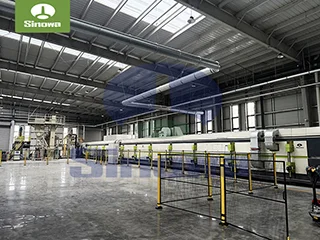
sandwich panel line
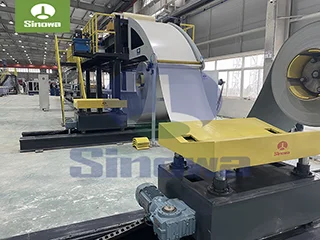
The foundation of any high-quality PIR sandwich panel production line is its ability to process raw materials with precision, as the quality of the input materials directly impacts the performance of the final panels. The primary components of PIR sandwich panels include the outer facings, the PIR foam core, and auxiliary materials such as adhesives and protective films. The outer facings, typically made of metal sheets like galvanized steel, pre-painted steel, or aluminum, serve as the structural backbone of the panel, providing rigidity and protection against external damage. These metal sheets must be processed to meet specific thickness and flatness requirements, as any irregularities can compromise the panel’s structural integrity and thermal performance. The production line begins with the uncoiling of metal coils, which are fed into a series of processing equipment to level, clean, and treat the surface. Leveling machines ensure that the metal sheets are free from warping or unevenness, while surface cleaning equipment removes dust, oil, and other contaminants that could hinder the adhesion between the metal and the PIR foam core. Some production lines also include corona treatment units, which modify the surface of the metal to enhance its bonding properties, ensuring a strong and durable connection with the foam.
Following the surface treatment of the metal facings, the next critical stage in the production process is the preparation and application of the PIR foam core. PIR foam is produced through a chemical reaction between polyol and isocyanate, combined with foaming agents, catalysts, and other additives that control the foam’s density, thermal conductivity, and fire resistance. The production line is equipped with high-pressure foaming machines, which are designed to accurately meter, mix, and dispense the chemical components in precise proportions. This precision is essential, as even minor variations in the ratio of polyol to isocyanate can significantly affect the properties of the foam. The foaming agents, which are often pentane-based to ensure environmental compatibility, create the cellular structure of the foam, which is responsible for its exceptional thermal insulation properties. Catalysts accelerate the chemical reaction, ensuring that the foam cures quickly and uniformly, while other additives enhance the foam’s fire resistance and dimensional stability. The high-pressure mixing heads of the foaming machines ensure that the chemical components are thoroughly mixed, resulting in a homogeneous foam that adheres evenly to the metal facings.
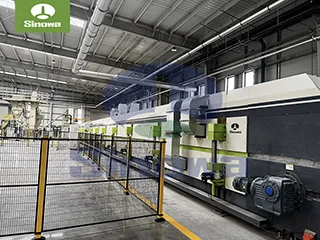
Once the PIR foam mixture is prepared, it is dispensed between the two metal facings, which are fed into a double belt press. The double belt press is a key component of the production line, as it controls the thickness, flatness, and curing of the sandwich panels. The press consists of two parallel, heated conveyor belts that apply consistent pressure and temperature to the panel as it moves through the machine. The temperature and pressure settings are carefully calibrated to ensure that the PIR foam cures properly, forming a dense and uniform core that bonds securely to the metal facings. The conveyor belts are independently heated and insulated, allowing for precise control of the curing process across the entire width and length of the panel. This ensures that the foam does not expand unevenly or develop voids, which would reduce the panel’s thermal insulation efficiency and structural strength. The double belt press also determines the final thickness of the panel, which can be adjusted according to the specific requirements of the chiller room application—ranging from 30mm to 200mm or more, depending on the desired thermal performance.
As the sandwich panel exits the double belt press, it moves to the cutting station, where it is cut into the desired lengths using flying saw machines. These machines are equipped with band saws or disk blades and feature a 180-degree rotating mechanism, allowing for precise cutting in both directions even at high production speeds. This flexibility is particularly useful for producing panels of varying lengths, which is often required for custom chiller room designs. The cutting process is fully automated, with sensors and control systems ensuring that the cuts are straight and accurate, minimizing waste and ensuring that the panels meet the required dimensional tolerances. After cutting, the panels are fed into a cooling station, where they are allowed to cool slowly and uniformly. This slow cooling process is essential to prevent the PIR foam from shrinking or warping as it solidifies, ensuring that the panels maintain their dimensional stability over time. The cooling station may use forced air or water cooling systems, depending on the production line’s design and the desired cooling rate.
Once the panels have cooled completely, they move to the handling and finishing station, where they are inspected, trimmed, and prepared for packaging. Quality inspection is a critical part of this stage, as it ensures that the panels meet the strict performance standards required for chiller room applications. Inspectors check for any defects such as uneven foam distribution, poor adhesion between the metal and foam, surface scratches, or dimensional inaccuracies. Any panels that do not meet the quality standards are rejected or sent back for rework. The panels that pass inspection are then trimmed to remove any excess material from the edges, ensuring a clean and precise finish. Some production lines also include protective film application units, which apply a thin plastic film to the surface of the metal facings to prevent scratches and damage during transportation and installation. Finally, the panels are stacked and wrapped using automated wrapping machines, which secure the panels for shipping and storage, ensuring that they arrive at the installation site in perfect condition.
The efficiency and versatility of PIR sandwich panel production lines make them well-suited for the production of chiller room panels, which often require customization to fit specific project requirements. Modern production lines are highly automated, with programmable logic controllers (PLCs) and human-machine interfaces (HMIs) that allow operators to monitor and adjust every stage of the production process. This automation reduces the risk of human error, improves production efficiency, and ensures consistent product quality. The production speed of these lines can be adjusted, typically ranging from 3 to 12 meters per minute, depending on the panel thickness and the desired output. This flexibility allows manufacturers to scale their production according to market demand, whether they are producing small batches of custom panels or large volumes for large-scale chiller room projects.
One of the key advantages of PIR sandwich panel production lines is their ability to produce panels with exceptional thermal insulation properties, which is essential for chiller rooms. PIR foam has a thermal conductivity value as low as 0.018 W/mK, making it one of the most efficient insulation materials available. This low thermal conductivity ensures that the chiller room maintains a stable internal temperature, reducing the load on the refrigeration system and lowering energy consumption. In addition to their thermal insulation properties, PIR sandwich panels produced by these lines also offer excellent fire resistance. The chemical composition of PIR foam makes it inherently fire-resistant, with a high oxygen index and low smoke generation, which is critical for chiller rooms that often store flammable or temperature-sensitive products. The metal facings further enhance the panel’s fire resistance, acting as a barrier that prevents the spread of fire.
Durability and moisture resistance are also important considerations for chiller room panels, as these environments are prone to high humidity and condensation. PIR sandwich panels produced by advanced production lines are designed to be highly resistant to moisture, with a closed-cell foam structure that prevents water absorption. This closed-cell structure also enhances the panel’s dimensional stability, ensuring that it does not swell, shrink, or degrade over time when exposed to moisture. The metal facings are treated with corrosion-resistant coatings, such as galvanization or pre-painted finishes, which protect them from rust and degradation caused by condensation or exposure to harsh chemicals. This durability ensures that the panels have a long service life, reducing the need for frequent maintenance or replacement and lowering the overall cost of the chiller room.
The versatility of PIR sandwich panel production lines allows for the production of panels for various parts of the chiller room, including walls, ceilings, and floors. Floor panels, for example, are often produced with additional structural reinforcement to support the weight of storage racks, equipment, and inventory. The production line can be adjusted to include additional layers or materials in the panel to enhance its load-bearing capacity, ensuring that it meets the specific requirements of chiller room floors. Ceiling panels, on the other hand, may be produced with a lighter weight design, while still maintaining the required thermal insulation and fire resistance properties. This versatility makes the production line a valuable asset for manufacturers, as it allows them to produce a wide range of panels to meet the diverse needs of chiller room construction.
In addition to their technical advantages, PIR sandwich panel production lines also offer environmental benefits. The PIR foam production process uses low-global-warming-potential (GWP) foaming agents, such as pentane, which are more environmentally friendly than traditional foaming agents. This reduces the environmental impact of the production process, aligning with global efforts to reduce greenhouse gas emissions. Furthermore, the durability and long service life of PIR sandwich panels reduce the need for frequent replacement, which minimizes waste and conserves resources. The production lines themselves are also designed to be energy-efficient, with optimized heating and cooling systems that reduce energy consumption during the manufacturing process.
The performance of PIR sandwich panels produced by these lines is closely tied to the precision and reliability of the production equipment. Regular maintenance and calibration of the production line components are essential to ensure consistent product quality. This includes checking the accuracy of the foaming machine’s metering systems, inspecting the double belt press for wear and tear, and calibrating the cutting machines to ensure precise cuts. Many production lines are equipped with diagnostic systems that monitor the performance of key components, alerting operators to potential issues before they affect the production process. This proactive maintenance approach helps to minimize downtime and ensure that the production line operates efficiently and reliably.
As the cold storage industry continues to evolve, the demand for high-quality PIR sandwich panels is expected to grow. This growth is driven by the increasing need for energy-efficient and sustainable cold storage solutions, as well as the expansion of industries that rely on chiller rooms, such as food processing, pharmaceuticals, and e-commerce logistics. PIR sandwich panel production lines are evolving to meet this demand, with advancements in automation, precision, and environmental sustainability. New technologies are being integrated into production lines to improve the efficiency of the foaming process, enhance the bonding between the metal and foam, and reduce the environmental impact of the manufacturing process. These advancements are enabling manufacturers to produce panels that are more efficient, durable, and cost-effective, making PIR sandwich panels an even more attractive choice for chiller room construction.
In conclusion, PIR sandwich panel production lines play a vital role in the manufacturing of high-quality panels for chiller room applications. These production lines integrate advanced technology, precision engineering, and automated control to deliver panels that offer exceptional thermal insulation, fire resistance, durability, and moisture resistance—all essential qualities for cold storage environments. From the processing of raw materials to the final packaging of the finished panels, every stage of the production process is carefully controlled to ensure consistency and reliability. The versatility of these production lines allows for customization to meet the specific needs of different chiller room projects, while their efficiency and environmental sustainability make them a cost-effective and responsible choice for manufacturers. As the demand for efficient and sustainable cold storage solutions continues to rise, PIR sandwich panel production lines will remain a cornerstone of the industry, enabling the construction of chiller rooms that are energy-efficient, durable, and capable of protecting temperature-sensitive products for years to come.
https://www.cnsinowa.com/sandwich-panel-machines/pir-sandwich-panel-production-line-for-chiller-room-panels.html