sandwich panel line
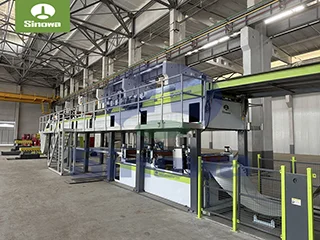
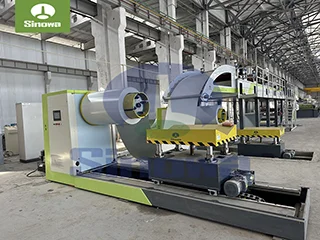
The structural composition of a polyurethane sandwich panel manufacturing line with PLC control is a modular arrangement of interconnected components, each performing a specific function while operating in harmony under the supervision of the PLC system. At the starting end of the line is the uncoiling mechanism, which feeds the facing materials—typically metal sheets such as pre-painted galvanized iron, aluminum, or stainless steel, as well as non-metallic options like fiberglass reinforced sheets—into the production process. This mechanism is equipped with dual uncoilers to ensure continuous operation; when one coil of facing material is exhausted, the PLC automatically switches to the standby coil, eliminating production downtime. The tension of the uncoiled material is precisely controlled by the PLC through frequency converters, preventing wrinkling or stretching of the facing sheets and ensuring uniform feeding into subsequent stages. Following the uncoiling mechanism is the preheating platform, which uses electric heating tubes to adjust the temperature of the facing materials to an optimal range for polyurethane foam adhesion and curing. The PLC regulates the number of active heating tubes based on real-time temperature data collected by PT100 thermal resistors, maintaining a consistent temperature field that promotes proper foam formation.
The upper feeding system and high-pressure foaming system form the core of the production line, responsible for delivering and mixing the polyurethane raw materials. The feeding system consists of premixing tanks and working tanks, where polyether polyol and isocyanate—the two primary components of polyurethane foam—are stored, stirred, and temperature-controlled. The PLC monitors the liquid level in each tank using level sensors, triggering automatic refilling from the premixing tanks to the working tanks when the level drops below a preset threshold, and stopping refilling when the upper limit is reached to prevent overflow. Temperature control in the tanks is achieved through a closed-loop system managed by the PLC, which adjusts the flow of circulating cooling water to maintain the raw materials at approximately 25℃, a temperature that optimizes the foaming reaction. The high-pressure foaming system uses precision metering pumps to deliver the two raw materials to a mixing gun head at a controlled ratio, with the PLC regulating the pump speed to ensure a flow rate accuracy within 3%. This precision is critical, as even minor deviations in the ratio of polyether polyol to isocyanate can significantly affect the thermal insulation, structural strength, and durability of the finished panels.
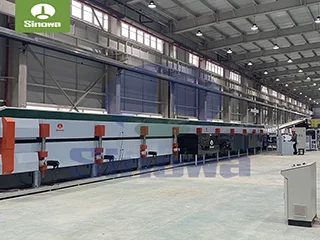
Adjacent to the foaming system is the mobile pouring platform, which distributes the mixed polyurethane foam evenly onto the lower facing material. The PLC controls the movement of the pouring gun head along a predefined path, adjusting the travel distance and speed based on the desired width of the panels. The positioning accuracy of the gun head is maintained within 1mm, ensuring uniform foam distribution across the entire surface of the facing material. The pouring platform is followed by the double-track laminator, a key component that shapes the sandwich panel and facilitates foam curing. The laminator consists of upper and lower tracks that apply consistent pressure to the panel as it moves through the system, with the spacing between the tracks determining the thickness of the panel. The PLC enables stepless adjustment of the track spacing within a range of 10mm to 300mm, with a control precision of ±0.5mm, allowing for the production of panels with varying thicknesses to suit different applications. Additionally, the laminator is divided into three temperature-controlled zones by the PLC, each corresponding to a stage of the polyurethane curing process—initial maturation, middle curing, and final maturation—with distinct temperature settings to optimize the mechanical properties of the foam core.
After the foam has cured sufficiently in the laminator, the panel proceeds to the length-cutting system, where it is trimmed to the required dimensions. The PLC uses signals from length sensors to monitor the movement of the panel, triggering the cutting mechanism—typically a circular saw or hydraulic shear—once the preset length is reached. The cutting process is synchronized with the panel’s movement to ensure clean, precise cuts without damaging the panel edges or compromising the foam core. Following cutting, the finished panels are transferred to the automatic packaging system, which arranges the panels into stacks and uses mechanical arms to wrap them with protective film. The PLC coordinates the stacking and wrapping processes, ensuring that the number of panels per stack is consistent and that the wrapping is tight enough to prevent damage during storage and transportation. Throughout the entire production line, the PLC communicates with each module via a field bus system, collecting real-time data on operating parameters such as temperature, pressure, speed, and material levels, and displaying this information on a human-machine interface (HMI) for operator monitoring. Operators can adjust production parameters through the HMI, with the PLC immediately implementing these changes to maintain optimal production conditions.
The performance of a polyurethane sandwich panel manufacturing line with PLC control is defined by its automation level, precision, efficiency, and flexibility—attributes that are directly enhanced by the integration of PLC technology. High automation reduces the need for manual intervention, minimizing the risk of human error and ensuring consistent product quality across large production runs. The PLC’s ability to synchronize the operation of multiple modules eliminates production bottlenecks, resulting in a continuous production process with a high throughput rate. The line’s speed can be adjusted steplessly within a range of 2m/min to 15m/min, allowing manufacturers to balance production volume with product quality based on specific requirements. Precision control is another key performance feature, with the PLC maintaining tight tolerances on panel thickness, length, and foam density. This precision not only improves product quality but also reduces material waste, as accurate cutting and foam distribution minimize the amount of scrap generated during production.
Energy efficiency is a notable performance advantage of these production lines, as the PLC optimizes the operation of energy-consuming components such as heating tubes and pumps. By adjusting the number of active heating tubes based on real-time temperature needs and regulating pump speeds to match production demand, the PLC reduces unnecessary energy consumption, lowering operational costs and environmental impact. The closed-loop temperature control system further enhances energy efficiency by maintaining stable temperatures without excessive heating or cooling. Flexibility is another critical performance characteristic, as the PLC allows for quick adjustments to production parameters to accommodate different panel specifications. Manufacturers can easily switch between different panel thicknesses, widths, and facing materials by modifying settings in the PLC, making the line suitable for small-batch, customized production as well as large-scale mass production. Additionally, the PLC’s diagnostic capabilities enable proactive maintenance, as it monitors the performance of each component and alerts operators to potential issues such as abnormal temperatures, low material levels, or mechanical malfunctions, reducing the risk of unplanned downtime and extending the service life of the equipment.
Polyurethane sandwich panel manufacturing lines with PLC control can be categorized based on their production mode, with two primary types: continuous production lines and discontinuous production lines. Continuous production lines are designed for high-volume production of standard or semi-standard panels, offering high efficiency and consistent quality. These lines operate without interruption, with raw materials continuously fed into the system and finished panels continuously exiting, making them ideal for large-scale construction projects or industrial applications where large quantities of panels are required. The PLC plays a crucial role in maintaining the synchronization of all modules in continuous lines, ensuring that the production process flows smoothly without gaps or delays. Discontinuous production lines, on the other hand, are suited for small-batch or highly customized production, where frequent changes to panel specifications are necessary. These lines operate in cycles, with each cycle producing a single batch of panels before adjusting to the next specification. The PLC simplifies the transition between batches by storing preset parameters for different panel types, allowing operators to switch between configurations with minimal setup time.
Another classification criterion is based on the type of core material produced, with lines specialized for polyurethane foam cores and hybrid cores such as polyurethane-edge-sealed rockwool cores. Lines producing pure polyurethane foam core panels focus on optimizing the foaming process to achieve superior thermal insulation and waterproof performance, with the PLC controlling foam density within a range of 32kg/m³ to 60kg/m³—a density range that balances structural strength and insulation efficiency. These lines are typically equipped with advanced high-pressure foaming systems to ensure uniform foam formation. Lines producing hybrid core panels integrate additional components to handle rockwool or other insulating materials, with the PLC coordinating the placement of the core material and the application of polyurethane edge sealing. This edge sealing enhances the panel’s airtightness and moisture resistance while leveraging the fire resistance of rockwool, resulting in panels with balanced thermal insulation and fire safety performance. The PLC adjusts the foaming and edge-sealing processes to accommodate the different properties of hybrid cores, ensuring consistent adhesion and structural integrity.
The applications of polyurethane sandwich panels produced by these PLC-controlled lines are diverse, spanning multiple industries where thermal insulation, structural strength, and durability are essential. In the construction industry, these panels are widely used for building envelopes, including walls, roofs, and partitions. Their lightweight nature reduces the structural load of buildings, while their excellent thermal insulation performance lowers energy consumption for heating and cooling. Pure polyurethane foam core panels are particularly suitable for industrial warehouses, logistics centers, and lightweight steel structures, where insulation and quick installation are priorities. Hybrid core panels with polyurethane edge sealing and rockwool cores are preferred for public buildings such as airports, railway stations, stadiums, and shopping malls, as well as high-fire-risk industrial facilities like power plants and chemical workshops, due to their A-level fire resistance and sound insulation properties. These panels also find applications in high-rise buildings, where their combination of fire safety and insulation meets strict building codes.
The refrigeration and cold storage industry is another major consumer of polyurethane sandwich panels, as their closed-cell foam structure provides exceptional thermal insulation with a thermal conductivity ranging from 0.022W/(m·K) to 0.024W/(m·K), and an R-value between 6.0 and 7.14. These panels are used to construct cold rooms, freezers, refrigerated trucks, and containerized cold storage units, where maintaining stable low temperatures is critical. The PLC-controlled production line ensures that the foam core has a uniform closed-cell structure, preventing moisture penetration and maintaining insulation performance over time. In the food processing and pharmaceutical industries, polyurethane sandwich panels are used to build clean rooms and constant temperature and humidity workshops, as they are resistant to mold, mildew, and bacteria, and can be easily cleaned to meet hygiene standards. The panels’ smooth surfaces and airtight joints minimize dust accumulation and facilitate compliance with industry-specific hygiene regulations.
Industrial applications extend beyond construction and refrigeration, with polyurethane sandwich panels used in noise-sensitive areas such as office buildings, schools, and hospitals, where their sound insulation properties reduce ambient noise. They are also employed in automotive manufacturing facilities, particularly in spray booths and assembly areas, where their fire resistance and durability withstand harsh industrial environments. Additionally, these panels are used in temporary structures such as construction site offices, disaster relief shelters, and event pavilions, due to their quick installation, portability, and reusability. The versatility of polyurethane sandwich panels is largely attributed to the flexibility of the PLC-controlled production lines, which can tailor panel specifications—including thickness, facing material, and core type—to meet the unique requirements of each application. Whether for a large-scale cold storage facility requiring maximum insulation or a public building demanding strict fire safety standards, these production lines can deliver panels that balance performance, durability, and cost-effectiveness.
The integration of PLC control technology into polyurethane sandwich panel manufacturing lines has revolutionized the production process, elevating standards of quality, efficiency, and flexibility. By centralizing control of all production modules, the PLC ensures that each stage of manufacturing operates in perfect synchronization, reducing variability and improving product consistency. The ability to monitor and adjust parameters in real-time allows manufacturers to respond quickly to changes in demand, whether modifying panel specifications for a custom order or optimizing production speed to meet tight deadlines. Furthermore, the energy-efficient operation of these lines aligns with global trends toward sustainable manufacturing, reducing carbon footprints while lowering operational costs. As industries continue to demand high-performance, customizable building materials, the role of PLC-controlled polyurethane sandwich panel manufacturing lines will only grow, driving innovation in production technology and expanding the range of applications for these versatile composite panels. From enhancing the energy efficiency of buildings to ensuring the integrity of cold chain logistics, these production lines play a vital role in supporting the infrastructure and industries that shape modern life.
https://www.cnsinowa.com/sandwich-panel-machines/polyurethane-sandwich-panel-manufacturing-line-with-plc-control-system.html