sandwich panel line
The foundation of a high-quality B1 grade fire-resistant polyurethane sandwich panel lies in the careful selection and preparation of raw materials. Unlike ordinary polyurethane sandwich panels, the production of B1 grade fire-resistant variants requires specialized materials that can inhibit combustion, slow down flame spread, and reduce smoke emission. The core materials include the surface panels, the polyurethane core with flame-retardant additives, and the structural adhesive that bonds the layers together. Each component undergoes strict pre-processing to ensure compatibility and performance consistency.
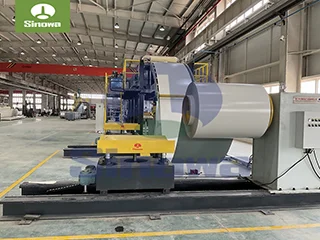
Surface panels typically consist of metal sheets such as color-coated steel, galvanized steel, or aluminum sheets, which provide structural rigidity, weather resistance, and protection for the inner core. Before entering the production line, these metal coils are subjected to a series of pre-treatment processes. First, the coils are uncoiled and leveled to eliminate any deformities caused by storage and transportation. Then, they undergo surface cleaning to remove oil, dust, and rust, which could compromise the bonding strength between the panel and the core. Some production lines also include a surface conditioning step, such as chemical conversion coating, to further enhance the adhesion of the adhesive. After pre-treatment, the metal sheets are cut into specified widths according to production requirements, ensuring uniformity and precision that will affect the final dimensions of the sandwich panels.
The polyurethane core is the key component that determines the fire resistance and thermal insulation performance of the panel. For B1 grade fire resistance, the polyurethane raw materials must be modified with high-efficiency flame retardants. Common flame-retardant additives include melamine polyphosphate (MPP), which acts as both an acid source and a nitrogen source in intumescent flame-retardant systems. When exposed to high temperatures, MPP decomposes to release phosphoric acid, which catalyzes the cross-linking and carbonization of the polyurethane molecular chain, forming a dense carbon layer on the surface that blocks the transfer of heat and oxygen. At the same time, it releases non-flammable gases such as ammonia and carbon dioxide, which expand the carbon layer to enhance the flame-retardant effect. Other flame-retardant technologies, such as embedding cobalt-ATMP coordination structures into the polyurethane main chain, have also been developed to improve fire resistance while maintaining mechanical properties. The polyurethane raw materials, including polyols, isocyanates, flame retardants, and foaming agents, are stored in separate insulated tanks to maintain stable temperatures, ensuring consistent reaction performance during the foaming process. Before use, these raw materials are precisely measured and mixed in a specific ratio, a process that requires strict control to ensure the flame-retardant properties and foaming quality of the core.
The structural adhesive used to bond the surface panels and the polyurethane core is another critical raw material. It must have high bonding strength, good heat resistance, and compatibility with both the metal panels and the polyurethane core. The adhesive is typically a two-component polyurethane-based adhesive that cures at room temperature or under mild heating conditions. Before application, the adhesive components are mixed in the correct proportion and stirred thoroughly to ensure uniformity. Some production lines use pre-mixing equipment with high-speed stirrers to achieve optimal mixing quality, which directly affects the bonding stability and durability of the sandwich panels.
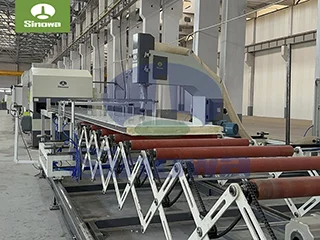
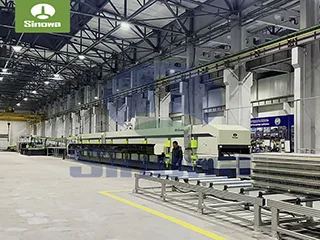
Once the raw materials are prepared, the production process moves to the core composite stage, which is carried out on a continuous automated production line. This stage involves several sequential steps: panel feeding and positioning, adhesive application, polyurethane foaming and casting, lamination and pressing, curing, and cutting. Each step is closely monitored and controlled to ensure the quality and performance of the final product.
The first step in the composite stage is the feeding and positioning of the surface panels. The pre-cut upper and lower metal panels are fed into the production line through separate conveying systems. Guide rollers and positioning devices ensure that the panels are aligned correctly, with no offset or misalignment. This alignment is crucial for maintaining the uniform thickness of the core and the overall flatness of the sandwich panel. The conveying speed is synchronized with other processes to ensure a continuous and smooth production flow.
Next is the application of the structural adhesive. The adhesive is applied to the inner surface of the lower metal panel (and sometimes the upper panel) using a precision coating system. Common coating methods include roller coating, spray coating, or slot die coating, which ensure uniform adhesive distribution with a controlled thickness. The amount of adhesive applied is carefully calibrated to achieve the required bonding strength without excess adhesive that could cause waste or affect the foaming of the polyurethane core. The coating system is equipped with sensors to detect any gaps or unevenness in the adhesive layer, allowing for real-time adjustments to maintain quality.
Immediately after adhesive application, the polyurethane foam mixture is cast onto the lower metal panel. The casting process is carried out using a high-pressure mixing head, which ensures thorough mixing of the polyurethane raw materials and flame-retardant additives. The mixing head is mounted on a movable gantry that traverses the width of the panel, distributing the foam mixture evenly across the surface. The amount of foam mixture cast is precisely controlled according to the desired thickness of the core, which typically ranges from 50mm to 200mm depending on the application requirements. As the foam mixture is cast, it begins to react and expand rapidly, filling the space between the upper and lower metal panels. The expansion rate and degree of foaming are controlled by adjusting the temperature of the raw materials, the mixing ratio, and the casting speed. This control is essential to ensure that the foam core has a uniform cell structure, which contributes to its thermal insulation performance and mechanical strength.
Once the polyurethane foam is cast, the upper metal panel is fed into position and aligned with the lower panel. The combined structure then enters a lamination and pressing zone, where it passes through a series of rollers or a continuous press. The pressing force and speed are carefully adjusted to ensure that the upper and lower panels are firmly bonded to the polyurethane core, and that the foam core is compressed to the desired thickness. The pressing process also helps to eliminate any air bubbles trapped in the foam, ensuring a dense and uniform core structure. The pressure applied typically ranges from a few hundred to a few thousand Pascals, depending on the thickness of the panel and the type of foam used. During pressing, the temperature of the rollers or press is also controlled to accelerate the curing of the adhesive and the foaming reaction of the polyurethane.
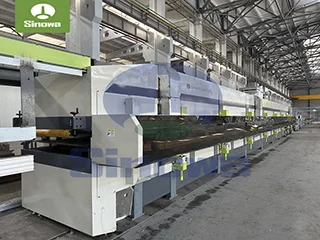
After lamination and pressing, the composite panel enters a curing zone. Curing is a critical step that allows the polyurethane foam to complete its expansion and cross-linking reaction, and the adhesive to fully cure, ensuring the structural integrity and stability of the sandwich panel. The curing zone is typically a temperature-controlled tunnel, where the panels are heated to a specific temperature (usually between 50°C and 80°C) and held for a certain period of time. The curing time varies depending on the type of polyurethane raw materials, the thickness of the core, and the ambient temperature. For continuous production lines, the curing tunnel is designed to match the production speed, ensuring that the panels are fully cured before exiting the tunnel. Some advanced production lines use infrared heating or hot air circulation systems to achieve uniform heating and efficient curing, reducing production time while maintaining quality.
Once cured, the continuous composite panel is cut into specified lengths using a precision cutting machine. The cutting machine is typically equipped with a circular saw or a CNC cutting system, which ensures clean, straight cuts with high precision. The length of the panels is determined by customer requirements, and the cutting machine can be adjusted to different lengths quickly, allowing for flexible production. After cutting, the panels are inspected for dimensional accuracy, with any off-spec panels removed from the production line. The cut panels then proceed to the edge trimming stage, where any irregular edges are trimmed to ensure a smooth and uniform finish. Edge trimming also helps to improve the installation efficiency of the panels, as it ensures that the panels can be tightly joined together during construction.
Quality control is an integral part of the entire manufacturing process, ensuring that the B1 grade fire-resistant polyurethane sandwich panels meet the required performance standards. Quality control measures are implemented at every stage of production, from raw material inspection to final product testing.
Raw material inspection is carried out before the materials enter the production line. For metal panels, inspections include checking the thickness, surface quality, and mechanical properties such as tensile strength and bending strength. For polyurethane raw materials and flame retardants, tests are conducted to verify their chemical composition, purity, and flame-retardant performance. The structural adhesive is tested for bonding strength, curing time, and heat resistance. Any raw materials that fail to meet the specified standards are rejected, ensuring that only high-quality materials are used in production.
In-process quality control is conducted during the composite stage to monitor key parameters such as the thickness of the adhesive layer, the uniformity of the foam casting, the pressure and temperature during lamination and pressing, and the curing time and temperature. Sensors and monitoring devices are installed throughout the production line to collect real-time data, which is analyzed by a central control system. If any parameters deviate from the set values, the system automatically adjusts the production equipment to correct the deviation. For example, if the thickness of the adhesive layer is found to be uneven, the coating system is adjusted to increase or decrease the amount of adhesive applied in specific areas. In-process inspections also include visual checks of the panels for surface defects such as bubbles, cracks, or uneven coloring.
Final product testing is conducted on finished panels to verify their fire resistance, thermal insulation performance, mechanical strength, and bonding strength. Fire resistance testing is a critical test for B1 grade panels, which involves exposing the panels to a controlled flame and measuring parameters such as flame spread rate, smoke emission, and self-extinguishing time. B1 grade panels are required to be difficult to ignite, with the flame spreading slowly and extinguishing immediately after the fire source is removed. Thermal insulation performance is tested by measuring the thermal conductivity of the core, with lower thermal conductivity indicating better insulation performance. Mechanical strength tests include bending strength, compressive strength, and impact resistance tests, which verify that the panels can withstand the loads and stresses encountered during installation and use. Bonding strength tests are conducted to ensure that the surface panels and the core are firmly bonded, with no delamination under normal or extreme conditions. Any finished panels that fail to meet the test standards are discarded, ensuring that only qualified products are delivered to customers.
B1 grade fire-resistant polyurethane sandwich panels produced by this advanced manufacturing line have a wide range of applications, thanks to their excellent comprehensive performance. In industrial settings, they are commonly used for the walls and roofs of workshops, especially in industries such as machinery manufacturing, electronics, and food processing, where fire safety and thermal insulation are critical. The lightweight nature of the panels reduces the overall weight of the building structure, allowing for simpler and more cost-effective structural design. In logistics and warehousing, the panels are used for the construction of warehouses and cold storage facilities. Their excellent thermal insulation performance helps to maintain a stable internal temperature, reducing energy consumption for heating or cooling. For cold storage facilities, the panels also provide good moisture resistance, preventing condensation and ensuring the quality of stored goods.
In public buildings such as stadiums, exhibition halls, shopping malls, and hospitals, B1 grade fire-resistant polyurethane sandwich panels are used for walls, ceilings, and partitions. Their fire resistance ensures the safety of occupants in the event of a fire, while their aesthetic appearance and versatility allow for flexible design options. The panels can be easily cut, bent, and punched, making them suitable for creating complex shapes and designs. In prefabricated buildings and temporary structures such as construction site offices and mobile homes, the panels are preferred for their quick and easy installation, which reduces construction time and labor costs. The panels can be assembled on-site quickly, allowing for the rapid construction of functional buildings.
The development of the manufacturing line for B1 grade fire-resistant polyurethane sandwich panels is driven by advancements in materials science and manufacturing technology. Future trends in the industry include the development of more efficient flame-retardant technologies that reduce the amount of flame-retardant additives used while improving fire resistance, making the panels more environmentally friendly and cost-effective. The integration of smart manufacturing technologies, such as artificial intelligence and the Internet of Things (IoT), is also expected to enhance the efficiency and quality of production. Smart sensors and AI algorithms can be used to optimize production parameters in real-time, reducing waste and improving product consistency. Additionally, the development of more sustainable raw materials, such as bio-based polyurethane, is likely to become a focus, as the construction industry moves towards more environmentally friendly practices.
Another trend is the customization of production lines to meet the specific needs of different applications. For example, production lines can be adjusted to produce panels with different core thicknesses, surface materials, or flame-retardant properties, allowing manufacturers to cater to a wider range of customer requirements. The development of modular production lines also allows for greater flexibility, as modules can be added or removed to expand production capacity or introduce new processes.
In conclusion, the manufacturing line for B1 grade fire-resistant polyurethane sandwich panels is a complex and sophisticated system that integrates raw material preparation, precise composite processes, and strict quality control. Each stage of the production process is carefully designed and controlled to ensure that the final products meet the rigorous requirements of B1 grade fire resistance, while maintaining excellent thermal insulation, mechanical strength, and durability. The wide range of applications of these panels, from industrial buildings to public structures, highlights their importance in modern construction. With ongoing advancements in materials and technology, the manufacturing line is expected to become more efficient, sustainable, and flexible, further expanding the use of B1 grade fire-resistant polyurethane sandwich panels in the global construction industry. The continuous improvement of this manufacturing technology not only enhances the safety and performance of buildings but also contributes to the development of a more sustainable and energy-efficient construction sector.
https://www.cnsinowa.com/sandwich-panel-machines/polyurethane-sandwich-panel-manufacturing-line-for-fire-resistant-panels-b1-grade.html