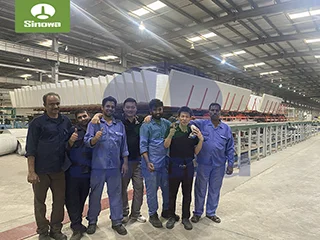
sandwich panel line
The core connotation of the modular design lies in decomposing the complex production process into independent functional units, each of which is designed as a standardized module with uniform interfaces and connection methods. For the polyurethane sandwich panel production line, this means that key links such as uncoiling and preheating, raw material mixing and metering, foaming and lamination, cooling and post-processing, as well as stacking and packaging, are all integrated into separate modular units. Each module has its own independent control system and mechanical structure, and can operate independently while also being seamlessly connected with other modules to form a complete production chain. This design concept not only simplifies the production line assembly process but also lays a solid foundation for future expansion. Unlike traditional production lines that require overall modification or even replacement when expanding capacity or changing product types, modular production lines only need to add or replace corresponding functional modules, which greatly reduces the difficulty and cost of expansion.
The easy expansion feature of the modular polyurethane sandwich panel production line is reflected in multiple aspects. Firstly, in terms of capacity expansion, when the market demand increases, enterprises can directly increase the number of key modules according to the actual production gap. For example, if the existing foaming and lamination module becomes a bottleneck in production capacity, an additional set of the same module can be added in parallel to double the production efficiency. The standardized interfaces ensure that the newly added module can be quickly integrated into the original production system without affecting the operation of other modules. Secondly, in terms of product diversification, the production line can easily switch between different types of polyurethane sandwich panels by replacing or adjusting specific modules. For instance, to produce roof panels, wall panels, and cold storage panels with different thicknesses and specifications, only the corresponding molding modules and cutting modules need to be replaced, and the adjustment of process parameters can be completed through the central control system. This flexibility allows enterprises to quickly respond to market changes and meet the personalized needs of different customers without investing in a new production line.
The realization of the modular production line's performance relies on advanced technical support, especially in the design of module interfaces and the integration of control systems. The interface standardization is the key to ensuring the interchangeability and compatibility of modules. All modules adopt unified mechanical connection standards and data transmission protocols, so that modules produced by different batches or even different manufacturers can be perfectly matched. This not only reduces the dependence on a single supplier but also facilitates the maintenance and replacement of modules in the later stage. In terms of the control system, the modular production line adopts a decentralized control mode combined with centralized monitoring. Each module is equipped with an independent controller to realize autonomous operation and fault self-diagnosis, while the central control platform can monitor the operation status of all modules in real time, coordinate the work of each link, and realize the linkage adjustment of parameters. This control mode not only improves the reliability and stability of the production line but also makes the expansion process more convenient. When adding new modules, it is only necessary to complete the parameter setting and protocol matching in the central control system, without modifying the control logic of the original system.
In practical production applications, the modular polyurethane sandwich panel production line shows significant advantages in improving production efficiency and reducing operational costs. Compared with traditional manual or semi-automatic production lines, the modular production line has a higher degree of automation, which can reduce the number of on-site operators by optimizing the process flow and integrating intelligent equipment. For example, the automatic uncoiling and preheating module can accurately control the tension and temperature of the facing material, ensuring the stability of the subsequent lamination process; the precision mixing and metering module can realize the accurate proportioning of polyurethane raw materials and additives, improving the utilization rate of raw materials and the quality stability of products. At the same time, the modular design makes the maintenance of the production line more efficient. When a certain module fails, it can be quickly disassembled and replaced, and the faulty module can be repaired offline, avoiding the shutdown of the entire production line caused by local faults, thus minimizing production losses.
The environmental adaptability and energy-saving performance of the modular polyurethane sandwich panel production line are also worthy of attention. With the increasing emphasis on environmental protection and energy conservation in the manufacturing industry, modern production lines are required to meet higher environmental standards. The modular production line can be equipped with energy-saving modules and environmental protection treatment devices according to actual needs, such as waste gas collection and treatment modules, energy recovery modules, etc. These modules can be flexibly added or upgraded according to policy requirements and enterprise development needs. For example, the heat recovery module can collect the waste heat generated during the foaming process and reuse it for the preheating of raw materials or the heating of the production workshop, reducing energy consumption. In addition, the closed design of the modules effectively reduces the leakage of raw materials and waste gas, improving the working environment of the workshop and meeting the requirements of green production.
The development of the modular polyurethane sandwich panel production line is also closely related to the trend of prefabricated construction. Prefabricated construction, which features factory prefabrication and on-site assembly, has become an important direction for the transformation and upgrading of the construction industry due to its advantages of high construction efficiency, good quality control, and low environmental impact. As a key prefabricated building material, the production efficiency and quality of polyurethane sandwich panels directly affect the development of prefabricated construction. The modular production line can realize the large-scale and standardized production of polyurethane sandwich panels, ensure the consistency of product quality, and meet the large demand of prefabricated construction projects. At the same time, the easy expansion capability of the production line can adapt to the rapid growth of the prefabricated construction market, providing a strong guarantee for the supply of building materials.
In the face of the complex and volatile market environment, the flexibility and adaptability of enterprises have become important factors determining their core competitiveness. The modular polyurethane sandwich panel production line provides enterprises with a flexible production solution through its easy expansion feature. Enterprises can adjust the production capacity and product structure of the production line according to market demand changes, avoid the risk of overcapacity or insufficient supply caused by fixed production capacity, and improve the ability to respond to market risks. For small and medium-sized enterprises, the modular production line also lowers the threshold for entry into the polyurethane sandwich panel industry. They can start with a basic production module according to their own financial strength and market demand, and gradually expand the production scale as the business grows, realizing step-by-step development.
The application of the modular polyurethane sandwich panel production line also promotes the innovation and upgrading of the entire industry. The standardized design of modules encourages enterprises to focus on the research and development of core technologies and key modules, promoting the progress of production technology. At the same time, the sharing and exchange of modular technologies can promote the integration of resources in the industry, realize the complementary advantages of enterprises, and promote the healthy development of the industry. For example, some enterprises specialize in the research and development of high-precision mixing modules, while others focus on the intelligent upgrading of stacking and packaging modules. Through the standardization of interfaces, these modules can be integrated into a complete production line, forming a professional division of labor and cooperative development pattern in the industry.
It should be noted that the successful application of the modular polyurethane sandwich panel production line requires enterprises to have a scientific planning and management system. Before carrying out production line construction and expansion, enterprises need to conduct in-depth market research and demand analysis to determine the appropriate module configuration and expansion plan. In the process of daily operation, it is necessary to establish a sound module maintenance system to ensure the normal operation of each module. At the same time, enterprises also need to strengthen the training of employees, improve their operation skills and understanding of the modular production line, so as to give full play to the advantages of the production line. In addition, the continuous optimization and upgrading of modules is also an important part of maintaining the competitiveness of the production line. Enterprises should pay attention to the development of new technologies and new processes, and timely update and upgrade existing modules to adapt to the changing market demands and technical trends.
Looking to the future, with the continuous advancement of intelligent manufacturing technology and the deepening of the concept of sustainable development, the modular polyurethane sandwich panel production line will usher in more development opportunities. The integration of technologies such as the Internet of Things, big data, and artificial intelligence will make the modular production line more intelligent. For example, through the installation of sensors on each module, real-time collection of production data, and analysis and optimization through big data technology, the production process can be further improved, and the predictive maintenance of modules can be realized. At the same time, the research and development of more environmentally friendly and energy-saving modules will help enterprises achieve green production and enhance their social responsibility. In addition, the application scope of the modular production line will also be further expanded, not only limited to the production of polyurethane sandwich panels but also can be extended to other types of sandwich panel products, such as rock wool sandwich panels and glass wool sandwich panels, through the replacement of core material processing modules, realizing the multi-purpose of the production line.
In conclusion, the modular polyurethane sandwich panel production line with easy expansion capabilities is an important innovation in the field of building material manufacturing. Its modular design, standardized interface, and flexible control system not only improve production efficiency and product quality but also reduce production costs and operational risks, providing strong support for enterprises to adapt to market changes and achieve sustainable development. With the continuous improvement of technology and the expansion of application scenarios, this kind of production line will play an increasingly important role in promoting the transformation and upgrading of the sandwich panel industry and the development of prefabricated construction. Enterprises should seize the development opportunity, actively adopt modular production technology, and continuously optimize the production line configuration and management level to enhance their core competitiveness in the fierce market competition.
https://www.cnsinowa.com/sandwich-panel-machines/modular-polyurethane-sandwich-panel-production-line-for-easy-expansion.html