What Temperature Range Is Suitable For Continuous PU Sandwich Panel Production Line Operation
Oct 13, 2026
The continuous production of polyurethane sandwich panels depends heavily on a tightly controlled thermal environment, because every stage—from raw material preparation through foaming, curing, laminating, and cooling—reacts sensitively to temperature shifts. Maintaining the right range across the line ensures consistent panel density, strong skin adhesion, stable dimensions, and defect-free output.
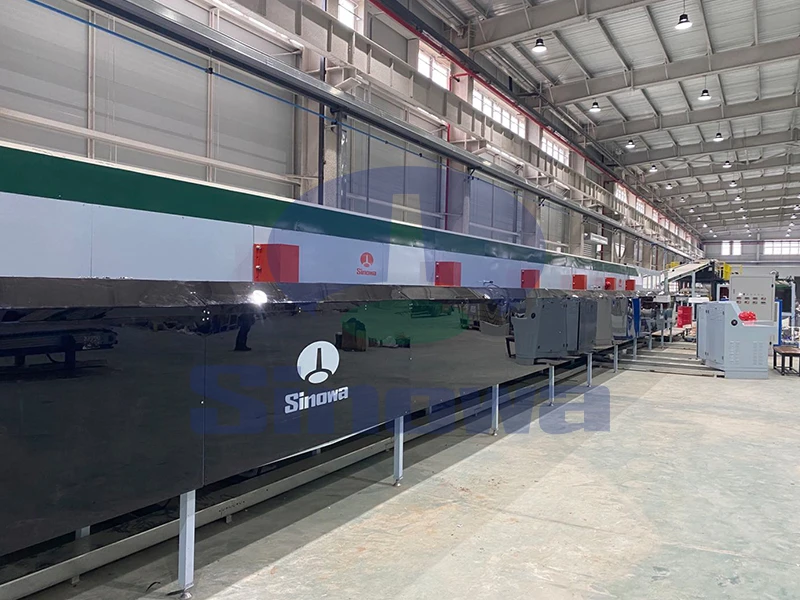
The starting point for any reliable continuous PU sandwich panel line is the temperature of the two chemical components before they ever reach the mixing head. Polyether or polyester polyol blends and polymeric diphenylmethane diisocyanate (MDI) are both heat-sensitive materials whose viscosity changes sharply with temperature. If either component is too cold, it becomes thick and difficult to pump, the high-pressure impingement mixing becomes uneven, and the resulting foam develops streaks, voids, or incomplete fill. If the component is too warm, its shelf life shortens, reactivity accelerates unpredictably, and the foam may start rising before it has been fully deposited onto the lower facing. For this reason, component storage tanks, circulation loops, and heat exchangers are typically held within a controlled band that keeps both liquids at a low, stable viscosity throughout the shift. Operators usually monitor these temperatures continuously rather than periodically, because even a few degrees of drift can show up later as cell structure variation inside the finished core.
Once the chemicals leave the mixing head and are deposited onto the moving lower facing sheet, the temperature of that facing itself becomes the next critical variable. The facing—usually galvanized steel, aluminum foil, or sometimes coated decorative board—acts as the surface against which the foam skins form, and its thermal condition dictates how the first layer of cells develops. A facing that is too cold can quench the reacting mixture near the surface, producing a dense but weak skin that delaminates later, while a facing that is overheated can cause premature surface cure, blistering, or uneven release from the mold. The lower sheet preheating station is therefore designed to bring the facing up to a moderate, uniform temperature before the foamed slurry lands on it. This preheat step is especially important in winter, when steel coils delivered to the line may be close to room temperature or below, and when the production hall itself has not yet reached steady-state conditions.
Above the lower facing and its freshly deposited foam sits the upper facing, which is guided down by a set of side rollers and a double conveyor or laminating belt. The conveyor belt temperature is one of the most influential settings on the whole line, because it directly controls the rate at which the foam reacts from both the top and bottom surfaces. A belt that is too cool slows the overall reaction, lengthening the required cure zone and reducing line speed; a belt that is too hot can overcook the outer skin of the foam, making it brittle and discolored, or can cause the facing to buckle because of uneven thermal expansion. In practice, the belt is divided into several heating zones, each with its own recirculating oil or water circuit, so that the early zones can be set slightly higher to initiate reaction and the later zones can be tuned downward to finish the cure gently. This zoning approach gives operators a way to balance fast demolding with dimensional stability in the finished panel.
The chemical reaction of polyurethane foam itself is exothermic, meaning it releases heat as it cures. This internal heat release interacts with the externally applied belt temperature in a way that many line operators find counterintuitive: the deeper layers of a thick panel can become significantly hotter than the setpoint of the heating equipment. If the core is allowed to peak too high, cells can rupture, the foam can shrink after cooling, and the panel can bow or warp as it reaches room temperature. The solution is not simply to lower all heating zones, but to manage the exotherm by matching belt temperature, line speed, and chemical formulation so that the internal peak stays within a safe window. Experienced line crews will often use an infrared thermometer or embedded probe to check the core temperature of panels at the exit of the curing section, treating that reading as a more reliable indicator of process health than the belt thermostat alone.
Ambient temperature in the production hall is another factor that quietly shapes line performance. Although the main heating and cooling stations are closed-loop, the open sections—where coils are loaded, where the mixing head is serviced, and where panels exit the cutter—are exposed to shop air. A cold draft from an overhead door, or a hot spot near a loading bay in summer, can cause localized cooling or heating of the facing sheets before they enter the belt, leading to visible defects such as wavy edges or inconsistent edge bonding. Well-run lines therefore maintain the hall within a moderate, narrow range throughout the year, using heating in winter and ventilation or cooling in summer, and they minimize large temperature swings near the machine itself. This environmental discipline is often what separates a line that produces consistently good panels from one that only performs well under ideal weather.
After the panel leaves the double belt and has been cross-cut to length, it enters a cooling or conditioning stage. At this point the foam is structurally set but still warm, and forcing it into storage or packaging too quickly can trap heat and cause post-cure distortion. The cooling zone is designed to bring the panel down gradually toward ambient temperature, allowing residual internal stresses to relax and the dimensional profile to stabilize. Cooling too aggressively—for example, with cold air blown directly onto a hot steel facing—can create differential shrinkage between the steel skin and the foam core, producing camber or twist. The cooling rate is therefore controlled, and the target exit temperature is usually close to the shop ambient rather than well below it. Panels that exit the cooling section within a narrow temperature band can then go on to packing without risk of later warping.
Temperature control also interacts strongly with line speed, which is why the two are always tuned together. Slower line speeds mean the panel spends more time in every heating and cooling zone, so zone setpoints must be reduced to avoid overcooking the core. Faster line speeds shorten residence time, so setpoints may need to be raised or additional zone heating added. A common mistake is to change speed alone while leaving temperatures fixed, which produces either undercured, soft panels at high speed or discolored, brittle panels at low speed. Seasoned operators treat the temperature profile as a function of speed, and they keep a set of proven recipes for different panel thicknesses, facing types, and foam densities, each with its own matched belt temperatures, component temperatures, and cooling settings.
Energy use and equipment longevity are also tied to how well the temperature range is maintained. Running heaters hotter than necessary wastes thermal energy and accelerates wear on oil circuits, heating elements, and temperature sensors. On the other hand, allowing temperatures to drift means the line must be run slower, scrap rates rise, and the repeated thermal cycling of cold starts and hot stops puts unnecessary stress on the belt and framing. A stable, correctly chosen operating range therefore pays off not only in product quality but also in predictable utility costs and longer service intervals. Many modern lines include trend logging for every temperature zone, so that operators and maintenance teams can see whether the system is holding its setpoints over weeks and months, rather than reacting only after a defect appears.
In the end, the suitable temperature range for a continuous PU sandwich panel line is not a single number but a coordinated set of windows: component temperatures low and steady, facing preheat moderate and even, belt heating zones graded from initiation to gentle cure, internal exotherm managed rather than suppressed, hall ambient kept comfortable and draft-free, and post-cut cooling gradual to ambient. When each of these windows is respected and adjusted in step with panel thickness, facing material, and line speed, the line runs smoothly, scrap stays low, and the finished panels leave the plant with consistent density, strong skin-to-core bond, and dimensions that remain stable over time. That balance is the real measure of a well-tuned continuous production process.
Gallery
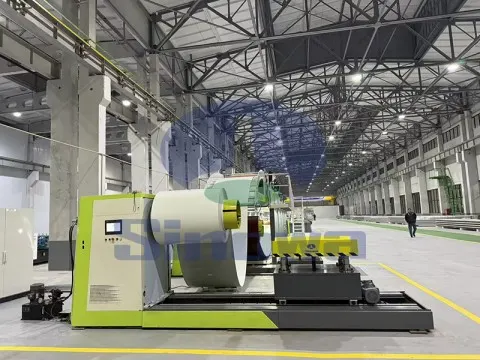
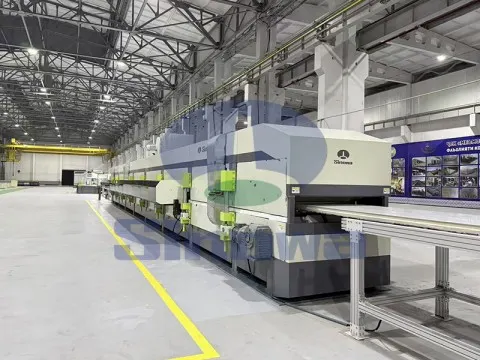
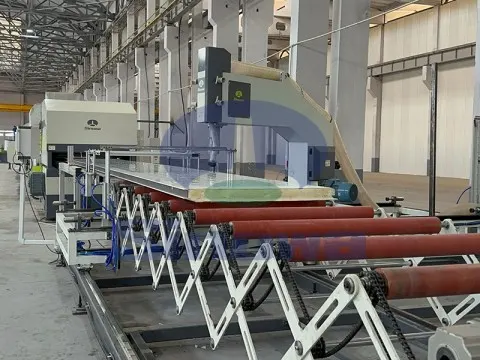
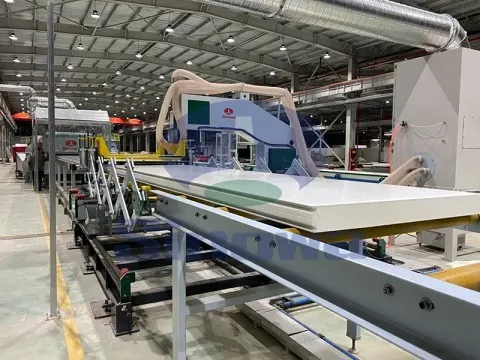
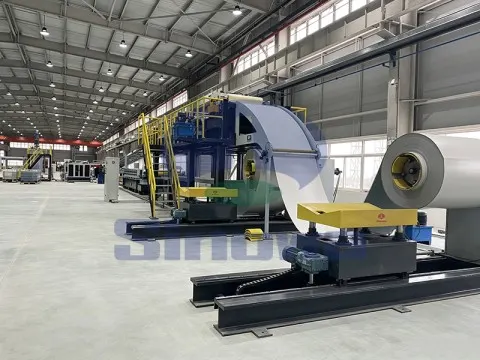
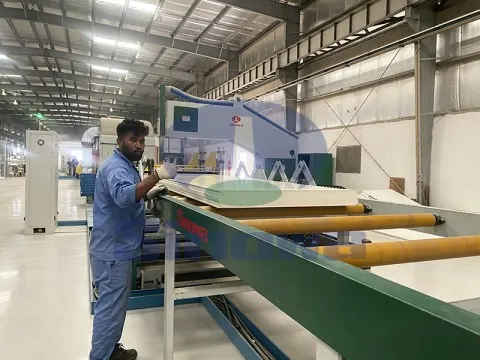
Sinowa is a professional manufacturer of sandwich panel machine in china, we provide diversified and high-performance sandwich panel production lines, including fully automatic continuous PU sandwich panel line and customized special lines to meet mass production and personalized order demands. These sandwich panel lines support processing multiple foam core materials, such as PU, PIR, mineral wool, rock wool and glass wool, covering different insulation and fireproof standards.
Featuring stable operation, high efficiency, energy saving and easy maintenance, our PU sandwich panel line deliver sandwich panels with excellent thermal insulation, fire resistance, sound insulation and lightweight durability. The finished panels are widely applied in industrial workshops, warehouse roofing and wall cladding, cold storage insulation, serving global construction and industrial insulation markets.
Main Products
-

Continuous PU Sandwich Panel Production Line
This continuous PU sandwich panel production line is an integrated automatic equipment. It covers uncoiling, forming, foaming, curing and cutting processes. With automatic raw material proportioning and precise temperature & pressure control, PIR sandwich panel production line continuously composites panels with double skins. Polyurethane sandwich panel production line stably produces steel and aluminum sandwich panels. Featuring high automation, the line makes fireproof and thermal-insulation panels for building enclosure and cold storage. -
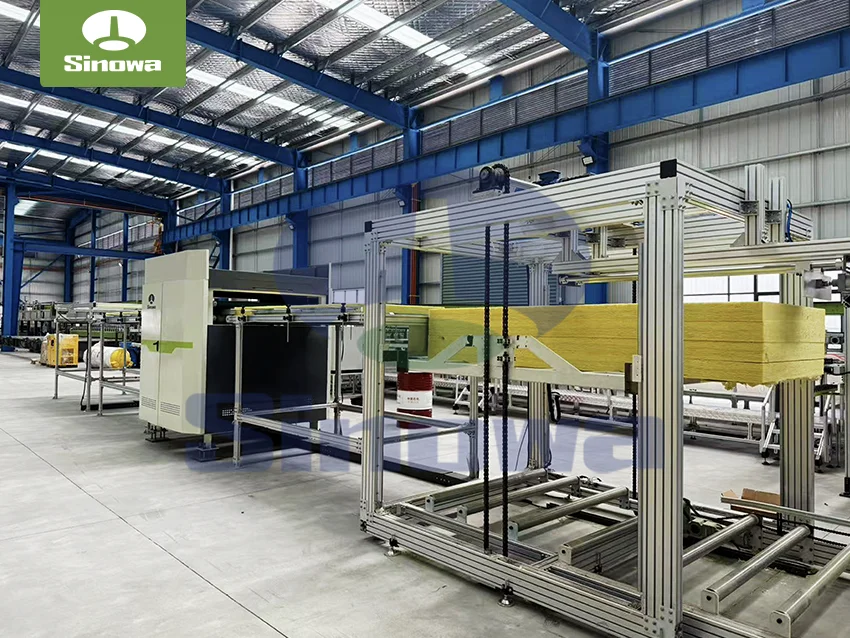
Rock Wool Sandwich Panel Production Line
Continuous rockwool sandwich panel production line is an automatic integrated production equipment, consisting of uncoiling, forming, gluing and compounding, heating curing, fixed-length cutting, automatic stacking and other modules. The mineral wool sandwich panel production line continuously conveys color steel plates and rock wool core materials to automatically complete lamination and curing, which can produce fireproof and thermal insulation sandwich panels. Featuring high automation degree and stable operation, this production line is suitable for mass production of panels used for building walls, roofs and other scenarios. -
Phenolic Insulation Board Production Line
This integrated automatic production line continuously manufactures PU and phenolic insulation boards. The insulation board production line covers raw material proportioning, high-pressure foaming, laminating, curing and fixed-length cutting. Featuring high automation and stable molding, the insulation panel production line supports various surface materials. PU boards offer excellent thermal insulation, while phenolic boards have superior fire resistance. These products are widely used in construction, cold chain, ventilation ducts and other thermal insulation fields.
Other FAQs
- Sandwich Panel Production Line Upgrade And Expansion Feasible Solutions
- Standard Panel Thickness Range Of PU Sandwich Panel Line
- What Thickness Range Can A Polyurethane Sandwich Panel Production Line Manufacture
- What Power Supply Requirements Does A Continuous PU Sandwich Panel Line Have
- Why Does The Continuous PU Sandwich Panel Line Have Unstable Production Speed
- How To Choose A Reliable PU Sandwich Panel Machine Manufacturer
- How To Solve Foaming Instability Issues In Insulation Panel Production Line
- How Much Factory Space Does A Full Continuous PU Sandwich Panel Line Require
- Equipment Foundation Construction Standard For PU Sandwich Panel Line
- Anti-corrosion Treatment Standard For PU Sandwich Panel Equipment
Related Articles
- PIR Sandwich Panel Line For Freezer Room Panels
- PU Sandwich Panel Machine For Industrial Building
- Custom PUR Sandwich Panel Line
- PU Sandwich Panel Line With Double Belt Conveyor
- Sandwich Board Assembly Line
- PU Sandwich Panel Line With Adjustable Panel Thickness
- Continuous PU Sandwich Panel Line Price
- PU Sandwich Panel Line For Cold Room Panels
- Automatic Sandwich Panel Foaming Production Line
- Continuous PU Sandwich Panel Line Complete Production System