What Power Supply Requirements Does A Continuous PU Sandwich Panel Line Have
Oct 13, 2026
A continuous PU sandwich panel line demands a carefully engineered electrical power supply to sustain uninterrupted, high-speed production across feeding, lamination, curing, cutting, and stacking stations. Matching the incoming power to the combined motor, heating, control, and safety loads is the foundation of product consistency, energy efficiency, and equipment longevity.
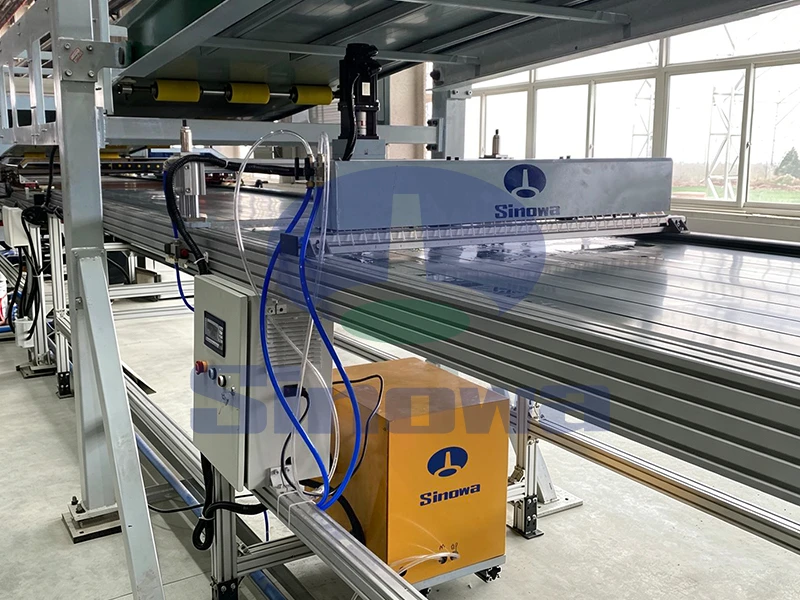
The first step in sizing the power supply is to calculate the total connected load of every major drive on the line. A typical continuous line integrates high-speed double-belt conveyor motors, layer-by-layer unwinder drives for both metal skins, side-edge sealing rollers, cutting and traversing saw motors, and automatic stacking conveyor systems. Each of these motors draws a rated current during normal operation, but the starting current can surge to five to seven times the rated value for brief periods. Engineers must therefore sum all continuous loads first, then apply a staggered-starting sequence so that not every motor accelerates at once. A common approach is to assign a main distribution panel with separate branch circuits for each functional zone, allowing individual isolation during maintenance without shutting down the entire line. This zoning also makes it easier to identify which segment is drawing abnormal current, reducing troubleshooting time during a production shift. Beyond the main conveyor drives, auxiliary equipment such as hydraulic power units for the press section, lubrication pumps, and exhaust ventilation fans must also be included in the load calculation. Neglecting these auxiliary loads is a frequent cause of undersized supply cables and overheating transformers after the line is put into service.
Heating and temperature control represent another substantial electrical demand that is often underestimated. The double-belt laminator relies on a series of heating zones along the curing tunnel to maintain precise skin temperatures as the polyurethane foam reacts and expands. Electric heating elements, whether embedded in platens or circulated through thermal oil systems, draw a steady base power that can rival the main conveyor motor in magnitude. Unlike motors, heaters draw nearly constant current from the moment they energize until the target setpoint is reached, so they contribute directly to the peak demand on the incoming supply. The control strategy for these heaters matters: using solid-state contactors with phase-angle or burst-firing control avoids the abrupt current spikes associated with simple on-off switching, which in turn reduces stress on the distribution transformer and minimizes voltage flicker visible to other equipment on the same network. Properly sized neutral conductors are also essential because heater banks are often connected in a configuration that produces harmonic currents, and undersized neutrals can overheat even when the phase currents appear normal.
The control and instrumentation system is the nerve center of the line and has its own power quality requirements. Programmable logic controllers, human-machine interface terminals, sensors, encoders, and proportional valves all operate on low-voltage direct current derived from regulated power supplies. These devices are highly sensitive to voltage sags, spikes, and electrical noise generated by the larger motors and heaters on the same supply. For this reason, control circuits are normally fed through dedicated isolation transformers and uninterruptible power supplies, ensuring that a momentary dip on the main power line does not cause the controller to reset mid-cycle. An unexpected controller reset during the lamination process can waste many meters of panel as the belts stop, the foam cures unevenly, and the skins delaminate. Encoder signals that track belt speed and panel length are particularly vulnerable to electromagnetic interference, so shielded cabling and proper grounding become part of the power supply strategy rather than an afterthought. Stable clean power for the control system is therefore not a luxury but a direct investment in material yield and scrap reduction.
Voltage stability across the length of the line is a concern that grows with the physical footprint of a continuous production system. A long double-belt line may extend over dozens of meters, with equipment distributed along both sides of the conveyor. If the supply voltage at the far end of the line drops too far below the nominal value, motors on that end will draw higher current to deliver the same torque, leading to overheating and premature winding failure. Cable cross-sections must be selected with voltage drop limits in mind, and main junction boxes should be positioned at intervals so that no branch circuit runs an excessive distance from the source. When the incoming grid voltage itself fluctuates, as commonly happens during periods of heavy regional load, automatic voltage regulators or saturating reactors can be installed ahead of the main distribution panel to hold the line supply within a usable band. The cost of these stabilizing devices is far lower than the cost of replacing a large conveyor motor or losing a full shift of production to a voltage-related shutdown.
Starting and inrush management deserves special attention because the simultaneous startup of all line components is rarely realistic. A logical power-on sequence begins with the control system and heaters, allowing the curing tunnel to reach operating temperature before the mechanical drives are energized. The main conveyor then starts at low speed, followed by the unwinders, edge rollers, and saw in succession. This staged approach keeps the peak demand on the transformer close to the sum of running loads rather than the sum of starting loads. Soft starters or variable-frequency drives on the larger motors extend this principle further by ramping motor speed gradually, eliminating the hard mechanical shock that would otherwise stress belts, chains, and gearboxes. Beyond protecting the electrical supply, controlled starting improves the quality of the first few meters of panel produced after a stoppage, since the foam chemistry is less forgiving when the belt accelerates abruptly. The result is both better power economics and a smoother transition from idle to full production speed.
Power factor and harmonic distortion are increasingly important considerations for any modern industrial line. Large induction motors and electric heating banks, when operated without correction, can draw a lagging reactive current that inflates the apparent power demanded from the grid. Capacitor banks installed near the main distribution panel compensate for this reactive demand, reducing the current that must flow through the supply cables and transformers. Lower current for the same useful power means less heat in the wiring and more spare capacity available for future line upgrades. Variable-frequency drives, while excellent for speed control, are a well-known source of harmonic currents that can distort the supply waveform and interfere with sensitive instrumentation. Installing passive harmonic filters or active front-end converters on the largest drives keeps this distortion within acceptable bounds, protecting not only the line's own controls but also neighboring equipment sharing the same feeder. Thinking about power quality proactively during installation avoids a long list of intermittent, hard-to-diagnose faults later.
Safety and emergency power provisions are non-negotiable elements of the supply design. Every major drive must have a local emergency stop button that immediately cuts power to the motor contactor while keeping the control circuit alive so the operator can diagnose the fault. Emergency lighting, ventilation for the work area, and safety relays for guarding devices must remain energized even when the main production power is isolated. In regions where the grid reliability is inconsistent, a backup generator sized to carry the critical safety and control loads, plus enough conveyor drive to bring the line to a controlled stop, prevents material from being ruined in the curing tunnel during an outage. On large installations, an uninterruptible supply that bridges the gap between grid failure and generator start gives the control system time to execute a graceful shutdown sequence. These safety layers add cost to the power supply installation, but they protect both personnel and the substantial value of the raw materials already in process.
Energy monitoring and efficiency optimization turn the power supply from a passive utility into a managed resource. Installing power meters at the main incoming panel and at each major branch allows operators to track exactly how much energy is consumed per meter of produced panel. Comparing these readings across shifts and product formulations reveals whether a particular recipe is consuming more heating power than expected, or whether a motor is drawing extra current because of mechanical wear. Over time, this data supports decisions about scheduling production runs during lower-cost tariff periods, adjusting heater setpoints, and scheduling preventive maintenance on drives that are showing rising energy consumption. Recovering waste heat from the hydraulic system or from cooling circuits back into the workshop also improves the overall energy picture. A continuous PU line, when instrumented this way, becomes not just a production asset but an energy-management system in its own right.
Putting all these considerations together, the power supply for a continuous PU sandwich panel line is far more than a simple connection to the local grid. It must match the combined motor, heating, and control loads with proper zoning and staged starting, protect sensitive instrumentation with clean and stable voltage, manage power factor and harmonics to stay efficient, and include safety and backup provisions that protect both people and material. When these elements are engineered together from the beginning, the line runs smoothly, produces consistent panel quality, and delivers reliable output year after year. The investment in a well-designed power supply is repaid many times over through reduced downtime, lower energy bills, and fewer rejected panels, making it one of the most critical decisions in setting up a high-performance continuous production facility.
Gallery
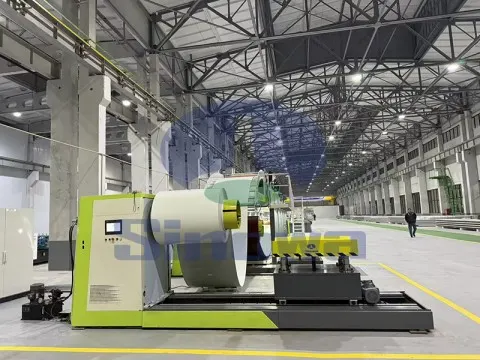
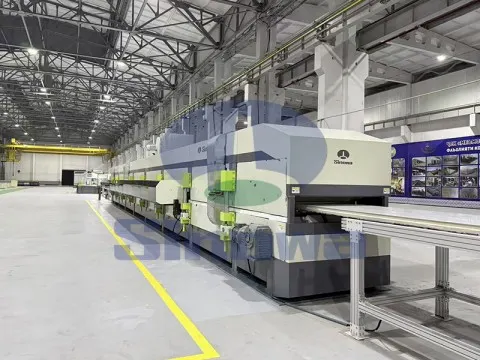
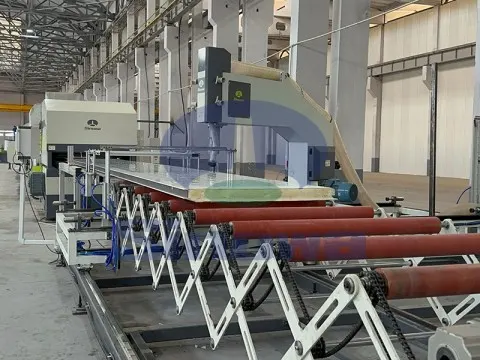
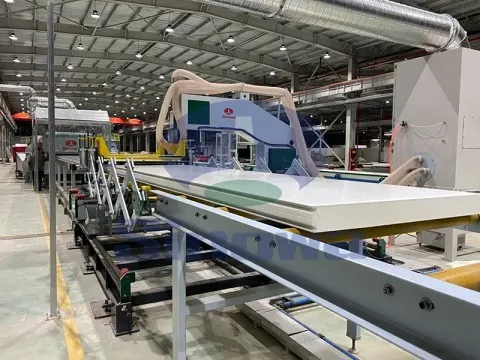
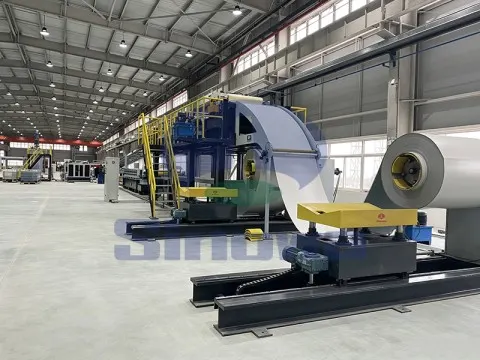
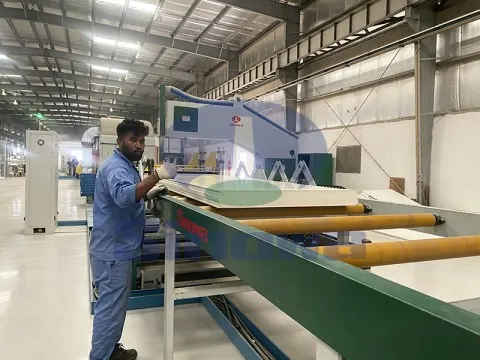
Sinowa is a professional manufacturer of sandwich panel machine in china, we provide diversified and high-performance sandwich panel production lines, including fully automatic continuous PU sandwich panel line and customized special lines to meet mass production and personalized order demands. These sandwich panel lines support processing multiple foam core materials, such as PU, PIR, mineral wool, rock wool and glass wool, covering different insulation and fireproof standards.
Featuring stable operation, high efficiency, energy saving and easy maintenance, our PU sandwich panel line deliver sandwich panels with excellent thermal insulation, fire resistance, sound insulation and lightweight durability. The finished panels are widely applied in industrial workshops, warehouse roofing and wall cladding, cold storage insulation, serving global construction and industrial insulation markets.
Main Products
-

Continuous PU Sandwich Panel Production Line
This continuous PU sandwich panel production line is an integrated automatic equipment. It covers uncoiling, forming, foaming, curing and cutting processes. With automatic raw material proportioning and precise temperature & pressure control, PIR sandwich panel production line continuously composites panels with double skins. Polyurethane sandwich panel production line stably produces steel and aluminum sandwich panels. Featuring high automation, the line makes fireproof and thermal-insulation panels for building enclosure and cold storage. -
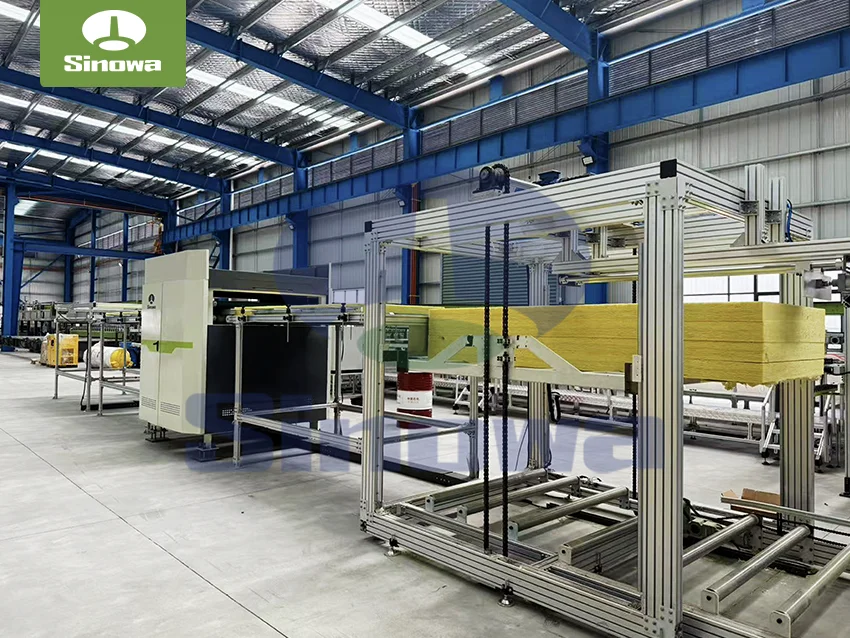
Rock Wool Sandwich Panel Production Line
Continuous rockwool sandwich panel production line is an automatic integrated production equipment, consisting of uncoiling, forming, gluing and compounding, heating curing, fixed-length cutting, automatic stacking and other modules. The mineral wool sandwich panel production line continuously conveys color steel plates and rock wool core materials to automatically complete lamination and curing, which can produce fireproof and thermal insulation sandwich panels. Featuring high automation degree and stable operation, this production line is suitable for mass production of panels used for building walls, roofs and other scenarios. -
Phenolic Insulation Board Production Line
This integrated automatic production line continuously manufactures PU and phenolic insulation boards. The insulation board production line covers raw material proportioning, high-pressure foaming, laminating, curing and fixed-length cutting. Featuring high automation and stable molding, the insulation panel production line supports various surface materials. PU boards offer excellent thermal insulation, while phenolic boards have superior fire resistance. These products are widely used in construction, cold chain, ventilation ducts and other thermal insulation fields.
Other FAQs
- How To Maintain Foam Core Sandwich Panel Line Daily
- How To Improve The Flatness Of Panels Made By PIR Foam Core Sandwich Panel Line
- What Is A PU Sandwich Panel Machine And How Does It Work
- Why Is The Curing Effect Poor In Insulation Board Production Line
- How To Adjust The Foaming Ratio Of A Polyurethane Sandwich Panel Production Line
- Continuous PU Sandwich Panel Production Line Speed Adjustment Synchronization Method
- Compressed Air Supply Requirement For PU Sandwich Panel Line Operation
- Polyurethane Sandwich Panel Production Line Fault Alarm System Debugging Method
- Sandwich Panel Production Line Startup And Shutdown Standard Operating Procedures
- Maximum Production Capacity Of Polyurethane Sandwich Panel Production Line
Related Articles
- Roof and Wall Panel Production Line
- Continuous PU Sandwich Panel Line For 50mm To 200mm Panel
- Custom Insulation Sandwich Panel Machine
- Continuous Laminating of PU Sandwich Panel Line
- PU Sandwich Panel Machine With Multi-component Foaming System
- PIR Insulated Partition Panel Production Line
- Continuous PU Sandwich Panel Line Export
- PU Sandwich Panel Insulation Board Machine
- Benefits Of PU Insulation Board Production Line
- Continuous PU Sandwich Panel Line For Color Steel Sheet