Polyurethane Sandwich Panel Production Line Fault Alarm System Debugging Method
Sep 21, 2026
The scientific debugging methods of the polyurethane sandwich panel production line fault alarm system. It covers pre-debug preparation, modular detection, fault verification, parameter calibration and post-debug maintenance, aiming to eliminate system misalarms and ensure stable, continuous and efficient operation of production equipment.
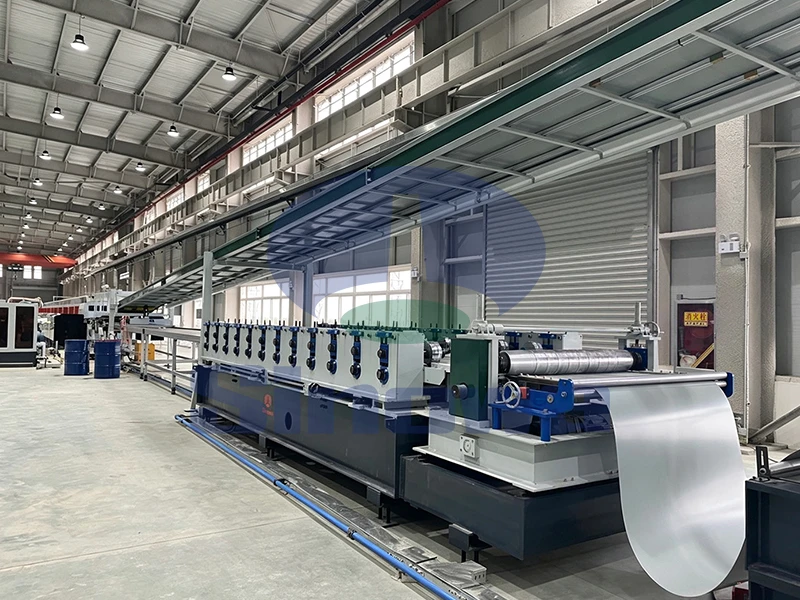
Effective debugging of the fault alarm system is the core guarantee for the stable operation of polyurethane sandwich panel production lines, as the system monitors key links including raw material feeding, foaming, pressing, cutting and conveying in real time. Before launching formal debugging work, comprehensive pre-debug preparation must be completed to avoid blind operation and secondary equipment faults. First, staff need to conduct a full visual inspection of the entire alarm system equipment, including sensors, signal transmission lines, alarm controllers and terminal display devices, to check for loose wiring, damaged line skin, displaced sensors and aging hardware components. All power supply equipment of the production line and alarm system should be inspected for stable voltage output and normal grounding conditions, because voltage fluctuation and poor grounding are common causes of system signal disorder and false alarms. Meanwhile, it is necessary to sort out the logical connection relationship between each alarm module and production process link, record the corresponding alarm trigger conditions of each process node, and build a basic debugging reference framework. In addition, the production line needs to be adjusted to a static standby state, stop all feeding and processing operations, and clean up residual raw materials and sundries on the equipment surface to ensure the debugging environment is clean, safe and free from external interference. Professional debugging tools including signal testers, multimeter and parameter calibrators should be inspected for normal use, and debugging personnel need to be familiar with the system operation logic and common fault types to lay a solid foundation for subsequent modular debugging work.
Modular hierarchical debugging is the key link to accurately locate faults in the polyurethane sandwich panel production line alarm system, which divides the whole system into sensor acquisition module, signal transmission module, central control processing module and sound-light alarm execution module for independent detection and verification. The sensor acquisition module is the front-end core of the alarm system, responsible for collecting real-time data of production temperature, pressure, speed and material level. During debugging, staff need to simulate various operating states of the production line, calibrate the induction sensitivity of temperature sensors, pressure sensors and displacement sensors one by one, and check whether the collected data can be accurately converted into electrical signals and uploaded to the control terminal. For sensors installed in high-temperature and high-pressure working areas of foaming and pressing links, it is necessary to focus on detecting signal delay and data deviation caused by long-term environmental erosion. The signal transmission module mainly includes transmission lines and signal converters. Debugging work focuses on detecting signal attenuation and interference problems in the transmission process, using professional instruments to test the stability of signal transmission under normal operating conditions of the production line, and eliminating signal distortion caused by line crossing, electromagnetic interference and line aging. The central control processing module undertakes data analysis and judgment work, and debugging needs to verify the rationality of internal program logic, check whether the system can accurately identify abnormal data signals, and judge whether the fault threshold judgment program has deviation or logic confusion. The final sound-light alarm execution module is debugged by simulating fault signals to confirm that the alarm indicator light and buzzer can respond timely and accurately, and there is no phenomenon of no alarm, delayed alarm or frequent false alarm.
Targeted fault simulation and verification testing is an indispensable step to improve the debugging accuracy of the alarm system, which can effectively identify potential hidden faults that cannot be found in static debugging. After completing modular independent debugging, staff need to carry out dynamic simulation tests according to the actual operation scenarios of the polyurethane sandwich panel production line, simulating common abnormal working conditions in the production process such as insufficient raw material supply, excessive foaming temperature, abnormal pressing pressure and sudden stop of conveying equipment. In the simulation process, it is necessary to strictly record the response time, alarm accuracy and data feedback results of the alarm system for each abnormal condition, and compare the actual system performance with the normal operation standard of production equipment. For the phenomenon of missed alarm, it is necessary to check whether the sensor induction range is limited or the system fault threshold is set too high, resulting in the failure to identify minor abnormal faults. For frequent false alarms in normal production, it is necessary to troubleshoot excessive sensor sensitivity, unstable signal transmission and unreasonable program parameter setting, and eliminate interference factors one by one. In addition, continuous operation simulation tests should be carried out for a certain period to verify the stability of the alarm system in long-term working state, avoid temporary debugging effect, and ensure that the system can maintain accurate and sensitive monitoring performance in continuous industrial production.
Parameter calibration and logic optimization are core operations to solve fundamental problems of the alarm system and ensure long-term stable operation. After locating all faults and hidden dangers through debugging and simulation, targeted parameter adjustment and logic revision should be carried out according to the actual production process characteristics of polyurethane sandwich panels. First, calibrate the fault threshold parameters of each monitoring node, set reasonable early warning and alarm values according to the fluctuation range of temperature, pressure, operating speed and material level in the normal production process, avoid excessive threshold setting leading to failure of timely warning of potential faults, and prevent too low threshold causing frequent false alarms to interfere with normal production. Then, optimize the system program logic, modify the confused judgment logic and delayed response programs existing in the central control module, and add anti-interference processing programs for signal transmission links to filter out invalid interference signals generated by equipment vibration and electromagnetic fluctuation. For the alarm delay problem of individual process nodes, adjust the signal transmission frequency and data processing speed of the system to ensure that abnormal conditions can trigger the alarm device within the effective response time. At the same time, set hierarchical alarm rules for different fault levels, distinguish minor early warning faults and major shutdown faults, realize graded prompt and processing of faults, improve the pertinence and efficiency of system alarm feedback, and avoid unnecessary production shutdown caused by single alarm mode.
After completing system debugging and parameter optimization, systematic overall commissioning and effect verification must be carried out to confirm that the alarm system meets the production operation requirements. The overall commissioning work needs to start the full-load trial operation of the polyurethane sandwich panel production line, simulate the whole process of raw material feeding, high-pressure foaming, continuous pressing, fixed-length cutting and finished product conveying, and comprehensively inspect the real-time monitoring and alarm performance of the system in the full-process production state. During the trial operation, staff need to track and record the working state of each sensor, the stability of signal transmission, the accuracy of central control judgment and the timeliness of alarm response, and confirm that all process nodes have no missed alarms, false alarms and delayed alarms. For individual residual minor problems found in the overall commissioning, fine-tuning of parameters and local logic optimization should be carried out immediately to ensure the overall coordination and stability of the system. After the commissioning is qualified, sort out all debugging data, fault records, parameter adjustment records and optimization schemes, form a complete debugging file, and clarify the optimal operating parameters of the alarm system under normal production conditions. This file can provide effective reference for subsequent daily maintenance and regular debugging of the equipment, and realize standardized management of the alarm system debugging work.
Daily maintenance and regular re-debugging mechanism is an important guarantee to maintain the long-term stable performance of the fault alarm system of polyurethane sandwich panel production line. After the completion of formal debugging and putting the system into use, enterprises need to formulate a scientific daily maintenance plan, regularly clean the dust and residual foam on the surface of sensors and signal equipment to avoid sensor induction failure caused by dirt coverage. Regularly check the tightness of equipment wiring and the aging degree of transmission lines, replace aging and damaged accessories in a timely manner, and maintain the stability of signal transmission. In the daily production process, record the abnormal alarm conditions of the system regularly, summarize the frequent fault types and interference factors, and carry out targeted minor debugging and parameter correction. At the same time, set up a regular full-system re-debugging cycle, conduct comprehensive modular detection, fault simulation and parameter calibration for the alarm system regularly, eliminate potential equipment aging and program logic lag problems caused by long-term operation, and ensure that the alarm system can always maintain high-precision monitoring and sensitive fault response capabilities, providing reliable technical support for the safe, stable and high-efficiency operation of polyurethane sandwich panel production line.
Main Products
-

Continuous PU Sandwich Panel Production Line
This continuous PU sandwich panel production line is an integrated automatic equipment. It covers uncoiling, forming, foaming, curing and cutting processes. With automatic raw material proportioning and precise temperature & pressure control, PIR sandwich panel production line continuously composites panels with double skins. Polyurethane sandwich panel production line stably produces steel and aluminum sandwich panels. Featuring high automation, the line makes fireproof and thermal-insulation panels for building enclosure and cold storage. -

Rock Wool Sandwich Panel Production Line
Continuous rockwool sandwich panel production line is an automatic integrated production equipment, consisting of uncoiling, forming, gluing and compounding, heating curing, fixed-length cutting, automatic stacking and other modules. The mineral wool sandwich panel production line continuously conveys color steel plates and rock wool core materials to automatically complete lamination and curing, which can produce fireproof and thermal insulation sandwich panels. Featuring high automation degree and stable operation, this production line is suitable for mass production of panels used for building walls, roofs and other scenarios. -

Phenolic Insulation Board Production Line
This integrated automatic production line continuously manufactures PU and phenolic insulation boards. The insulation board production line covers raw material proportioning, high-pressure foaming, laminating, curing and fixed-length cutting. Featuring high automation and stable molding, the insulation panel production line supports various surface materials. PU boards offer excellent thermal insulation, while phenolic boards have superior fire resistance. These products are widely used in construction, cold chain, ventilation ducts and other thermal insulation fields.
Other FAQs
- Operator Professional Training Content For PU Sandwich Panel Line
- Energy Consumption Standard Of Automatic PU Sandwich Panel Production Equipment
- Polyurethane Sandwich Panel Production Equipment Lubrication Maintenance Standard
- Troubleshooting For Sandwich Panel Production Line Frequent Shutdown Failure
- Polyurethane Sandwich Panel Production Line Start-up Pre-inspection Complete Items