Why Is The Foaming Expansion Rate Unstable On The PU Foam Production Line
Sep 29, 2026
Unstable foaming expansion rate is a common and troublesome issue on the PU foam production line, which directly causes inconsistent foam density, uneven cell structure and defective finished products.
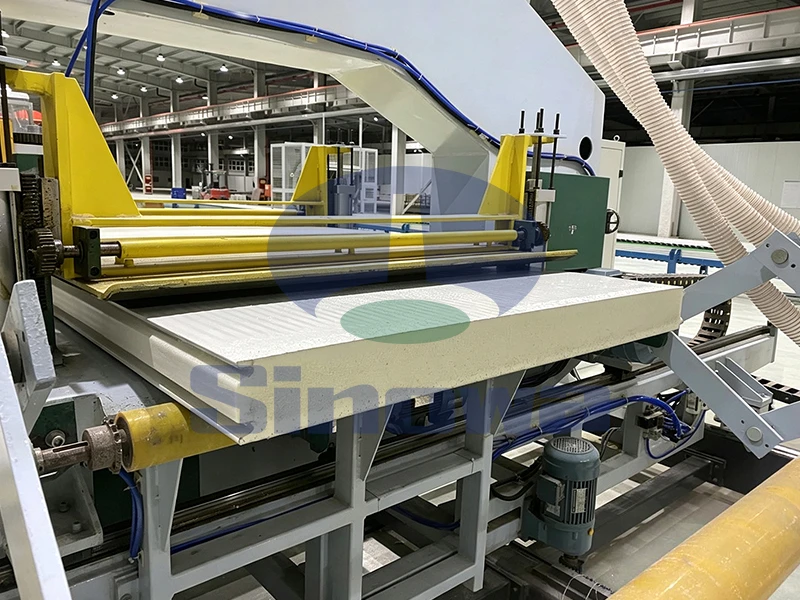
Raw material inconsistency stands as one of the primary causes of unstable foaming expansion rate on the PU foam production line. PU foam production relies on the precise coordination of multiple chemical components, mainly polyol, isocyanate, catalysts, blowing agents and surfactants, and subtle variations in raw material properties will disrupt the entire foaming process. Different batches of raw materials often have slight differences in purity, viscosity and active ingredient content. For example, fluctuating moisture content in polyol can trigger extra side reactions with isocyanate, generating unpredictable carbon dioxide and altering the gas production volume during foaming. Meanwhile, uneven catalyst activity will change the speed of foaming and gelling reactions. If the catalyst activity is too high in a certain batch, the foaming reaction proceeds rapidly with excessive gas release, leading to over-expansion; while low catalyst activity slows down gas generation and results in insufficient expansion. Additionally, minor changes in blowing agent concentration will directly affect the expansion power of the foam. On the PU foam production line, continuous feeding of inconsistent raw materials leads to repeated fluctuations in expansion rate, making it impossible to maintain stable product quality throughout production batches.
The imbalance between foaming reaction and gelling reaction is a key internal factor leading to fluctuating expansion rate on the PU foam production line. Qualified PU foam formation requires perfect synchronization of two core reactions: the blowing reaction that generates gas to expand the foam and the gelling reaction that solidifies the polymer framework. The expansion rate remains stable only when gas generation speed matches the polymer curing speed. In actual production, this balance is easily broken by various subtle disturbances. When the blowing reaction proceeds faster than the gelling reaction, a large amount of gas is generated before the polymer forms a stable network structure. The soft polymer framework cannot constrain internal gas pressure, causing excessive foam expansion, cell wall rupture and even partial collapse. On the contrary, if the gelling reaction is too fast, the polymer solidifies prematurely, locking the foam structure before full gas expansion, which leads to low expansion rate, compact foam texture and poor resilience. Minor deviations in catalyst ratio are the main trigger for this imbalance. Excessive amine catalysts accelerate gas production, while excessive tin catalysts speed up gelling. Slight proportion changes in the feeding system of the PU foam production line will break reaction synchronization and cause continuous expansion rate instability.
Ambient temperature and humidity fluctuations in the production workshop greatly interfere with the foaming stability of the PU foam production line. PU foam foaming is a highly temperature-sensitive chemical reaction, and environmental temperature directly affects reaction kinetics and material fluidity. When the workshop temperature rises, all chemical reaction speeds increase synchronously, shortening the initial cream time and foam rising time. Rapid gas generation leads to sudden acceleration of expansion rate, and the foam expands sharply in a short time, forming uneven cell structures. In low-temperature environments, raw material viscosity increases, material mixing uniformity declines, and reaction activity decreases significantly, resulting in slow gas release and insufficient foam expansion. Humidity is another critical interfering factor. Excessive air humidity makes raw materials absorb moisture, and the extra moisture reacts with isocyanate to produce additional gas, causing irregular expansion rate surges. In workshops without constant temperature and humidity control, daily and seasonal climate changes create unstable production conditions. The PU foam production line operates in such a fluctuating environment, and the foaming expansion rate cannot maintain a consistent standard, resulting in large batch-to-batch product differences.
Abnormal equipment operation and uneven material mixing on the PU foam production line are important mechanical causes of unstable expansion rate. Stable foam production relies on the precise mixing system of the PU foam production line to ensure uniform fusion of all raw material components. Abnormal mixer speed, worn mixing blades or unstable feeding pressure will lead to incomplete and uneven material mixing. Partial areas of the mixed material have excessive catalyst or blowing agent content, while other areas lack key components, causing inconsistent reaction degrees in different parts of the foam. Local over-foaming and under-foaming occur simultaneously, presenting an overall unstable expansion state. Besides, unstable material feeding flow will cause real-time fluctuations in the ratio of chemical components. Even tiny flow deviations during continuous production will accumulate and amplify, changing the foaming reaction intensity. Long-term operation of the production line may also cause pipeline blockage and material residue, affecting the continuity of material delivery. These mechanical failures do not cause obvious production abnormalities in a short time but lead to persistent fluctuations in foaming expansion rate and reduce the yield of qualified products.
Unreasonable and drifting production process parameters further aggravate the instability of foaming expansion rate on the PU foam production line. In formal production, process parameters including material preheating temperature, feeding ratio, mixing time and foaming time need to be kept within a fixed range to ensure stable foaming. In actual operation, long-term equipment operation will cause parameter drift. For instance, the preheating system’s temperature control accuracy decreases over time, leading to inconsistent raw material temperature before feeding and changing the initial reaction state of foaming. Operators’ subtle operational differences in parameter adjustment will also affect the expansion effect. Shortened mixing time results in insufficient component fusion, while prolonged mixing time causes pre-reaction of raw materials in advance. Moreover, inappropriate surfactant dosage will affect the stability of foam cells. Insufficient surfactant cannot wrap gas bubbles effectively, causing bubble merging and collapse and reducing expansion rate; excessive surfactant makes cell walls too tough and hinders normal foam expansion. Long-term neglect of parameter calibration on the PU foam production line will form a vicious cycle of unstable expansion rate.
Regular equipment maintenance, standardized raw material management and precise process calibration are effective measures to stabilize the foaming expansion rate on the PU foam production line. Enterprises need to establish strict raw material incoming inspection mechanisms to ensure consistent purity and activity of each batch of materials, avoiding reaction fluctuations caused by raw material differences. It is necessary to install constant temperature and humidity control systems in the production workshop to eliminate the interference of environmental changes on foaming reactions. Regular inspection and maintenance of the mixing and feeding systems of the PU foam production line can eliminate mechanical failures such as unstable speed and pipeline blockage to ensure uniform material mixing and stable feeding flow. In addition, regular calibration of production process parameters and unified operation standards can maintain the dynamic balance between foaming and gelling reactions. Comprehensive control of raw materials, environment, equipment and processes can fundamentally solve the problem of unstable foaming expansion rate and improve the stability and consistency of PU foam products.
Gallery
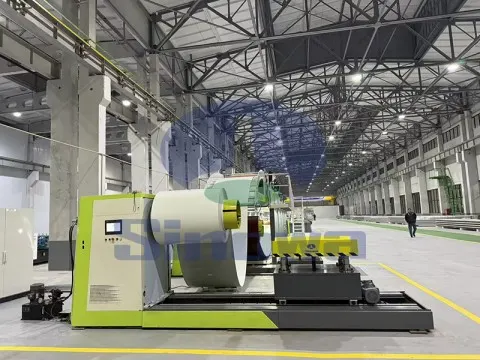
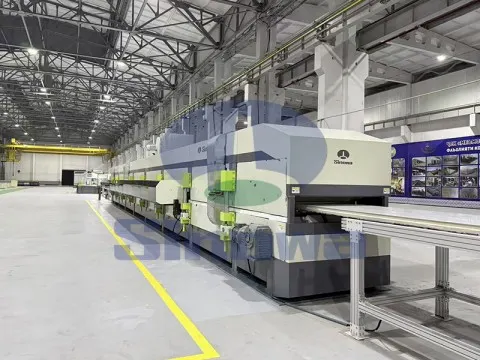
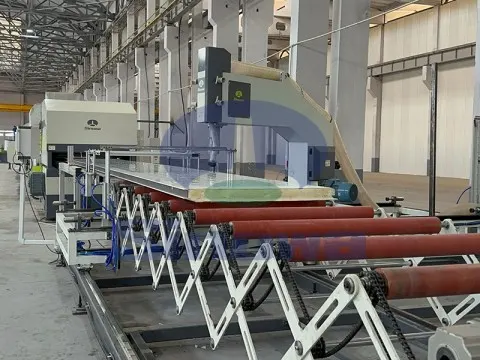
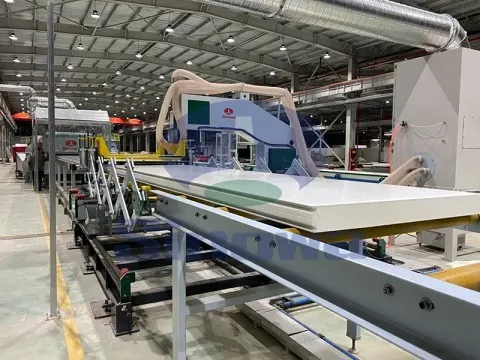
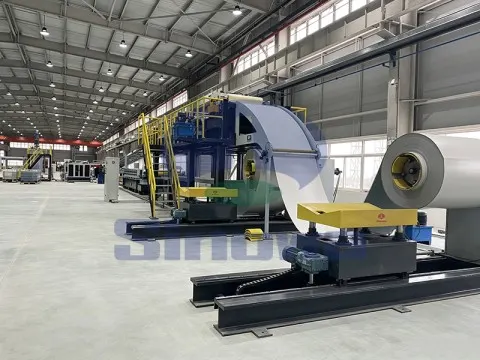
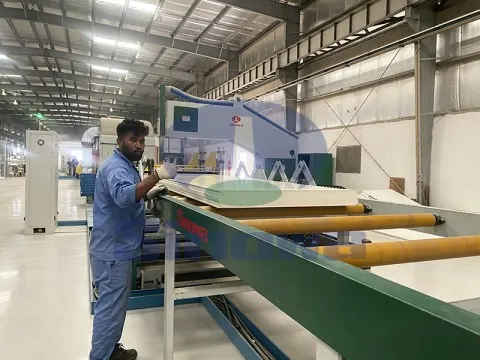
Sinowa is a professional manufacturer of sandwich panel machine in china, we provide diversified and high-performance sandwich panel production lines, including fully automatic continuous PU sandwich panel line and customized special lines to meet mass production and personalized order demands. These sandwich panel lines support processing multiple foam core materials, such as PU, PIR, mineral wool, rock wool and glass wool, covering different insulation and fireproof standards.
Featuring stable operation, high efficiency, energy saving and easy maintenance, our PU sandwich panel line deliver sandwich panels with excellent thermal insulation, fire resistance, sound insulation and lightweight durability. The finished panels are widely applied in industrial workshops, warehouse roofing and wall cladding, cold storage insulation, serving global construction and industrial insulation markets.
Main Products
-

Continuous PU Sandwich Panel Production Line
This continuous PU sandwich panel production line is an integrated automatic equipment. It covers uncoiling, forming, foaming, curing and cutting processes. With automatic raw material proportioning and precise temperature & pressure control, PIR sandwich panel production line continuously composites panels with double skins. Polyurethane sandwich panel production line stably produces steel and aluminum sandwich panels. Featuring high automation, the line makes fireproof and thermal-insulation panels for building enclosure and cold storage. -

Rock Wool Sandwich Panel Production Line
Continuous rockwool sandwich panel production line is an automatic integrated production equipment, consisting of uncoiling, forming, gluing and compounding, heating curing, fixed-length cutting, automatic stacking and other modules. The mineral wool sandwich panel production line continuously conveys color steel plates and rock wool core materials to automatically complete lamination and curing, which can produce fireproof and thermal insulation sandwich panels. Featuring high automation degree and stable operation, this production line is suitable for mass production of panels used for building walls, roofs and other scenarios. -

Phenolic Insulation Board Production Line
This integrated automatic production line continuously manufactures PU and phenolic insulation boards. The insulation board production line covers raw material proportioning, high-pressure foaming, laminating, curing and fixed-length cutting. Featuring high automation and stable molding, the insulation panel production line supports various surface materials. PU boards offer excellent thermal insulation, while phenolic boards have superior fire resistance. These products are widely used in construction, cold chain, ventilation ducts and other thermal insulation fields.
Other FAQs
- Troubleshooting For Sandwich Panel Production Line Frequent Shutdown Failure
- How To Solve Surface Bubble Problems Of Panels From PU Foam Core Sandwich Panel Line
- Why Does The Polyurethane Sandwich Panel Line Produce Uneven Foam Distribution
- How To Improve The Production Efficiency Of Insulation Board Production Line
- How To Solve Foam Shrinkage Issues On A Polyurethane Sandwich Panel Production Line
- Polyurethane Sandwich Panel Production Line Idle Period Maintenance Management Scheme
- Polyurethane Sandwich Panel Production Line Start-up Pre-inspection Complete Items
- Noise Reduction Measures For PU Sandwich Panel Production Equipment
- Difference Between PUR And PIR Sandwich Panel Production Lines
- How To Improve The Flatness Of Panels Made By PIR Foam Core Sandwich Panel Line
Related Articles
- PU Sandwich Panel Manufacturing Line With Automatic Cutting Length Setting
- PU Sandwich Panel Machine For Sale
- PIR Sandwich Panel Manufacturing Plant With Pneumatic Control Components
- Continuous Production Line For Color Steel Sandwich Panels
- Automatic PU Sandwich Panel Making Line With Remote Monitoring Function
- Continuous Foam Core Sandwich Panel Line
- Modular Polyurethane Sandwich Panel Production Line For Easy Expansion
- Reliable Insulation Sandwich Panel Machines
- PIR Sandwich Panel Production Line With Touch Screen Operation Panel
- Composite Panel Production Machine